

Digital Citizenship through School Leadership: Exploring School Principals’ Perceptions and Practices in Beirut Schools
المواطنة الرقمية من خلال القيادة المدرسية: استكشاف تصورات وممارسات مديري المدارس في مدارس بيروت
Maysaa Nimer1
1 Educational Specialist | Master’s Student – Educational Management, Lebanese University – Faculty of Education
Email: maysaa.nimer@hotmail.com
DOI: https://doi.org/10.53796/hnsj610/33
Arabic Scientific Research Identifier: https://arsri.org/10000/610/33
Volume (6) Issue (10). Pages: 524 - 539
Received at: 2025-09-07 | Accepted at: 2025-09-15 | Published at: 2025-10-01
Abstract: This study explores the role of school leadership in promoting digital citizenship in Lebanese schools, focusing specifically on the perceptions, practices, and challenges faced by school principals in Beirut. Grounded in the Digital Citizenship Education (DCE) framework and Ribble’s nine elements, the research adopts a mixed-methods design. The study drew on two data sources: 42 participants completed the survey, and 6 school principals participated in semi-structured interviews to provide qualitative insights, representing both public and private schools in Beirut. Quantitative results revealed limited familiarity with digital citizenship concepts and inconsistent implementation across school levels. Thematic analysis of interviews showed significant gaps in awareness, policy guidance, and curricular integration, particularly in public schools. Despite recognizing the urgency of addressing students' digital behavior, principals reported limited systemic action due to lack of training, leadership agency, and institutional support. The findings highlight the need for national policy frameworks, capacity building, and school-wide strategies to foster safe, ethical, and participatory digital environments.
Keywords: Digital Citizenship, School Leadership, Lebanese Schools, Policy and Curriculum Integration, Capacity Building.
المستخلص: تستكشف هذه الدراسة دور القيادة المدرسية في تعزيز المواطنة الرقمية في المدارس اللبنانية، مع التركيز على تصورات وممارسات وتحديات مديري المدارس في بيروت. واستنادًا إلى إطار المواطنة الرقمية الصادر عن مجلس أوروبا، وعناصر Ribble التسعة، اعتمدت الدراسة نهجًا بالأسلوب المختلط. اعتمدت الدراسة على مصدرين للبيانات: أكمل 42 مشاركًا الاستبيان، وشارك 6 مديرين من المدارس في مقابلات شبه مهيكلة لتقديم رؤى نوعية، وشملت الدراسة مدارس رسمية وخاصة في بيروت. كشفت النتائج الكمية عن ضعف في الإلمام بمفاهيم المواطنة الرقمية وتفاوت في التنفيذ بين المراحل التعليمية. أما التحليل النوعي للمقابلات فقد أبرز وجود فجوات كبيرة في الوعي، والسياسات الإرشادية ، والدمج في المناهج، خاصة في المدارس الرسمية. وعلى الرغم من إدراك المديرين لأهمية التعامل مع سلوك الطلاب الرقمي، إلا أن الممارسات كانت محدودة بسبب غياب التدريب والدعم المؤسسي. تؤكد النتائج على الحاجة إلى أطر وطنية واضحة، وبناء القدرات، واستراتيجيات مدرسية شاملة لتعزيز بيئة رقمية آمنة وأخلاقية وتشاركية.
الكلمات المفتاحية: المواطنة الرقمية، القيادة المدرسية، المدارس اللبنانية، السياسات ودمج المناهج، بناء القدرات.
Introduction
In today’s digital age, technology is integral to daily life, influencing communication, entertainment, and education (Shal, El Kibbi, Ghamrawi, & Ghamrawi, 2018). Students, often termed “digital natives,” are proficient with digital platforms yet frequently lack awareness of online risks and ethical considerations (James et al., 2010). This underscores the necessity for schools to actively promote digital citizenship by integrating responsible technology use into their curricula. However, many educational institutions have not fully embraced this responsibility (Orth & Chen, 2013).
School principals, as educational leaders, play a pivotal role in shaping students’ digital behaviors. Their knowledge, perceptions, and practices are crucial in fostering environments that emphasize ethical technology use (Hollandsworth, Dowdy, & Donovan, 2011). Without strong leadership, efforts to promote digital citizenship may remain fragmented, leaving students unprepared for the challenges of the digital world.
In Lebanon, particularly within Beirut’s schools, the integration of digital tools has become increasingly prevalent. Recurring crises—such as economic instability, political turmoil, and the COVID-19 pandemic—have necessitated the adoption of online and blended learning models to ensure educational continuity (Save the Children, 2021; World Bank, 2021). Despite this increased reliance on digital platforms, there is a notable absence of structured digital citizenship education. School principals often face challenges in implementing these concepts due to limited training, resources, and self-efficacy Ghamrawi (2018).
The lack of structured digital citizenship education in Lebanese schools, coupled with insufficient research and training for school principals, impedes the promotion of responsible technology use among students.
This study aims to address this issue by exploring the following research questions:
- What is the level of knowledge that school principals possess about digital citizenship?
- How do school principals perceive their role in fostering digital citizenship?
- What practices do school principals implement to promote digital citizenship?
- What challenges do school principals encounter in integrating digital citizenship?
By examining these questions, the research seeks to provide insights that can inform policy development and enhance training programs, ultimately fostering a healthier digital learning environment in Lebanese schools.
1.1 Research Objectives:
This study aims to explore the role of school principals in fostering digital citizenship within Lebanese schools in Beirut by examining their knowledge, perceptions, practices, and challenges related to digital citizenship. The research seeks to provide insights that can inform educational policies and leadership training programs to enhance digital citizenship implementation in schools.
1.1.1 Primary Objective:
To investigate how school principals understand, perceive, and implement digital citizenship within their schools and to identify the challenges and opportunities associated with its integration.
1.1.2 Specific Objectives:
- To assess school principals’ understanding of digital citizenship, including its principles, significance, and components
- To explore principals’ attitudes toward the importance of digital citizenship and their perceived role in promoting it within their schools
- To identify the strategies and initiatives school principals implement to encourage responsible and ethical digital engagement among students and staff
- To examine the challenges principals encounter in integrating digital citizenship and the potential strategies they employ to overcome these obstacles.
1.2 Significance of Study
In today’s digital world, students are growing up surrounded by technology, it’s part of how they learn, communicate, and make sense of the world. But being tech-savvy doesn’t always mean they know how to use digital tools wisely or ethically. That’s where schools come in. By integrating digital citizenship into the classroom, we help students not just stay safe online but also become critical thinkers and respectful members of the digital community (American University, 2020). This study seeks to highlight how schools can take meaningful steps to support students in becoming responsible digital citizens—not just as an add-on, but as part of their everyday learning.
At the heart of these efforts are school principals. Their leadership sets the tone for the entire school, including how technology is used and what kind of digital habits are encouraged. Principals are in a unique position to model and support positive digital behavior, create policies that matter, and guide their teams through ever-changing technological challenges. This research digs into how principals see their role when it comes to digital citizenship, and what they’re already doing, or wish they could do better. The goal is to give school leaders practical insight into shaping a digital culture that aligns with their school’s values and goals (PowerSchool, 2021).
But the impact of this work reaches far beyond the school walls. As our lives become increasingly connected online, it’s more important than ever to raise a generation that knows how to engage thoughtfully and ethically in digital spaces. Teaching students about digital citizenship helps prevent issues like cyberbullying, misinformation, and online manipulation; issues that affect not just the youth but entire communities. By sharing insights from this research, we hope to support educational leaders and policymakers in creating environments where students aren’t just passive users of technology, but informed, empowered, and ethical digital citizens (Nearpod, 2023).
Review of Related Literature
2.1 Digital Natives and the Importance of Promoting Digital Citizenship
In today’s educational landscape, students are often referred to as “digital natives” due to their inherent familiarity with technology and digital communication tools. This generation, primarily comprising individuals born from 2002 to 2010, has been immersed in digital environments from a young age, significantly influencing their learning preferences and interactions within educational settings (İyici & Kutoğlu Kuruç, 2023).
Despite their adeptness at navigating digital platforms, digital natives often exhibit a gap between their technical skills and the effective application of these tools for academic purposes. Studies indicate that while a significant portion of these students feel capable of using technology independently, they may not fully leverage these skills in educational contexts (Tóth et al., 2022). This discrepancy underscores the necessity for targeted educational strategies that not only incorporate technology but also guide students in its purposeful application for learning.
The integration of digital citizenship education (DCE) into school curricula emerges as a critical response to this challenge. Digital citizenship encompasses the responsible and ethical use of technology, empowering students to navigate the digital landscape safely and thoughtfully. Implementing DCE fosters critical thinking, enhances online safety, and promotes respectful digital interactions, thereby preparing students to engage constructively in an increasingly digital society Senos et al. (2024).
However, the successful promotion of digital citizenship extends beyond curriculum design; it necessitates the active involvement of educational leaders. School principals play a pivotal role in shaping the digital culture of their institutions. Their perceptions, knowledge, and practices directly influence the implementation of digital citizenship initiatives. By fostering an environment that prioritizes ethical technology use, principals can bridge the gap between students’ digital proficiencies and their responsible application in academic and social contexts (Hollandsworth, Dowdy, & Donovan, 2011).
In the context of Lebanese public schools, particularly in Beirut, the integration of digital tools has become increasingly prevalent, especially in response to recurring crises necessitating online and blended learning models (Save the Children, 2021; World Bank, 2021). Despite this increased reliance on digital platforms, there is a notable absence of structured digital citizenship education. School principals often face challenges in implementing these concepts due to limited training, resources, and self-efficacy Ghamrawi (2018).
Addressing these challenges requires a comprehensive understanding of the current landscape of digital citizenship education within these schools.
2.2 Domains of Digital Citizenship
Digital citizenship encompasses key competencies that enable individuals to engage responsibly and ethically in the digital world. Two widely recognized frameworks, the Council of Europe’s Digital Citizenship Education (DCE) domains (2020) and Ribble’s (2012) nine elements of digital citizenship, provide a structured approach for fostering responsible digital behaviors in education.
1. The Digital Citizenship Education (DCE) Framework:
The Council of Europe (2020) classifies digital citizenship into three categories:
- Being Online: Focuses on access and inclusion, learning and creativity, and media literacy, ensuring equitable digital participation and critical engagement.
- Wellbeing Online: Covers ethics and empathy, digital health, and ePresence, promoting responsible online interactions and well-being.
- Rights Online: Includes active participation, privacy and security, and consumer awareness, emphasizing the balance between digital rights and responsibilities.
2. Ribble’s (2012) Nine Elements of Digital Citizenship:
Ribble (2012) categorizes digital citizenship into three domains:
- Respect Yourself and Others: Includes digital access, etiquette, and law, focusing on ethical behavior and legal responsibilities.
- Educate Yourself and Others: Covers digital commerce, communication, and literacy, emphasizing informed and responsible digital engagement.
- Protect Yourself and Others: Addresses digital rights, health, and security, ensuring digital safety and well-being.
3. Digital Citizenship in Education
Both frameworks highlight the need for structured digital citizenship education in schools (Fong, 2015). School principals play a crucial role in shaping policies that equip students with essential digital skills. In Lebanese public schools, where digital learning has expanded due to recurring crises, structured digital citizenship programs are critical (World Bank, 2021). Understanding principals’ challenges and perspectives will help develop effective policies and training programs that foster responsible digital engagement.
2.3 The Role of School Leadership in Promoting Digital Citizenship
The role of school leadership in fostering digital citizenship is critical, encompassing ethical technology use, critical awareness, and policy implementation. School leaders shape a culture of responsible digital engagement, ensuring students navigate online spaces safely and ethically.
Educational leaders are responsible for embedding technology ethics into school practices, guiding students to use technology responsibly and avoid misuse (Baydar, 2022). They play a key role in raising awareness of digital actions’ consequences, such as cyber-plagiarism and misinformation, and promoting critical thinking skills necessary for ethical digital interactions (Vicente & Meirinhos, 2023).
School-based initiatives, when led by proactive school leaders, effectively promote digital citizenship by fostering critical awareness, self-reflection, and behavioral change (“School-Based Initiatives Promoting Digital Citizenship and Healthy Digital Media Use”, 2022). Leaders facilitate the integration of technology in classrooms, aligning with policies that support democratic values and responsible technology use (Moyle, 2014).
Despite their pivotal role, school leaders face challenges such as varying levels of technological competence among educators and the need for ongoing professional development to keep up with evolving digital landscapes. Addressing these challenges requires continuous support and training to ensure leaders can effectively champion digital citizenship initiatives in their schools.
2.4 Best Practices of School Leadership in Promoting Digital Citizenship
Effective school leadership is essential for fostering a culture of responsible technology use and ensuring that digital citizenship is a core component of education. Best practices in this area involve establishing clear goals, integrating digital citizenship into the curriculum, and fostering a supportive environment that encourages ethical digital engagement.
School leaders should set explicit objectives for digital citizenship education, aligning them with broader educational goals. This includes promoting safe and responsible technology use and ensuring that students understand their digital rights and responsibilities (Baydar, 2022). Clear policies on ethical online behavior, cyberbullying prevention, and data privacy help establish a structured approach to digital citizenship.
Digital citizenship should be embedded across various subjects rather than treated as a separate module. Scenario-based learning, interactive games, and project-based activities can help students critically analyze digital interactions and reflect on their technology use (“School-Based Initiatives Promoting Digital Citizenship and Healthy Digital Media Use”, 2022). Programs that emphasize critical thinking, media literacy, and online ethics enable students to make informed decisions in digital spaces.
A school culture that embraces innovation and adaptability is key to effective digital citizenship education. School leaders should encourage students to engage with technology responsibly while supporting teachers through training programs on digital literacy and online safety (Hasanah & Yusoff, 2024). Professional development for educators strengthens their ability to guide students effectively, ensuring that digital citizenship principles are consistently reinforced (Al-Ghamdi & Al-Areefi, 2023).
While these best practices provide a strong foundation, challenges such as varying levels of digital literacy among educators and students may hinder implementation. Addressing these disparities through inclusive policies, targeted training, and accessible digital resources is essential for fostering a safe and responsible digital learning environment.
2.5 Challenges School Leaders Face in Promoting Digital Citizenship
School leadership faces significant challenges in promoting digital citizenship, primarily due to a lack of knowledge and resources, as well as the need for a more inclusive approach. Many school leaders struggle with an insufficient understanding of digital tools and their application in educational settings, which hampers effective planning and engagement in digital citizenship initiatives (Johari et al., 2023). Additionally, traditional views of citizenship often emphasize compliance over critical engagement, potentially alienating students with diverse needs, such as those with disabilities (Rice & Dunn, 2023). The pandemic has further highlighted social inequalities, necessitating a re-evaluation of educational practices to foster digital literacy and citizenship that empower all students, particularly those in vulnerable situations (Monteiro et al., 2022). Moreover, existing policies often fail to adequately connect technology use with democratic values, leaving school leaders without clear guidance on integrating these concepts into their curricula (Moyle, 2014). Thus, a critical and inclusive framework for digital citizenship is essential for effective school leadership in the digital age (Fonseca & Bettencourt, 2020).
2.6 Keywords and Key Concepts
Digital Citizenship: The responsible and ethical use of digital technology, including online behavior, digital rights, and responsibilities, as well as the skills needed to navigate digital environments safely and effectively (Ribble, 2012).
School Leadership: The role of school principals and administrators in guiding, implementing, and shaping educational policies and school culture, including the promotion of digital citizenship (Baydar, 2022).
Digital Natives: A generation of individuals who have grown up with digital technology and are naturally proficient in using it yet may lack critical thinking skills for ethical online engagement (Prensky, 2001; İyici & Kutoğlu Kuruç, 2023).
Digital Literacy: The ability to access, evaluate, create, and communicate information using digital technologies, including media literacy and online critical thinking skills (Tóth et al., 2022).
Technology Ethics: The moral principles and guidelines that govern responsible digital behavior, including privacy, security, and respect for intellectual property (Vicente & Meirinhos, 2023).
Digital Access: The equitable opportunity for individuals to participate in digital environments, ensuring that students and educators have the necessary tools and internet access to engage in learning (Council of Europe, 2020).
Digital Security & Privacy: The measures taken to protect personal information and online interactions, including data protection, cybersecurity, and safe digital practices (Fonseca & Bettencourt, 2020).
Media and Information Literacy: The ability to critically analyze digital content, recognize misinformation, and engage with digital media responsibly (Senos et al., 2024).
Ethics and Empathy in Digital Spaces: The ability to recognize the feelings and perspectives of others while engaging in online interactions, fostering positive and respectful digital communication (Hasanah & Yusoff, 2024).
Digital Wellbeing: The awareness and management of physical and psychological health in digital spaces, including screen time management, cyberbullying prevention, and online mental health support (Monteiro et al., 2022).
Policy Implementation in Digital Education: The process of developing and enforcing school policies that promote digital literacy, ethical online behavior, and responsible technology use (Moyle, 2014).
Active Participation in Digital Spaces: Engaging in online communities and discussions while understanding democratic values, digital activism, and ethical responsibilities (Council of Europe, 2020).
Blended Learning and Digital Integration: A teaching approach that combines face-to-face instruction with digital tools and online learning experiences to enhance educational outcomes (Karasová & Doty, 2024).
3. Methodology
3.1 The Sample
This study was conducted with a random sample of school principals from both public and private schools located within the Beirut governorate. The sample was selected to ensure representation from different educational contexts and governance structures. The inclusion of both sectors aimed to provide a balanced view of school leadership practices regarding digital citizenship across diverse institutional settings in Lebanon.
A total of 60 digital surveys were distributed via email and school networks, accompanied by a cover letter detailing the purpose of the study, guaranteeing confidentiality, and explaining the voluntary nature of participation. Out of the 60 surveys sent, 45 responses were returned, and 42 were considered valid and complete for analysis. Three responses were excluded due to incomplete answers. The final sample thus consisted of N = 42 school principals randomly selected from both public and private schools in Beirut.
3.2 The Research Instruments
The study employed a mixed-methods approach, utilizing both a structured survey and a semi-structured interview to gather quantitative and qualitative data, respectively. The survey instrument was based on the widely recognized Digital Citizenship framework by Ribble (2012), which organizes digital citizenship into nine elements distributed across three major domains: (1) Respect Yourself and Others, (2) Educate Yourself and Others, and (3) Protect Yourself and Others.
The adapted questionnaire consisted of statements rated on a four-point Likert scale: “Rarely” (1), “Sometimes” (2), “Often” (3), and “Frequently” (4). These statements assessed principals’ perceptions and reported practices related to each of the digital citizenship domains. In addition to the main scale items, the survey included a section for demographic information, requesting participants to report their age, gender, highest academic qualification, school type (public or private), school level (elementary, middle, secondary, or mixed), and awareness of the concept of digital citizenship.
To ensure the validity of the instrument, the survey was piloted with a small group of six school principals (three from public schools and three from private schools in Beirut) who were not part of the final sample. Based on the feedback obtained during this pilot phase, several items were revised to enhance clarity and contextual appropriateness. Furthermore, the revised instrument was reviewed by two university professors specialized in educational leadership and ICT in education. Their expert feedback led to the refinement of certain terms and ensured that the items accurately captured the constructs intended.
Complementing the survey, a semi-structured interview guide was developed to further explore school leaders’ perceptions and real-life practices related to digital citizenship. The interviews focused on four main domains: awareness and understanding of digital citizenship, practices of implementation, challenges and barriers, and leadership roles. Six school principals were purposively selected from the survey participants to participate in virtual interviews conducted via Microsoft Teams. These sessions were recorded, transcribed, and analyzed thematically.
3.3 Methods of Data Analysis
Quantitative data collected through the survey were analyzed using SPSS version 25. Descriptive statistics, including means, standard deviations, and frequency distributions, were computed for each item and domain. Additionally, comparative analysis was conducted to examine any observable differences between public and private school settings in terms of digital citizenship practices.
Thematic analysis was applied to the qualitative data obtained from the interviews. The transcriptions were coded manually, and emerging themes were identified and categorized. The findings from the interviews were used to support and contextualize the quantitative data, thereby contributing to a deeper understanding of the leadership dynamics at play.
All participants provided informed consent, and data confidentiality was strictly maintained throughout the study.
4.1 Quantitative Results
4.1.1 Demographic Data
The sample consisted of 38.1% males and 61.9% females, indicating a greater representation of female principals in the study. The majority of participants (47.6%) were within the 40–49 age group, followed by 28.6% aged 50 and above, and 23.8% aged 30–39.
In terms of educational qualifications, the majority held a Master’s degree (59.5%), while 26.2% had a Bachelor’s degree, and 14.3% held a Doctorate. Regarding the type of school, 54.8% of the principals worked in public schools, whereas 45.2% were affiliated with private schools, offering a balanced insight into both sectors within Beirut.
As for the school level, 38.1% of the respondents were leading elementary schools, followed by 33.3% in middle schools, and 28.6% in secondary schools. This diversity in school levels ensures a broad perspective across educational stages.
The demographic characteristics of the participants are summarized in Table 1 below.
Table 1. Demographic Characteristics of Participants (N = 42)
|
Variable |
Category |
Percentage (%) |
|
Gender |
Male |
38.1% |
|
Female |
61.9% |
|
|
Age Group |
30–39 |
23.8% |
|
40–49 |
47.6% |
|
|
50+ |
28.6% |
|
|
Educational Qualification |
Master’s degree |
59.5% |
|
Bachelor’s degree |
26.2% |
|
|
Doctorate |
14.3% |
|
|
School Type |
Public |
54.8% |
|
Private |
45.2% |
|
|
School Level |
Elementary |
38.1% |
|
Middle |
33.3% |
|
|
Secondary |
28.6% |
4.1.2 Familiarity with the Term “Digital Citizenship”
Participants were asked whether they were familiar with the term digital citizenship. The responses showed that the majority (45.2%) selected “Maybe,” indicating uncertainty or partial familiarity with the concept. This was followed by 33.3% who responded “No,” suggesting a significant lack of awareness among school principals. Only 21.4% of respondents indicated that they were clearly familiar with the term by selecting “Yes.” This result, as shown in Table 2, reveals a noticeable gap in the foundational understanding of digital citizenship among school leadership in Beirut, which may impact the depth and quality of implementation of related practices in schools.
Table 2. Familiarity with the Term “Digital Citizenship” (N = 42)
|
Response Option |
Frequency |
Percentage |
|
Yes |
9 |
21.4% |
|
No |
14 |
33.3% |
|
Maybe |
19 |
45.2% |
4.1.3 Digital Citizenship Domains
4.1.3.1 Domain 1: Respect Yourself and Others
This domain evaluates leadership practices related to Digital Access, Digital Etiquette, and Digital Law, with a focus on promoting ethical and inclusive digital environments in schools.
The most frequently practiced behavior was educating students about cyberbullying and respectful digital presence, with 47.6% of school principals selecting “Frequently.” This indicates a strong and consistent commitment among school leaders to address online safety and student well-being. The standard deviation (SD = 0.97) is relatively low, indicating consistency across responses and suggesting shared practices across different school types.
Similarly, promoting ethical online behavior and respectful communication demonstrated strong engagement, with 40.5% reporting “Frequently” and 33.3% “Often.” The slightly higher SD (1.03) implies moderate variation, possibly reflecting differences in how digital etiquette is embedded across school cultures.
Ensuring equitable access to digital resources was less frequently practiced, with only 28.6% selecting “Frequently.” The distribution of responses across categories (14.3% “Rarely,” 21.4% “Sometimes,” 35.7% “Often”) led to a standard deviation of 1.02, suggesting that access to digital tools and connectivity remains inconsistent. This could point to infrastructure gaps or funding discrepancies, especially between public and private institutions.
The lowest-rated practice in this domain was enforcing school policies regarding digital law, including issues such as plagiarism and intellectual property rights. Only 31.0% selected “Frequently”, and 19.0% “Sometimes.” This relatively low implementation rate, coupled with a standard deviation of 0.99, suggests significant variation in how digital law is approached. These findings may indicate a lack of standardized policies or unequal application of existing rules, potentially more pronounced in public schools, where regulatory frameworks may be less developed or inconsistently enforced.
These findings, detailed in Table 3, point to a strength in awareness and behavior-related interventions but highlight a clear area for improvement in policy enforcement and equitable digital access—both essential for responsible digital citizenship.
Table 3. Domain 1 – Respect Yourself and Others (N = 42)
|
Statement |
R (1) |
S (2) |
O (3) |
F (4) |
SD |
|
1. I ensure that all students and staff have equitable access to digital resources. |
14.3% |
21.4% |
35.7% |
28.6% |
1.02 |
|
2. I promote ethical online behavior and respectful digital communication among students. |
9.5% |
16.7% |
33.3% |
40.5% |
1.03 |
|
3. I educate students about cyberbullying and the importance of maintaining a respectful digital presence. |
7.1% |
11.9% |
33.3% |
47.6% |
0.97 |
|
4. I enforce school policies regarding digital law (e.g., plagiarism and intellectual property rights). |
11.9% |
19.0% |
38.1% |
31.0% |
0.99 |
4.1.3.2 Domain 2: Educate Yourself and Others
This domain explores school leaders’ practices in promoting digital literacy, responsible online communication, and awareness of digital commerce. The data reflects strong engagement in the digital teaching domain overall, yet there are distinct disparities between public and private schools, and across school levels.
The most consistently implemented practice was encouraging the use of technology for educational purposes, with 52.4% of principals selecting “Frequently.” This practice was more common in private and secondary schools, which often have greater access to digital infrastructure and resources. The standard deviation (SD = 0.85) suggests relatively consistent implementation across the sample, though slightly more aligned within private settings.
Support for digital literacy programs also received strong endorsement, with 47.6% selecting “Frequently” and 31.0% “Often.” Notably, this support was higher in private schools, where digital literacy is often embedded into the curriculum and supported by updated educational tools. In contrast, public schools, especially elementary schools, reported lower frequency of implementation. The moderate SD = 0.87 highlights some variation across school types, suggesting uneven implementation influenced by resources or curriculum structure.
However, guidance on digital commerce received lower ratings, with only 16.7% selecting “Frequently”. This topic appears more frequently addressed in secondary private schools, where students are older and more likely to engage in online purchasing. Public and elementary schools reported less emphasis on this domain. The higher SD = 1.10 reflects this inconsistency and fragmentation in practice.
Critical media literacy discussions, which are vital in combating misinformation, also showed lower engagement, with 21.4% “Frequently” and 28.6% “Often.” Again, private and secondary schools were more proactive in tackling this issue, while public and elementary schools reported limited attention. The SD = 1.12—the highest in this domain—reinforces the disparity in implementation and suggests the need for stronger integration across all school types.
These findings, summarized in Table 4, suggest that private and secondary schools lead in integrating this domain, while public and elementary schools lag behind, particularly in digital commerce and media literacy. This gap underscores the importance of capacity-building efforts, especially in public elementary schools, to ensure equitable digital literacy for all students.
Table 4. Domain 2 – Educate Yourself and Others (N = 42)
|
Statement |
R (1) |
S (2) |
O (3) |
F (4) |
SD |
|
5. I encourage students and teachers to use technology for educational purposes effectively. |
7.1% |
14.3% |
26.2% |
52.4% |
0.85 |
|
6. I support the integration of digital literacy programs in my school. |
4.8% |
16.7% |
31.0% |
47.6% |
0.87 |
|
7. I provide guidance on safe online transactions and digital commerce awareness. |
14.3% |
38.1% |
31.0% |
16.7% |
1.10 |
|
8. I facilitate discussions on critical media literacy to help students evaluate online information. |
16.7% |
33.3% |
28.6% |
21.4% |
1.12 |
4.1.3.3 Domain 3: Protect Yourself and Others (Digital Rights & Responsibilities, Health, and Security)
This domain exhibited the lowest levels of implementation among all four domains, underscoring significant gaps in policy enforcement, leadership attention, and professional development concerning digital safety, student well-being, and cybersecurity. The responses indicate systemic shortcomings in both public and private schools, but particularly in public institutions where infrastructure and training are more limited.
The most addressed area in this domain was promoting awareness of students’ digital rights and responsibilities, though still underwhelming, only 28.6% selected “Frequently”, and 26.2% “Often”, while 31.0% chose “Sometimes”. The standard deviation (SD = 1.08) suggests varied practices among school types, with private secondary schools reporting higher engagement.
Cybersecurity and data privacy education revealed a critical weakness, with 28.6% of principals selecting “Rarely” and 23.8% “Sometimes”—a combined 52.4% showing minimal implementation. Only 21.4% indicated “Frequently”, and the SD = 1.17 confirms wide inconsistencies across schools. Public schools notably lack clear guidelines, technical capacity, and allocated time to address cybersecurity topics, leaving both staff and students vulnerable.
The item on students’ mental and physical well-being in digital environments performed even more poorly. A striking 33.3% selected “Rarely”, and only 14.3% said “Frequently”. The high SD of 1.22 reflects a serious disparity, particularly in elementary and public schools, where digital safety is often absent from the core strategy, and screen time regulation is not enforced.
Lastly, collaborative efforts with teachers to embed digital safety into the curriculum also fared poorly. Only 19.0% selected “Frequently”, while 31.0% selected “Sometimes”, and 28.6% “Rarely.” The SD = 1.14 further reflects inconsistent practices and a lack of national curriculum alignment, especially in public schools, where principals expressed limited authority to adapt curricula or implement cross-cutting safety themes.
These findings, detailed in Table 5, point to a critical and urgent need for policy development, staff training, and resource allocation. Without a consistent digital code of conduct, investment in digital wellness, or a national strategy for cyber hygiene, students’ rights and well-being remain exposed—particularly in lower-resourced public schools and at early education levels.
Table 5. Domain 3 – Protect Yourself and Others (N = 42)
|
Statement |
R (1) |
S (2) |
O (3) |
F (4) |
SD |
|
9. I promote awareness of students’ digital rights and responsibilities. |
16.7% |
31.0% |
26.2% |
28.6% |
1.08 |
|
10. I educate staff and students on data privacy and cybersecurity. |
28.6% |
23.8% |
26.2% |
21.4% |
1.17 |
|
11. I take measures to ensure students’ mental and physical well-being in digital spaces. |
33.3% |
35.7% |
16.7% |
14.3% |
1.22 |
|
12. I collaborate with teachers to incorporate digital safety into the curriculum. |
28.6% |
31.0% |
21.4% |
19.0% |
1.14 |
 4.2 Qualitative Results: Thematic Analysis of Semi-Structured Interviews
Overview
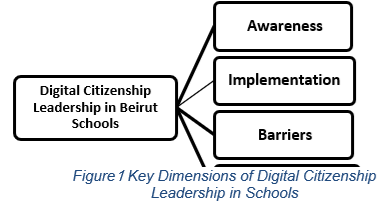
Six school principals, 3 from public schools and 3 from private schools in Beirut, participated in semi-structured virtual interviews (30–45 minutes each via Microsoft Teams). As illustrated in Figure 1, the study categorizes findings into four interrelated dimensions.
4.2.1 Awareness and Understanding of Digital Citizenship
Across both public and private schools, principals acknowledged the growing relevance of digital behavior in education. However, their understanding of “digital citizenship” was fragmented and often superficial. Many equated the term with polite online behavior, safe device usage, or social media manners. There was little mention of broader and more complex aspects like students’ digital rights, legal responsibilities, or media literacy. This conceptual ambiguity was especially pronounced among public school principals, who tended to express uncertainty or partial recognition of the term. In contrast, private school leaders appeared more confident and tied the concept to values like ethics and responsibility. The findings echo the survey data, where only a small fraction of participants reported full familiarity with the term. This confusion at the conceptual level limits how school leaders can meaningfully engage with digital citizenship in terms of curriculum development, staff training, or policy implementation. Without a shared, comprehensive understanding, efforts risk remaining fragmented and reactionary.
“I’ve heard the term once or twice, but I’m not sure what it includes. Is it about using devices safely?” — Principal C, Public School
“For us, it mostly means teaching students not to post harmful things online and to be respectful.” — Principal B, Private School
4.2.2 Practices of Implementation — Uneven and Event-Driven
While some private schools had launched structured programs around digital safety and awareness, such as theme weeks or integrated classroom discussions, many public schools relied on reactionary measures, often triggered by incidents like cyberbullying. This disparity in implementation reflects broader systemic gaps between the two sectors. Even in schools that had some activities in place, efforts were typically driven by individual enthusiasm rather than strategic, school-wide planning. Few had embedded digital citizenship meaningfully into the formal curriculum. These observations align with the survey results, where certain areas like digital literacy had moderate coverage, but others, such as media literacy, cybersecurity, or digital commerce, remained notably weak. The lack of continuity and coordination makes school initiatives fragile, especially when they depend on specific staff members. A clear framework, embedded in curriculum scope and sequence, is necessary for digital citizenship education to be sustainable and impactful.
“We run a digital awareness week every semester, involving students and parents. We also teach about fake news in our media class.” — Principal A, Private School
“We had a session about cyberbullying last year, but it wasn’t regular. It happened after a case in Grade 8.” — Principal E, Public School
4.2.3 Challenges and Barriers
Despite the recognition of digital citizenship as a growing concern, principals across the board highlighted major challenges preventing its effective implementation. A widespread lack of training, limited access to national guidance, and overwhelming curriculum demands made it difficult for schools to prioritize digital citizenship. Many principals, especially in public schools, had received no training whatsoever on digital topics and felt unprepared to lead or support staff in this area. The absence of official frameworks left them relying on intuition or ad hoc measures. Teachers were often reluctant or too overburdened to take on additional responsibilities, particularly in systems already dominated by exam preparation and overloaded schedules. Moreover, protection and well-being measures—such as managing screen time or supporting students with online stress and anxiety—were found to be inconsistently addressed or not addressed at all. This reflects the low implementation scores seen in the survey’s protection domain. Even with strong intentions, principals lacked the tools, training, and time to turn awareness into structured school-wide action.
“I’ve never had training on digital topics. I just guide teachers based on what seems right.” — Principal D, Public School
“It would help to have guidelines from the Ministry or some external support. We’re doing our best, but it’s scattered.” — Principal F, Private School
“Teachers feel overwhelmed. If I don’t make it easy and ready for them, they won’t do it.” — Principal B, Private School
“Our curriculum is already full. Where can we fit this?” — Principal C, Public School
4.2.4 Leadership Roles and Institutional Realities
Principals expressed a clear sense of responsibility for promoting digital citizenship in their schools, yet their ability to act varied significantly based on institutional contexts. Private school leaders tended to adopt more proactive stances, seeing themselves as change agents who could initiate new programs and empower staff. In contrast, public school principals described a more constrained reality, where they needed administrative directives or ministry-issued circulars before taking any new initiatives. The interviews revealed that very few principals, regardless of sector, had systems in place to monitor digital behavior, assess progress, or collect feedback from students and staff. This gap between leadership intent and institutional capacity highlights the need for stronger support systems—policy frameworks, resource allocations, and feedback mechanisms—that enable school leaders to move from aspiration to implementation.
“As the school leader, I believe it’s my responsibility to ensure ethical digital use. But I also need tools and support.” — Principal A, Private School
“I can encourage staff, but I can’t impose anything new without a circular from the administration.” — Principal E, Public School
Throughout the interviews, principals consistently voiced concerns about their students’ digital habits—from misinformation and distraction to screen addiction and mental health risks. Yet this widespread awareness has not translated into systematic action. The challenges they face—conceptual ambiguity, curriculum overload, limited authority, and lack of resources—make it difficult to transform concern into cohesive school-wide strategies. The findings underscore a central tension: while the need for digital citizenship education is urgent, the systems to support it remain underdeveloped and unevenly applied.
“Kids are growing up online. If we don’t step in, they’ll learn from the wrong sources.” — Principal F, Private School
The following concept map (Figure 2) summarizes the major themes and sub-themes derived from the semi-structured interviews, including awareness, practices, challenges, and leadership roles across public and private schools.
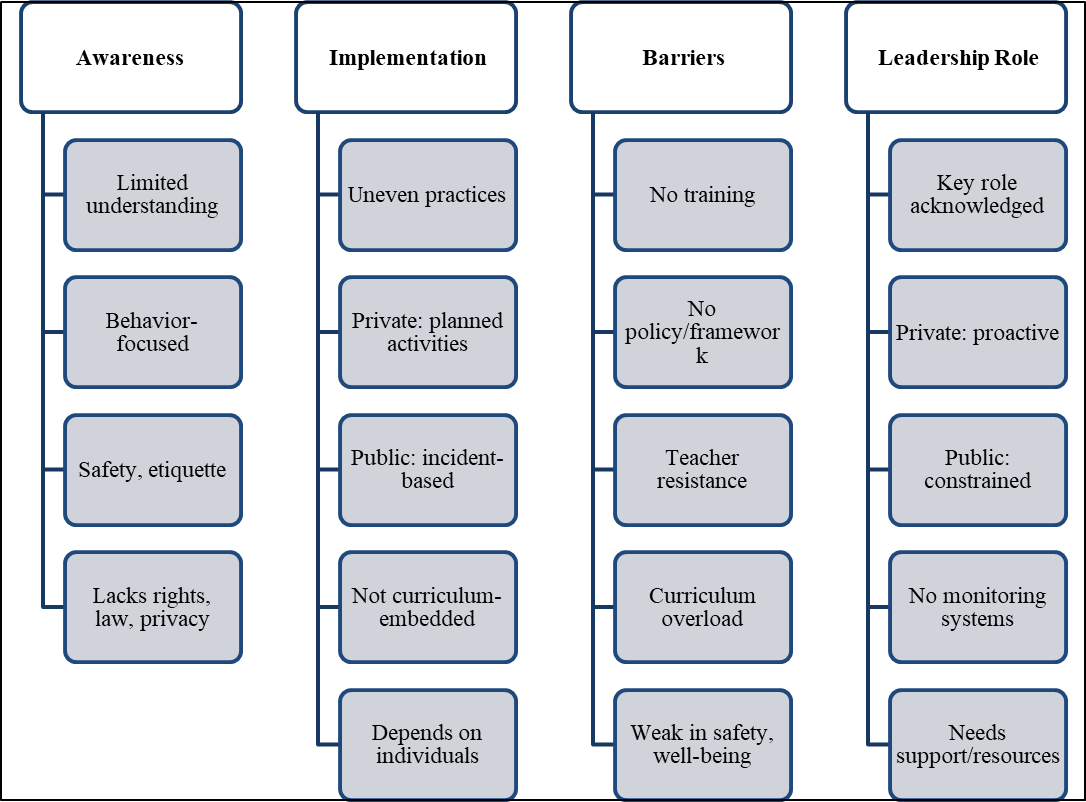
Figure 1 . Key Themes in School Leadership for Digital Citizenship Implementation
5. Discussion of Results20
The findings of this study reveal a significant gap in school principals’ understanding of digital citizenship in Lebanese schools, particularly in the public sector. Quantitative data indicate that only 21.4% of surveyed principals were familiar with the term “digital citizenship,” while 45.2% selected “maybe” and 33.3% responded “no,” suggesting that many educational leaders operate without a clear conceptual foundation. These results were corroborated by qualitative interviews, where most principals equated digital citizenship with basic digital safety or internet usage rules, omitting references to broader concepts such as media literacy, ethical use, digital law, or digital rights. This aligns with Tóth et al. (2022), who found that digital natives often possess technical skills but lack critical digital literacy, and supports Hollandsworth et al. (2011) who argued that without deep understanding from leadership, schools fail to promote digital citizenship effectively. From a theoretical standpoint, this deficiency limits the operationalization of the Council of Europe’s (2020) DCE framework and Ribble’s (2012) elements of digital citizenship within school settings.
Regarding current implementation practices, the research indicates that digital citizenship initiatives in Lebanese schools are fragmented and inconsistent. Survey results show moderate engagement in areas such as cyberbullying prevention and digital communication, particularly in private institutions. However, implementation in domains like digital law, digital commerce, and cybersecurity was weak, with wide standard deviations indicating irregular adoption. For instance, only 23.8% of principals reported frequently educating staff and students on data privacy. Similarly, the incorporation of digital safety into the curriculum showed low engagement, with only 21.4% “frequently” collaborating with teachers to do so. These findings are reinforced by the qualitative interviews, where private school leaders described structured programs and teacher collaboration, while public school leaders largely relied on reactive measures to address incidents. The absence of formal policies and insufficient training rendered most public school initiatives unsystematic and informal. This confirms the literature by Orth and Chen (2013), who found that digital citizenship is often reduced to isolated efforts in schools lacking structural frameworks. Moreover, this disconnect contradicts best practices outlined in the literature, which emphasize the integration of digital citizenship across subjects and the establishment of explicit behavioral codes (Baydar, 2022; Hasanah & Yusoff, 2024).
The challenges faced by school principals in promoting digital citizenship emerged as a central theme across both data sets. Interviewed principals consistently reported limited access to professional development, unclear national guidelines, and a lack of resources, echoing the survey’s high standard deviations and low overall scores in protective domains such as digital well-being and data privacy. These barriers were particularly acute in public schools, where principals described bureaucratic constraints and a lack of curricular flexibility. This aligns with the challenges reported in the literature, particularly by Ghamrawi (2018) and Johari et al. (2023), who emphasized that Lebanese school leaders often feel unprepared to address the ethical and pedagogical demands of digital learning. The theoretical framework also underscores these constraints: both Ribble’s and the Council of Europe’s models demand structured, proactive engagement from leadership—something made difficult by systemic limitations and policy fragmentation in the Lebanese public education system (Save the Children, 2021; Moyle, 2014).
Finally, the findings shed light on the pivotal yet underutilized role of school leadership in shaping digital citizenship practices. While most principals acknowledged their responsibility in modeling and promoting ethical digital behavior, few described consistent systems for teacher training, student monitoring, or policy implementation. Private school leaders demonstrated more initiative in coordinating teacher efforts and initiating awareness campaigns, while public school leaders expressed frustration with the lack of autonomy and clarity from governing bodies. These findings align with Hallinger’s instructional leadership model (2005), which emphasizes the need for strategic planning and distributed leadership in promoting educational innovation. Without systemic support and clear role definitions, principals struggle to fulfill their potential as change agents. This is further supported by Vicente and Meirinhos (2023), who stress that leadership effectiveness in digital citizenship is linked not only to knowledge but also to institutional empowerment and policy coherence.
In conclusion, the study highlights a disconnect between the theoretical importance of digital citizenship in today’s education and its practical implementation in Lebanese schools. It points to the urgent need for structured training, policy development, and leadership empowerment to embed digital citizenship meaningfully into the fabric of school culture. Without addressing these foundational gaps, schools, especially in the public sector, risk leaving students underprepared to navigate the digital world ethically, critically, and safely.
6. Conclusion, Recommendations, and Limitations
6.1 Conclusion
This study set out to explore the role of school leadership in promoting digital citizenship in Lebanese public and private schools, particularly in the context of Beirut. The findings reveal a notable gap between the recognized importance of digital citizenship and its practical implementation at the school level. While most principals acknowledged the urgency of equipping students to navigate digital spaces ethically and safely, their actual knowledge of the term “digital citizenship” was limited. The majority either lacked familiarity or held narrow, behavior-based understandings, largely confined to online etiquette and device safety.
Quantitative and qualitative findings collectively point to a pattern of fragmented, ad hoc implementation practices. In private schools, initiatives were more structured and proactive, often supported by school-wide activities or embedded within specific subjects. In contrast, public school approaches were largely reactive, triggered by incidents such as cyberbullying, and rarely supported by institutional frameworks. Across both sectors, there was a lack of formal training, policy guidance, and monitoring mechanisms—factors that significantly hinder the systematic promotion of digital citizenship.
Leadership emerged as a potential driver of change but was limited by systemic constraints. Private school principals exercised more agency, often initiating and supporting digital citizenship activities. Public school leaders, on the other hand, cited rigid governance structures, policy vacuums, and overwhelming workloads as key barriers to action. These findings reinforce the need to support school leaders in their critical role as facilitators and enablers of digital transformation within educational institutions.
6.2 Recommendations
To promote digital citizenship effectively in Lebanese schools, multi-level, coordinated action is needed across ministries, schools, training institutions, and partners. First, at the policy level, the Ministry of Education should take the lead in developing a national digital citizenship framework that aligns with international models such as Ribble’s nine elements and the Council of Europe’s Digital Citizenship Education (DCE) framework. This framework should offer a clear and comprehensive definition of digital citizenship while also establishing practical guidelines to support implementation across both public and private educational institutions. Furthermore, it is recommended that digital citizenship be integrated into school accreditation standards as a core quality indicator, which would drive systemic accountability and encourage schools to embed digital citizenship into their culture, curricula, and improvement plans.
At the school leadership level, principals should actively promote a shared vision for digital citizenship within their schools. This entails aligning digital ethics with the school’s mission, forming dedicated committees, engaging families in the process, and assigning staff champions to maintain momentum. Effective implementation also depends on integrating digital citizenship across all subject areas rather than confining it to ICT classes. Through interdisciplinary approaches such as scenario-based learning, media analysis, and digital storytelling, schools can nurture a deeper understanding of responsible digital behavior among students. To ensure sustainability, schools should establish monitoring and feedback systems that track digital behavior trends, gather input from students and staff, and evaluate the effectiveness of digital citizenship initiatives over time.
In terms of professional development, it is critical that training bodies offer tailored leadership programs for school principals, particularly those in public schools, focusing on legal and ethical dimensions of digital leadership, data privacy, and critical media literacy. In addition, fostering peer learning and communities of practice among school leaders will enable them to exchange best practices, troubleshoot challenges collectively, and develop a support network to drive innovation in digital citizenship education.
Finally, international organizations and NGOs have a valuable role to play, especially in supporting vulnerable and under-resourced schools. Agencies such as UNICEF, Save the Children, and local NGOs should invest in capacity building by developing contextualized toolkits, funding pilot projects, and delivering practical training for school teams. In the context of Lebanon’s recurring crises, there is also a strategic opportunity to embed digital citizenship into emergency response and recovery programs, ensuring that digital safety, ethics, and wellbeing are treated as essential components of resilience and educational continuity.
6.3 Limitations of the Study
While this study offers valuable insights into the current state of digital citizenship in Lebanese schools, several limitations should be acknowledged. First, the sample size, though representative of both public and private schools in Beirut, was limited to 42 survey respondents and 6 interviewees, which may constrain the generalizability of findings to other regions or educational contexts in Lebanon. Future research should expand to include rural areas and diverse school types.
Second, the study relied on self-reported data, which may be influenced by social desirability bias, particularly in reporting leadership practices or challenges. Although triangulation between survey and interview data helped mitigate this, observational data or student perspectives would offer a more comprehensive picture.
Third, the rapidly evolving nature of digital technologies presents a moving target for research. The study captures a specific moment in time, and the findings may need to be revisited as new platforms, risks, and educational reforms emerge.
Finally, while the study adopted a strong theoretical framework (Ribble, Council of Europe, and leadership theories), it did not engage with broader sociocultural factors such as political influences, parental attitudes, or gender norms that may shape digital behavior and policy adoption. These remain critical areas for future inquiry.
References
- Alenezi, N., & Alfaleh, M. (2024). Enhancing digital citizenship education in Saudi Arabian elementary schools: Designing effective activities for curriculum integration. Frontiers in Education, 9. https://doi.org/10.3389/feduc.2024.1494487
- Al-Ghamdi, H., & Al-Areefi, M. (2023). Empowering educators in digital citizenship: Strategies for effective implementation. International Journal of Educational Leadership and Management, 11(2), 145-162. https://hipatiapress.com/hpjournals/index.php/ijelm/article/view/15516/4882
- American University. (2020). The importance of promoting digital citizenship for students. Retrieved from https://soeonline.american.edu/blog/digital-citizenship-for-students/
- Baydar, F. (2022). The role of educational leaders in the development of students’ technology use and digital citizenship. Malaysian Online Journal of Educational Technology, 10(1), 32-46. https://eric.ed.gov/?id=EJ1333621
- Council of Europe. (2020). Digital citizenship education: 10 domains of digital citizenship education. Retrieved from https://edoc.coe.int/en/internet/7643-digital-citizenship-education-project-dce-10-domains.html
- Dennen, V. P., He, D., & Adolfson, D. (2023). College students, networked knowledge activities, and digital competence. Online Learning. https://doi.org/10.24059/olj.v27i4.4046
- Fonseca, M., & Bettencourt, T. (2020). Building an inclusive digital citizenship framework: Challenges and opportunities for school leadership. Journal of Educational Technology & Society, 23(4), 1-12.
- Ghamrawi, N. A. R. (2018). Schooling for digital citizens. Open Journal of Leadership, 7, 209-224. https://doi.org/10.4236/ojl.2018.73012
- Hallinger, P. (2005). Instructional Leadership and the School Principal: A Passing Fancy That Refuses to Fade Away. Leadership and Policy in Schools, 4, 221-239
http://dx.doi.org/10.1080/15700760500244793 - Hasanah, E., & Mohd Yusoff, M. Z. (2024). Unlocking the digital realm: Exploring perceptions and practices in educational leadership. Tarbawi, 10(2), 251–260. https://doi.org/10.32678/tarbawi.v10i02.10030
- Hollandsworth, R., Dowdy, L., & Donovan, J. (2011). Digital citizenship in K-12: It takes a village. TechTrends, 55(4), 37–47.
- İyici, A., & Kutoğlu Kuruç, Ü. (2023). Digital natives’ academician-student relationships. Journal of Educational Technology Research. https://doi.org/10.5824/ajite.2023.04.004.x
- James, C., Davis, K., Flores, A., Francis, J. M., Pettingill, L., & Rundle, M. (2010). Young people, ethics, and the new digital media: A synthesis from the GoodPlay Project. The MIT Press.
- Johari, A. M. Y., Ghani, M. F. A., Radzi, N. M., Ayub, A., & Ghani, M. A. (2023). Challenges of school leaders’ digital leadership: An initial study in Bintulu, Sarawak, Malaysia. Jurnal Akuntabilitas Manajemen Pendidikan. https://doi.org/10.21831/jamp.v11i1.58443
- Karasová, E., & Doty, B. W. (2024). Adapting education for digital natives: Understanding the needs of students of humanities and technical disciplines. Deleted Journal, 311–322. https://doi.org/10.34135/mmidentity-2024-32
- Monteiro, C., Pereira, L., & Nunes, P. (2022). Social inequalities in digital learning: Lessons from the COVID-19 pandemic. Education and Information Technologies, 27, 775-793.
- Monteiro, A., Teixeira, E. G., Leite, C., Barros, R. Q. de, Fernandes, P., & Soares, F. (2022). Education towards literacy and digital citizenship of young people: Beyond being online. Revista Conhecimento Online, 2, 89–107. https://doi.org/10.25112/rco.v2.2991
- Moyle, K. (2014). Technologies, democracy and digital citizenship: Examining Australian policy intersections and the implications for school leadership. Education Sciences, 4(1), 36–51. https://doi.org/10.3390/EDUCSCI4010036
- Nearpod. (2023). Why is digital citizenship important for 21st-century students? Retrieved from https://nearpod.com/blog/importance-digital-citizenship/
- Orth, R., & Chen, Y. (2013). Digital citizenship and school authority: A misaligned relationship. Educational Leadership Journal, 71(5), 56–62.
- PowerSchool. (2021). A principals’ guide to promoting digital citizenship and student data security. Retrieved from https://www.powerschool.com/blog/a-principals-guide-to-promoting-digital-citizenship-and-student-data-security/
- Prensky, M. (2001). Digital natives, digital immigrants. On the Horizon, 9(5), 1-6.
- Ribble, M. (2012). Digital citizenship in schools: Nine elements all students should know (2nd ed.). International Society for Technology in Education.
- Rice, M., & Dunn, L. (2023). Rethinking digital citizenship: Inclusion and equity in the digital age. Journal of Digital Learning in Teacher Education, 39(2), 123-134.
- Save the Children. (2021). Rights curtailed: Impact of COVID-19 and economic crisis on child rights in Lebanon.
- Senos, J., Pereira, L., & Nunes, P. (2024). Digital citizenship education: Fostering critical awareness and responsible online behavior. Computers & Education, 182, 104496.
- Sindhu, C. M., & Binoy, K. (2017). Do digital natives aware on digital technology. International Journal of Educational Technology, 4(24). https://doi.org/10.21922/SRJHSEL.V4I24.10324
- Tóth, C., Fábián, G., & Tóvölgyi, S. (2022). Digital competence and learning preferences of Generation Z students. Journal of Educational Computing Research, 60(3), 731-754.
- Vallès-Peris, N., & Domènech, M. (2024). Digital citizenship at school: Democracy, pragmatism and RRI. Technology and Society. https://doi.org/10.1016/j.techsoc.2023.102448
- Vicente, Fernanda & Meirinhos, Manuel. (2023). Digital Citizenship: The Cyber-Plagiarism Dilemma in Compulsory School. 10.1007/978-3-031-47281-7_25.
- World Bank. (2021). Learning and earning losses: The educational and economic costs of Lebanon’s public school crisis. Retrieved from https://documents.worldbank.org/en/publication/documents-reports/documentdetail/123456789/learning-and-earning-losses-the-educational-and-economic-costs-of-lebanons-public-school-crisis
 English
  Arabic