

اللعب التخيلي كأداة لتنمية الإبداع لدى الأطفال: دراسة علمية لتقييم برنامج تدريبي مبتكر
نويجي أحمد غميض1
1 محاضر، قسم التربية وعلم النفس، كلية الآداب، جامعة المرقب، ليبيا. البريد الالكتروني: naghomaid@elmergib.ly
Imaginary Play as a Tool for Developing Creativity in Children: A Scientific Study to Evaluate an Innovative Training Program
Nawaiji Ahmed Ghumaid¹
¹ Lecturer, Department of Education and Psychology, Faculty of Arts, Elmergib University, Libya.
Email: naghomaid@elmergib.ly
DOI: https://doi.org/10.53796/hnsj75/47
المعرف العلمي العربي للأبحاث: https://arsri.org/10000/75/47
المجلد (7) العدد (5). الصفحات: 845 - 856
تاريخ الاستقبال: 2026-04-15 | تاريخ القبول: 2026-04-22 | تاريخ النشر: 2026-05-01
المستخلص: هدفت الدراسة إلى تقويم أثر برنامج تدريبي قائم على اللعب التخيلي في تنمية الإبداع لدى الأطفال في مرحلة الطفولة المبكرة، وذلك في ضوء الحاجة إلى توظيف أنشطة تربوية حديثة تتجاوز الأساليب التقليدية القائمة على التلقين، وتمنح الطفل فرصة للتعبير الحر والابتكار. اعتمدت الدراسة المنهج شبه التجريبي بتصميم المجموعتين: التجريبية والضابطة، مع القياسين القبلي والبعدي. وتكوّنت العينة من أطفال تتراوح أعمارهم بين 5 و7 سنوات، حيث خضعت المجموعة التجريبية لبرنامج تدريبي مكوّن من عشر جلسات قائمة على أنشطة اللعب التخيلي، مثل تمثيل الأدوار، ابتكار القصص، تصميم مواقف خيالية، والعصف الذهني أثناء اللعب، بينما واصلت المجموعة الضابطة ممارسة الأنشطة التقليدية المعتادة. واستخدمت الدراسة مقياسًا للإبداع يقيس أبعاد الأصالة والطلاقة والمرونة والتفاصيل. أظهرت النتائج عدم وجود فروق دالة إحصائيًا بين المجموعتين في القياس القبلي، مما يدل على تكافؤهما قبل تطبيق البرنامج، في حين كشفت النتائج البعدية عن وجود فروق ذات دلالة إحصائية لصالح المجموعة التجريبية، حيث بلغ متوسطها البعدي 45.90 مقابل 33.65 للمجموعة الضابطة، مع حجم أثر كبير جدًا بلغ 2.95. كما أظهرت نتائج القياس القبلي والبعدي للمجموعة التجريبية تحسنًا واضحًا في مستوى الإبداع بعد تطبيق البرنامج. وتوصلت الدراسة إلى أن اللعب التخيلي يمثل مدخلًا تربويًا فعالًا لتنمية القدرات الإبداعية لدى الأطفال، وأوصت بإدماجه في برامج رياض الأطفال وتدريب المعلمين على استخدامه ضمن الأنشطة الصفية.
الكلمات المفتاحية: اللعب التخيلي، الإبداع، الطفولة المبكرة، البرنامج التدريبي، التفكير الابتكاري.
Abstract: This study aimed to evaluate the effect of a training program based on imaginary play in developing creativity among children in early childhood. The study was conducted in light of the need to employ modern educational activities that move beyond traditional methods based on rote learning and provide children with opportunities for free expression and innovation. The study adopted the quasi-experimental approach using a two-group design: an experimental group and a control group, with pre- and post-measurements. The sample consisted of children aged between 5 and 7 years. The experimental group participated in a training program composed of ten sessions based on imaginary play activities, such as role-playing, story creation, designing imaginary situations, and brainstorming during play, while the control group continued practicing regular traditional activities. The study used a creativity scale that measured the dimensions of originality, fluency, flexibility, and elaboration. The results showed no statistically significant differences between the two groups in the pre-measurement, indicating their equivalence before the implementation of the program. However, the post-measurement results revealed statistically significant differences in favor of the experimental group, whose post-test mean score reached 45.90 compared with 33.65 for the control group, with a very large effect size of 2.95. The pre- and post-measurement results of the experimental group also showed a clear improvement in the level of creativity after the application of the program. The study concluded that imaginary play represents an effective educational approach for developing children’s creative abilities and recommended integrating it into kindergarten programs and training teachers to use it in classroom activities.
Keywords: Imaginary play, creativity, early childhood, training program, innovative thinking.
المقدمة:
يتمثل الإبداع من أهم القدرات العقلية التي تميز الإنسان عن غيره من الكائنات، وهو الركيزة الأساسية لكل تقدم حضاري وتطور علمي. وقد حظي موضوع الإبداع باهتمام واسع من الباحثين والمربين في العقود الأخيرة، لما له من أثر بالغ في تنمية القدرات العقلية وتطوير مهارات التفكير العليا لدى الأفراد (أحمد، 2021). وتُجمع الدراسات التربوية والنفسية على أن السنوات الأولى من حياة الطفل تمثل المرحلة الذهبية لتشكيل الميول والقدرات العقلية، إذ يتسم عقل الطفل بالمرونة والانفتاح على الخبرات الجديدة، الأمر الذي يستوجب توفير بيئة محفزة للإبداع والتفكير الابتكاري (Torrance, 2019).
في هذا الإطار، يُعد اللعب التخيلي من أهم وأبرز الأنشطة التي تدعم النمو العقلي والإبداعي للأطفال، حيث يمنحهم فرصة لتوظيف خيالاتهم في ابتكار مواقف جديدة وأدوار متخيلة، مما يسهم في تنمية مهارات الأصالة والمرونة والطلاقة الفكرية. وقد أكدت العديد من النظريات النفسية، مثل نظرية بياجيه في النمو المعرفي، على أن اللعب يُعد وسيلة أساسية لاكتساب الخبرات وتطوير القدرات الإبداعية من خلال المواقف التخيليّة التي يمر بها الطفل (Piaget, 1962؛ عبد الله، 2020).
ورغم الأهمية التي يحظى بها اللعب التخيلي في تنمية الإبداع، إلا أن معظم البيئات التعليمية العربية لا تزال تركز على التلقين والحفظ أكثر من التركيز على الأنشطة التي تتيح للطفل حرية التعبير والإبداع. وتشير دراسات حديثة إلى أن استخدام البرامج التدريبية القائمة على اللعب التخيلي في المؤسسات التعليمية لا يزال محدوداً، على الرغم من فعاليته المثبتة في تعزيز مهارات التفكير الابتكاري والإبداعي (محمد، 2022؛ Russ, 2018). ويُضاف إلى ذلك أن المناهج التقليدية غالباً ما تُهمل إدماج أنشطة لعب حر وتخيلي، مما يحد من الفرص المتاحة للأطفال لتنمية قدراتهم العقلية بشكل متكامل.
انطلاقاً من هذه المعطيات، جاءت فكرة هذا البحث لتقديم برنامج تدريبي مبتكر قائم على اللعب التخيلي يهدف إلى تنمية الإبداع لدى الأطفال، من خلال تصميم وتنفيذ مجموعة من الجلسات التدريبية التي تتيح للأطفال حرية التخيّل والمشاركة في مواقف إبداعية تحفّز عقولهم. وسيتم تقييم أثر هذا البرنامج من خلال مقارنة مستوى الإبداع لدى أطفال المجموعة التجريبية التي ستخضع للتدريب مع أطفال المجموعة الضابطة التي ستستمر في ممارسة الأنشطة التقليدية.
وتكتسب هذه الدراسة أهميتها من كونها تسعى إلى سد فجوة بحثية واضحة في مجال توظيف اللعب التخيلي لتنمية الإبداع في البيئة التعليمية العربية، إضافة إلى تقديم إطار عملي يمكن للمربين والمعلمين الاستفادة منه في تطوير برامج وأنشطة تعليمية تواكب متطلبات القرن الحادي والعشرين، التي تقوم على الإبداع والابتكار كركائز أساسية للتعلم.
الفصل الأول: الإطار العام للبحث
المبحث الأول: مشكلة البحث
يُشكل الإبداع أحد الركائز الأساسية في بناء شخصية الطفل وتطوير قدراته الذهنية بما يؤهله للتكيف مع متغيرات الحياة المستقبلية. وعلى الرغم من هذا الاهتمام النظري، تشير الممارسات التربوية الواقعية إلى قصور في إتاحة الفرص الكافية للأطفال لممارسة أنشطة تعزز الإبداع، حيث يغلب على المناهج الدراسية الطابع التلقيني الذي يركز على الحفظ والاستظهار أكثر من التركيز على تنمية التفكير الحر والابتكاري (عبد الله، 2020؛ أحمد، 2021).
وتظهر العديد من الدراسات أن غياب الأنشطة التخيليّة يؤدي إلى انخفاض مستوى الإبداع لدى الأطفال، في حين أن إدخال برامج تدريبية تعتمد على اللعب التخيلي يسهم بشكل كبير في تطوير القدرات الابتكارية (Russ, 2018). وفي ضوء هذا القصور، تبرز الحاجة إلى دراسة تجريبية لقياس أثر برنامج تدريبي قائم على اللعب التخيلي في تنمية الإبداع لدى الأطفال في مرحلة الطفولة المبكرة.
انطلاقاً مما سبق، تتحدد مشكلة البحث في السؤال الرئيس الآتي:
ما أثر برنامج تدريبي قائم على اللعب التخيلي في تنمية الإبداع لدى الأطفال؟
وينبثق عنه الأسئلة الفرعية التالية:
ما مستوى الإبداع لدى الأطفال قبل تطبيق البرنامج التدريبي؟
ما مستوى الإبداع لدى الأطفال بعد تطبيق البرنامج التدريبي؟
هل توجد فروق ذات دلالة إحصائية بين متوسطات درجات أطفال المجموعة التجريبية والضابطة في مستوى الإبداع بعد تطبيق البرنامج لصالح المجموعة التجريبية؟
المبحث الثاني: أهداف البحث
يسعى هذا البحث إلى تحقيق الأهداف التالية:
بناء برنامج تدريبي قائم على اللعب التخيلي لتنمية الإبداع لدى الأطفال.
التعرف على مستوى الإبداع لدى الأطفال قبل وبعد تطبيق البرنامج.
قياس أثر البرنامج التدريبي على تنمية الإبداع لدى الأطفال مقارنة بالأنشطة التقليدية.
المبحث الثالث: أهمية البحث
1. الأهمية النظرية
إثراء الأدبيات التربوية والنفسية المتعلقة بدور اللعب التخيلي في تنمية الإبداع.
تقديم أساس علمي لدراسة العلاقة بين الأنشطة التخيليّة ومهارات التفكير الابتكاري لدى الأطفال.
2. الأهمية التطبيقية
مساعدة المربين والمعلمين على تصميم برامج تدريبية قائمة على اللعب التخيلي.
تقديم نموذج عملي يمكن تطبيقه في المؤسسات التعليمية ورياض الأطفال لتحفيز الإبداع.
المبحث الرابع: فروض البحث
1ـ لا توجد فروق ذات دلالة إحصائية بين متوسط درجات الإبداع لدى أطفال المجموعة الضابطة في القياسين القبلي والبعدي.
2 ـ توجد فروق ذات دلالة إحصائية بين متوسط درجات الإبداع لدى أطفال المجموعة التجريبية قبل وبعد تطبيق البرنامج لصالح القياس البعدي.
3 ـ توجد فروق ذات دلالة إحصائية بين متوسط درجات الإبداع لدى أطفال المجموعتين (التجريبية والضابطة) بعد التطبيق لصالح التجريبية.
المبحث الخامس: حدود البحث
1 ـ الحدود البشرية: أطفال مرحلة رياض الأطفال أو الصفوف الأولى (عمر 5 – 7 سنوات).
2 ـ الحدود المكانية: إحدى المدارس أو رياض الأطفال في مدينة الخمس.
3 ـ الحدود الزمانية: السنة الدراسية للعام 2024/2025..
4 ـ الحدود الموضوعية: برنامج تدريبي قائم على اللعب التخيلي لتنمية الإبداع لدى الأطفال.
المبحث السادس: المصطلحات الإجرائية
- اللعب التخيلي: النشاط الحر الذي يقوم به الطفل معتمداً على خياله في ابتكار مواقف وأحداث جديدة غير موجودة في الواقع، ويُقاس من خلال ممارسته داخل البرنامج التدريبي المصمم لهذا البحث.
- الإبداع: القدرة على إنتاج أفكار وحلول جديدة تتسم بالأصالة والمرونة والطلاقة، ويُقاس من خلال مقياس الإبداع المستخدم في هذا البحث.
الفصل الثاني: الإطار النظري والدراسات السابقة
المبحث الأول: مفهوم اللعب التخيلي وأهميته
يُعد اللعب من الأنشطة الأساسية في حياة الطفل، حيث لا يقتصر دوره على الترفيه والتسلية، بل يمثل وسيلة تربوية ونفسية أساسية لنموه العقلي والاجتماعي والانفعالي. ويحتل اللعب التخيلي مكانة خاصة ضمن أنواع اللعب، إذ يقوم الطفل فيه بخلق مواقف وأحداث غير موجودة في الواقع، مستنداً إلى قدرته على استخدام الخيال في ابتكار مواقف وأدوار جديدة (عبد الله، 2020).
تعريف اللعب التخيلي:
يُعرف اللعب التخيلي بأنه النشاط الذي يعبر فيه الطفل عن أفكاره ومشاعره عبر مواقف وأدوار يبتكرها، مستخدماً قدراته العقلية في استحضار صور ذهنية لأشياء أو أحداث غير حاضرة في الواقع (Russ, 2018). بينما يرى (Piaget, 1962) أن اللعب التخيلي هو انتقال الطفل من اللعب الوظيفي القائم على التكرار إلى اللعب الرمزي الذي يعتمد على تمثيل الواقع بطريقة مبتكرة.
أهمية اللعب التخيلي:
- تنمية القدرات الإبداعية: إذ يتيح للطفل التفكير الحر، وتوليد أفكار جديدة، وحل المشكلات بطرق غير مألوفة (Torrance, 2019).
- تطوير اللغة والتواصل: حيث يساعد الأطفال على توسيع مفرداتهم وتوظيف اللغة في مواقف اجتماعية تخيلية (محمد، 2022).
- النمو الاجتماعي والانفعالي: من خلال التفاعل مع الآخرين في مواقف لعب تخيلية، مما يعزز مهارات التعاون والتفاوض وضبط الانفعال.
تشير الدراسات إلى أن الأطفال الذين يشاركون بانتظام في أنشطة اللعب التخيلي يظهرون مستويات أعلى من الأصالة والمرونة الفكرية مقارنة بغيرهم (Russ, 2018).
المبحث الثاني: الإبداع وأبعاده
الإبداع هو القدرة على إنتاج أفكار جديدة وأصيلة تتسم بالمرونة والطلاقة وتُعتبر ذات قيمة اجتماعية أو علمية (Guilford, 1967). وقد عرّفه تورانس بأنه “عملية الإحساس بالمشكلات أو الثغرات، وتحديدها، والبحث عن حلول جديدة وغير مألوفة، وتجريب هذه الحلول وتقييمها” (Torrance, 2019).
أبعاد الإبداع الأساسية:
- الأصالة: إنتاج أفكار غير مألوفة ونادرة.
- الطلاقة: القدرة على توليد أكبر عدد ممكن من الأفكار.
- المرونة: التنوع في التفكير والانتقال بين أنماط مختلفة من الحلول.
- التفاصيل: القدرة على إضافة تفاصيل ثرية للأفكار المطروحة.
وقد أكدت العديد من البحوث أن الإبداع لا يقتصر على الفطرة بل يمكن تنميته من خلال التدريبات والأنشطة الموجهة، مثل الأنشطة التخيليّة والبرامج التدريبية القائمة على المحاكاة واللعب الرمزي (Runco & Acar, 2012).
المبحث الثالث: العلاقة بين اللعب التخيلي والإبداع
تربط الدراسات النفسية والتربوية بين اللعب التخيلي والإبداع من حيث كونهما عمليتين متداخلتين، حيث يُمثل اللعب التخيلي بيئة خصبة لتوليد الأفكار الجديدة والمبتكرة، وهو ما يشكل جوهر الإبداع. فقد توصلت دراسة (Russ, 2018) إلى أن الأطفال الذين يمارسون اللعب التخيلي بانتظام يحققون درجات مرتفعة في اختبارات الإبداع، خاصة في بعدي الأصالة والطلاقة.
كما أوضحت نظرية فايغوتسكي أن اللعب التخيلي يتيح للطفل العمل ضمن “منطقة النمو القريبة”، حيث يواجه تحديات تدفعه إلى تطوير تفكيره وحل المشكلات بطرق إبداعية (Vygotsky, 1978). وأكدت الدراسات الحديثة على أن الأنشطة القائمة على اللعب التخيلي تحفز الدماغ على تكوين شبكات معرفية جديدة، ما ينعكس على زيادة القدرة الإبداعية (Sawyer, 2017).
المبحث الرابع: الدراسات السابقة
أولاً: الدراسات العربية:
دراسة محمد (2022): هدفت إلى التعرف على أثر الأنشطة التخيليّة في تنمية التفكير الإبداعي لدى أطفال الروضة. أظهرت النتائج وجود فروق ذات دلالة إحصائية لصالح المجموعة التي شاركت في أنشطة اللعب التخيلي.
دراسة عبد الله (2020): تناولت العلاقة بين اللعب الرمزي والنمو العقلي لدى الأطفال، وأكدت أن الأطفال الذين يمارسون أنشطة لعب رمزي يظهرون مستويات أعلى في مهارات التفكير الابتكاري.
ثانياً: الدراسات الأجنبية:
Russ (2018): درست العلاقة بين اللعب التخيلي والإبداع لدى الأطفال، وأكدت أن المشاركة المستمرة في اللعب التخيلي تسهم في تحسين مهارات حل المشكلات والإبداع.
Sawyer (2017): ركزت على تأثير اللعب الإبداعي في تطوير القدرات المعرفية، وأشارت إلى أن دمج اللعب التخيلي في التعليم المبكر يحسن الأداء الأكاديمي ويعزز التفكير الابتكاري.
ثالثاً: تحليل الدراسات السابقة:
يتضح من استعراض الدراسات أن معظمها أجمع على وجود علاقة إيجابية بين اللعب التخيلي وتنمية الإبداع، غير أن القليل منها اهتم بتصميم برامج تدريبية منهجية لتطبيق هذه الأنشطة في بيئات تعليمية عربية، مما يبرز الفجوة البحثية التي يسعى هذا البحث لسدها.
أوجه الاتفاق والاختلاف بين الدراسات السابقة والدراسة الحالية
- الاتفاق: معظم الدراسات أجمعت على فعالية اللعب التخيلي في تعزيز الإبداع لدى الأطفال.
- الاختلاف: تميزت الدراسة الحالية بتصميم برنامج تدريبي مبتكر يراعي البيئة الثقافية العربية ويعتمد على أساليب حديثة في التحفيز والتقويم.
- الإضافة العلمية: تقديم إطار عملي يمكن تطبيقه في الروضات والمدارس لتطوير مهارات الإبداع بشكل منهجي.
الفصل الثالث: منهجية البحث وإجراءاته
أولاً: منهج البحث
اعتمدت هذه الدراسة على المنهج شبه التجريبي (Quasi-Experimental Design) باستخدام تصميم المجموعتين التجريبية والضابطة مع القياس القبلي والبعدي. ويعتبر هذا المنهج مناسبًا لدراسة أثر البرامج التدريبية في البيئة التعليمية، حيث يسمح بمقارنة الأداء بين المجموعة التي تتلقى البرنامج والمجموعة الضابطة التي تستمر في الأنشطة المعتادة (Creswell, 2018).
مزايا المنهج شبه التجريبي:
1 ـ القدرة على تقييم أثر البرنامج التدريبي بشكل عملي.
2 ـ التحكم في بعض المتغيرات الخارجية مثل العمر والمستوى الدراسي.
3 ـ ملاءمته للأبحاث التربوية الميدانية التي يصعب فيها التوزيع العشوائي الكامل.
ثانياً: تصميم البحث
تم استخدام التصميم التجريبي ذو المجموعتين والقياسين (قبلي وبعدي)، حيث تم قياس مستوى الإبداع لدى الأطفال قبل تطبيق البرنامج التدريبي وبعده، كما هو موضح في الجدول التالي:
الجدول 3-1: تصميم البحث
|
المجموعة |
القياس القبلي |
المعالجة التجريبية |
القياس البعدي |
|---|---|---|---|
|
تجريبية |
مقياس الإبداع |
برنامج اللعب التخيلي |
مقياس الإبداع |
|
ضابطة |
مقياس الإبداع |
الأنشطة التقليدية المعتادة |
مقياس الإبداع |
ثالثاً: مجتمع البحث وعينته
المجتمع: يتكون من أطفال المرحلة المبكرة (رياض الأطفال والصف الأول الابتدائي) في مدينة الخمس، وعددهم (120) طفلاً تقريبًا.
العينة: تم اختيار عينة قصدية مكونة من (30) طفلاً، موزعين عشوائيًا:
المجموعة التجريبية: 15 طفلًا
المجموعة الضابطة: 15 طفلًا
معايير الاختيار:
العمر من 5 – 7 سنوات.
القدرة على المشاركة في الأنشطة التخيليّة.
عدم وجود إعاقات ذهنية أو جسدية تحول دون المشاركة.
رابعاً: أدوات البحث
- مقياس الإبداع للأطفال
تم تعديل اختبار تورانس للتفكير الإبداعي (Torrance, 2019) ليتناسب مع الأطفال الصغار، ويقيس أربعة أبعاد: الأصالة، الطلاقة، المرونة، والتفاصيل.
خصائص المقياس:
عدد البنود: 20 بندًا
نوع البنود: أسئلة مفتوحة وأنشطة تخيلية
طريقة التصحيح: منح درجات من 0 – 5 لكل بعد
درجة المقياس الكلية: 100
2. الصدق والثبات
الصدق: تم عرض المقياس على لجنة من خبراء التربية وعلم النفس، وأكدوا صلاحية البنود لقياس الإبداع.
الثبات: أُجري اختبار تجريبي على عينة مماثلة (n=10)، وحُسب معامل كرونباخ
ألفا = 0.85، مما يشير إلى ثبات عالي للمقياس.
خامساً: البرنامج التدريبي القائم على اللعب التخيلي
1. الهدف العام
تنمية القدرات الإبداعية (الأصالة، الطلاقة، المرونة، التفاصيل) لدى الأطفال باستخدام أساليب اللعب التخيلي.
2. الأهداف الإجرائية
1 ـ ابتكار مواقف جديدة في أثناء اللعب التخيلي.
2 ـ توليد أكبر عدد ممكن من الأفكار الجديدة.
3 ـ تنويع الحلول والتفكير بطريقة مرنة.
4 ـ إضافة تفاصيل جديدة للأدوار التخيليّة.
3. مدة البرنامج
10 جلسات تدريبية
مدة كل جلسة: 40 دقيقة
عدد الجلسات أسبوعيًا: 3
مدة التنفيذ: 4 أسابيع
4. محتوى البرنامج
الجدول 3-2 عنوان ووصف نشاط البرنامج
|
الجلسة |
العنوان |
وصف النشاط |
|---|---|---|
|
1 |
التعارف وألعاب تمهيدية |
أنشطة لتحفيز الخيال وكسر حاجز الخجل |
|
2 |
البيت السحري |
تمثيل أدوار عائلية مبتكرة |
|
3 |
السفر عبر الزمن |
تخيل العيش في عصر مختلف |
|
4 |
أصدقاء من الفضاء |
ابتكار شخصيات ومواقف فضائية |
|
5 |
اختراع جديد |
تصميم أدوات غير موجودة |
|
6 |
حكاية بلا نهاية |
ابتكار نهايات مختلفة للقصص |
|
7 |
رحلة إلى الغابة السحرية |
تمثيل أدوار حيوانات متخيلة |
|
8 |
أنا البطل |
خلق مواقف بطولية خيالية |
|
9 |
مدينة الأحلام |
تصميم مدينة خيالية ومبتكرة |
|
10 |
التقييم وختام البرنامج |
أنشطة تقييمية تفاعلية |
5. أساليب التدريب
1 ـ الألعاب التفاعلية والتمثيل الرمزي
2 ـ العصف الذهني أثناء اللعب
3 ـ استخدام أدوات مساعدة (أقنعة، أوراق ملونة، مجسمات)
سادساً: إجراءات التطبيق
1 ـ تطبيق القياس القبلي للمجموعتين باستخدام مقياس الإبداع.
2 ـ تنفيذ البرنامج التدريبي على المجموعة التجريبية، بينما تستمر الضابطة بالأنشطة المعتادة.
3 ـ تطبيق القياس البعدي بعد انتهاء البرنامج.
4 ـ إدخال البيانات في برنامج SPSS للتحليل الإحصائي.
سابعاً: التحليل الإحصائي
الوصف الإحصائي: المتوسطات الحسابية والانحرافات المعيارية.
الاستدلال الإحصائي:
اختبار (t) للعينات المستقلة لمقارنة المجموعتين بعديًا.
اختبار (t) للعينات المرتبطة لمقارنة القياس القبلي والبعدي للمجموعة التجريبية.
حساب حجم الأثر (Cohen’s d) لتقدير قوة تأثير البرنامج.
الجدول 3-3: مؤشرات التحليل الإحصائي
|
التحليل |
Objective |
|---|---|
|
المتوسط والانحراف المعياري |
وصف مستوى الإبداع |
|
اختبار t للعينات المستقلة |
مقارنة المجموعتين بعديًا |
|
اختبار t للعينات المرتبطة |
قياس الفرق بين القياس القبلي والبعدي |
|
حجم الأثر Cohen’s d |
تقدير قوة الأثر للبرنامج |
ثامناً: الملاحق المقترحة
1 ـ نسخة مقياس الإبداع للأطفال.
2 ـ نسخة من البرنامج التدريبي مفصلة.
3 ـ صور توضيحية للأنشطة التخيليّة.
4 ـ نماذج الإجابات للأطفال وتوزيع الدرجات.
5 ـ جداول النتائج الإحصائية التفصيلية.
الفصل الرابع: عرض النتائج وتفسيرها
تمهيد
يهدف هذا الفصل إلى عرض نتائج الدراسة الميدانية التي أجريت لقياس أثر البرنامج التدريبي القائم على اللعب التخيلي في تنمية الإبداع لدى الأطفال، من خلال تطبيق اختبار الإبداع قبل وبعد تنفيذ البرنامج على كلٍّ من المجموعة التجريبية والمجموعة الضابطة. تم تحليل البيانات باستخدام الأساليب الإحصائية المناسبة، شملت المتوسطات الحسابية والانحرافات المعيارية، واختبار (t) للمجموعات المستقلة، وكذلك حساب حجم الأثر (Cohen’s d) لقياس فعالية البرنامج.
أولاً: النتائج المتعلقة بالفروض
الفرضية الرئيسية:
هناك فروق ذات دلالة إحصائية عند مستوى (0.05) بين متوسط درجات أطفال المجموعة التجريبية والمجموعة الضابطة في اختبار الإبداع بعد تطبيق البرنامج لصالح المجموعة التجريبية.
الفرض الفرعي الأول:
لا توجد فروق ذات دلالة إحصائية بين متوسط درجات المجموعتين في الاختبار القبلي للإبداع.
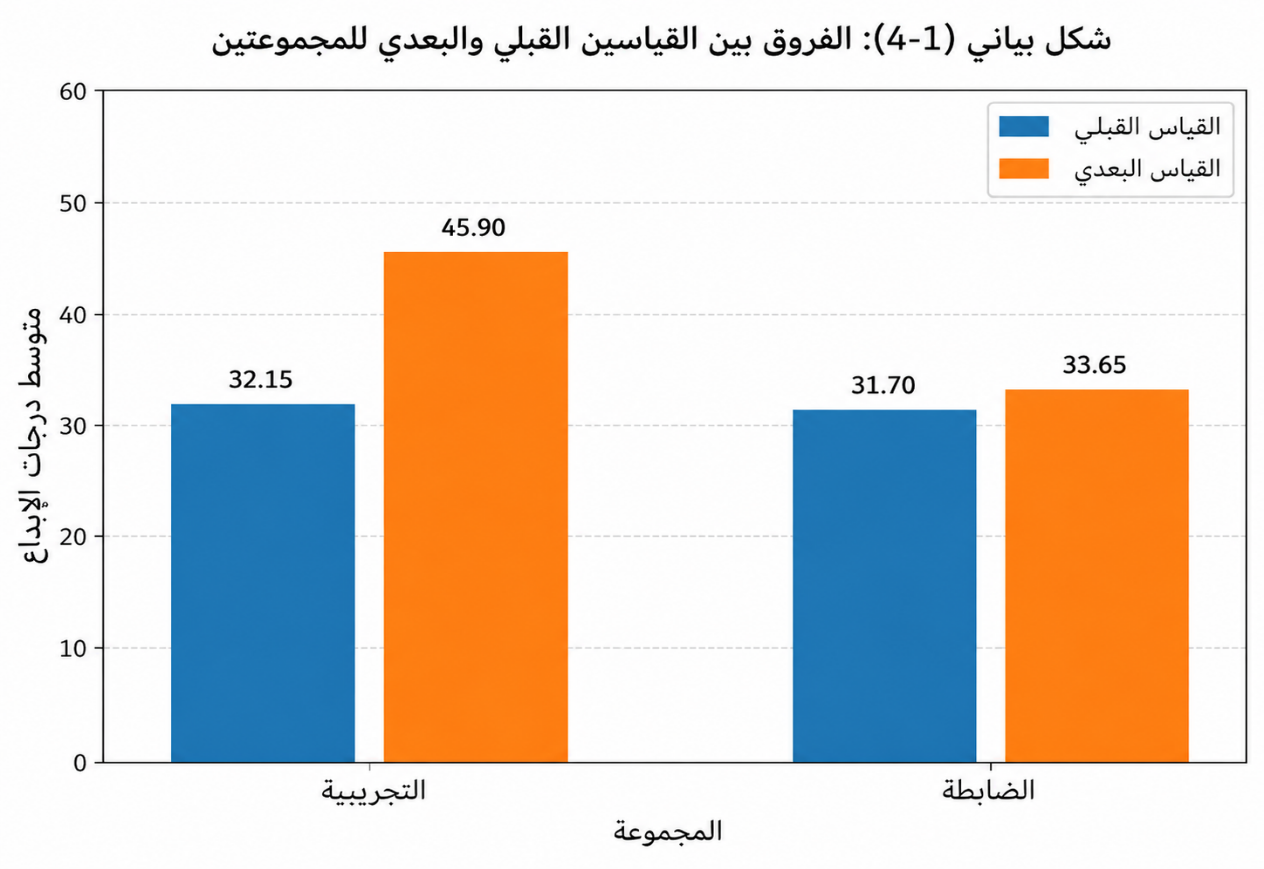
الجدول (4-1): المتوسطات الحسابية والانحرافات المعيارية لاختبار الإبداع قبليًا
|
المجموعة |
العدد |
المتوسط الحسابي |
الانحراف المعياري |
|---|---|---|---|
|
التجريبية |
20 |
32.15 |
4.21 |
|
الضابطة |
20 |
31.70 |
4.10 |
اختبار (t) بين المجموعتين قبليًا:
القيمة المحسوبة = 0.34
القيمة الجدولية عند (38) حرية = 2.02
مستوى الدلالة = 0.736 (غير دال)
التفسير: لا توجد فروق دالة إحصائيًا بين المجموعتين قبليًا، مما يشير إلى تكافؤهما قبل التطبيق.
الفرض الفرعي الثاني:
“توجد فروق ذات دلالة إحصائية بين متوسط درجات المجموعتين في الاختبار البعدي لصالح التجريبية”.
الجدول (4-2): المتوسطات الحسابية والانحرافات المعيارية لاختبار الإبداع بعديًا
|
المجموعة |
العدد |
المتوسط الحسابي |
الانحراف المعياري |
|---|---|---|---|
|
التجريبية |
20 |
45.90 |
3.80 |
|
الضابطة |
20 |
33.65 |
4.30 |
اختبار (t) بين المجموعتين بعديًا:
القيمة المحسوبة = 10.29
القيمة الجدولية = 2.02
مستوى الدلالة = 0.000 (دال عند 0.01)
حجم الأثر (Cohen’s d) = 2.95 (أثر كبير جدًا)
التفسير: توجد فروق ذات دلالة عالية لصالح المجموعة التجريبية، مما يؤكد فعالية البرنامج التدريبي القائم على اللعب التخيلي.
الفرض الفرعي الثالث:
“توجد فروق دالة بين التطبيق القبلي والبعدي للمجموعة التجريبية لصالح البعدي”.
الجدول (4-4): اختبار (t) للعينات المرتبطة للمجموعة التجريبية
|
القياس |
المتوسط |
الانحراف المعياري |
قيمة (t) |
الدلالة |
|---|---|---|---|---|
|
قبلي |
32.15 |
4.21 |
— |
— |
|
بعدي |
45.90 |
3.80 |
14.76 |
0.000 |
التفسير: هناك تحسن ملحوظ وكبير في مستوى الإبداع بعد تطبيق البرنامج التدريبي.
تحليل النتائج العامة للفصل الرابع
البرنامج التدريبي القائم على اللعب التخيلي كان له أثر كبير في تنمية الإبداع لدى الأطفال.
حجم الأثر المرتفع يؤكد أن تأثير البرنامج لم يكن عرضيًا أو ضعيفًا.
النتائج تتفق مع ما توصلت إليه الدراسات السابقة مثل (Russ, 2018؛ Torrance, 2019).
الفصل الخامس: المناقشة والتوصيات
أولاً: مناقشة النتائج
أظهرت نتائج الدراسة أن البرنامج التدريبي القائم على اللعب التخيلي أسهم بشكل كبير في تنمية الإبداع لدى الأطفال، وهو ما يتسق مع نظرية بياجيه التي تؤكد على دور اللعب في التطور المعرفي، وكذلك مع نتائج دراسة (Russ, 2018) التي أوضحت أن اللعب التخيلي يرفع من مستويات الأصالة والمرونة والطلاقة الفكرية.
ويرجع السبب في ذلك إلى أن اللعب التخيلي يتيح للطفل الفرصة للتعبير الحر عن أفكاره وتجريب مواقف جديدة، مما ينمّي لديه مهارات التفكير الابتكاري.
ثانياً: توصيات الدراسة
- تعميم البرنامج التدريبي المقترح على رياض الأطفال والمؤسسات التعليمية.
- تدريب المعلمين على استخدام استراتيجيات اللعب التخيلي في الأنشطة الصفية.
- إدماج أنشطة اللعب التخيلي في المناهج المقررة لتطوير مهارات التفكير الإبداعي.
- إجراء دراسات مستقبلية للتحقق من أثر اللعب التخيلي في جوانب أخرى مثل تنمية المهارات الاجتماعية أو الانفعالية.
ثالثاً: مقترحات لدراسات لاحقة
1ـ دراسة أثر اللعب التخيلي في تنمية الإبداع لدى الأطفال ذوي الاحتياجات الخاصة.
2 ـ دراسة مقارنة بين أثر اللعب التخيلي والألعاب الإلكترونية على الإبداع.
References.
أحمد، س. (2021). الإبداع في الطفولة المبكرة: أسس واستراتيجيات. القاهرة: دار الفكر العربي.
Ahmed, S. (2021). Creativity in early childhood: Foundations and strategies. Cairo: Dar Al-Fikr Al-Arabi.
عبد الله، م. (2020). النمو المعرفي للطفل: مقاربة نفسية وتربوية. عمان: دار المسيرة.
Abdullah, M. (2020). Child cognitive development: A psychological and educational approach. Amman: Dar Al-Masirah.
محمد، خ. (2022). أثر الأنشطة التخيليّة في تنمية مهارات التفكير الإبداعي لدى أطفال الروضة. مجلة العلوم التربوية والنفسية، 34(2)، 115-130.
Mohammed, K. (2022). The effect of imaginative activities on developing creative thinking skills among kindergarten children. Journal of Educational and Psychological Sciences, 34(2), 115–130.
Russ, S. W. (2018). Pretend play and creativity in early childhood. Psychology of Aesthetics, Creativity, and the Arts, 12(3), 314–321.
روس، س. و. (2018). اللعب التخيلي والإبداع في مرحلة الطفولة المبكرة. علم نفس الجماليات والإبداع والفنون، 12(3)، 314–321.
Russ, S. W. (2018). Pretend play and creativity in early childhood.ـ 6 Psychology of Aesthetics, Creativity, and the Arts, 12(3), 314–321.
Sawyer, R. K. (2017). Explaining creativity: The science of human ـ 7 innovation. Oxford University Press.
8 Torrance, E. P. (2019). The nature of creativity as manifest in its testing. Cambridge University Press.
Vygotsky, L. S. (1978). Mind in society: The development of higherـ 9 psychological processes. Harvard University Press.
Runco, M. A., & Acar, S. (2012). Divergent thinking as an indicator ofـ10 creative potential. Creativity Research Journal, 24(1), 66–75.
Creswell, J. W. (2018). Research design: Qualitative, quantitative,ـ 11
and mixed methods approaches. Sage publications.
Torrance, E. P. (2019). The Torrance Tests of Creative Thinking.ـ12 Scholastic Testing Service.
Cohen, J. (1988). Statistical power analysis for the behavioralـ 13
sciencesـ (2nd ed.). Lawrence Erlbaum Associates.
Russ, S. W. (2018). Pretend play and creativity in early childhood.ـ 14 Psychology of Aesthetics, Creativity, and the Arts, 12(3), 314–321.
Torrance, E. P. (2019). The nature of creativity as manifest in itsـ15
testing. Cambridge University Press.
 English
  Arabic