
A Critical Discourse Analysis of Social Deviance in Al-Imam Ali's (Peace be upon him) Speech
التحليل النقدي للخطاب حول الانحراف الاجتماعي في خطبة الإمام عليّ (عليه السلام)
Dr. Zina Abdu Hussein Khudhair1, Asst. Lect. Zahraa Kareem Ghannam2
1 University of Babylon, College of Education for Human Sciences, Iraq.
Email: Hum975.zynh.abdulhussein@uobabylon.edu.iq
2 University of Babylon, College of Management and Economics, Department of Accounting, Iraq.
Email: bsc.zahraa.karim@uobabylon.edu.iq
DOI: https://doi.org/10.53796/hnsj611/23
Arabic Scientific Research Identifier: https://arsri.org/10000/611/23
Volume (6) Issue (11). Pages: 409 - 418
Received at: 2025-10-07 | Accepted at: 2025-10-15 | Published at: 2025-11-01
Abstract: The current study deals with social deviance which is, a behavior that deviates from social norms, from a Critical analysis perspective for the speeches of Al-Imam Ali (Peace be upon him). Therefore; the study tries to answer the following questions: What is meant by social deviance? What are the dominant processes of the transitivity analysis used in Al-Imam Ali (Peace be upon him) speech? How are the lexical and the rhetorical levels employed in the text in order to uncover the social deviance? The current paper aims to: Giving an explanation about the term social deviance. And also showing the ideological message of Al-Imam Ali (Peace be upon him) in relation to social deviance. It is hypothesized that: Lexicalization, apparent illustration and examples, actor description, can be the major structural devices employed within the text in relation to social deviance. Antithesis, irony rhetorical question are the dominant rhetorical devises used in the speech of Al-Imam Ali (Peace be upon him). This study adapts Fairclough model 1995for analyzing the data. It is concluded that. The integration of ideological analysis of the micro level (using rhetorical, lexical and transitivity analysis) and macro level (using in-group, out-group and social analysis) elucidate the social deviance of individuals as they exceed the social norms.
Keywords: Critical discourse analysis, social deviation, norms, Al- Imam Ali (peace be upon him)
المستخلص: تتناول هذه الدراسة الانحراف الاجتماعي، وهو سلوكٌ ينحرف عن الأعراف الاجتماعية، من منظور تحليل نقدي لخطب الإمام علي (عليه السلام). لذا، تحاول الدراسة الإجابة على الأسئلة الاتية: ما المقصود بالانحراف الاجتماعي؟ ما هي العمليات السائدة لتحليل التعدية المستخدمة في خطاب الإمام علي (عليه السلام)؟ كيف وُظِّفت المستويات المعجمية والبلاغية في النص للكشف عن الانحراف الاجتماعي؟ تهدف هذه الدراسة إلى: تقديم شرح لمصطلح الانحراف الاجتماعي، وإظهار الرسالة الأيديولوجية للإمام علي (عليه السلام) فيما يتعلق بالانحراف الاجتماعي. وتفترض الدراسة أن: التعابير المعجمية، والتوضيحات والأمثلة الظاهرة، ووصف الفاعل، يمكن أن تكون الأدوات الهيكلية الرئيسية المستخدمة في النص فيما يتعلق بالانحراف الاجتماعي. يُعدّ الاستفهام البلاغي، المُناقض والمُفارق، من أبرز الأساليب البلاغية المُستخدمة في خطاب الإمام علي (عليه السلام). وقد اعتمدت هذه الدراسة نموذج Fairclough (1995) لتحليل البيانات. وخلصت إلى أن دمج التحليل الأيديولوجي على المستوى الجزئي (باستخدام التحليل البلاغي والمعجمي والتحليل الانتقالي) والمستوى الكلي (باستخدام التحليل الداخلي والخارجي والاجتماعي) يُوضح الانحراف الاجتماعي للأفراد نتيجة تجاوزهم للمعايير الاجتماعية.
الكلمات المفتاحية: التحليل النقدي للخطاب، الانحراف الاجتماعي، المعايير، الإمام عليّ (عليه السلام)
- Introduction
For a long time, Sociologists consider that what is different from the norm is considered as deviant. Social deviance includes a wide range of actions, from minor norm such as rule-violating behavior to breaking criminal laws or other laws intended to forbid or restrict it. So, social deviants are labeled to any behavior that differs from their own. The deviation is mainly related to the social environment in which an individual is located. Therefore; the sociological approach does not focus on the fact that the deviation depends on the heredity and character of an individual. Tozhibayev and Isokov (2022:395) define deviation as an action, activity or even way of life that deviates from the norms that are broadly accepted in a society.
-
- The problem
In the United States, in the late 1930s, the concept social deviance emerged as a result of cultural conflict. In other words, adopting the norms of one culture will result to deviation in another.
Henery (2009:16) summaries the process for identifying deviance, or how to decide whether a behavior qualifies as deviant or not. We could begin with the well-known concept of statistical deviance. The underlying evidence of this theory is that all behavior is distributed according to a normal. “Behavior that is commonly occurring forms the body of norms, whereas behavior on the extremes, which occurs less frequently, is designated as “deviant. Thus, in one direction, there can be both negative and positive deviance ” Negative deviance is therefore possible in both directions; on the other end of the spectrum is “positive deviance,” which includes things like being a genius, exceptionally gifted academically, or musically. The study tries to answer the following questions:
- What is meant by social deviance?
- What is the ideological message of Al-Imam Ali (Peace be upon him)?
- What are the dominant processes of the transitivity analysis used in Al-Imam Ali (Peace be upon him) speech?
- How are the lexical and the rhetorical levels employed in the text in order to uncover the social deviance?
- The Aims
The current paper aims to:
- Give an explanation about the term social deviance.
- Show the ideological message of Al-Imam Ali (Peace be upon him) in relation to social deviance.
- Identify the dominant processes of the transitivity analysis used in Al-Imam Ali’s (Peace be upon him) speech
- Present the mostly used lexical and the rhetorical levels in the text in order to uncover the social deviance?
- The Hypotheses
It is hypothesized that:
- Lexicalization, apparent illustration examples and actor description can be the major structural devices employed within the text in relation to social deviance.
- Antithesis, irony rhetorical question are the dominant rhetorical devices used in the speech of Al-Imam Ali (Peace be upon him).
- The use of the ideological group of the macroanalysis reinforces the analysis of social deviance.
- The Procedures
The following steps will be adopted:
1. Giving some definitions to some major concepts used in critical discourse analysis, therefore CDA.
2. Analyzing Al-Imam Ali’s (Peace be upon him) speech by adapting Fairclough model in 1995.
- Definitions of Critical Discourse Analysis
Fairclough (1995:132-3) defines CDA as a discourse analysis that attempts to discover the vague relations of “causality” and ‘”determination” between practice, events, and texts, and “wider social and cultural structures, relations, and processes” discovering how these are formed and how they are affected by ideology and power, also to notice how the vagueness of these relationships between discourse and society is itself “hegemony”. Thus, when trying to connect discourse with society, various phenomena will appear such as inequality, power abuse, racism, feminism and so on.
Likewise, Van Dijk (1998:1) defines CDA as “a research that is concerned with the way power abuse, dominance, and inequality are enacted, reproduced, and resisted by text and talk in the social and political context”. That is, CDA is concerned with social affairs and how a weak group is dominated by a powerful one. CDA tries to present a mode for analysis and application, rather than being a direction or a school by itself.
Both Fairclough (1995:132-3) and Van Dijk(1998:1) consider this branch of linguistics as a social practice trying to use these discourses or the side of the dominant groups to enable them to exploit those who have less power. Though, Fairclough deals with CDA as an approach concentrating on linguistic parameters to reveal their hidden elements in the social system, and to which extent these elements affect that linguistic system. Meanwhile, Van Dijk’s approach linked CDA to cognition. He believes that people discourse is a reflation to their mentality.
- Social Deviance
For a long time, sociologists consider what is different from the norm considers as deviant. Meanwhile, who decides what is conventional and what is normal? “Normality” refers to any shared set of cultural norms and values concerning appearance, appropriate behavior, and also thought processes. Social deviation refers to any deviance from accepted norms and values including acting, appearing, or thinking
Social deviance includes a wide range of actions, from minor norm such as rule-violating behavior to breaking criminal laws or other laws intended to forbid or restrict it. So, social deviants are labeled to any behavior that differs from their own. Those who are considered as deviant may or may not accept their identity. The results of the social processes that give rise to deviance are whether or not they are categorized as such, and whether they choose to embrace or reject the label of deviant. These procedures entail interpreting the act’s meaning, and the historical and social context has a significant impact on meaning (Henery, 2009:2).
In the United States, in the late 1930s, the concept social deviance emerged as a result of cultural conflict. In other words, adopting the norms of one culture, will result to deviation in another. For illustration, when Muslims residing in the West deal with this cultural conflict within their own homes and respond to the perceived threat by adhering to cultural norms, social deviance problems will occur. A girl who does not wear a hijab is viewed by Muslims as a deviation from traditional Muslim standards and brings shame to their family, who are viewed as failures by their community. (ibid:7).
Elements that contribute to youth deviations is categorized as societal shifts. the primary requirement for classifying these factors is the interpretation of the deviation. The analysis of social system processes is in conflict with this deviation as to Parsons’ opinion (Komlev, 2014: 145).
Deviation is defined as “behavior that deviates from social norms and is regarded as normative in a particular social context in the sociological lexicon”. (Veche,1999: 161) cited in (Tozhibayev and Isokov, 2022:395).
The deviation is mainly related to the social environment in which an individual is located. Therefore; the sociological approach does not focus on the fact that the deviation depends on the heredity and character of an individual. Tozhibayev and Isokov (2022:395) define deviation as an action, activity or even way of life that deviates from the norms that are broadly accepted in a society.
Henery (2009:16) summaries the process for identifying deviance, or how to decide whether a behavior qualifies as deviant or not. We could begin with the well-known concept of statistical deviance. The underlying evidence of this theory is that all behavior is distributed according to a normal. “Behavior that is commonly occurring forms the body of norms, whereas behavior on the extremes, which occurs less frequently, is designated as “deviant. Thus, in one direction, there can be both negative and positive deviance ” Negative deviance is therefore possible in both directions; on the other end of the spectrum is “positive deviance,” which includes things like being a genius, exceptionally gifted academically, or musically. The more extreme one deviates from the norm, the less frequent and more serious one is. Positive deviance is the term used to describe people who honorably exceed conventional expectations. The primary determinant of what constitutes deviance in statistical terms is the proportion of individuals engaging in the behavior compared to the total population. For example, homosexuality manifestly deviates from heterosexual relationships on this criterion.
- Some Deviated Islamic Norms
Although Prophet Muhammad (may God bless him and his family), established serious political, social and economic foundations showed the features of life and the systematic methods that must be followed after his death so that the nation does not go astray, including the guardianship of Ali Ibn Abi Talib. But some Muslims were driven by the love of power to usurp the rule from Ali ibn Abi Talib, and thus the situation in the Islamic community deteriorated because they did not follow the approach of the Messenger of Allah. But Imam Ali, peace be upon him, during his reign he followed all the rules of Allah and urged people to do the same. Among the things that were violated is justice and equality. The Messenger of Allah adopted the principle of complete equality in the matter of distributing gifts among all Muslims, and he ordered the spoils to be distributed equally among Muslims. After the Prophet (may God bless him and his family), and for many years, Muslims gradually got used to the issue of giving privileges to individuals close to the Caliph and the ruling authority, as the method of distributing unfair gifts during the era of Caliphs Omar and Othman led to the emergence of social effect represented by the problem of class disparity among the individuals of the Islamic community, which led to the creation of a class of the destitute who did not receive the annual giving and a class saturated with wealth. (الحسيني14-15: 2022). But Imam Ali (peace be upon him) showed great rigidity towards these issues, and he used to say: (…فإن في العدل سعة، ومن ضاق عليه العدل، فالجور عليه أضيق) (1375:1هـ كاظم حمدي)Even his companions came to him one day requesting him to have more than other people but he said: (أتأمروني أن أطلب النصر بالجور فيمن وليت عليه، والله لا أطور به ما سمر سمير )كاظم حمدي (هـ 1375:19) That means, you are asking me to strive to achieve my goals through injustice and depriving people of their rights! No, this will never happen from me, even if time passes. That is, politics at that time (i.e. in the era of the three caliphs) was managed on the basis of treachery, deceit and cunning, to the point that some of them said: Ali had no politics at all, unlike Muawiyah who, in their view, was a shrewd politician. Imam Ali (peace be upon him) handed over power to a society that had inherited corruption and many complex problems awaited it on various levels, so Imam Ali (peace be upon him) worked with his new revolutionary system that he decided to follow in order to achieve the goals for which he accepted being Caliph. (الحسيني, 14-15:2022)
- Methodology
The data chosen will be analyzed by adopting Fairclough’s (1995) model due to its being the cornerstone of the entire field of CDA. This model assumes that language is an essential part of society. Furthermore, he is the first who attempts to expose ideological and power patterns in texts. For him, the analysis of the text is divided into microanalysis and macro analysis. The micro- analysis level, is divided into discursive strategies and transitivity analysis, Macro-analysis is divided into contextual analysis, ideological squire and social analysis.
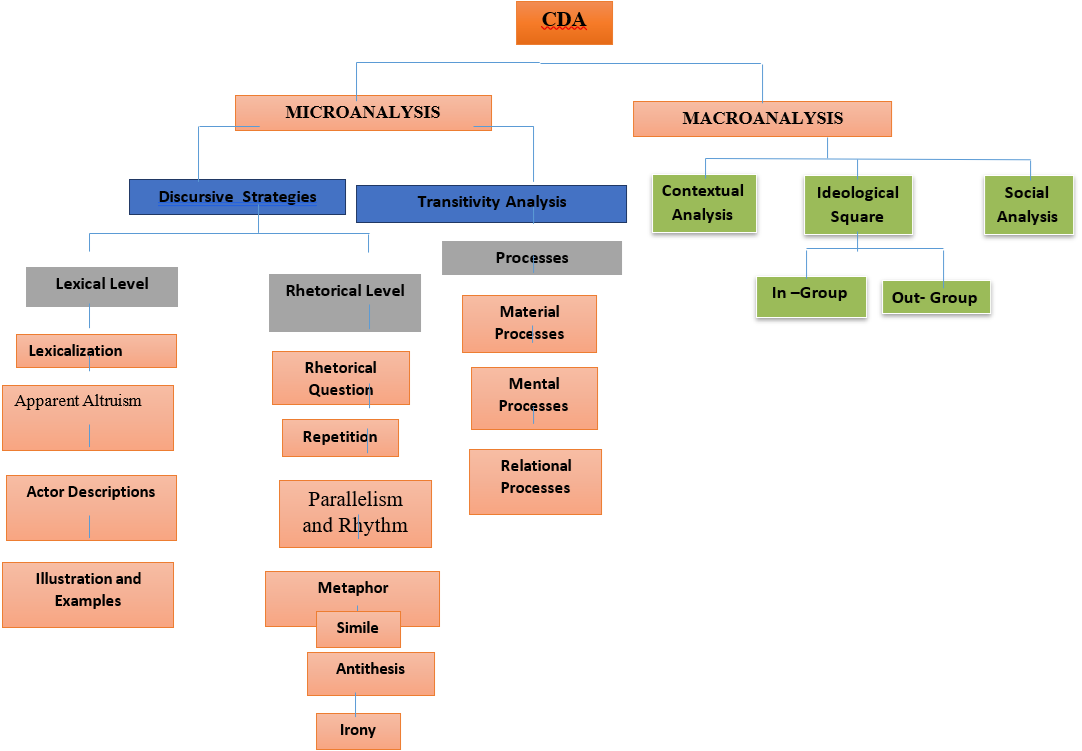
Fig.1 : The eclectic model adopted for the analysis
- The Analysis
This section is concerned with the analysis of the following speech by Al Imam Ali (peace be upon him)
(أما بعد فإن الدنيا قد أدبرت وآذنت بوداع، وإن الآخرة قد أقبلت وأشرفت باطلاع ألا وإن اليوم المضمار، وغدا السباق، والسبقة الجنة، والغاية النار. أَفَلَا تَائِبٌ مِنْ خَطِيئَتِهِ قَبْلَ مَنِيَّتِهِ! أَلَا عَامِلٌ لِنَفْسِهِ قَبْلَ يَوْمِ بُؤْسِهِ! أَلَا وَإِنَّكُمْ فِي أَيَّامِ أَمَلٍ مِنْ وَرَائِهِ أَجَلٌ؛ فَمَنْ عَمِلَ فِي أَيَّامِ أَمَلِهِ قَبْلَ حُضُورِ أَجَلِهِ فَقَدْ نَفَعَهُ عَمَلُهُ وَلَمْ يَضُرُّهُ أَجَلُهُ، وَمَنْ قَصَّرَ فِي أَيَّامِ أَمَلِهِ قَبْلَ حُضُورِ أَجَلِهِ فَقَدْ خَسِرَ عَمَلَهُ وَضَرَّهُ أَجَلُهُ. أَلَا فَاعْمَلُوا فِي الرَّغْبَةِ كَمَا تَعْمَلُونَ فِي الرَّهْبَةِ! أَلَا وَإِنِّي لَمْ أَرَ كَالْجَنَّةِ نَامَ طَالِبُهَا وَلَا كَالنَّارِ نَامَ هَارِبُهَا! أَلَا وَإِنَّهُ مَنْ لَا يَنْفَعُهُ الْحَقُّ يَضُرُّهُ الْبَاطِلُ، وَمَنْ لَا يَسْتَقِيمُ بِهِ الْهُدَى يَجُرُّ بِهِ الضَّلَالُ إِلَى الرَّدَى. أَلَا وَإِنَّكُمْ قَدْ أُمِرْتُمْ بِالظَّعْنِ وَدُلِّلْتُمْ عَلَى الزَّادِ، وَإِنَّ أَخْوَفَ مَا أَخَافُ عَلَيْكُمْ اتِّبَاعُ الْهَوَى وَطُولُ الْأَمَلِ، فَتَزَوَّدُوا فِي الدُّنْيَا مِنَ الدُّنْيَا مَا تُحْرِزُونَ بِهِ أَنْفُسَكُمْ غَدًا.)
(And now, the world has turned away and announced its farewell, and the Hereafter has approached and appeared with a glimpse. Beware, today is the racetrack, and tomorrow is the race, and the lead is Paradise, and the goal is Hell. Is there no one who repents from his sin before his death? Is there no one who works for himself before the day of his misery? Beware, you are in days of hope, behind which is a term. So whoever works in the days of his hope before his death comes, his work will benefit him and his death will not harm him. And whoever falls short in the days of his hope Before his appointed time arrives, his deeds have been lost and his appointed time has harmed him. So work in your desire as you work in your fear. Indeed, I have never seen anything like Paradise, whose seeker sleeps, nor like Hell, whose fugitive sleeps. Indeed, he whom the truth does not benefit will be harmed by falsehood, and he whom guidance does not set straight will be dragged by misguidance to ruin. Indeed, you have been commanded to set out. And you have been shown the provisions, and what I fear most for you is following desires and long hopes, so take provisions in this world from this world that will protect yourselves tomorrow.
(Translated by the researchers)
6.1 Micro Analysis Level
6.1.1 Lexical level
1. Lexicalization
This part of the speech is full of lexicalization, for example the words” أَدْبَرَتْ ” آذَنَتْ” ” أقْبَلَتْ” and ” أَشْرَفَتْ” in which Imam Ali (peace be upon him) uses these words to attract the attention of the hearer adding aesthetic affect to the text.
In the above-mentioned text of Al Imam Ali (peace be upon him) the use of this device is clear since the speaker cares about the destiny of human beings in general. Al Imam Ali (peace be upon him) advises people to leave the sins and return to God. This call to the society at that time was a warning from the abuse of the rules of Islam which is concerned as social deviance.
- Actor Description
أَفَلَا تَائِبٌ مِنْ خَطِيئَتِهِ قَبْلَ مَنِيَّتِهِ! أَلَا عَامِلٌ لِنَفْسِهِ قَبْلَ يَوْمِ بُؤْسِهِ! أَلَا وإِنَّكُمْ فِي أَيَّامِ أَمَلٍ مِنْ وَرَائِهِ أَجَلٌ
In the above-mentioned text of Al Imam Ali (peace be upon him) describes those who prefers life to heaven. Those who don’t work for their afterlife will regret.
- Illustration and Examples
الْيَوْمَ الْمِضْمَارَ وغَداً السِّبَاقَ
In the speech of Al Imam Ali (peace be upon him) uses the device of illustration and example to convince the hearer that the life is something transient just like a track there is an end in it so that they must focus on their deeds and adhere to the norms of Islam. Illustrations and examples as devices powerful strategies of discourse. They are considered as a way to make the abstract facts more concrete. (Van Dijk,1998:49).
6.1.1.2 Rhetorical Level
1. Rhetorical Question
أَفَلَا تَائِبٌ مِنْ خَطِيئَتِهِ قَبْلَ مَنِيَّتِهِ! أَلَا عَامِلٌ لِنَفْسِهِ قَبْلَ يَوْمِ بُؤْسِهِ
In this speech Al Imam Ali (peace be upon him) employed rhetorical question to reflect Imam Ali’s method of advice, counseling, and spiritual education, where he combines wisdom, reminders, and psychological impact, without direct accusation, which makes it more effective in moving hearts. In relation to social deviance they refer to the people who do nOt deny the moral failure they will be regarded as part of it.
2. Repetition
The word ” أَلَا” has repeated more than one time to draw the attention of the audience so that Al Imam Ali (peace be upon him) emphasizes the urgency of each statement.
Another repetition is whenAl Imam Ali (peace be upon him) repeats the structure
فَمَنْ عَمِلَ ……فَقَدْ نَفَعَهُ
وَمَنْ قَصَّر… فَقَدْ خَسِر
The repetition of these parallel words reinforces the gap between good and bad actions. Those who deviate from the norms of Islam will lose in comparison with who do not deviate.
أَلَا فَاعْمَلُوا فِي الرَّغْبَةِ كَمَا تَعْمَلُونَ فِي الرَّهْبَة
This balance in structure (parallel construction) makes the message memorable and rhythmic, aiding in oral delivery and impact. The use of parallelism in this speech serves as a rhetorical tool to address social deviance by promoting consistency in moral actions, aligning with cultural norms, confronting moral hypocrisy, encouraging self-reflection, and enhancing the cognitive impact of the message.
لحق / الباطل – الجنة / النار
الهدى الضلال
الجنة النار
نام طالبها_ نام هاربها
These opposites expressions thar are used in the above speech show the consequences of deviance. That’s to say truth vs. falsehood, and reward vs. punishment, heaven vs. hell. All these words are used in a perfect way to make people warrens of what is coming when not following Allah’s rule.
5. Irony
أَلَا وَإِنِّي لَمْ أَرَ كَالْجَنَّةِ نَامَ طَالِبُهَا وَلَا كَالنَّارِ نَامَ هَارِبُهَا!
Imam Ali, peace be upon him, used irony to criticize the religious deviation that had occurred in society, where the seeker of Paradise could not be lenient in obtaining it.
- Metaphor
وإن اليوم المضمار، وغدا السباق، والسبقة الجنة، والغاية النار
In this line, Al Imam Ali (peace be upon him) described live as preparation or just like warming up. The day of judgment as a “race”. The reward is heaven and the consequence of failure is hell. These lines refers to the violation of social norms, values. The manipulation of metaphor in these lines is used not only for poetic devices but also as a moral framework.
“فَمَنْ عَمِلَ فِي أَيَّامِ أَمَلِهِ قَبْلَ حُضُورِ أَجَلِهِ فَقَدْ نَفَعَهُ عَمَلُهُ وَلَمْ يَضُرُّهُ أَجَلُهُ”
Al- Imam Ali (peace be upon him) associates good actions with provisions that help humanity to live. Emphasizing the necessity of doing good deeds before death, so that they will be ready to die in any time. Thus Al- Imam Ali (peace be upon him) tries to say that life is not immortal so that any human being must be ready to leave it.
- Simile
“أَلَا فَاعْمَلُوا فِي الرَّغْبَةِ كَمَا تَعْمَلُونَ فِي الرَّهْبَةِ”
Al- Imam Ali (peace be upon him) urges people to do in time of (الرغبة) the same deeds (just like worshipping and good manners) that they do it when in days of trouble and fear (الرَّهْبَةِ) because in these days humans be sincere to God in order to help them. Therefore Al- Imam Ali (peace be upon him) tries to tell people to be sincere in all of the situations whether in fear or in comfort.
6.1.2 Transitivity Analysis/ Process Type
Transitivity analysis of selected excerpts
1. Process: Material (action)
“أَفَلَا تَائِبٌ مِنْ خَطِيئَتِهِ قَبْلَ مَنِيَّتِهِ!”
Participants:
Actor: “تَائِبٌ” (the one who repents)
Goal: “خَطِيئَتِهِ” (his sin)
Circumstances: “قَبْلَ مَنِيَّتِهِ” (before his death)
A material process occurs in the verb (repent). The Actor represents the action on the Goal (The sin). The circumstance is temporal that indicate the action should occur.
2. Mental (reaction)
“أَلَا فَاعْمَلُوا فِي الرَّغْبَةِ كَمَا تَعْمَلُونَ فِي الرَّهْبَةِ!”
Participants: Senser: “أَنْتُمْ” (you) Phenomenon: “فِي الرَّغْبَةِ” (in hope), “فِي الرَّهْبَةِ” (in fear)
A material process is clear in the verb “تَعْمَلُونَ” (you work). It concentrates on the mental state hope and fear. It influences actions. Regardless of the emotional states, the comparison emphasizes the consistency of action.
“أَلَا وَإِنَّهُ مَنْ لَا يَنْفَعُهُ الْحَقُّ يَضُرُّهُ الْبَاطِلُ”
The process in this verb is mental (reaction)
Participants:
Senser: “مَنْ” (who)
Phenomenon: “الْحَقُّ” (truth), “الْبَاطِلُ” (falsehood)
Both of the verbs “يَنْفَعُهُ” (benefits him) and “يَضُرُّهُ” (harms him) are material processes. Therefore; it concentrates on the influence of truth and falsehood on the individual.
3. Relational (attribution)
“أَلَا وَإِنِّي لَمْ أَرَ كَالْجَنَّةِ نَامَ طَالِبُهَا وَلَا كَالنَّارِ نَامَ هَارِبُهَا!”
Participants:
Carrier: “طَالِبُهَا” (its seeker), “هَارِبُهَا” (its evader)
Attribute: “نَامَ” (slept)
The type of process is material in the verb “نَامَ”. Its function is to attribute the sleeping state of the participants. It also highlights the contrast between the evader of hell and the seeker of paradise.
6.2 Macro-analysis Level
In this level, three components will be discussed:
6.2.1. Contextual Level: Historical and Situational Analysis
This speech of Al Imam Ali (peace be upon him) is delivered to people in a period that political turmoil and moral laxity are separated in the society. Al Imam tries to awaken the people at that time from their inattentive of spiritual duties and ethical responsibilities, urging individuals to think about their actions before the inevitable approach of death. Therefore, Al Imam Ali (peace be upon him) emphasizing the necessity of repentance and self-accountability. Thus, the sermon contains vocabularies that are related to time, action and participants as in: (أَلَا وَإِنَّكُمْ فِي أَيَّامِ أَمَلٍ مِنْ وَرَائِهِ أَجَلٌ)
6.2.2 Ideological Level
Al Imam Ali (peace be upon him) differentiates between two groups: (in-group) and (out-group) in the sense that each group has its own characteristics. ‘In group’ are those who adhere to divine guidance and the ‘Out group’ are those who deviate from divine guidance and follow their own desire.
1. In-group
“أَفَلَا تَائِبٌ مِنْ خَطِيئَتِهِ قَبْلَ مَنِيَّتِهِ!”
This line shows the nature of people who are regarded as in group. They are characterized by repentance, self-accountability. This type of people have recognized in advance the transient nature of life as it is not lasting forever but it has an end so that they try of follow the rules of Allah.
2. Out- group
“أَلَا وَإِنَّكُمْ فِي أَيَّامِ أَمَلٍ مِنْ وَرَائِهِ أَجَلٌ…”
This line explicates the second type of people, who are seeking their desire only without thinking in death. They are procrastinating repentance because they are occupied with worldly distractions. Actually, this type of people has ideological nature that deviates from the moral norms.
6.2.3 Social Analysis
Imam Ali, peace be upon him, set some standards for society, and among these standards are social justice and Islamic morals which Prophet Muhammad (may God bless him and his family) urges Muslims to follow these values and not violate them. These values are considered as social heritage for people which they return to whenever they face a problem.
The speech of Al Imam Ali (peace be upon him) criticizes people who neglect divine commandments for their personal inclinations. Thus, this is regarded as ideological deviance because it leads to moral and spiritual decay. Therefore, Al Imam Ali (peace be upon him) makes clear the fact that there must be a correspondence between one’s action with divine rules and not to follow personal desires and harboring excessive hope ( اتباع الهوى و طول الامل)
- Conclusions
- Al Imam Ali (peace be upon him) uses different devices in the lexical level which are lexicalization, apparent illustration and examples, actor description not only for elucidating different ideas but also for evoking deep emotional responses, so that to motivate people to align their behaviour with morals. Thus, this validates the first hypothesis which reads as “Lexicalization, apparent illustration and examples, actor description, can be the major structural devices employed within the text in relation to social deviance”.
- The eloquence of Al-Imam’s words, through the use of different rhetorical devices make the text influential not only in his time but in all subsequent generations, as moral, religious and social deviation exists in all periods. This validates the second hypothesis which reads as” Antithesis, irony rhetorical question are the dominant rhetorical devices used in the speech of Al-Imam Ali (Peace be upon him)”.
- The integration of ideological analysis of the macro level, and the use of in-group and out-group analysis, elucidate the social deviance of individuals as they exceed the social norms. This validates the third hypothesis which reads as “The use of the ideological group of the macroanalysis reinforce the analysis of social deviance”.
References:
Enikeev, M.I.. 1996. Fundamentals of General Legal Psychology. Moscow: Hopnctb.
Fairclough, N. (1995). Critical Discourse Analysis: The Critical Study of Language. Longman.
Hennery, S. 2009. Social Deviance: Short Introduction. Policy Press: Cambridge.
Komlev, Ju. 2014. Theories of Deviant Behavior: Tutorial [Teorii deviantnogo povedenija: uchebnoe posobie]. 2nd edition, revised and added – SPb.: «ALEFPRESS»,. (In Rus.).
Tozhibayev,B and, Isokov,S. 2022. Youth Social Deviation in the Process of Reforms in Uzbekistan. Technological Institute, Namangan, Uzbekistan
Van Dijk. 1998. Ideology. A Multidisciplinary Approach. London: Sage Publications.
Arabic references:
الحسيني, علي.2022. قيم الإنتاج في عصر امير المؤمنين علي بن ابي طالب عليه السلام واثرها في التنمية الاقتصادية (35-40هـ). رسالة ماجستير غير منشورة . جامعه كربلاء, كلية التربية للعلوم الإنسانية.
كاظم حمدي. 1375هـ. المعجم المفهرس لألفاظ نهج البلاغة. مؤسسة النشر الإسلامي.
 English
  Arabic