

Review Analysis of Three-Phase Gravity Separators in Oil and Gas Production
مراجعة تحليلية للعازلات بالجاذبية ثلاثية الطور في إنتاج النفط والغاز
Dr. Wasila Abdulaziz Elasheg1
1 Associate Professor, Department of Petroleum Engineering, University of Tripoli, Libya.
Email: welasheg@gmail.com
DOI: https://doi.org/10.53796/hnsj611/1
Arabic Scientific Research Identifier: https://arsri.org/10000/611/1
Volume (6) Issue (11). Pages: 1 - 8
Received at: 2025-10-07 | Accepted at: 2025-10-15 | Published at: 2025-11-01
Abstract: Separators are essential equipment in the oil and gas industry, allowing the efficient phase separation of gas, oil, and water mixtures. It enhances production, resource utilization, safety, and environmental management. This work focuses on gravity separators, which operate based on the fundamental principle of gravity to separate fluids of differing densities. The paper discusses the theoretical background, classification, and design considerations of gravity separators, highlighting their widespread use in upstream oil and gas processing. Main internal components, such as baffles, weirs, and coalescing plates, improve the separation efficiency by minimizing turbulence and promoting phase disengagement. Recent advancements in separator technology include optimized three-phase gravity separators that improve separation while reducing capital and operational costs. These systems combine dynamic simulation tools and innovative designs to increase safety, efficiency, and reliability in oilfield operations.
Keywords: Gravity separators; Three-phase separation; Oil and gas processing; Separation efficiency; Dynamic simulation tools.
المستخلص: تُعَدّ العازلات معدات أساسية في صناعة النفط والغاز، إذ تُمكِّن من الفصل الكفء لأطوار الغاز والنفط والماء. ويسهم ذلك في رفع الإنتاج وكفاءة استغلال الموارد وتعزيز السلامة وحماية البيئة. يركّز هذا العمل على العازلات بالجاذبية التي تعتمد على المبدأ الأساسي للجاذبية لفصل الموائع ذات الكثافات المختلفة. يناقش البحث الخلفية النظرية وتصنيفات واعتبارات تصميم العازلات بالجاذبية، مع إبراز انتشار استخدامها في معالجة النفط والغاز في قطاع المنبع. كما تُحسّن المكوّنات الداخلية الرئيسة—مثل الحواجز المشتِّتة (Baffles) والحواجز الفيضية (Weirs) وصفائح التلاصق (Coalescing plates)— كفاءة الفصل من خلال تقليل الاضطراب وتعزيز انفصال الأطوار. وتشمل التطورات الحديثة في تقنيات العزل تحسين العازلات الجاذبية ثلاثية الطور بما يرفع كفاءة الفصل ويخفض التكاليف الرأسمالية والتشغيلية. وتجمع هذه الأنظمة بين أدوات المحاكاة الديناميكية والتصاميم الابتكارية لتعزيز السلامة والكفاءة والموثوقية في عمليات حقول النفط.
الكلمات المفتاحية: العازلات بالجاذبية؛ الفصل ثلاثي الطور؛ معالجة النفط والغاز؛ كفاءة الفصل؛ أدوات المحاكاة الديناميكية.
1- Interdiction
Separators play a vital role in oil and gas processing by enabling the efficient phase separation of gas, oil, and water mixtures, which is essential for optimal production, resource utilization, safety, and environmental management. The separation process typically involves three-phase separation technology, increasingly becoming important as oilfields enter stages with higher water content and emulsification of extracted fluids. Efficient and compact separator designs are crucial, especially for space-limited offshore platforms, to ensure effective oil-water separation while maintaining appropriate flow dynamics inside the separator (Shangfei Song et al.,2024).
The importance of separators in the industry extends beyond simply partitioning phases; they significantly improve resource recovery and operational profitability by reducing hydrocarbon losses and optimizing downstream processing.
The paper explains the theoretical background of what separators are, their importance, types, and mechanisms. Gravity separators will be discussed in detail.
2- Separator definition
Hydrocarbon streams, when produced at the wellhead, are a collection of a mixture of gas, liquid hydrocarbons, and sometimes free water. In most cases, it is necessary to separate these components as soon as possible after delivering them to the surface and handling or transporting them. A separation of the liquids from the gas phase is accomplished by passing the well stream through a separator, which is generally referred to as a pressure vessel used for separating well fluids produced into gaseous and liquid components (Tariq Ahmed et al., 2020).
Separators have several purposes, such as upstream and downstream of compressors, gasoline plants, and liquid traps in gas transmission lines (Sivalls, 2009).
In the oil and gas industry, separators are used to separate the various components present in the flow of crude oil, water, and gas. Oil, water, and gas separations depend on the characteristics of each component, and their separations can vary based on the specific conditions of the field and the processes used.
2.1 Oil-Water Separator
Oil-water separators primarily rely on gravity separation, taking advantage of the density difference between oil and water. Oil (~800 kg/m³) floats above water (~1000 kg/m³).
Separation efficiency is enhanced by reducing turbulence and providing sufficient residence time for droplets to coalesce and separate. Typically, residence time is 3-15 minutes, depending on flow rate and emulsion characteristics. Coalescing elements aim to increase droplet size to >100 microns for faster settling. Also, Flow Velocity must be low (< 0.1 m/s) in the settling section to avoid re-entrainment. However, temperature influences viscosity and interfacial tension; heating may improve separation (Tariq Ahmed et al., 2020).
2.2 Oil-Gas Separator
These separators reduce the pressure of the produced mixture to promote gas coming out of solution from the liquid hydrocarbons. Gas disengages and collects at the top chamber, while oil settles below. Operating Pressure must be optimized to be below the bubble point but high enough to avoid hydrate or wax formation downstream. The separator is sized to provide sufficient retention time (typically seconds to a few minutes, depending on flow) to allow gas separation. Gas must be allowed to rise with minimal entrainment of liquids; typically, gas velocity is controlled below the maximum allowable. Control the liquid Level to prevent carryover and ensure a correct gas-liquid interface (Josh Tracey, PMP., 2022).
2.3 Water-Gas Separator
It works by facilitating the removal of gas from water by exposing the flow to reduced pressure and using gravity. Gas bubbles rise and separate from the water phase. Reducing pressure to atmospheric or near-atmospheric speeds for gas release. Retention Time needs to be enough for gas bubbles to coalesce and separate. Similarly, the water flow rate should be controlled (Josh Tracey, PMP., 2022).
General Design Considerations
- Material Selection: Corrosion-resistant alloys or linings are often used due to acidic gases (H2S, CO2) and water content (Josh Tracey, PMP., 2022).
- Pressure and Temperature Ratings: Designed per ASME or API standards according to field conditions (Josh Tracey, PMP., 2022).
- Instrumentation: Level sensors, pressure transmitters, temperature detectors, and automated control valves for maintaining stable interfaces and safe operation (Josh Tracey, PMP., 2022).
- Safety Features: Relief valves and emergency shutdown systems to manage unexpected surges or overpressure situations (Josh Tracey, PMP., 2022).
Overall, the key operational principle across these separators is the use of pressure control and phase density differences to achieve effective phase separation, enhanced by internal structures and optimized flow dynamics to yield the full advantage of separation efficiency (Tariq Ahmed et al., 2020).
There are other types of separators used in the oil and gas industry created on the specific needs of each field and flow. These separators may include heavy oil, light oil, sour gas separators, etc. For example, three-phase separators incorporating elements such as corrugated plate coalescers enhance oil-water separation by facilitating oil droplet floating, coalescence, and stabilization—processes that are vital for efficient separation and lowering production costs. Additionally, advanced designs such as vortex separators inside pipelines improve gas-liquid separation quality via centrifugal forces, enhancing phase isolation, to ease hydrocarbon losses and environmental contamination.
3- Classification of separators
In the oil and gas industry, separators are essential equipment used to divide produced fluids into distinct phases for further processing and handling. The common classification of separators, classified by their function and design, includes:
3.1. Number of Phases Separated:
- Two-Phase Separators: Separate fluid mixtures into gas and liquid (where liquid may contain both oil and water). Used in applications where initial gas-liquid separations are sufficient. These can be vertical, horizontal, or spherical.
- Three-Phase Separators: Separate the fluid mixture into gas, oil, and water phases distinctly. These types are widely used in upstream processing to handle complex production streams with significant water content.
3.2 Design and Orientation:
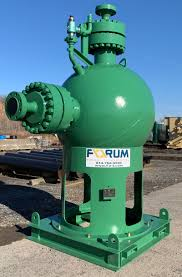
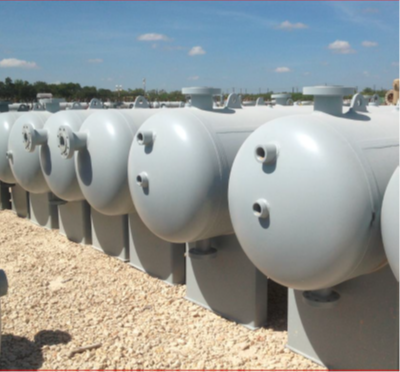
Figure 1: horizontal separato Figure 2: Vertical separators Figure 3: Spherical Separators
- Horizontal Separators: Cylindrical vessels oriented horizontally, providing a large surface area for phase settling, suitable for high liquid volumes and where space height is limited (figure 1), (Josh Tracey, PMP., 2022).
- Vertical Separators: Cylindrical vessels oriented vertically, preferred where space is constrained on the floor and where the gas-to-liquid ratio is high (figure 2), (Josh Tracey, PMP., 2022).
- Spherical Separators: Compact spherical vessels used primarily in high-pressure applications or when space is at a premium (figure 3), (Josh Tracey, PMP., 2022).
3.3 Application:
- Test Separators: Used during well testing to measure and separate produced fluids. Can be configured as two-phase or three-phase separators and are often portable or skid-mounted (Tariq Ahmed et al., 2020).
- Production Separators: Continuously separate produced fluids post wellhead for ongoing production operation; usually larger, fixed installations (Tariq Ahmed et al., 2020).
3.4 Specialized Separators:
- Low-Temperature Separators: Utilize pressure drops to cool fluids, condensing vapors to recover liquids (Tariq Ahmed et al., 2020).
- Metering Separators: Combine fluid separation with precise flow rate measurement for production monitoring (Tariq Ahmed et al., 2020).
- Cyclone Separators: Use centrifugal forces for enhanced gas-liquid separation, often as pre-separators (Tariq Ahmed et al., 2020).
In the coming section, gravity separators will be discussed in detail
4. Gravity Separators.
Gravity separators operate on the fundamental principle of gravity to separate fluids of different densities, mainly oil, water, and gas (fig.3.1). These separators allow the heavier liquid (usually water) to settle at the bottom while the lighter liquid (oil) forms a layer above it, and gas is separated based on density differences. This principle is straightforward, making gravity separators one of the most widely used separation technologies in surface facilities (Ghanim M. Farman, 2024).
Gravity separators are used in three-phase separation (gas, oil, water) in upstream oil and gas processing, including wellhead facilities and processing plants. They are often sought for their reliability, simplicity, and ability to handle large volumes at relatively low flow velocities.
Internal components such as baffles, weirs, and coalescing plates are used to enhance the separation process by directing flow, reducing turbulence, and increasing droplet coalescence for improved phase disengagement (Christoph J, et. al 2018).
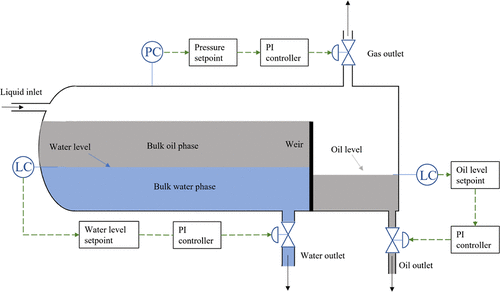
Figure (3-1). Schematic of a three-phase gravity separator. ACS Omega 2023,
4.1. Types of Gravity Separators
-
- Horizontal Gravity Separators: These separators are designed with a horizontal orientation, which facilitates longer residence times and offers an extensive surface area for effective phase separation. They are typically utilized for processing large volumes (Ahmed et al., 2020).
- Vertical Gravity Separators: This type employs a vertical shape, making them suitable for areas with limited space or when managing slugs of liquids (Ahmed et al., 2020).
- Spherical Gravity Separators: It is less frequently used, spherical separators are primarily employed in situations where pressure containment and compact size are essential (Ahmed et al., 2020).
Enhancing separation efficiency is the new development that has been focusing on optimizing three-phase gravity separators while simultaneously lowering both capital and operational expenses. This includes the development of improved design models that consider retention time and droplet settling principles, which assist in determining sizing and operational conditions to ensure clean gas outputs and avert downstream issues such as compressor failure, pump cavitation, and hydrate formation (Ahmed et al., 2020).
Dynamic simulation tools have been designed for three-phase gravity separators to oversee and manage operational factors such as water and oil levels, pressure, and valve positions, thereby increasing safety and efficiency in operations (Ram Chandra Chaurasia et. al.,2024).
Innovative ideas that combine additional technologies with gravity separation, such as cyclone systems or mesh elements, have been proposed to improve separation effectiveness in gas drying processes and other applications.
4.2 Design of Gravity Separators
The primary components of gravity separators utilized within the oil and gas sector include (Tariq Ahmed et al. 2020):
- Vessel Shell (Body): The outer pressure vessel captures the fluid mixture. The shape, which is horizontal, vertical, or spherical, varies depending on the separator type and spatial limitations. It is engineered to withstand operational pressures and temperatures while providing adequate volume for phase separation.
- Inlet Section and Diffuser: It is crafted to receive multiphase fluids while reducing their velocity to minimize turbulence. The inlet distributor or diffuser ensures uniform distribution across the separator’s cross-section, enabling calm settling and preventing disruptive jetting.
- Internal Baffles and Weirs: These internal flow management elements help decrease turbulence and enable phase disengagement. They create distinct settling zones by directing flow patterns that allow liquid droplets to combine and settle according to their density differences.
- Coalescing Plates or Packs: Some gravity separators incorporate internal coalescing plates or packs that improve separation performance by encouraging smaller droplets to merge into larger ones that settle more efficiently. This feature is particularly significant in enhancing oil-water separation, where emulsions may exist.
- Settling Section: The central volume within the vessel is characterized by low fluid velocity sufficient for gravitational stratification of different phases (gas, oil, water) based on density variations. Proper sizing of this section is essential for ensuring adequate residence time for droplet settling.
- Outlet Sections and Interfaces: Dedicated outlets for gas, oil, and water phases permit independent extraction. Control mechanisms like level controllers and valves regulate the interfaces between these layers to optimize phase withdrawal.
- Gas Outlet with Scrubbers or Mist Extractors: The gas outlet may include mist extractors or demisters (mesh pads) that serve to eliminate liquid carryover from the gas stream, resulting in cleaner gas output.
- Coatings and Corrosion Protection: Internal protective coatings such as fusion-bonded epoxy (FBE) or glass-reinforced epoxy (GRE) linings safeguard the vessel against corrosion caused by produced fluids containing acidic gases like H2S and CO2, as well as water contaminants.
- Instrumentation and Control Components: Sensors monitoring levels, pressure, and temperature, along with automated control valves, enable dynamic regulation of phase interfaces alongside overall separator performance. These components play a critical role in maintaining safety standards while optimizing separation efficiency under fluctuating operating conditions.
This combination of elements enables gravity separators to effectively segregate gas, oil, and water phases by reducing fluid velocities, minimizing turbulence, and providing ample residence time for gravitational settling while ensuring equipment protection from harsh operational environments (Shangfei Song et al., 2023).
4.3 Functional Flow Inside a Gravity Separator:
- Fluid Entry and Velocity Reduction: The multiphase flow enters the separator through an inlet diffuser that slows and distributes the flow evenly to minimize turbulence and mixing (Tariq Ahmed et al. 2020).
- Phase Settling: Inside the settling zone, gravity pulls the denser water downwards. Oil, being less dense, floats on top of the water, while gas rises above the oil layer. Internal baffles and weirs preserve these layers separate and calm.
- Droplet Coalescence: In separators equipped with coalescing packs or plates, smaller oil droplets merge into larger ones, accelerating the separation rate.
- Phase Withdrawal: The separated gas exits through the top gas outlet after passing through mist extractors, which remove residual liquid droplets. Oil and water are withdrawn separately from designed outlets at specific heights, maintaining the interface between them.
- Level Control: Instruments continuously monitor oil-water levels and adjust valves to maintain phase integrity and avoid carryover. This ensures consistent quality and prevents operational issues downstream.
5. Results
The analysis reveals that gravity separators are effective in handling three-phase mixtures of gas, oil, and water through gravitational settling aided by internal flow control elements. Horizontal gravity separators offer longer residence times and increased surface area, allowing high-volume processing, while vertical and spherical designs cater to space constraints and pressure requirements. Enhanced separation efficiency is achieved by coalescing plates, baffles, and optimized flow management to reduce turbulence and facilitate droplet coalescence and phase stratification. Instrumentation and automated controls maintain phase interface levels to prevent carryover and progress extraction. Innovative designs that link gravity separation with additional technologies, for example, cyclone systems, have further enhanced gas drying and purification. Dynamic simulators provide precise operational control, contributing to reduced hydrocarbon losses and improved downstream process reliability. Overall, three-phase gravity separators suggest a reliable, cost-effective solution for fluid phase separation in complex oilfield conditions.
6. Conclusion
- Gravity separators remain a cornerstone technology in oil and gas production, offering simplicity, reliability, and efficiency in separating gas, oil, and water phases.
- Horizontal to vertical and spherical configurations enable adaptation to diverse operational constraints.
- The integration of internal flow management elements and coalescing technology significantly enhances phase separation, ensuring higher quality outputs and reduced operational problems.
- Advances in dynamic simulation and hybrid separator designs further optimize performance, reduce costs, and improve safety.
- Continued innovation and optimization in gravity separator technology will be essential in addressing increasingly complex separation challenges in modern oil and gas production environments.
7. References
Christoph J. Backi, Brian A. Grimes, and Sigurd Skogestad, ” A Control- and Estimation-Oriented Gravity Separator Model for Oil and Gas Applications Based upon First-Principles”, Industrial & Engineering Chemistry Research, Vol 57/Issue 21, 2018.
C. RICHARD SIVALLS, P.E., ” OIL AND GAS SEPARATION DESIGN MANUAL”, SIVALLS, INC., 2009.
Ghanim M. Farman, ” Optimization of Separator Size and Operating Pressure for Three-phase Separators in the West Qurna1 Oil Field”, Iraqi Journal of Chemical and Petroleum Engineering, 2024.
Josh Tracey PMP, “TYPES OF SEPARATORS”, 12 elven production equipment, Uploaded by
Hamza Mughal on Jul 20, 2022.
Ram Chandra Chaurasia, Deepak Singh Panwar, and Bhupendra Singh Ken, “Enhancing gravity separation for improved mineral processing,” Multidisciplinary Science Journal, 2024.
Shangfei Song et al, “Dynamic simulator for three-phase gravity separators in oil production Processes”, ACS publication, volume 8, issue 6, 2023.
Shangfei Song. et al. ” Dynamic Simulator for Three-Phase Gravity Separators in Oil Production Facilities”, https://pubs.acs.org/journal/acsodf?ref=breadcrumb 2023.
Tariq Ahmed et al., “Design and capital cost optimization of three-phase gravity separators,” Heliyon, 2020.
 English
  Arabic