

The Role of Digital Transformation in the Development of the Agricultural and Services Sectors: The Case of the Iraqi Economy
دور التحول الرقمي في تطوير قطاعي الزراعة والخدمات: دراسة حالة الاقتصاد العراقي
Zainab Mousa Abdel Redha1, Abdel Wahab Mohamed Jawad1
1 Faculty of Administration and Economics, University of Kufa, Najaf, Iraq.
DOI: https://doi.org/10.53796/hnsj68/20
Arabic Scientific Research Identifier: https://arsri.org/10000/68/20
Volume (6) Issue (8). Pages: 316 - 329
Received at: 2025-07-07 | Accepted at: 2025-07-15 | Published at: 2025-08-01
Abstract: This study explores the vital role of digital transformation in developing the agricultural and services sectors within the Iraqi economy, amidst persistent institutional, economic, and structural challenges that hinder sustainable development. It emphasizes that digital transformation is no longer a mere technological option but a strategic necessity that enhances government efficiency, improves service quality, stimulates innovation, and optimizes resource use. The research highlights the potential of advanced digital technologies, including artificial intelligence, to revolutionize agricultural resource management through accurate crop prediction and maximizing land productivity, while also advancing municipal, educational, and healthcare services. It analyzes the current state of digital transformation in Iraq, identifies major challenges—such as weak infrastructure, limited expertise, and lack of clear digital policies—and argues for the urgent need to adopt integrated national strategies. Ultimately, the study concludes that digital transformation serves as a foundational pathway toward sustainable development, institutional reform, and a more efficient, inclusive, and resilient Iraqi economy.
Keywords: Digital Transformation, Agricultural Sector, Services Sector, Iraqi Economy.
المستخلص: تناولت هذه الدراسة الدور الحيوي للتحول الرقمي في تطوير قطاعي الزراعة والخدمات في الاقتصاد العراقي، في ظل التحديات المؤسسية والاقتصادية التي تعيق تحقيق التنمية المستدامة. أوضحت الدراسة أن التحول الرقمي لم يعد خيارًا تكنولوجيًا فحسب، بل أصبح ضرورة استراتيجية تعزز من كفاءة الأداء الحكومي، وتُسهم في تحسين جودة الخدمات، وتحفيز الابتكار، وترشيد استخدام الموارد. كما بينت كيف يمكن للتقنيات الرقمية، بما في ذلك الذكاء الاصطناعي، أن تُحدث تحولًا نوعيًا في إدارة الموارد الزراعية، من خلال التنبؤ الدقيق بالمحاصيل وتعظيم العائد من وحدة الأرض، فضلًا عن تعزيز الخدمات البلدية، التعليمية، والصحية. استعرضت الدراسة واقع التحول الرقمي في العراق، والتحديات التي تواجه تطبيقه، مثل ضعف البنية التحتية ونقص الكفاءات وغياب السياسات الواضحة. وخلصت إلى أن تبني سياسات رقمية متكاملة يُمثل مدخلًا أساسيًا لتحقيق أهداف التنمية المستدامة، وتحقيق تحول مؤسسي شامل يُعزز العدالة الاجتماعية والاقتصادية، ويؤسس لاقتصاد عراقي أكثر كفاءة واستجابة وتقدمًا.
الكلمات المفتاحية: التحول الرقمي، القطاع الزراعي، قطاع الخدمات، الاقتصاد العراقي.
- Introduction
Recent decades have witnessed rapid technological advancements, including the so-called Fourth Industrial Revolution, also known as the Information Age or the Digital Revolution. These developments aim to fundamentally change the way organizations operate through the technical solutions they offer and the harnessing of modern technology, which contributes to improving the quality of services, developing organizational operations, and increasing efficiency while significantly reducing costs. Digital transformation has become an effective tool in our modern world. Digital transformation in Iraq is one of the most pressing issues to emerge on the economic scene, given the urgent need to develop the productive and service sectors. This is particularly important at a time when the economy suffers from structural imbalances, weak diversification, and excessive dependence on oil revenues. Hence, the importance of directing efforts toward digitizing key economic sectors, particularly agriculture and services, as they are vital to providing job opportunities, improving the standard of living, and achieving economic stability. However, the reality of digital transformation in Iraq still faces numerous challenges, most notably a weak technical infrastructure, a lack of specialized competencies, inadequate funding and investment in this field, and the absence of clear policies that support digitization across various sectors. In addition, the impact of political and economic conditions has negatively impacted the state’s ability to adopt effective digital paths. Accordingly, this research examines the role of digital transformation in supporting the agricultural and service sectors of the Iraqi economy by analyzing the current state of affairs. It also aims to shed light on the most prominent challenges and obstacles and put forward a set of proposals aimed at enhancing the use of digital transformation in the service of sectoral development. This, in turn, contributes to improving performance and achieving the desired economic recovery.
- Methodology
- Research problem
The Iraqi economy suffers from weak performance in most economic sectors due to structural and technical factors. The most prominent of these are the limited use of technical tools and the weakness of the technological infrastructure. Considering the accelerating global trend towards digitization, there is a need to investigate the extent to which digital transformation can enhance the efficiency of the agricultural and service sectors. Accordingly, the research problem is represented by the following two questions:
- To what extent has digital transformation contributed to the development of the agricultural and services sectors in Iraq?
- What are the most prominent challenges and obstacles facing Iraq, and what are the possible ways to overcome them?
- Research hypothesis
The research hypothesizes that digital transformation can effectively contribute to the development of the agricultural and service sectors in Iraq. This goal is achieved by improving productivity, enhancing service delivery efficiency, reducing waste, and expanding access to resources, all of which positively impact the performance of the national economy.
-
- Research objectives
This research aims to:
-
- Clarify the concept of digital transformation and its most prominent applications in the agriculture and services sectors.
- Clarify the concept of sustainable development and its objectives.
- Analyze the reality of these two sectors in Iraq and the extent to which they benefit from digital tools.
- Demonstrate the reciprocal relationship between digital transformation and sustainable development.
- Propose ways to enhance the use of digital transformation to advance the agriculture and services sectors within the framework of the Sustainable Development Goals in Iraq.
- The concept of digital transformation
Digital transformation is a fundamental process that contributes to reshaping traditional business models across various sectors by leveraging the vast potential offered by digital applications and platforms. These efforts to digitize processes and services are often viewed as representing digital transformation. The importance of this transformation lies in its being a critical factor for organizations’ survival in an environment characterized by increasing competition. Without adequate preparation and effective adaptation to technological developments, organizations may face the risk of decline or even market exit. Digital transformation is not limited to adopting technology alone; it also involves a deep understanding of its impact on an organization’s strategic and organizational structure. It requires rethinking the way we work, establishing integrated digital infrastructures, and developing platforms and applications that can enhance efficiency and expand opportunities. The impact of this transformation extends beyond creating new jobs; it also affects organizations’ infrastructure, reshaping their operational models and the nature of their interactions with customers and markets (Lundberg, 2021). Digital transformation is defined as “the integration of digital technology into all areas of business, fundamentally changing how business is conducted smoothly and achieving customer satisfaction. It is also a cultural change that requires organizations to continually challenge the status quo and experiment until desired goals are achieved” (Ben Qarash, & Mohamed Nour El Din, 2024). Others have defined it as “the process of improving organizational operations through significant changes using information and communications technology” (Vial, G., 2021). From the above, it can be concluded that digital transformation is introducing a culture of creativity and innovation into the work environment. It is a comprehensive process designed to enhance organizational performance by leveraging modern digital technology to improve operational efficiency, service delivery, and product manufacturing. Digital transformation involves redesigning business models and organizational structures by digitizing data and information and employing advanced information and communication technologies to achieve sustainability, improve service quality, streamline procedures, and increase competitiveness in line with the strategic vision of building effective, competitive societies. This is done so that services are delivered to citizens more quickly, at a lower cost, and with greater efficiency.
- The importance of digital transformation
With technological advancements and the challenges of traditional work, digital transformation has become a necessity for developing the agricultural and services sectors in Iraq. The shift from paper-based procedures to digital ones accelerates processes, enhances communication, and enables the utilization of data to inform better decisions (Al-Bar, 2021). Considering the changing economic and social conditions, digital transformation enables these sectors to meet challenges and provide new services that better meet community needs, while reducing costs and effort (Abu Samra, 2019). Digital transformation also facilitates the secure receipt of electronic payments, increasing transparency, reducing corruption, and enhancing the management of financial resources. The advantages of digitization in these two sectors include the following (Ibrahim, 2025):
1. Providing modern services that open up new opportunities.
2. Increasing efficiency and reducing human errors.
3. Improving the quality of procedures and accelerating the flow of information.
4. Reducing operational costs.
5. Enhancing information security and increasing transparency in communication.
- The concept of sustainable development
The Arabic translations of the term “Sustainable Development” vary, depending on the linguistic concepts. It has been given various names, such as steady development, sustainable development, continuous development, and sustainable development (Abdul Aziz Qasim, 2011). “Sustainable human development is based on the idea of ensuring job opportunities for future generations, meaning fair distribution or sharing of development opportunities between present and future generations. It is development that not only generates economic growth but also addresses distribution” (Ibrahim, 2025). Others define it as development whose primary goal is to reduce extreme poverty by providing sustainable and secure livelihoods that reduce resource depletion, environmental degradation, cultural disruption, and social instability (Barbier, 2007).
- Sustainable Development Goals
Sustainable development-oriented education techniques help address global challenges and provide communities with the skills needed to achieve sustainable growth. The United Nations describes the Sustainable Development Goals as comprehensive and integrated goals under the name “Sustainable Development Agenda,” which were officially adopted from September 25 to 27, 2015. All governments are required to set their own national goals in line with the global level of development, considering local circumstances, and identify ways to integrate these goals into national development plans and strategies (Khattab, Abdel Latif, 2022).
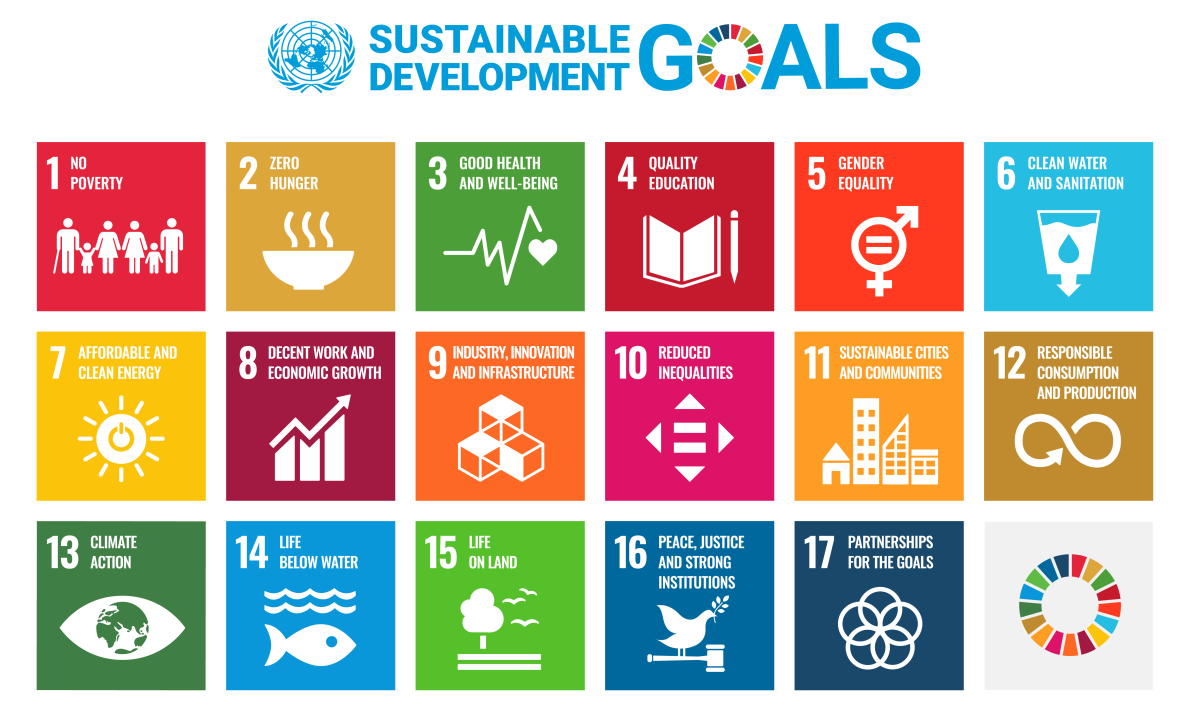
Figure 1. Sustainable Development Goals
The 17 Sustainable Development Goals are presented in a colorful visual format, each with a distinct color and symbolic meaning that reflects its scope. The format begins with Goal 1, represented in dark red and aiming to end poverty in all its forms everywhere. Goal 2, in orange, aims to completely eradicate hunger by improving food security and promoting sustainable agriculture. Goal 3, shown in light red, focuses on ensuring healthy lives and promoting well-being for all. Quality education, represented by Goal 4, is also shown in light red, highlighting the importance of providing inclusive and equitable education and promoting lifelong learning opportunities. Goal 5, on gender equality, is depicted in pink and aims to empower women and girls, as well as eliminate all forms of discrimination. Goal 6, in sky blue, emphasizes the need to ensure access to clean water and sanitation for all. Goal 7, in yellow, highlights the importance of affordable and clean energy, as well as ensuring access to modern, sustainable energy sources. Goal 8, shown in dark red, emphasizes the importance of decent work and economic growth in achieving sustainable development. Goal 9, representing industry, innovation, and infrastructure, is depicted in dark orange and emphasizes the need to strengthen infrastructure and establish a sustainable industrial base. Goal 10, in light pink, aims to reduce inequalities within and among countries. Sustainable cities are shown in goal 11, in golden yellow, highlighting the need to make cities safe, inclusive, and resilient. Goal 12, on responsible consumption and production, is depicted in yellow-brown and emphasizes the efficient use of natural resources. Climate action is represented in green in Goal 13, indicating the need for urgent action to combat climate change. Goal 14 is followed by blue, focusing on protecting life below water and conserving marine ecosystems. Goal 15, representing life on land, is shown in dark green and aims to conserve terrestrial ecosystems and combat desertification. Goal 16, in dark blue, calls for promoting peace and justice and building strong and accountable institutions. Finally, Goal 17, in light blue, emphasizes the importance of global partnerships in achieving all the previous goals (United Nations, 2017).
- The relationship between digital transformation and sustainable development
Digital transformation has become an inevitable choice for achieving sustainable development, given the rapid economic changes occurring globally. With the escalation of growth-related challenges, it has become imperative to develop more flexible economic models that rely on technology and innovation as key drivers of growth. Digital transformation enhances the efficiency of production and service sectors, increasing their competitiveness by streamlining processes, providing accurate data, and improving the quality of services. It also helps create an economic environment capable of adapting to changes, enhancing entrepreneurship and investment opportunities in the digital economy. This, in turn, opens the way for the creation of quality job opportunities, meeting a significant portion of the needs of the younger generations entering the labor market annually, thus enhancing the economic and social dimensions of sustainable development (Rashid, Jamal, Aziz, 2022). Information technology, electronic services, and communications also play a significant role in promoting sustainable development, as they contribute to enhancing the performance of government and private institutions and creating innovative management models, such as digital cities and technology incubators. They also support economic growth, contribute to the provision of new job opportunities, and help reduce poverty through the transition to an information society and the achievement of digital transformation goals. These modern technologies enable rapid access to information and prompt responses to citizens’ inquiries, thereby enhancing the efficiency of government services and improving productivity to achieve sustainable development goals. In this context, most governments are working to develop advanced technological infrastructure to provide a range of electronic services across various fields and activities (Bouafia, 2005).
Table 1. The positive contribution of digital transformation in supporting the Sustainable Development Goals
|
Sustainable Development Goals (SDGs) |
How economic transformation contributes to achieving it |
|
Goal 1: Eradicate poverty |
Access to digital financial services helps lift people out of poverty |
|
Goal 2: Zero hunger |
Providing technological solutions to farmers increases crop productivity and reduces energy and water consumption |
|
Goal 3 : Good health and well-being |
ICT services improve direct interaction between doctors and patients, and provide health information and telemedicine |
|
Goal 4: Quality education |
By equipping young people with digital skills, opportunities can be created that qualify them for the labor market |
|
Goal 5: Gender equality |
Promotes access to ICTs and digital skills building. |
|
Goal 6: Clean water and sanitation |
Digital technologies facilitate smart water and sanitation management, ensuring the availability and sustainability of these services for all. |
|
Goal 7 : Affordable and clean energy |
Advanced technologies will play a critical role in reducing global carbon emissions, electrifying transportation, and increasing energy efficiency. |
|
Goal 8: Decent work grows the economy |
Accelerating digital transformation and stimulating innovative entrepreneurship lead to new job generation and socio-economic development |
|
SDG 9: Industry, innovation and improved infrastructure |
ICTs contribute to promoting sustainable and inclusive industrialization, encouraging innovation, and establishing and maintaining resilient infrastructure |
|
Goal 10: Reduce inequalities |
Digital technologies help reduce inequality within countries, if disadvantaged segments are given access to technology and knowledge |
|
SDG 11 : Sustainable cities and communities |
Information and communication technologies are driving more efficient and sustainable management of water, transportation and energy systems in cities and communities |
|
SDG 12: Sustainable consumption and production |
Technology can boost sustainable consumption and production by adopting digital technologies in sectors such as agriculture, transport, energy, supply chain management and smart buildings. |
|
SDG 13: Climate action |
Smart applications help address and mitigate climate change by building prediction and early warning systems, and supporting climate resilience |
|
Goal 14: Life Below Water |
ICTs are widely used to monitor the changing marine environment and protect endangered wild animals |
|
Goal 15: Life on Land |
ICTs help identify and monitor wildlife populations, and protect endangered wild animals |
|
Goal 16 : Peace, justice and strong institutions |
E-government services contribute to improving the relationship between citizens and the state and increasing the efficiency of government service delivery |
|
SDG 17 : Partnerships to achieve the Goals |
Partnerships help build the physical infrastructure needed to deliver Internet services to remote areas as well as facilitate investment, innovation and inclusion. |
- Using digital transformation for optimal use in the production and service sectors
Digital transformation in the current era is an indispensable strategic path, and it is imperative for both governmental and private institutions to embrace it. The role of digital transformation in enhancing the efficiency and effectiveness of service delivery demonstrates that digital transformation is no longer just an option, but rather a necessity to keep pace with the technological and economic changes that characterize our contemporary environment. In Iraq, implementing digital transformation is a crucial means of enhancing the performance of various institutions, particularly in light of the country’s political and economic challenges. Improving organizational performance is inseparable from efforts to improve the standard of living for members of society. This is achieved by providing high-quality services that address citizens’ needs and contribute to reducing costs while increasing efficiency. Digital transformation enables the improvement of government services and productivity, whether by simplifying administrative procedures, developing digital infrastructure, or facilitating data-driven decision-making. This, in turn, leads to consolidating the foundations of community development and achieving the optimal use of resources, thereby contributing to the building of a more prosperous and advanced society. Hence, Iraq urgently needs to adopt integrated digital policies that enable it to overcome challenges and employ digital tools to support the productive and service sectors. This aims to enhance institutional performance and expand access to services, thereby contributing to comprehensive and sustainable development, despite current circumstances (Jassim, Al-Ghazali, 2024).
Many small and medium-sized enterprises (SMEs) around the world, particularly in developing countries, are beginning to recognize the importance of digital transformation in enhancing their performance and increasing their ability to adapt to changes. Some experiences demonstrate that these organizations’ reliance on modern technology has enabled them to organize internal work more efficiently, streamline procedures, and save time and effort. When organizations adopt digital systems, they can track inventory, manage sales, and distribute tasks to employees more efficiently and accurately. The experiences of some organizations suggest that this transformation was not merely a technical step, but rather an effective means of increasing productivity and delivering better services. The use of digital tools, such as task management applications and cloud systems, has helped improve communication between departments, accelerate decision-making, and reduce recurring errors. Organizations in Iraq face numerous challenges, but despite this, there is a clear desire to adopt these modern methods. When an organization begins using simple digital solutions such as electronic invoicing or an appointment booking system, it notices a real difference in the quality of service and its audience. As it advances in this field, the competition intensifies, particularly in rapidly evolving markets. Furthermore, digital transformation doesn’t stop improving internal operations; it opens the door to innovation and the introduction of new ideas. For example, a manufacturing organization can utilize data analytics tools to predict demand, or a service organization can develop an electronic platform to communicate with the public, thereby making services faster and easier. Therefore, implementing digital transformation in Iraqi organizations is not just a technical improvement; it is a path toward comprehensive development in the production and service sectors, enabling these organizations to overcome obstacles, provide high-quality services, and effectively contribute to building a more advanced and stable economy (Hasan, 2025).
- Role of digital transformation in predicting crops to maximize yield per unit of land
Crop forecasting is a crucial application of digital transformation in supporting sustainable agriculture and enhancing yield per unit of land. Thanks to these technologies, farmers can select the optimal crop that best suits their soil characteristics and climatic conditions without the need for costly or random field experiments. This type of forecasting relies on analyzing soil data, including nutrient levels (such as nitrogen, phosphorus, and potassium), moisture, and pH, as well as weather data, including temperature and rainfall. This data is fed into machine learning and deep learning models, such as decision trees, random forests, logistic regression, support vector machines, and deep neural networks, which have demonstrated very high accuracy, reaching approximately 99.96%, in predicting the most suitable crop. This approach enables the improved utilization of agricultural land by planting crops that are most compatible with their potential, resulting in increased production efficiency, reduced waste, and enhanced profitability. These models also provide farmers with accurate information that helps them make informed agricultural decisions, thereby enhancing the economic value of each dunum planted and reducing the risks associated with inappropriate crop selection. The use of digital transformation technologies in this context is not limited to increasing production alone. It represents a qualitative shift in how natural resources are managed and agricultural policies are directed towards greater efficiency and profitability, which aligns with the goals of sustainable development and maximizing the return per unit of agricultural land. Thus, artificial intelligence represents a strategic tool for addressing rural agricultural problems, promoting sustainability, and reducing poverty (Abdulkarim and Fahmy, 2025).
This transformation is a crucial pillar within the framework of comprehensive digital transformation, which extends beyond introducing modern technologies to encompass reshaping the entire agricultural system through a data-driven approach and system integration. Utilizing digital infrastructure, such as the Internet of Things, cloud platforms, and agricultural databases, can enhance the capacity of farmers and government institutions to plan evidence-based strategies, prioritize investments, and monitor production in real-time. In Iraq, which possesses tremendous agricultural potential but faces significant challenges related to water scarcity, declining soil fertility, and inadequate extension services, digital transformation in agriculture can serve as a crucial starting point for revitalizing this vital sector. By digitizing agricultural value chains and providing innovative applications tailored to local conditions, we can increase resource efficiency, reduce waste, and enhance local production in line with food security plans. Furthermore, the use of geographic information systems (GIS) and satellite imagery can enable stakeholders to continuously monitor environmental and agricultural changes and develop flexible policies that respond to climate fluctuations. The impact is not limited to production alone but also extends to empowering rural groups by creating a new digital business environment that stimulates local innovation, supports the establishment of small, transformational projects that enhance the added value of agricultural products, and opens up opportunities for direct marketing without intermediaries. With appropriate training, artificial intelligence can provide quality job opportunities for rural youth and help integrate them into the digital economy. Thus, AI-based digital transformation is not merely a technological trend, but a strategic development option that contributes to addressing structural imbalances in the Iraqi agricultural sector, establishing sustainable smart agriculture that achieves food security, narrows urban-rural development gaps, and directly contributes to achieving the Sustainable Development Goals (Mohammed, Shartouh, 2025).
- Role of digital transformation in developing education
Digital transformation is a fundamental pillar in improving the quality of education and enhancing the efficiency of the educational process, especially in higher education institutions. The use of modern digital technologies has contributed to the development of teaching and learning methods by providing innovative, interactive environments that enable both teachers and students to access and analyze information accurately and efficiently. Digital transformation has also presented new opportunities to develop academic curricula that meet the demands of the changing labor market, while enhancing distance learning through digital tools that provide learning experiences tailored to individual student differences. Digital transformation also helps reduce academic cheating through precise monitoring tools, improved communication channels between students and professors, and the provision of immediate assessments and performance analytics that contribute to providing appropriate support for each student. The digital learning environment contributes to increased interaction and active participation and provides continuous, personalized academic guidance through intelligent systems. These transformations have also reduced the routine burden on faculty by automating administrative tasks such as exam marking and question preparation, allowing them to focus on improving the quality of content and the educational process. Recent experiences demonstrate that digital transformation can quickly update curricula to keep pace with cognitive developments and provide personalized content that enhances students’ understanding and retention of information. This is in addition to providing support outside the classroom through smart digital assistants that provide appropriate education at the right time and place (Khorshid, 2023).
Recent studies indicate that the adoption of digital transformation technologies by higher education institutions in Iraq has contributed to improving student academic performance. Research results have shown a positive and significant relationship between the use of modern digital tools and academic achievement, reflecting the significant benefits that can be achieved by integrating these technologies into the educational environment. Digital transformation has helped reshape traditional teaching methods by designing interactive learning experiences that consider the individual abilities and needs of each student. Some educational platforms are now capable of providing flexible and personalized content that suits each student’s learning style and comprehension speed, enhancing the effectiveness of the educational process. This transformation has also enabled educational institutions to develop modern curricula, provide personalized academic support, and improve education management by automating repetitive administrative processes. Experience has shown that universities that have invested in their digital infrastructure have achieved better academic results and are distinguished by their ability to adapt to future changes. The impact of digital transformation extends to the efficiency of the educational institution itself, in terms of its ability to develop, innovate, and enhance its academic standing. Despite the many benefits, these technologies require effective governance to ensure their ethical use and prevent deviations such as bias or reduced employment opportunities. Therefore, building an integrated regulatory framework that ensures fairness and safety in the use of digital transformation in education is a necessary step for continued progress. Studies confirm that digital transformation has the potential to transform Iraqi higher education, not only by raising the level of achievement, but also by enhancing student readiness for the future and improving the overall outcomes of the educational system (Altememy, 2023).
- The impact of digital transformation on the health sector
The healthcare sector has undergone significant transformations in recent years due to the integration of digital transformation technologies, which have demonstrated their ability to enhance the quality of healthcare services, improve diagnostic accuracy, and increase the efficiency of medical decision-making. The results of several field studies, which surveyed professionals including ophthalmologists and dental surgeons, demonstrate that these technologies have had a tangible positive impact on various aspects of clinical practice, as follows (Ibrahim et al., 2022):
- Improving the accuracy and speed of medical diagnosis: Digital technologies such as optical coherence tomography (OCT), fundus photography, and intraoral scanning have contributed to reducing the time to disease detection and providing accurate indicators of conditions difficult to detect with traditional examinations. These tools have also enhanced physicians’ ability to make treatment decisions based on more reliable data.
- Enhancing patient confidence and increasing diagnostic clarity: Digital transformation technologies have contributed to clarifying complex medical information for patients and making the diagnostic process more transparent, enhancing the level of understanding between physicians and patients, and helping to make better treatment decisions.
- Improving the quality of medical care and the doctor-patient relationship: The use of modern digital tools has reduced the time doctors spend on diagnostic procedures, allowing them more time for human interaction with patients. This has been reflected in increased patient satisfaction and increased confidence in the healthcare services provided, especially when digital examinations are combined with traditional clinical examinations.
- Enhancing telemedicine services and care in remote areas: The digital transformation experience during the COVID-19 pandemic demonstrated its significant role in supporting telemedicine by facilitating access to patients in remote areas and providing accurate and continuous follow-up of cases, which has helped in early detection and reducing the complications of chronic diseases.
- Digital transformation as a supportive tool, not a substitute for doctors: Despite some challenges such as the cost of equipment and difficulties in obtaining insurance coverage, doctors agreed that digital transformation does not replace human expertise. Clinical analysis and physician intervention remain essential in confirming and interpreting the diagnosis to the patient, which strengthens patient confidence and enhances their safety.
In this context, adopting digital transformation in the Iraqi health sector is a strategic necessity, not an option, especially considering the increasing pressures on the health system and the need to improve operational efficiency and service quality. Digital transformation can contribute to the establishment of unified health information systems, electronically linking health institutions to facilitate data exchange, reduce medical errors, and accelerate access to care, particularly in rural and remote areas with weak health infrastructure. Integrating advanced digital technologies, such as electronic health records, telemedicine, and health monitoring applications, is also a fundamental step in developing the healthcare system and enhancing its response to crises and emergencies. This is crucial for achieving health equity and expanding coverage, as well as for the ability to analyze large medical datasets to inform evidence-based health decisions. Considering the existing challenges, the need for effective public-private partnerships and the support of international civil society organizations to provide an incubator for digital transformation in the health sector is highlighted. Investing in human resource training and raising awareness of the use of technology in diagnosis and treatment are two essential pillars for ensuring the success of this transformation. Accordingly, accelerating the pace of digital transformation in the Iraqi health sector, while paying attention to regulatory and legislative aspects, can significantly contribute to improving the quality of medical services, reducing costs, and achieving the efficiency of the health system, which will positively impact the health and safety of Iraqi citizens (Al-Mendalawi, 2023).
- Role of digital transformation in improving service efficiency
Digital transformation contributes to improving the efficiency of government services by reducing traditional procedures and accelerating transaction processing, which directly impacts the reduction of corruption and lowering operational costs. Digital tools build an efficient information environment where processes are managed accurately and transparently, enhancing government institutions’ ability to provide smoother and more efficient services. The use of digital technology in government services also contributes to better meeting citizens’ needs, particularly through smartphone applications and online platforms, which facilitate access to services at any time and from anywhere. Big data and smart analytics empower government agencies to make more informed and responsive decisions by analyzing information from multiple sources and responding to changes in real-time. This, in turn, enhances the management of vital sectors, including security, health, and education. Streamlining data exchange between government institutions also increases transparency and enhances citizens’ trust in their institutions by making information related to public activities and investment opportunities available. Digitization reduces reliance on human resources in administrative tasks, which contributes to reducing errors and irregularities resulting from human intervention, eliminating bureaucracy, and rationalizing expenditures. The digital environment also provides ample scope for offering innovative services that cater to individual needs and pave the way for geographic expansion to cover larger segments of the population. With the government’s reliance on advanced electronic systems, services become more flexible and efficient, characterized by continuity and rapid response to changes. These efforts have a significant impact on achieving the Sustainable Development Goals, as digital transformation supports improved institutional performance and governance. It contributes to building a government service model based on innovation and effectiveness, enhancing citizens’ quality of life and meeting their aspirations in a technologically accelerated world (Hashim, 2024).
- Role of artificial intelligence in developing local municipal services for sustainable development goals
Considering digital transformation, artificial intelligence (AI) represents a vital tool for enhancing the performance of public institutions, particularly municipalities, which are responsible for delivering essential services to citizens. Modern applications have demonstrated significant potential to improve efficiency, reduce costs, and enhance the quality of municipal services. In the field of waste management, some global municipalities are using AI technologies through smart bins equipped with sensors that monitor the level of filling and send real-time data to central systems. This enables efficient collection schedules, reducing the number of trips, conserving fuel, and lowering emissions. Predictive algorithms also enable the identification of peak waste production time and proactive planning. In the field of public safety, AI has helped enhance municipalities’ ability to manage crises and respond quickly to emergencies. Surveillance data analysis systems and cameras are used to detect risk patterns such as crimes or natural disasters and send alerts to the relevant authorities. Machine learning algorithms are also utilized in police stations to monitor crime indicators and predict potential crime locations, thereby enhancing community security. In traffic and transportation management, AI systems enable traffic flow optimization through smart traffic lights that automatically adjust according to vehicle density, reducing congestion and travel times. These systems are also used to predict congestion, adjust bus schedules, and enhance public transportation services according to the population’s needs. Applications also include improving the internal administrative performance of municipalities. Artificial intelligence algorithms are used to automate routine processes, such as issuing permits, analyzing population data, managing complaints, and increasing employee efficiency, thereby saving time and resources. The successful implementation of these technologies requires robust digital infrastructure, human resource training, and the establishment of appropriate regulatory and legislative frameworks. However, in the long term, artificial intelligence can transform municipal operations and contribute to building more efficient and responsive local institutions, which represents one of the pillars of institutional digital transformation in Iraq (Mohammed et al., 2025).
- Smart waste management techniques
Given the environmental challenges facing Iraq, particularly in waste management and urban accumulation, digital transformation emerges as a powerful tool that can make a significant difference in improving this reality. It has become possible to employ modern innovative technologies to develop an integrated waste management system that contributes to environmental protection and improves the quality of life. One of the most prominent of these technologies is smart containers, which are waste containers equipped with sensors that send real-time data on the container’s fullness. This type of data enables municipalities and specialized companies to schedule waste collection operations more accurately and efficiently, thereby reducing unnecessary trips and, consequently, decreasing fuel consumption and carbon emissions from truck traffic. Data analysis and artificial intelligence can also be used to determine the most efficient routes for waste collection trucks, thereby saving time and distance, increasing performance efficiency, and reducing congestion and noise. Within waste sorting stations, AI-powered robots can be utilized to sort recyclable materials accurately and efficiently, thereby enhancing the quality of recycling and increasing the quantity of recycled materials. The matter does not stop at collection and sorting. Waste can also be converted into energy through modern technologies such as safe incineration or biodegradation, providing alternative energy sources, supporting the move towards sustainability, and reducing reliance on traditional sources. Finally, interactive mobile phone applications directly engage citizens by enabling them to report environmental violations and encouraging them to sort waste or donate recyclable materials in exchange for digital incentives or rewards, thereby enhancing environmental awareness and collective responsibility (Hussein, 2025).
Conclusions
The results demonstrate that the concept of digital transformation is no longer an optional choice, but rather an urgent necessity for modernizing both the structure of the state and society simultaneously. We have become aware of how digital transformation can reshape the productive and service sectors, starting with improving institutional efficiency and enhancing the quality of services, developing the agricultural sector through accurate crop forecasting and maximizing the return per unit of land, and enhancing municipal performance and environmental services through artificial intelligence and innovative waste management. It has become clear that, if properly adopted and implemented, digital transformation can serve as the cornerstone of building a more resilient and responsive Iraqi economy, as well as a more just and sustainable society. Digital transformation does not stop at automation, but rather encompasses restructuring the administrative mindset, activating a data-driven culture, and empowering individuals and institutions with practical tools that contribute to informed decision-making, thereby enhancing the quality of life. In this regard, the call to develop integrated national policies for digital transformation in Iraq is no longer just a suggestion, but rather an urgent necessity for development that the government, the private sector, academic institutions, and civil society must share. With its human and natural resources, Iraq is well-positioned to become a regional model for comprehensive digital transformation, provided there is political will, a strategic vision, and data-driven planning. Digital transformation is not merely a technical project, but rather a civilizational one that reshapes the priorities of the state and society, consolidates the concepts of efficiency and transparency, and paves the way for comprehensive development and a prosperous future.
References
Abdul Aziz Qasim, The Warrior of Development and Sustainable Development in the Face of Reality’s Challenges from an Islamic Perspective, Dar Al-Jami’a Al-Jadida, Alexandria, 2011.
Adnan Mustafa Al-Bar, Digital Transformation Technologies. Article available at the following link on January 1, 2021: http://www.kau.edu.sa/GetFile.aspx?id=287966&fn=Article-of-this
Al-Mendalawi, M. D. (2023). An Insight into the Incorporation of Artificial Intelligence in Paediatrics Practice in Iraq. Sultan Qaboos University Medical Journal, 23(4), 564..
Central Statistical Organization, Sustainable Development Goals: Substantial Reforms, Ministry of Planning, Iraq, year not mentioned.
Barbier, E. B. (2007). Frontiers and sustainable economic development. Environmental and Resource Economics, 37(1), 271-295..
Emad Mohammed, Saadi Shartouh, The impact of AI applications in alleviating poverty in Iraqi rural communities, paper presented to the conference, Eighth International Scientific Conference of the Union of Arab Statisticians, Kurdistan Region, 2025, p. 26-30.
Haady Abdilnibi Altememy, The impact of AI capabilities of higher education institutions in Iraq on the academic performance of students (The role of AI-based technology applications as a mediator), Eurasian Journal of Educational Research, Ani Publishing, Vol. 104,No. 104, Turkey, 2023.
Hasan, H. H. (2025). The Digital Transformation Impact on Business Models in SMEs in Iraq. American Journal of Economics and Business Innovation, 4(2), 70-73..
Lundberg, M. (2021). Identifying the different viewpoints and key elements of digital transformation..
Mahmoud Hussein, The importance of city empowerment in Iraq: A case study of municipalities, International Journal of Sustainable Development and Planning, International Society for Information Technology and Engineering, UK, Vol. 20, No. 3, 2025.
Muhammad Hussein Abdul Majeed Hashim, Digital Transformation and Its Impact on the Performance of Government Service Institutions, Journal of the Faculty of Sharia and Law, Al-Azhar University, Egypt, Volume 29, Issue 4, 2024.
Ben Qarash, & Mohamed Nour El Din. (2024). Digital Transformation as a Governance Mechanism for Achieving Sustainable Development Goals in Algeria. Journal of Business and Trade Economics, 9(2), 500-517.
Munir Al-Hamza, Saihi Al-Khamisa, Manjia Bourhala, Digital Transformation and Its Role in Achieving Sustainable Development Goals, Sustainable Development, Journal of Environmental Studies and Sustainable Development, Al-Shahid Sheikh Al-Arabi Al-Tabsi, Algeria, Volume 2, Issue 2, 2022.
Murtada Rashid, Hassan Jamal, Nagham Aziz, Analyzing the Role of the Digital Economy in Achieving Sustainable Development in the Gulf Cooperation Council Countries and Iraq, research published at the conference (Proceedings of the International Scientific Conference of the College of Administration and Economics), University of Kufa, 2022.
Rachid Bouafia, Electronic Banking and the Algerian Banking System, Master’s Thesis, Faculty of Economics, Business, and Management Sciences, University of Blida, Algeria, 2005.
Rusu, Cultural barriers in digital transformation in a public organization: A case study of a Sri-Lankan organization In Information Systems, 17th European, Mediterranean, and Middle Eastern Conference, Dubai, United Arab Emirates, November, Springer International Publishing, 2020.
Saeed Abdel Hamid Ibrahim, Human Development in the Era of Artificial Intelligence Technologies, Dar Al-Ilm Wal-Iman, First Edition, Egypt, 2025.
Samir Abdel Qader Khattab, Mahran Saad Al-Mihi Abdel Latif, Recycling University Education: An Approach to Achieving Sustainable Development Goals, Al-Azhar University, Education Journal, Volume 3, Issue 1 196, 2022.
Sarab Jabbar Khorshid, Artificial Intelligence Strategy in Education, Iraqi University Journal, College of Education, Iraqi University, Volume 20, Baghdad, 2023.
Thabit Sultan Mohammed, Karim Mohammed Aljebory, Ahmed Thabit Sultan, Towards Achieving the UN Sustainable Development Goals: The Role of AI in Municipality Services, Paper presented at the Eighth International Scientific Conference of the Union of Arab Statisticians, Kurdistan Region, 2025.
United Nations, Sustainable Development Goals Report 2017, New York, 2017.
Vial, G. (2021). Understanding digital transformation: A review and a research agenda. Managing digital transformation, 13-66..
Younis Marai Abu Samra, The Importance of Transformation in the Banking Sector, 24th Annual Conference on Crisis Research, Ain Shams University, Egypt, 2019.
Saleh Ibrahim, Y., Khalid Al-Azzawi, W., Hamad Mohamad, A. A., Nouri Hassan, A., & Meraf, Z. (2022). [Retracted] Perception of the Impact of Artificial Intelligence in the Decision‐Making Processes of Public Healthcare Professionals. Journal of Environmental and Public Health, 2022(1), 8028275.
Zahraa Kamel Jassim, Fadhel Radhi Al-Ghazali, Digital Transformation and Its Impact on High Performance of Public Sector Organizations in Iraq, Al-Ghari Journal of Economic and Administrative Sciences, College of Administration and Economics, University of Kufa, Najaf, Volume 20, Special Issue, 2024.
Zaidoun Ahmed Abdulkarim, Alaa Hassan Fahmy, Soil Quality Based Crop Prediction Using Machine and Deep Learning Models, Paper presented at the Eighth International Scientific Conference of the Union of Arab Statisticians, Kurdistan Region, 2025.
 English
  Arabic