
الكتلة السوداء في الكونغرس وتطور دورها السياسي خلال عهد الرئيس الأمريكي ريتشارد نيكسون (1969م-1974م)
رواء صباح كناوي1
1 جامعة الكوفة، كلية التربية للبنات، قسم التاريخ، العراق.
The Black Caucus in Congress and the Evolution of Its Political Role during the Presidency of U.S. President Richard Nixon (1969–1974)
Rawaa Sabah Kanawi¹
1 University of Kufa, College of Education for Women, Department of History, Iraq.
DOI: https://doi.org/10.53796/hnsj75/40
المعرف العلمي العربي للأبحاث: https://arsri.org/10000/75/40
المجلد (7) العدد (5). الصفحات: 734 - 756
تاريخ الاستقبال: 2026-04-15 | تاريخ القبول: 2026-04-22 | تاريخ النشر: 2026-05-01
المستخلص: يهدف هذا البحث إلى دراسة الكتلة السوداء في الكونغرس الأمريكي وتحليل تطور دورها السياسي خلال عهد الرئيس الأمريكي ريتشارد نيكسون (1969-1974م)، من خلال بيان دورها في تعزيز تمثيل الأمريكيين من أصل أفريقي داخل المؤسسة التشريعية الأمريكية، وتنبع مشكلة البحث من محدودية الدراسات العربية التي تناولت تأثير الكتل البرلمانية المرتبطة بالأقليات في صناعة القرار السياسي الأمريكي، فضلًا عن الحاجة إلى تفسير كيفية انتقال الأمريكيين من أصل أفريقي من هامش الاحتجاج السياسي إلى مركز التأثير المؤسسي داخل الكونغرس، كما تبرز أهمية البحث في كونه يسلط الضوء على تجربة سياسية رائدة أسهمت في إعادة تشكيل مفهوم تمثيل الأقليات داخل النظم الديمقراطية الحديثة، ويكشف طبيعة العلاقة بين الكتلة السوداء وإدارة نيكسون في ظل الخلافات المرتبطة بالحقوق المدنية، والتمييز العنصري، والعدالة الاقتصادية، والحرب في فيتنام، والسياسات الخارجية تجاه أفريقيا، واعتمد البحث على المنهج التاريخي التحليلي من خلال الاستفادة من الوثائق الرسمية، ومحاضر الكونغرس، والدراسات الأكاديمية المتخصصة، وتوصل إلى أن الكتلة السوداء نجحت في ترسيخ حضورها السياسي، وتوسيع نفوذها داخل اللجان البرلمانية، وتحويل المطالب الاجتماعية للأفارقة الأمريكيين إلى أجندة تشريعية مؤثرة، رغم ما واجهته من عقبات حزبية ومؤسسية، الأمر الذي جعلها نموذجًا مهمًا في تطور المشاركة السياسية للأقليات داخل الولايات المتحدة الأمريكية.
الكلمات المفتاحية: الكتلة السوداء، الكونغرس الأمريكي، ريتشارد نيكسون، الأقليات السياسية، الحقوق المدنية.
Abstract: This research aims to examine the Black Caucus in the United States Congress and analyze the development of its political role during the presidency of Richard Nixon (1969–1974), by clarifying its role in strengthening the representation of African Americans within the American legislative institution. The research problem stems from the limited Arabic studies that have addressed the influence of minority-based parliamentary blocs on political decision-making in the United States, as well as the need to explain how African Americans moved from the margins of political protest to the center of institutional influence within Congress. The significance of this study lies in highlighting a pioneering political experience that contributed to reshaping the concept of minority representation within modern democratic systems, while revealing the nature of the relationship between the Black Caucus and the Nixon administration amid disputes related to civil rights, racial discrimination, economic justice, the Vietnam War, and U.S. foreign policy toward Africa. The study adopts the historical-analytical method through the use of official documents, congressional records, and specialized academic studies. It concludes that the Black Caucus succeeded in consolidating its political presence, expanding its influence within congressional committees, and transforming the social demands of African Americans into an influential legislative agenda despite the partisan and institutional obstacles it faced, making it an important model in the development of minority political participation in the United States.
Keywords: Black Caucus, United States Congress, Richard Nixon, Political Minorities, Civil Rights.
المقدمة
عُدت الكتلة السوداء أَحدى أَكثر النماذج رُقيًا، وحداثة في تمثيل الأَقليات داخل النظم الدستورية الحديثة؛ باعتبارها أَداة مؤسسية أَعادت توزيع الأَقليات بشكلها الصحيح داخل النظام السياسي في الدولة. ومنذ تأسيسها في أَوائل سبعينات القرن العشرين، وتحديدًا عام (1971م) تحولت لفاعلٍ تشريعي، سعت إِلى ترسيخ وجودها في صناعة القرار الفيدرالي، لخدمة المجتمعات الأَفريقية الأَمريكية.
تنبع أَهمية الموضوع، من إِسهام الكتلة السوداء الفاعل في منح الأَفارقة الأَمريكيين دورٍ كبيرٍ في السياسة الحديثة على أَثر تهميشها، وقلب عالم الحركة السوداء من مواقع الاحتجاج في الساحات العامة، والعمل، إِلى الريادة في صناعة الأَحداث السياسية الهامة للولايات المتحدة الأَمريكية خلال النصف الثاني من القرن العشرين. من خلال أَصرارها وعزيمتها، على ضرورة تطبيق الحكومة للتشريعات الفيدرالية ففازت بتمثيلها لملفات العدالة الاجتماعية، والاقتصادية، والصحة، والتعليم مستخدمةً أَسلوب الضغط تارةً، والمناورة تارةً أُخرى.
قسم البحث إلى مقدمة ومبحثين مع خاتمة ذكرت فيها الباحثة أهم النتائج التي توصلت إِليها، اختص المبحث الأَول المعنون بـ: “البدايات التاريخية لنشوء الكتلة السوداء في الكونغرس” بدراسة بدايات دخول الأَفارقة الأَمريكيين المعترك السياسي للحصول على حقوقهم ولو بشكلٍ نظري بعد تطبيق سياسة إِعادة الإِعمار(1870م-1877م). خلالها عمل الأَفارقة الأَمريكيين مع الحزب الجمهوري؛ لإِلتزامه بمبادئ العدالة الاجتماعية، والحريات، والاقتراع الحر، استمر الوضع إِلى ثلاثينات القرن العشرين إِذ سرعانما تحولوا إِلى تأَييد الحزب الديمقراطي؛ على إِثر مواقف الرئيس الأَمريكي (فرانكلين روزفلت Franklin Delano Roosevelt 1933م-1945م) بعد أَخذه لزمام المبادرة الخاصة بتشريعات الحقوق المدنية، التي أَثرت على حياتهم، وانتزعت ناخبيهم نحو الحزب الديمقراطي. فأَدركوا ضرورة توحيد الجهود السياسية لتسهيل التواصل بين ممثليهم السياسيين، وقيادات الكونغرس، التي أَدت في نهاية الأَمر الى تشكيل الكتلة السوداء عام (1971م).
أما المبحث الثاني الذي كان بعنوان” دور الكتلة السوداء في صياغة التشريعات الفيدرالية” فكان للكتلة السوداء دورها الواضح في أَن تكون رائدة، وفاعلة في صناعة الأَحداث السياسية، ليس على الصعيد الداخلي فحسب، بل على الصعيد الخارجي أَيضًا. فكان لها صولة خاصة بالمطالبة بالوحدة العربية، ومناهضة اسرائيل. وأوضحت الباحثة الانتقالة الاستراتيحية لأَعضاءها في الكونغرس فمن الإِقصاء إِلى الدخول لمراكز صناعة القرار، وحصولهم على رئاسة، وعضوية عدد من اللجان الفرعية والدائمة، وبهذا انتقلت الكتلة من خطاب الاعتدال، والمساواة، إِلى الصراع على إِدارة موارد الدولة.
اعتمدت الباحثة على عدد من المصادر، كان من بين أبرزها أُطروحة للباحث ج. هـ. سميث، بعنوان ” الكتلة السوداء في الكونغرس: دراسة للسلوك التشريعي للممثلين السود في الكونغرس الأمريكي”.
J. H. Smith, The Congressional Black Caucus, A Study OF Black Representatives Legislative Behaviour In The United States Congress. ، ورسالة ماجستير للباحث برادلي ويليام ريفرز، بعنوان “الكتلة السوداء في الكونغرس، السياسة الأمريكية تجاه جنوب أفريقيا 1970م-1980م”.
Bradley William rivers, The congressional Black Caucus American Policy toward southern Africa 1970-1980.
المبحث الأَول: البدايات التاريخية لنشوء الكتلة السوداء في الكونغرس
أولاً: المشاركة السياسية للأَفارقة الأَمريكين خلال عصر إِعادة الإِعمار
منح إعلان تحرير العبيد لعام (1863م)، وما تلاه من اعتماد لتعديلات الحرب الأَهلية الأَمريكية American Civil War))(بدأت الحرب الأَهلية الأَمريكية رسميًا في 12 نيسان (1861م)، عندما أطلقت قوات الكونفدرالية النار على حصن سمتر التابع للولايات المتحدة الأَمريكية قبالة ساحل تشارلستون، كارولاينا الجنوبية. بعدما انفصلت 11 ولاية جنوبية عن بقية الولايات. دارت الحرب بين الشمال، الذي أُطلق عليه الاتحاد، والجنوب، الذي أُطلق عليه عادةً الكونفدرالية. أنتهت باستسلام الجنرال روبرت إِدوارد لي ((Robert Edward Lee في 9 نيسان (1865م)) (Hourly History, 2019; Rees, 2012, pp. 1–5) على الدستور الفيدرالي، الأَفارقة الأَمريكيين نظريًا الحقوق السياسية التي تمتع بها البيض (Rivers, 2005, pp. 19–67; Schulman, 2009, p. 126). اتخذ جون ر. لينش. Lynch) John. R) الذي سيأتي الحديث عنه فيما بعد، وآخرون من الأَفارقة الأَمريكيين، خطواتهم الأَولى المترددة نحو المشاركة في العملية الانتخابية كوسيلة لتحسين الوضع الاجتماعي والاقتصادي والسياسي لهم. وأُعترف بالمشاركة السياسية وسيلة لتحويل نظرية المساواة إلى واقع عملي. وبمجرد تطبيق سياسة إعادة الإعمار (1870م-1877م) The Reconstruction era) ) (يشير المصطلح إلى المدة الممتدة من نهاية الحرب الأهلية عام (1865م -1877م).
أحدثت الحقبة تغييرات كبيرة في قانون الحريات المدنية. إذ حظر التعديل الثالث عشر للدستور العبودية، ومنع التعديل الرابع عشر الولايات من حرمان الأشخاص من الإجراءات القانونية الواجبة أو الحماية المتساوية بموجب القانون، وضمن التعديل الخامس عشر الحق في التصويت. ومع ذلك، من الناحية العملية، لم توفر تعديلات الحرب الأهلية سوى القليل من الحماية الفعلية للأَمريكيين من أَصل أَفريقي. بحكم تفوق العرق الأبيض) (Rothman et al., 2009, p. 133; Sebree, 2019, pp. 16–17; Stroud & Schomp, 2007, pp. 6–9)، التي أقرها الكونغرس، انتهز العديد من الأَفارقة الأمريكيين ذوي الميول السياسية الفرصة للوصول إلى مناصب نفوذ في الولايات الجنوبية، وبحلول أوائل سبعينات القرن التاسع عشر، تمكن عدد قليل منهم من الوصول إلى قمة السلطة السياسية في الولايات المتحدة الأَمريكية، وعضوية الكونغرس الفيدرالي (Smith, n.d., pp. 6–7).
كانت غالبية أعضاء الكونغرس من الأَفارقة الأَمريكيين في هذه المدة رجالًا معتدلين؛ لقبولهم أيديولوجية عدم التدخل الصارمة في الشؤون السياسية، واعتقدوا أنه بمجرد وضع الأَفريقي الأمريكي على قدم المساواة، يمكنه تهيئة الظروف لتقدمه الذاتي في المجتمع الأَمريكي ورعاية تشريعات مصممة خصيصًا لوضعهم على قدم المساواة مع الأمريكي الأبيض (Smith, n.d., p. 31).
أُنتخب أَول عضو منهم في مجلس النواب، جون دبليو مينارد (John W. Maynard ) من ولاية لويزيانا طعن خصمه ومعارضته في انتخابه، منعته من الجلوس في الكونغرس، في عام (1868م) هزم مينارد منافسه الأَبيض بحصوله على (5107) مقابل (2833) صوتًا، لكنه حُرم من مقعده (أصبح أَول أَمريكي من أَصل أَفريقي يُنتخب لعضوية مجلس النواب الأَمريكي، لم يُسمح له بتولي مقعده بسبب نزاع حول نتائج الانتخابات. انتقل مينارد إلى فلوريدا، إذ شغل منصبًا فيدراليًا، وحرر صحيفة، وخدم في الولاية) (Davis et al., 2022, pp. 3–4) ، ونتيجة لذلك لم يؤدي أَول أَفريقي أَمريكي اليمين الدستورية أَلا بانعقاد المؤتمر الحادي والأَربعين (1869م-1871م) (هو اجتماع للفرع التشريعي للحكومة الفيدرالية للولايات المتحدة الأَمريكية، يتألف من مجلس الشيوخ الأَمريكي ومجلس النواب، ينعقد في واشنطن العاصمة بدأت المؤتمرات تعقد لأَول مرة من 4 آذار (1789م)- 3 آذار (1791م) تضمن ثلاث جلسات. وهو أَول مؤتمر يُعقد بعد أَن تشكلت الولايات المتحدة الأَمريكية برئاسة نائب الرئيس جون آدامز (John Adams) ، ورئيس مجلس الشيوخ برو تيمبور( (Pro Tempur، وجون لانغدون John Langdon، وسكرتير مجلس الشيوخ صموئيل أ. اوتيس( (Samuel Allyne Otis، ورئيس مجلس النواب فريدريك أ. موهلينبرج (Frederick A. Muhlenberg) ، والمتحدث بأسم البيت الأَبيض جون بيكلي (John Beckley) (Biographical Congressional Directory, 1913, pp. 30–32) ، بعضوين في مجلس النواب وعضو عن مجلس الشيوخ، وبعد ذلك انعقد المؤتمر الثاني والأَربعين (1871م-1873م) بخمسة منهم ينظر إلى الجدول رقم (1)، أَما المؤتمر الثالث والأَربعين (1873م-1875م) بسبعة أعضاء، والمؤتمر الرابع والأَربعين مع أعلى مستوى تاريخي آنذاك ثمانية منهم، وبحلول المؤتمر السابع والأَربعين (1881م-1883م) انخفض العدد إلى اثنين ((Rivers, 2005, p.126.
عُقد المؤتمر الثاني والخمسين بحضور عضو واحد فقط، ظل عدد الأَعضاء واحدًا حتى عام (1901م) عندما غادر جورج اتش وايت (George H. White) مجلس النواب وهو آخر أعضاء الكونغرس الأَفارقة الأَمريكيين في عصر إعادة الأَعمار، وبهذا انتهت المدة الأولى لتمثيلهم (تضافرت أحداث عدة لإنهاء دور الأَفارقة الأَمريكيين في الكونغرس بشكلٍ كبير. إذ أنهى الحزب الجمهوري دعمه النشط، للسلطة السياسية للأَفارقة الأَمريكيين في الجنوب؛ نتيجة للانتخابات الرئاسية لعام (1876م) التي هُزم فيها الحزب بزعامة روثرفورد ب. هايز (Rutherford B. Hayes)، أمام الديمقراطي صموئيل تيلدن (Samuel Tilden). فستخدم البيض أساليب عدة لترهيب الناخبين الأَفارقة الأَمريكيين في الجنوب؛ نتيجة إقرار قوانين جيم كرو، وتشكيل الكو كلوكس كلان( Ku Klux Klan)) ((Jaynes, 2005, Vol. 1, p. 216; Rivers, 2005, p. 126.
بتقييم السلوك التشريعي لهم خلال هذه المدة الممتدة لثلاثين عامًا، نستنتج أنهم دعموا باستمرار سياسات الحزب الجمهوري حتى بعد تخليهم عن قضية الحقوق المدنية والمساواة السياسية للأفارقة الأَمريكيين (تجاهل الحزب الديمقراطي إلى حد كبيرٍ الناخب الأَمريكي الأَفريقي، ولم يفعل الجمهوريون أكثر من إبقاء الأَفارقة الأمريكيين سياسيًا ضمن صفوفهم. فلم يشعروا بأنهم مضطرين لترشيح مرشحين منهم للكونغرس؛ والسبب الرئيس في ذلك هو أنه خلال حقبة إعادة الإعمار، لم يكن تصويت الأَفارقة الأَمريكيين في الشمال مهمًا؛ لأنه لم يشكل أكثر من (4%) من الناخبين المحتملين في أي ولاية شمالية) (Smith, n.d., pp. 34–35). فاستمروا في التماهي مع الحزب الجمهوري لمدة طويلة حتى بعد تخليهم عن سياسات إعادة الإعمار. تفسير ذلك هو أَن الذين أرادوا المشاركة في التيار الرئيس للحياة السياسية الأمريكية لم يكن لديهم خيار آخر سوى العمل لصالح الحزب؛ لألتزامه بالمثل العليا التي طرحها، في المساواة الاجتماعية، والتعليم، والحرية، والاقتراع الحر. عكس النائب الأَمريكي من أَصل أَفريقي، جون ميرسر لانغستون (John Mercer Langston) رأي الأغلبية عندما ذكر في عام (1892م): “عندما يتعلق الأمر بمسألة العرق، فإن الجمهوريين جميعهم ديمقراطيون”. (Smith, n.d., pp. 30–32) ، وعندما سُئل النائب روبرت سمولز (Robert Smalls) عام (1912م) عن سبب كونه لا زال جمهوريًا قويًا، أجاب :”لا يمكنني أبدًا أن أغفل حقيقة أنه لولا الحزب الجمهوري، لما كنتُ أبدًا شاغلًا لأي منصب من أي نوع من عام (1862م) حتى هذا التاريخ” (as cited in Smith, n.d) .
جدول رقم (1)
الأَعضاء الأَفارقة الأَمريكيين في الكونغرس خلال (عصر إعادة الإعمار) (Smith, n.d., pp. 4–5)
|
الأَسم |
الأَسم باللغة الأَنكليزية |
الولاية |
مدة الولاية |
الكونغرس الأًمريكي |
|
السيناتور هيرام ر. ريفلز |
Hiram. R. Revels |
الميسيسبي |
25 شباط (1870م)-3 آذار (1871م) |
41 |
|
النائب جوزيف إتش . ريني |
Joseph H.Rainey |
كارولاينا الجنوبية |
12 كانون الأَول (1870م)-3 آذار (1879م) |
41-45 |
|
النائب جيفرسون ب. لونغ |
Jefferson F. Long |
جورجيا |
16 كانون الثاني (1871م)-3 آذار (1871م) |
41 |
|
النائب روبرت سي . ديلارج |
Robert. C.De Large |
كارولاينا الجنوبية |
4 آذار (1871م)-24 كانون الثاني (1873م) |
42 |
|
النائب روبرت ب. إليوت |
Robert Brown Elliott |
كارولاينا الجنوبية |
4 آذار (1871م)-كانون الثاني (1873م) 1 كانون الأَول (1873م)-1 تشرين الثاني (1874م) |
42-43 |
|
النائب بنجامين إس . تيرنر |
Benjamin Sterling Turner |
ألاباما |
4 آذار (1871م)-3 آذار (1873م) |
42 |
|
النائب جوزيا تي. وولس |
Josiah T. Walls |
فلوريدا |
4 آذار (1871م)-29 كانون الثاني (1873م) 1 كانون الأَول (1873م)-3 آذار (1875م) 6 كانون الأَول (1875م)-19 نيسان (1876م) |
44،43،42 |
|
النائب ريتشارد إتش. كاين |
Richard H.Cain |
جنوب كارولاينا |
1 كانون الأَول (1873م)-3 آذار (1875م) 15 تشرين الأَول (1877م)-3 آذار (1879م) |
45،43 |
|
النائب جون ر. لينش |
. Lynch John. R |
ميسيسبي |
1 كانون الأَول (1873م)-3 آذار (1877م) 29 نيسان (1882م)-3 آذار (1883م) |
43-44 47 |
|
النائب ألونسو ج. رانسير |
Alonzo J. Ransier |
كارولاينا الجنوبية |
1 كانون الأَول (1873م)-3 آذار (1875م) |
43 |
|
النائب جيمس ت. رابير |
James. T. rapier |
ألاباما |
1 كانون الأَول (1873م)-3 آذار (1875م) |
43 |
|
السيناتور بلانش ك. بروس |
Blanche.k. Bruce |
الميسيسبي |
5 آذار (1875م)-3 آذار (1881م) |
44-46 |
|
النائب جيريميا هارالسون |
Jeremiah Haralson |
ألاباما |
6 كانون الأَول (1875م)-3 اذار (1877م) |
44 |
|
النائب جون أ.هايمان |
John Adams Hyman |
كارولاينا الشمالية |
6 كانون الأَول (1875م)-3 آذار (1877م) |
44 |
|
النائب تشارلز إي. ناش |
Charles.E. Nash |
لويزيانا |
6 كانون الأَول (1875م)-3 آذار (1877م) |
44 |
|
النائب روبرت سمولز |
Robert Smalls |
كارولاينا الجنوبية |
6 كانون الأَول (1875م)-3 آذار (1879م) 19 حزيران (1882م)-3 آذار (1883م) 31 آذار (1884م)-3 آذار (1887م) |
44-45 |
|
النائب جيمس إي. أوهارا |
James G. O’Hara |
كارولاينا الشمالية |
3 كانون الأَول (1883م)-3 آذار (1887م) |
48-49 |
|
النائب هنري بي. تشيثان |
Henry Plummer Cheathan |
كارولاينا الشمالية |
2 كانون الأَول (1889م)-3 آذار (1893م) |
51-52 |
|
النائب جون ميرسر لانغستون |
John Mercer Langston |
فرجينيا |
23 أيلول (1890م)-3 آذار (1891م) |
51 |
|
النائب توماس إي. ميلر |
Thomas E. Miller |
كارولاينا الجنوبية |
24 أيلول (1890م)-3 آذار (1891م) |
51 |
|
النائب جورج دبليو موراي |
George W. Murray |
كارولاينا الجنوبية |
7 آب (1893م)-3 آذار (1895م) 4 تموز (1896م)-3 آذار (1897م) |
53 54 |
|
النائب جورج إتش وايت |
George H. White |
كارولاينا الشمالية |
15 آذار (1897م)-3 آذار (1901م) |
55-56 |
ثانياً: بدايات تشكيل الكتلة السوداء داخل الكونغرس الأَمريكي
شهد مطلع القرن العشرين استعادة تدريجية للمجالس التشريعية في الولايات الجنوبية من قبل الديمقراطيين البيض المحافظين، بين عامي (1901م) و15 نيسان (1929م) أنهى انتخاب اوسكار ديبرست( Oscar De Priest) جمهوري عن الينوي عام (1929م) مدة ثمانية وعشرين عامًا، حُرموا خلالها من التمثيل الانتخابي، ونجح بالحصول على ترشيح للكونغرس والفوز في الانتخابات العامة، وأَدى اليمين الدستورية في الكونغرس الحادي والسبعين (1929م -1931م ((Rivers, 2005, p. 126).
أثبت نقل الجمهورية السوداء من الجنوب إلى الشمال أنه قصير الأجل؛ فالهجرة شمالًا لعشرات الآلاف من الأَفارقة الأَمريكيين الجنوبيين الفقراء التي حدثت في العقود الثلاثة الأَولى من القرن العشرين أدت إلى تغيير الوضع السياسي. ففي بحثهم عن العمل، مال المهاجرون بطبيعة الحال إلى التمركز في المدن الصناعية الشمالية الرئيسة، وخاصة شيكاغو، ونيويورك اللتين كانتا تقعان عند نقاط نهاية خطوط السكك الحديدية القارية. ونتيجة لذلك، شهد التركيب الديموغرافي للعديد من مناطق المدينة تغييرًا سريعًا؛ إذ اكتسب بعضها أعدادًا كبيرة منهم. وبهذا أَدرك الجمهوريون البيض الشماليين على الفور المزايا الانتخابية التي يمكن جنيها في مناطق المدينة؛ من خلال تسخير الولاء التقليدي لهم (Smith, n.d., p. 35).
كان للواقع الاقتصادي لسنوات الكساد أثر في انتزاع الناخبين من الأَفارقة الأَمريكيين الشماليين من ارتباطهم بالجمهوريين نحو الديمقراطيين(على الرغم من تردد الرئيس فرانكلين ديلانو روزفلت(Franklin Delano Roosevelt 1933م-1945م) في أخذ زمام المبادرة في تشريعات الحقوق المدنية، إذ حوّل الأمريكيون من أصل أفريقي ولاءهم، من حزب لينكولن (الجمهوريين) إلى الحزب الديمقراطي. هناك أسباب عدة لهذا التحول التاريخي: دفاع السيدة الأولى إليانور روزفلت (Eleanor Roosevelt) ، ووزير الداخلية هارولد إيكس( (Harold LeClair Ickesعن قضايا الحقوق المدنية أولًا، لقاء الرئيس بشكل دوري بمجموعة من المستشارين الأمريكيين من أصل أفريقي، أُطلق عليهم اسم “مجلس الوزراء الأسود” ثانيًا. وفي عام (1941م)، أصدر الرئيس أمرًا تنفيذيًا حظر التمييز في صناعة الدفاع ثالثًا. وأخيرًا، اعتقادهم أن روزفلت، على الرغم من أوجه قصوره، حاول تحسين ظروف الفقراء والطبقة العاملة منهم) (Resnick, 2020, p. 318)، ففي عام (1935م)، هُزم ديبرست على يد الديمقراطي آرثر دبليو ميتشل( Arthur W. Mitchell)، مما أَدى إلى بداية جديدة تمثلت في رعاية الأَمريكيين من أَصل أَفريقي للحزب الديمقراطي (Smith, n.d., pp. 36–37; Rivers, 2005, p. 126).
أَسباب عدة دعت أعضاء الكونجرس الأَفارقة الأَمريكيين يدركون ضرورة الحاجة إلى تشكيل هيئة تشريعية تضم مئات الأعضاء؛ لتقوية نفوذه السياسي لصالح ناخبيه الأَفارقة الأَمريكيين بشكلٍ خاص، والأقلية الأمريكية السوداء بشكل عام أَولًا، وأصبح عدد كبير من الأمريكيين البيض أكثر استجابةً للحاجة إلى تشريعات فيدرالية للحقوق المدنية ثانيًا. وفي الوقت نفسه، ازدياد قوة الحملة لإنهاء الفصل العنصري القانوني، واشتداد نزوح السكان الأَفارقة الأَمريكيين إلى المدن بحثًا عن فرص العمل بشكل ملحوظ بعد عام (1945م) ثالثًا ((Smith, n.d., pp. 83–90.
دراسة الطريقة التي تعامل بها أعضاء الكونجرس الأَفارقة الأَمريكيين الشماليين الأوائل مع هذه المشكلة أمر بالغ الأهمية؛ وذلك لفهم السلوك التشريعي لهم بشكلٍ كامل ((Smith, n.d., p. 38، نُظم التجمع من خلال جهود النائب وويليام داوسون((William Dawson (ديمقراطي – إلينوي)(1943م). وآدم كلايتون باول ( Adam Clayton Powell Jr.) (ديمقراطي – نيويورك)(1945م)، وتشارلز ديجز (Charles Diggs, Jr.) (ديمقراطي – ميشيغان) الذي أُنتُخب لأَول مرة لمجلس النواب عام (1954م)، وأُنتخب كلًا من: روبرت نيكس (Robert Nix) (ديمقراطي – بنسلفانيا) عام (1957م)، وأوغسطس هوكينز( Augustus Hawkins) (ديمقراطي – كاليفورنيا) عام (1962م)، وجون كونيرز John Conyers)) (ديمقراطي – ميشيغان) عام (1964م) انظر الجدول رقم 2 (Smith, n.d., p. 97).
كان للأَفارقة الأَمريكيين في الكونغرس دور كبير، ومواقف سياسية ثابتة على رأسها :فيتنام، ومنهم النائب جون كونيرز الذي اتخذ موقفًا ثابتًا تجاه مسألة السياسة العسكرية للولايات المتحدة في فيتنام(Smith, n.d., p. 97)، إذ اقترح في 5 آيار (1965م) خلال جلسة لمجلس النواب بعد قرار مشترك (HJ Res. 447) إضافة 700 مليون دولار إلى مخصصات الدفاع للسنة المالية المذكورة؛ لغرض محدد هو تصعيد العمليات العسكرية الأَمريكية في فيتنام. كمنت أهمية القرار المشترك في أن طلب الاعتمادات التكميلية مَثَّلَ المرة الأولى التي سعت فيها إدارة الرئيس الأَمريكي ليندون جونسونLyndon B. Johnson) 1963م-1968م)( ليندون جونسون (1908م-1973م): ولد في بلدة أوكهيرست الصغيرة شرق تكساس في 6 حزيران (1924م). التحق بجامعة بايلور عام (1941م)، خلال عام (1948م) فاز في الانتخابات التمهيدية بفارق 87 صوتًا، وحقق فوزًا ساحقًا في الانتخابات العامة. أُنتُخب نائبًا للأقلية عام (1951م)، وزعيمًا للأقلية عام (1953م)، وزعيمًا للأغلبية عام (1955م). بعد دقائق قليلة من الساعة 2:30 مساءً في 27 تشرين الأَول (1963م)، دخل جونسون قاعة مجلس النواب الأمريكي. في غضون 24 ساعة من أَغتيال الرئيس الأَمريكي جون أَف. كينيدي John F. Kennedy) 1961-1963م)، ليصبح رئيسًا للبلاد) (Watson & Markman, 2014; Lerner, 2012, pp. 1–2)، للحصول على أموال دفاعية إضافية للاستخدام الحصري في فيتنام(Smith, n.d., p. 96)؛ لم يكن القرار خاص بالحصول على الأَموال الاضافية فقط، ولكنه أيضًا تصويت لاستمرار الجهود لوقف العدوان الشيوعي في جنوب فيتنام(في رسالته إلى الكونجرس المصاحبة لطلب أموال إضافية لتلبية الاحتياجات العسكرية المتزايدة في فيتنام، صرح الرئيس جونسون: “هذا ليس تخصيصًا روتينيًا. فكل عضو في الكونجرس يدعم هذا الطلب يصوت أيضًا على المثابرة في جهودنا لوقف العدوان الشيوعي في جنوب فيتنام. كل منهم يقول إن الكونجرس والرئيس يقفان متحدين أمام العالم في تصميم مشترك على الحفاظ على استقلال جنوب فيتنام وعدم نجاح الهجوم الشيوعي.” وافق مجلس النواب على التخصيص بأغلبية (408 صوتًا- 7)، ومجلس الشيوخ بأغلبية (88 صوتًا – 3) ، وفي 28 حزيران (1965م) صرح الرئيس في مؤتمره الصحفي قائلاً: “نحن في فيتنام للوفاء بأحد أقدس تعهدات الأمة الأمريكية. ثلاثة رؤساء – الرئيس= =أيزنهاور، والرئيس كينيدي، ورئيسكم الحالي على مدى 11 عامًا – التزموا ووعدوا بالمساعدة في الدفاع عن هذه الأمة الصغيرة والشجاعة”)(United States Congress Senate Committee on Foreign Relations, 1969, p. 175). في الواقع، أثبت التصويت على القرار المشترك أنه الخطوة التمهيدية للتدخل العسكري الأَمريكي في الحرب. صوت النواب الأَفارقة الأَمريكيين، باستثناء النائب آدم كلايتون باول، مع الأغلبية لصالح القرار. عدت غالبية النواب منهم، كما فعل معظم أعضاء الكونجرس، تصويتهم لصالح القرار استجابة وطنية ضرورية؛ لدعوة الرئيس إلى الوحدة الوطنية بشأن السياسة الخارجية الأَمريكية. ومع ذلك، في الأشهر اللاحقة، ومع تسارع التدخل الأمريكي من حيث المعدات العسكرية والقوات البرية، أَدركوا أَنه لا فائدة من استمرار التدخل في فيتنام(Smith, n.d., p. 98).
عارض النائب جون كونيرز سياسة الولايات المتحدة في فيتنام، وأكد على أن التكاليف المادية والبشرية المتزايدة للتدخل الأَمريكي أسهمت بشكلٍ كبير في الاضطرابات المدنية المتنامية في المجتمعات السوداء في المدن الأَمريكية الكبرى، التي أدت دورًا حاسمًا في تنمية الشكوك حول سياسة فيتنام. وبينما تصاعد التدخل العسكري الأمريكي في فيتنام، وتزايدت انتقادات كونيرز، بدأ كبار النواب الأَفارقة الأَمريكيين في إعادة النظر في موقفهم من الحرب في منتصف كانون الثاني (1966م)، كما كان للنائب ديجز دور في معارضة الحرب إذ أَدار مع سبعة ديمقراطيين ليبراليين بيض آخرين مؤتمرًا لمدة يومين مخصصًا حول حرب فيتنام. في 15 شباط من العام نفسه، أصدرت المجموعة تقريرًا انتقدت فيه سياسة الإدارة. واقترح التقرير قبول الإدارة المطالب الرئيسة لفيتنام الشمالية، بما في ذلك الانسحاب العسكري الأمريكي من فيتنام الجنوبية، كأساس للمفاوضات. بالإضافة إلى ذلك، اعتبر التقرير أنه: «لا ينبغي أن يكون هناك أي تصعيد إضافي لالتزام القوات الأَمريكية»(as cited in Smith, n.d.).
انضم النائب هوكينز في آيار 1967م، إلى النائب كونيرز، وسبعة وعشرين ديمقراطيًا ليبراليًا آخرين في حث الرئيس الأَمريكي ليندون جونسون علنًا على عدم قصف أو زرع ألغام في ميناء هايفونغ بشمال فيتنام (وهو مسار عمل اقترحه المستشارين العسكريين على الرئيس). من خلال المعارضة لتصعيد التدخل الأَمريكي في حرب فيتنام، اتخذ كبار النواب الأَفارقة الأَمريكيين خطواتهم الأولى نحو تأييد موقف النائب كونيرز المتمثل في المعارضة الكاملة للسياسة الأَمريكية في فيتنام. الى ان أُجبر الرئيس الأَمريكي على وقف القصف على فيتنام عام (1968م) (Smith, n.d., pp. 84–99) .
أزداد تمثيل الأَفارقة الأَمريكيين في الكونغرس عام (1968م)، إلى ستة نواب بانتخاب ثلاثة آخرين لمجلس النواب، وهم كلًا من: لويس ستوكس(( Louis Stokes ديمقراطي من أوهايو، وويليام كلاي(( William Clay ديمقراطي من ميسوري، وشيرلي تشيشولم Shirley Chisholm)) ديمقراطية من نيويورك. وبانتخابهم الذي شكّل نقطة تحول في الحاجة إلى إنشاء نوع من التنظيم الرسمي(كان للتطورات الرئيسة دورها في ازدياد عدد الأَمريكيين من أَصل اَفريقي في الكونغرس، فزاد عدد المقيمين منهم في المدن، مما أدى إلى إنشاء مناطق انتخابية هيمنوا عليها، وساعدت تشريعات الحقوق المدنية التي منحت المساواة المدنية والسياسية بما في ذلك قانون الحقوق المدنية، وقانون حقوق التصويت، الذي مكنهم من التصويت، وبالتالي، زاد عدد المنتخبين منهم لعضوية الكونغرس، وقادتهم رغبتهم في التعاون في ايجاد طرق لتلبية احتياجات المواطنين منهم. وأَخيرًا أدى اغتيال مالكولم اكس Malcolm X ، ومارتن لوثر كينغ الأَبن (Martin Luther King Jr.)، إلى خلق فراغ في السلطة في المجتمع الأَمريكي الأَفريقي، وازدياد الحاجة إِلى زعيم مؤثر في الشؤون السياسية الوطنية. أَدت دورها في تحالف السياسيين منهم وسلط الضوء إِلى الحاجة إِلى التنظيم السياسي) (Straus, 2012, p. 127; Black Americans in Congress, 2023, p. 740).
دعا ديجز إلى اجتماع للممثلين الأَفارقة الأَمريكيين التسعة عام (1969م)؛ بعد انضمام عدد من الأَعضاء الجدد للكتلة السوداء، وهو كلًا من: ( رون ديلومز Ron Dellums، وولتر فونتري Walter Fauntroy، وجورج كولينز George Collins)، واقترح تشكيل ما سُمّي لاحقًا باللجنة الديمقراطية المختارة (Democratic Select Committee) (DSC). هدفت إِلى تسهيل التواصل بين الممثلين الأَفارقة الأَمريكيين، وبين قيادة مجلس النواب. عملت هذه المجموعة بشكلٍ غير رسمي، إذ لم تُجرَ انتخابات، ولم يكن لديها موظفين مستقلين، أو ميزانية، أو تخطيط طويل الأَمد. وأختير ديجز ليكون رئيسًا مؤقتًا للمجموعة(Longpree, 1983; Smith, n.d., p. 84; FCO 82-323, 1973).
أَدى العدد المتزايد لأَعضاء الكتلة إِلى قيام ديجز بالدعوة لاجتماع في الأَسابيع الأَولى من عام (1971م)( أَرتفع عدد الاعضاء من 9- 13 عضوًا. وهم كلًا من: ( شيرلي تشيشولم، ويليام كلاي، جورج كولينز، جون كونيرز، رون ديلومز، تشارلز ديجز، اوغسطس هوكينز، رالف ميتكالف، بارين ميتشل، روبرت نيكس، تشارلز رانجيل، لويس ستوكس، والتر فونتري) (Longpree, 1983; Smith, n.d., p. 84; FCO 82-323, 1973)؛ للنظر في توصيات كلاي أَولًا، والدعوة الى انتخابات رسمية للمسؤولين ثانيًا، وتسمية لجنة تنفيذية وإِنشاء لجان فرعية ثالثًا، ناقش المشرعون منهم أَيضًا اسمًا مناسبًا للمجموعة تضمنت التسميات المقترحة: (لجنة الكونغرس المعنية بحقوق الأَقليات)، و(لجنة الكونغرس المعنية بمصالح الأَقليات)، و(لجنة الكونغرس لحماية حقوق الأَقليات)، أَراد البعض منهم تسميات مقبولة؛ ليصبح بالإِمكان الانضمام إِليها سواء على صعيد الشيكانو(Chicano)( يشير المصطلح إلى الأشخاص من أصلٍ مكسيكي؛ عاشوا في الولايات المتحدة منذ عام (1848م)) (Case, 1990, p. 131)، والبورتوريكيين، واليهود أَيضًا، في النهاية قرر أَعضاء لجنة الخدمة المدنية أَن تتألف المنظمة الجديدة من مشرعين سود حصرًا، وأَن تظهر كلمة ” أَسود” في الاسم(Rivers, 2005, pp. 19–67; Jaynes, 2005, Vol. 1, p. 219).اقترح تشارلز رانجيل (Charles Rangel) أَحد الأَعضاء الأَمريكيين من أَصل أَفريقي في مجلس النواب؛ تسمية المجموعة بالكتلة السوداء في الكونغرس ( Congressional Black Caucus)(CBC) (Wright, 1972, p. 85) . وجد المقترح موافقة بالإِجماع؛ لأَن الاسم وصف مهمتها بشكلٍ مناسب، وهي استراتيجية هدفت إِلى حث الجمهوريين، ومنهم: السيناتور إدوارد بروك (Edward Brooke ) الجمهوري عن ولاية ماساتشوستس على الإِنضمام(Rivers, 2005, pp. 19–67).
المبحث الثاني: دور الكتلة السوداء في صياغة التشريعات الفيدرالية
أولاً:علاقة الرئيس الأَمريكي ريتشارد نيكسون، بالكتلة السوداء
عزت معظم الروايات التاريخية لنجاح الكتلة السوداء في الكونغرس إلى حدثين؛ أولهما ظهور خلاف بين أَعضاءها، وإِدارة الرئيس الأَمريكي ريتشارد نيكسون(Richard Milhous Nixon1969م-1974م)، وتحديدًا علاقة الرئيس العدائية بشكلٍ واضح مع القيادة السياسية السوداء في جميع أنحاء البلاد. إِذ رفض الرئيس في مناسباتٍ عديدة لقائهم؛ لمناقشة أجندة البيت الأبيض التي وصفها منتقدوها، بأنها: عدم اكتراث منه تجاه التمييز العنصري، والتدهور الاقتصادي داخل المجتمعات السوداء. وعليه نظم الأعضاء مقاطعة واسعة النطاق(بالنسبة إِلى اسلوب المقاطعة، عرفه بعض الشباب الأَفارقة الأَمريكيين جيدًا. إِذ بدأ النائب ويليام كلاي بدايته السياسية، بتنظيم اعتصام في أَحد البنوك في ولاية ميسوري، واشتهر النائب رون ديلومز بمثل هذا المنهج السياسي أَيضًا) (Rivers, 2005, pp. 19–67)، لأحدى خطابات حالة الاتحاد للرئيس في كانون الثاني (1971م)( (Smith, n.d., p. 20، كان السيناتور إِدوارد بروك الحاضر الوحيد(Mjagkij, 2001, p. 169). ولتفسير سبب وجوده، ذكر بهذا الخصوص:
“أَنه يحترم منصب الرئيس والرجل الذي يشغل هذا المنصب … ومن واجبه كعضو في مجلس الشيوخ الأَمريكي أَن يكون حاضرًا، للاستماع إِلى توصياته، والنظر فيها”. كان الوضع السياسي للسيناتور مختلفًا عن نظرائه في المجلسين؛ فلم يكن جمهوريًا أَسودًا فقط، بل كانت دائرته الانتخابية من البيض(as cited in Rivers, 2005, pp. 19–67).
اعتقد ويليام كلاي، ورون ديلومز، إِن المقاطعة ستكون فاعلة بشكلٍ أَكبر إِذا انسحب الأَعضاء بدلًا من الإِعلان عن غيابهم، وشكك ديجز، و كبار الأَعضاء بالمقاطعة؛ مدركين خطورة عدم احترام الرئيس والكونغرس. لقيت المقاطعة استجابة في المجتمعات السوداء، إِلى جانب ذلك كان هناك صامتين ومنتقدين أَيضًا(Rivers, 2005, pp. 19–67)؛ فرجال الأَعمال ممن استفاد من برنامج الرأسمالية السوداء(( Black capitalism (مصطلح خاص بإنشاء وامتلاك الأَمريكيين من أَصل أَفريقي لشركات خاصة بهم، تم تسويقها للمجتمع الأَسود. كان بوكر تي واشنطن Booker T. Washington))، أحد أبرز دعاتها. أَصبح ذا مكانة بارزة في نهاية القرن التاسع عشر وحتى وفاته عام (1915م)، بذل الجهود لتحقيق المساواة السياسية والاجتماعية للأمريكيين من أصل أفريقي. بحلول أواخر الستينيات وأوائل السبعينيات، بدأ السياسيون في تبني الرأسمالية السوداء، إِذ أدرج ريتشارد نيكسون بعضًا منها خلال الحملة الرئاسية لعام (1968م)) (Jaynes, 2005, p. 109)، مثل القس ليون سوليفان (Leon Sullivan) (ليون سوليفان (1922م-2001م) : ولد في تشارليستون، فيرجينيا الغربية، تلقى تعليمه في جامعة ولاية فيرجينيا، وجامعة كولومبيا، ومدرسة الاتحاد اللاهوتية عام (1922م) ، وهو المؤسس، ورئيس مجلس إِدارة مركز فرص التصنيع الأَمريكية، التي تأسست في مدينة فيلادلفيا عام (1964م)، انضمَّ في عام (1971م) إِلى مجلس إِدارة شركة جنرال موتورز، كان له دور فاعل في توسيع نطاق توظيفهم، وفي إِنشاء مدونة دولية، لقواعد السلوك التجاري ساعدت في إِنهاء الفصل العنصري في جنوب افريقيا) (Abegunrin, 2018, p. 67; Archer, 2001, pp. 5–7)، مؤسس مركز الفرص الصناعية، والمؤيد القوي للمساعدة الذاتية الاقتصادية ظل صامتًا(Rivers, 2005, pp. 19–67).
أَثار الأَمر إِحراج الرئيس الأَمريكي ريتشارد نيكسون؛ فالحدث حظي بتغطية إِعلامية كبيرة في وسائل الإِعلام المحلية والأَجنبية(Graves, 1976, p. 118)، وعليها وافق على الاجتماع بالكتلة السوداء في آذار (1971م)؛ خلال ذلك قدمت الكتلة للرئيس ستين توصية سياسية(Tate, 2003, p. 104)، انتهى الاجتماع بشكلٍ إِيجابي، إِذ وصفه الرئيس وممثلوه، بأَنه مثمر ووعد بتشكيل لجنة من خمسة موظفين؛ للنظر في توصياتهم. أَما أَعضاء الكتلة، أَكدوا على رغبتهم في عمل الجانبين معًا(Rivers, 2005, pp. 19–67)، وأَصدروا بيان بهذا الشأن:” منذ عام (1971م)، انضم أَعضاء الكتلة السوداء في الكونغرس معًا؛ لتعزيز جهودهم لتمكين المواطنين المُهملين في أَمريكا بما في ذلك: الأَمريكيين الملونين من خلال، معالجة مخاوفنا التشريعية بشكل اكثر فعالية …، عن طريق: الوصول الشامل إِلى تعليم عالي المستوى منذ الولادة وحتى المرحلة ما بعد الثانوية، اتاحة الوصول الشامل الى الرعاية الصحية الجيدة، والقضاء على الفوارق الصحية القائمة على العنصرية، خلق وصول عالمي إِلى التكنولوجيا الحديثة، ورأس المال، والعمالة الكاملة ذات التعويض العادل … “(as cited in Bradley, 2015, p. 41). نلحظ من البيان الآتي:
- دفاع الكتلة السوداء في الكونغرس، عن مصالح الأَفارقة الأَمريكيين في الكونجرس.
- تمثيلها لمصالح الفقراء من الشعب الأَمريكي.
- تشكيلها شبكة سياسية في جميع أنحاء البلاد؛ لتثقيف الجمهور بشكلٍ عام، والفقراء بشكلٍ خاص، حول كيفية سنّ قوانين تُحقق أهدافهم(Congressional Black Caucus Political Action Committee, 1982; Smith, n.d., p. 104).
وهدفت إِلى أَن يكون لها تأثير إِيجابي على مسار الأَحداث في السياسات المحلية والدولية، وصاغت خطة قبول خاصة، بضمان: التوظيف الكامل، والدخل السنوي المضمون، وإِنهاء تورط الولايات المتحدة الأَمريكية في فيتنام (أَدى التوغل الأَمريكي في كمبوديا عام (1970م) إِلى إنهاء أي أمل لانسحاب القوات الأَمريكية من فيتنام، عُد بمثابة إِشارة إِلى رغبة الإِدارة الأَمريكية في توسيع نطاق الحرب في جنوب شرق آسيا، خرج الطلاب المناهضين للحرب، واشتبكوا مع رجال الحرس الوطني في 4 أَيار (1970م) بعد تبادل الحجارة، والغاز المسيل للدموع، وعلى مدى الأَيام والأَسابيع العديدة التي تلت الإِضراب، شارك أَربعة إِلى خمسة ملايين طالب في أَكبر إِضراب طلابي في التاريخ الأَمريكي، وأَدى إِلى اغلاق قرابة 600 حرم جامعي في البلاد، واجبار الرئيس الأَمريكي ريتشارد نيكسون على وقف التصعيد الأَخير للولايات المتحدة في حرب فيتنام، وهو الغزو الأَمريكي لكمبوديا) (Clemens, 2015, pp. 1–368; Barber, 2008, p. 4; Vavrus, 2022, p. 8; Eldridge, 2011, pp. 167–185; Ellis, 2010, p. 50; Davis, 2015, pp. 20–21)، وركزت على أَمورٍ عدة، منها: نظام العدالة الجنائية الذي كافح الجريمة وضرورة تأهيل المجرمين (عين الرئيس الأَمريكي نيكسون، نيلسون روكفلرNelson Rockefeller)) حاكمًا على ولاية نيويورك الذي عُرف بصرامته في التعامل مع الجريمة والمخدرات، والذي بدوره عين مفوضًا جديدًا مسؤولًا عن ذلك في كانون الثاني (1971م)، راسل جي اوزوالد Russell G. Oswald أَدار الجهاز الإِصلاحي للولاية، وكان فاعلًا في الضغط من أَجل تطبيق القانون، فأنشئ إِدارة الخدمات الإِصلاحية في نيويورك للتعامل مع السجناء، عد وظيفته الجديدة فرصة لتحسين حياتهم، من خلال إِعادة تسمية السجون والإِصلاحيات بـ “المرافق الإِصلاحية”، وإِعادة تسمية حراس السجون بـ “ضباط الإِصلاح”)(Thompson, 2016, pp. 1–101)، وإِصلاح نظام الرعاية الاجتماعية التي عُدت واحدة من أَكثر المشاكل الحاحًا، وتحقيق تكافؤ الفرص، والحد من تعاطي المخدرات(أَعلن الرئيس الأَمريكي ريتشارد نيكسون الحرب على المخدرات من خلال مؤتمر صحفي في 17 حزيران (1971م) . الذي وصفه بأنه ” العدو العام رقم واحد في الولايات المتحدة “. وبعدها بعامين أُنشأت إِدارة مكافحة المخدرات (Drug Enforcement Administration) (DEA) لمكافحتها، وللتعامل مع جميع جوانب المشكلة. قامت الإِدارة بتجميع عملاء من مختلف الوكالات بما في ذلك الكمارك، ووكالة المخابرات المركزية، ومكتب تعاطي المخدرات، وتنفيذ القانون) (Ferragut, 2007, p. 79; White, 2020; Farmbry, 2014, p. 93; Farber, 2022, p. 247; Bertram & Blachman, 1996, pp. 105–107; Richert, 2018, p. 41; Gierach, 2023)، واتخاذ اجراءات رادعة ضد البلدان التي زرعت الهيروين(The Conscience of Congress, 1995, p. 41; Ford Presidential Library, 1974; Black Americans in Congress, 2023, p. 740). عارض المشرعون منهم بشكلٍ جماعي إِدارة نيكسون في العديد من القضايا، بما في ذلك ترشيحات المحكمة العليا للقاضي كليمنت فورمان هاينزورث الأَبن (ClementFurman Haynsworth.Jr)، وجورج هارولد كارسويلGeorge Harrold) Carswell) (عارضت جماعات العمال، والحقوق المدنية، ترشيحهما مستشهدة بتاريخهما السيء بتشجيع الفصل العنصري، فنددت الرابطة الوطنية لتقدم الشعب، ومؤتمر القيادة للحقوق المدنية التي ضمت 125 مجموعة دينية، وعمالية، ورعاية اجتماعية وحقوق مدنية. وفي النهاية. رُفض الترشيح، بأغلبية (55 صوتًا- 45)، وصوت 17 عضوًا جمهوريًا بمجلس الشيوخ، بعد أَشهر، رفض مجلس الشيوخ مرشح نيكسون الثاني، هارولد كارسويل من المحافظين الجنوبيين ونتيجة للرفض؛ رشح نيكسون، القاضي هاري أ.بلاكمون من مينيسوتا، الذي وافق عليه مجلس الشيوخ بالإِجماع) (Narvaez, 1989; Naughton, 1970, p. E2)، وبرامج الحقوق المدنية والسياسات المتعلقة بأفريقيا (تعرضت إِدارة نيكسون لانتقادات داخلية لدعمها المفتوح للبرتغال، فالنائب تشارلز ديجز رئيس الكتلة السوداء في الكونغرس، الذي عُين عام (1969م) في منصب رئيس اللجنة الفرعية المعنية بأفريقيا التابعة للشؤون الخارجية، إِذ كتبت اللجنة رسالة شارك في التوقيع عليها 18 عضوًا في الكونغرس، انتقدت فيها موقف الولايات المتحدة المؤيد للاحتلال البرتغالي لدول القارة الأَفريقية، على اثرها استقال ديجز؛ احتجاجًا على دعم حكومته للاحتلال) (Fraser, 1972, p. 51; Wright, 1997, pp. 53–54).
ثانياً: مشاركة الأَفارقة الأمريكيين، في الأَحداث السياسية الهامة
دعا ديجز في 20 تشرين الثاني (1971م)، إلى عقد مؤتمر سياسي خاص بالأَفارقة الأَمريكيين يضم جميع القادة، بغض النظر عن توجهاتهم السياسية؛ لغرض وضع استراتيجيات لتحقيق أقصى قدر من الوحدة في المشاركة الوطنية لهم في المؤتمرات الديمقراطية، والجمهورية، وفي الانتخابات المحلية، والولائية، والوطنية. انضم كلًا من: ريتشارد جوردان هاتشر (Richard Gordon Hatcher) (ريتشارد جوردون هاتشر (1933م-2019م): وُلد في ولاية ميشيغان الأَمريكية، حصل على شهادة في القانون من جامعة فالبارايسو. في عام (1959)، انخرط في مجال الحقوق المدنية، قاد وفدًا من غاري إلى مسيرة الحقوق المدنية عام (1963) في واشنطن. تولى منصبه كعمدة في 2 كانون الثاني (1968م)، وبين عامي (1968م) و(1977م)، تم توجيه التجديد الحضري، إلى جانب برنامج المدن النموذجية و”الحرب على الفقر” وجهود المساعدات الفيدرالية الأخرى، إلى منطقتي ميدتاون وسمول فارمز، وكلاهما جزء من المركز التاريخي لمجتمع غاري الأسود) (Catlin, 2014, pp. 23–27). (عمدة غاري، إنديانا)، وإميري باراكا(( Amiri Baraka (أميري باراكا (1934م-2014م) شاعر، كاتب مسرحي، كاتب مقالات، ناشط، محاضر، روائي، محرر، جامع مختارات، ومخرج. عُد أحد أكثر الكتاب الأمريكيين الأفارقة تأثيرًا وإنتاجًا في القرن العشرين، لفت انتباه القراء والنقاد لأول مرة. وُلد باسم إيفريت ليروي جونز في نيوارك، نيو جيرسي. التحق بالمدارس العامة، ومن ثم جامعة روتجرز، وجامعة هوارد في المدينة نفسها. استقر في مدينة نيويورك، ودرس الأدب المقارن في جامعة كولومبيا) (Foster, 2001, pp. 25–27). (أحد دعاة الوحدة الأفريقية من نيوارك، نيو جيرسي) إِلى ديجز في تنظيم المؤتمر، عُقد في آذار (1972م) في غاري، إنديانا. حضره (4267) مندوبًا رسميًا من 43 ولاية(Smith, n.d., p. 120)، وعدد مماثل من المندوبين البدلاء، والمراقبين. وصفه أحد أعضاء الوفد، بأنه :”واحد من أكثر التجمعات تنوعًا للأَفارقة الأَمريكيين في تاريخ الأمة”(as cited in Smith, n.d., p. 41). بشكلٍ عام، مثّل المندوبين الحاضرين كل طيف من الآراء السياسية في أمريكا السوداء. انعكس التنوع السياسي للكتلة، في المتحدثين الرئيسيين الذين حضروا المؤتمر إذ اجتمع مسؤولين مُنتخبين من كلا الحزبين، قوميين، وانفصاليين، وقادة نقابات عمالية، وقادة حقوق مدنية من دعاة الاندماج، وأعضاء حزب الفهود السود(Black panther). وأرسلت أكثر من 150 منظمة سياسية سوداء مندوبين ومراقبين. شاركت فيه شخصيات سياسية هامة، ومنهم: صموئيل سي. جاكسون( Samuel C. Jackson) (صمويل سي. جاكسون(1929م- 1982م): أول شخص أمريكي من أَصل أَفريقي يُنتخب نائبًا لرئيس الحزب الجمهوري في ولاية كانساس. عام (1965م)، عيّنه الرئيس الأَمريكي ليندون جونسون واحدًا من الأعضاء الخمسة الأصليين الذين عيّنهم في لجنة تكافؤ فرص العمل. عام (١٩٦٨م)، شارك في تأسيس المؤتمر الوطني للمحامين الأَفارقة الأَمريكيين في مانهاتن حتى استقالته من منصبه كثالث أعلى مسؤول في وزارة الإسكان والتنمية الحضرية عام (1972م). في كانون الثاني (1981م)، عيّنه الرئيس الأَمريكي رونالد ريغان 1981Ronald Reagan) -1989م) في لجنة= =الإسكان. شغل وظائف عدة، بما في ذلك جامعة أتلانتا، ومحطة (WBNB) التلفزيونية في سانت توماس، وشركة إسيكس آند يونيون للرهن العقاري في ليندن، نيو جيرسي) (Jackson, 1982, p. 26) ، مساعد وزير الإسكان والتنمية الحضرية في إدارة نيكسون، وبوبي سيل Bobby Seale) (Hamilton, 2014, p. 343)). (بوبي سيل(1936- الى الوقت الحاضر) زعيم القوة السوداء، وأحد مؤسسي جماعة الفهود السود الراديكالية الأمريكية الأفريقية في الستينيات. ولد في دالاس، تكساس، دعا إلى أجندة ثورية متشددة تبنت معارضة الرأسمالية، وأصرت على تسلح الأَفارقة الأَمريكيين للدفاع عن النفس. عندما عارض الكثيرون في المجموعة هذا الموقف، كتب هو وهيوي بي. نيوتن Huey P. Newton برنامجًا من 10 نقاط، وفي تشرين الأول (1966م) أسسا حزب الفهود السود. طالبا بحرية الأَفارقة الأَمريكيين، والتحسينات الاقتصادية، والتنمية الاشتراكية، وإنهاء وحشية الشرطة) (Hamilton, 2014, p. 343)، العضو المؤسس لحزب الفهود السود، والقس جيسي إل جاكسون(Jesse Louis Jackson) من شيكاغو. هذا الاختلاف في الأطياف السياسية انعكس في النتائج السياسية الرئيسة المتناقضة للأجندة السياسية السوداء، وهي القرارات التي اعتمدت في المؤتمر، إذ حصل مؤتمر المساواة العرقية (Congress of Racial Equality) CORE (أَنشأه جيمس فارمر (James Farmer) في مذكرة عام (1941م)، ومجموعة من طلاب جامعة شيكاغو الذين نظموا أول اعتصام ناجح في الولايات المتحدة عام (1942م)، دعوا إلى العمل المباشر الشخصي غير العنيف لإنهاء التمييز العنصري توسعت المنظمة بسرعة، وشكلت فروعًا في جميع أنحاء الجنوب، وسعت أهدافها من خلال العمل على تحسين ظروف عمل الأَفارقة الأَمريكيين وسكنهم. بحلول عام (1964م) بلغ دخلها(000, 900) دولار أمريكي وعدد موظفيها المحترفين 137 موظفًا، كان لعملها نتائج ملموسة في تشريعات الحقوق المدنية، وزيادة التسهيلات العامة للأَفارقة الأَمريكيين) (Rich, 1965, pp. 113–118) ، على تمرير قرار أدان نقل الأطفال الأَفارقة الأَمريكيين بالحافلات لتحقيق الاندماج العرقي في النظام المدرسي؛ لأَنه عنصري وأَستند إلى الفكرة الخاطئة: “بأن الأطفال الأَفارقة الأمريكيين غير قادرين على التعلم ما لم يكونوا في نفس بيئة الأطفال البيض” (بموجب قرار براون ضد مجلس التعليم لعام (1954م) (Brown v. Board of Education) الذي أَلغى الفصل العنصري في مدارس الولايات المتحدة الأَمريكية. صدرت الأوامر لمجالس المدارس المحلية بالتحرك، وكُلفت بإعداد خطط إلغاء الفصل العنصري المجالس فالتي أبدت استعدادًا للتحرك كانت تُفضل عادةً انتظار قرار قضائي يُلزمها بذلك، وذلك لتبرير أفعالها أمام معارضي القرار، غالبًا ما اتخذت هذه المجالس تدابير لم تصل إلى حد إلغاء الفصل العنصري فعليًا. ومن هذه التدابير خطط “حرية الاختيار”، التي يُفترض بموجبها أن لكل طالب حرية اختيار المدرسة التي يرغب في الالتحاق بها، ولكنها في الواقع لم تُسفر إلا عن عدد قليل جدًا من حالات الانتقال من مدارس الأَفارقة الأَمريكيين. ولمدة من الزمن، أثبت هذا التباطؤ نجاحه، ففي نهاية المطاف، بدت المحكمة العليا وكأنها تُجيز هذه التدابير في قضية براون الثانية، إذ لم تُلزم السلطات المدرسية أو المحاكم الأدنى باتخاذ خطوات فورية “لقبول الطلاب في المدارس العامة على أساس غير تمييزي عنصري، بل فرضت عليهم فقط واجب تحقيق هذا الهدف “بأسرع ما يمكن”. بحلول عام (1968م)، نفد صبر المحكمة، وفي قضية غرين ضد مجلس إدارة مدارس مقاطعة نيو كينت، أعلنت أن مجالس المدارس لديها واجب إيجابي للقضاء. تطلب هذا وضع خطط تعد بالتحول السريع إلى نظام غير مفصول عنصريًا. وأكدت المحكمة أن الهدف هو تحقيق “نظام تعليم عام موحد وغير عنصري”)(as cited in Rossum & Tarr, 2016, Vol. II, p. 652; Smith, n.d., p. 43). أَضف إلى ذلك أصدر ائتلاف من الجماعات القومية قرارًا، دعا إلى وحدة الأَفارقة الأمريكيين مع القضية العربية في الشرق الأوسط، ومناهضة اسرائيل. تمكن الأَعضاء من الحصول على تأييد ساحق من مندوبي المؤتمر لوثيقة سياستهم(Smith, n.d., p. 121). التي احتوت على”60 توصية”، وتشكيل “جمعية سياسية سوداء وطنية” ستتألف من (427) مندوبًا (10٪ من المندوبين الحاضرين في المؤتمر) يجتمعون بانتظام في المؤتمرات. كانت مهامها السياسية الرئيسة: تأييد ودعم المرشحين الأَفارقة الأَمريكيين للمناصب الانتخابية، وإجراء التثقيف الوطني للناخبين، وبرامج التسجيل للضغط من أجل المصالح السياسية السوداء للعمل كوسيط قوة في التعامل مع المؤسسات السياسية البيضاء؛ لتقديم توصيات للمؤتمرات المستقبلية (Smith, n.d., p. 122).
كان النجاح الرئيس للمؤتمر هو المستوى غير المسبوق من الوحدة السياسية السوداء الذي تحقق، التي أَدت دورًا في إقناع سياسي الحزب الديمقراطي بأنه لم يعد من الممكن تجاهل مطالبهم السياسية. واعترافًا بذلك، أشارت أَحدى الصحف الرائدة إلى أن :”المؤتمر يبدو أنه كان بمثابة انتصار للسياسيين الديمقراطيين في الغالب، الذين يأملون في استخدام هذا الاستعراض للقوة والوحدة … للتفاوض مع الحزب الديمقراطي”(as cited in Smith, n.d., p. 45).
حصل مؤتمر غاري على تأييد واسع لوثيقته السياسية، وبهذا بدأت الكتلة المهمة الأَصعب، المتمثلة في النضال للحصول على قبول الحزب الديمقراطي لمطالبه السياسية الرئيسة. بحلول حزيران (1972م)، حددت قائمة بمطالب سياسية “غير قابلة للتفاوض” لتقديمها إلى الديمقراطيين. أُطلق عليها اسم (وثيقة حقوق السود)، التي تضمنت بعض المقترحات الجديدة، منها: نظام تأمين صحي وطني، وخدمات طبية مجانية للفقراء، وقانون جديد لإعادة بناء المدن الداخلية، وإصلاح السجون لضمان إعادة التأهيل وحقوق السجناء. عند إعلانه للوثيقة، صرّح النائب لويس ستوكس: “نعتزم بشدة أن تنعكس هذه المطالب في برنامج الحزب (الديمقراطي) وأن يقبلها مرشح الحزب للرئاسة”(as cited in Smith, n.d., p. 46). وعلى الرغم من اتفاق أعضاء الكتلة السوداء بشأن أهداف السياسة، لم يكن هذا هو الحال فيما يتعلق بمسألة الاستراتيجية السياسية الواجب اتباعها لتحقيق الأَهداف، كما هو الحال في “وثيقة الحقوق”(Smith, n.d., p. 123).
نظرًا لاختلاف أعضاء الكتلة في الكونغرس حول التكتيكات السياسية الواجب استخدامها في الكونغرس، انقسموا أيضًا حول أفضل السبل لتقديم مقترحاتهم السياسية داخل الحزب الديمقراطي. كان هناك خلاف كبير حول مسألة المرشح الرئاسي الديمقراطي الواجب تأييده. وهل سيعمل بحماس لإدراج الوثيقة في برنامج الحزب الديمقراطي؟ وهل سيعمل بصدق على تنفيذ السياسات المقترحة(Smith, n.d., p. 123) ؟
اعتقد بعض أعضاء الكتلة في الكونغرس، أن السيناتور جورج ماكغفرن (George McGovern) (جورج ماكغفرن (1922م-2012م) ولد في أفون، داكوتا الجنوبية، في 19 حزيران (1922م). كان ترشيح الحزب الديمقراطي له للرئاسة نتيجة لانتخابات عام (1968م). عام (1980م) خسر مقعده في مجلس الشيوخ. عام (1984م)، كان لمدة وجيزة مرشحًا عن الحزب للرئاسة، إِذ روّج للرعاية الصحية الوطنية ووعد بخفض الميزانية العسكرية. لاحقًا، بصفته سفير الولايات المتحدة الأَمريكية لدى وكالات الأغذية، والزراعة التابعة للأمم المتحدة في روما، إيطاليا (1998-2001)، روّج للأغذية المعدلة وراثيًا. مُنح وسام الحرية الرئاسي عام (2000م) في العقد الأول من القرن الحادي والعشرين) (Congressional Record, 1980, pp. 33803–33804; Chapman, 2010, pp. 346–347) سيعمل بجد من أجل المصالح السياسية للأَفارقة الأَمريكيين، بينما فضل آخرون دعم السيناتور هيوبرت همفري( Hubert H. Humphrey(هيوبرت همفري (1911م-1978م) وُلد في ولاية مينيسوتا. خدم في مجلس الشيوخ حتى عام (1964م)، عام (1968م)، ترشح عن الحزب الديمقراطي للرئاسة، وخسر بفارق ضئيل أمام الرئيس الأَمريكي ريتشارد نيكسون. عاد إلى مجلس الشيوخ عام (1971م). وعندما مرض بشدة عام ( 1977م)، عقد كل من مجلس الشيوخ، ومجلس النواب جلسات غير مسبوقة تكريمًا له. بعد وفاته عام (1978م)، سُجي جثمانه في قاعة الكابيتول المستديرة) (Kloss, 2005, p. 194). والبعض أَبقى خياراته مفتوحة حتى المؤتمر الديمقراطي. من وجهة نظرهم كانت المهمة الأساسية لهم في الكونغرس، إقناع المندوبين الأَفارقة الأَمريكيين بالتوحد ككتلة تصويت، والتفاوض مع المرشحين من موقع قوة. قررت إحدى عضوات الكتلة السوداء في الكونغرس، النائبة شيرلي تشيشولم أن الطريقة الوحيدة للتفاوض مع الديمقراطيين؛ بترشيح أمريكي من أَصول أَفريقية قوي في الانتخابات التمهيدية للحزب الديمقراطي، طبقت النائبة نظريتها عمليًا، من خلال إعلان ترشحها للرئاسة عن الحزب الديمقراطي(في المؤتمر السياسي الوطني للأفارقة الأَمريكيين في غاري، فكروا بجدية في بتقديم مرشح رئاسي أمريكي أَفريقي؛ لحشد الدعم لجميع المندوبين في أنحاء البلاد، لكنهم لم يستقروا على أَي أَحد. لذا، كان الأمر بالغ الصعوبة؛ وعلى الرغم من أَن شيرلي تشيشولم حظيت بدعمٍ كبير من النساء، وبعض الدعم من الأمريكيين من أصول لاتينية، فادركت عدم قدرتها على الفوز، فذكرت بهذا الخصوص:” لم أحضر ذلك الاجتماع في غاري؛ لأنني كنت أعلم أنه سيتحول إلى مواجهة حقيقية، كنت بدأت حملتي الانتخابية بالفعل، وكنت أعلم أنهم لا يريدونني أن أترشح لأنني امرأة. فليس لأي امرأة الحق في الترشح للرئاسة قبل رجل أسود. لذلك أرسلتُ ثاديوس غاريت، أحد أعضاء فريق حملتي، ليكون ممثلي”)(Bingham, 2024, p. 368). على الرغم من أصرارها طوال حملتها على السباق الرئاسي للفوز، إلا أن نيتها الأساسية من الترشح، كانت البحث عن إجابات لسؤالين أساسيين واجها الديمقراطيين من الأَفارقة الأَمريكيين، عبرت عن هذين السؤالين بكلماتها الخاصة على النحو الآتي: “هل يمكن لمرشح أسود حشد أصواتًا كافية خلفه للذهاب إلى المؤتمر الوطني الديمقراطي مع كتلة قوية من المندوبين من شأنها أجبار السلطات في الحزب على الاستماع إلى مطالب السود، هل يمكن لهؤلاء المندوبين التجمع خلف مرشح واحد، متجاوزين الاختلافات الأيديولوجية والشخصية؟”(as cited in Smith, n.d., p. 124). ومع تطور أحداث الحملة الرئاسية الديمقراطية لعام (1972م)، تبين أن الإجابات على كلا السؤالين سلبية (في المؤتمر الديمقراطي، فشل مندوبي الأَفارقة الأَمريكيين الأربعمائة الذين حضروا المؤتمر في التوحد لدعم مرشح واحد؛ إِذ انقسمت أصواتهم بين ماكغفرن، وهمفري، وتشيشولم. علاوة على ذلك، لم يتمكن مؤيدو ماكغفرن، الذين شكلوا أغلبية في الوفد الأسود، من انتزاع أي التزام من مرشحهم بمطالب السياسة الأمريكية السوداء) (Smith, n.d., p. 124).
كان دخول شيرلي السباق الرئاسي ليس لرغبة في الرئاسة نفسها؛ بل عملت من خلال ذلك على كسر احتكار المنصب من قبل الرجال أَولًا، ومن قبل البيض ثانيًا، كان الأَمر اختبار للبلد بأكمله بقدرتهِ على تجاوز قضايا الانقسام العرقي. وكانت الاجابة على السؤال بأَن الوقت لم يحن بعد لتُحكم البلاد من قبل أَمراة أَولًا، وسوداء ثانيًا.
كان العامل الآخر الذي أسهم في ظهور الكتلة السوداء كقوة مؤثرة في الكابيتول هيل؛ العائق الذي واجهه الأعضاء داخل حزبهم. فعلى الرغم من أن جميع أعضاءها ديمقراطيين، إلا أن أيًا منهم لم يشغل مناصب قيادية مهمة. إذ اقتصرت قيادة مجلس النواب على المتمتعين بالأقدمية (يملك الكونغرس السلطة اللازمة لتقليص سلطة النواب، والشيوخ الذين يستمدون نفوذًا غير متكافئ، بموجب نظام الأَقدمية، ويمنح الدستور كلا المجلسين السلطة لتنظيم قواعدهما وبنيتهما الداخلية، ففي الحزب الديمقراطي لا ترتبط قيادة الحزب من قبل أَي نائب بالأقدمية، وبهذا ضمن الأَفارقة الأَمريكيين بموجب هذه القاعدة أَن بإمكانهم أَيضًا قيادة الحزب الديمقراطي) (Hearings before the Subcommittee on the Constitution, 1978, p. 89)، والتحالفات المتعددة داخل الحزب فنصف أعضاءها الأصليين كانوا في ولايتهم الأولى. ولذا تجاهل رئيس مجلس النواب أعضاء الكتلة السوداء عند تعيينهم في أقوى لجان المجلس(Crayton, 2010, pp. 473–485).
خلال عام (1973م) نجح النواب الأَفارقة الأَمريكيين بالحصول على اللجان الدائمة(Smith, n.d., p. 135). ومنهم: تشارلز ديجز، الذي خدم لتسع ولايات إِذ تولى رئاسة لجنة مقاطعة كولومبيا في مجلس النواب. وحصل أعضاء آخرون كبار على أول رئاسة مهمة للجان الفرعية، ومنهم: أوغسطس هوكينز، في ولايته السادسة إِذ حصل على رئاسة اللجنة الفرعية للتعليم والعمل، وجون كونيرز، في ولايته الخامسة حصل على رئاسة اللجنة الفرعية للقضاء. وعلى الرغم من ذلك كان أعضاء الكتلة السوداء في الكونغرس غير ممثلين تمثيلًا جيدًا في أقوى اللجان الدائمة في مجلس النواب(Smith, n.d., p. 191)؛ من بين أهم ثلاث لجان دائمة، لجنة الطرق والوسائل، ولجنة الاعتمادات، ولجنة القواعد. كانت الكتلة ممثلة في لجنة الاعتمادات فقط. إذ حصل النائب لويس ستوكس، على مقعد في اللجنة في الكونغرس الثاني والتسعين(انظر الجدول رقم 4).
خلاصة القول، مُررت إِصلاحات عدة اقترحتها الكتلة، منها: قانون الحكم الذاتي لمقاطعة كولومبيا (وقع قانون الحكم الذاتي، وإعادة التنظيم الحكومي لمقاطعة كولومبيا ليصبح قانونًا من قبل الرئيس الأَمريكي ريتشارد نيكسون في 24 كانون الأول (1973م) مما لا شك فيه أن إقرار تشريع نص على حكم ذاتي محدود في مقاطعة كولومبيا، كان إنجازًا هامًا للنائب ديجز، والكتلة السوداء في الكونغرس، ومؤيدي الحكم الذاتي في مجلس النواب) (Smith, n.d., p. 315)، وتقليص نظام الأَقدمية عام (1974م) ، وبهذا أتيحت لهم فرصة المشاركة في القيادة كما كان حال زملائهم البيض في العام نفسه (Moody, 1985, pp. 28–29).
جدول رقم (2)
أَعضاء مجلس النواب الأَفارقة الأَمريكيين، في الكونغرس التاسع والثمانين إِلى الثالث والتسعين (يتم سرد الممثلين حسب الأقدمية) ([1])(1965م-1974م)
|
التاسع والثمانون |
التسعون |
الواحد والتسعون |
الثاني والتسعون |
الثالث والتسعون |
|
ويليام داوسون(إلينوي،الدائرة الأَولى)([2]) |
ويليام داوسون |
ويليام داوسون |
تشارلز ديجز |
تشارلز ديجز |
|
آدم كلايتون باول(نيويورك،الدائرة الثامنة عشر)([3]) |
تشارلز ديجز |
تشارلز ديجز |
روبرت نيكس |
روبرت نيكس |
|
تشارلز ديجز(ميشيغان، الدائرة الثالثة عشر) |
روبرت نيكس |
روبرت نيكس |
أَوغسطس هوكينز |
أَوغسطس هوكينز |
|
روبرت نيكس( بنسلفانيا، الدائرة الثانية) |
أَوغسطس هوكينز |
أَوغسطس هوكينز |
جون كونيرز |
جون كونيرز |
|
أَوغسطس هوكينز(كاليفورنيا، الدائرة الحادية والعشرين) |
جون كونيرز |
جون كونيرز |
شيرلي تشيشولم |
شيرلي تشيشولم |
|
جون كونيرز( ميشيغان الأَولى)([4]) |
شيرلي تشيشولم(نيويورك، الدئرة الثانية عشر) |
ويليام كلاي |
ويليام كلاي |
|
|
المجموع 6 |
5 |
ويليام كلاي( ميسوري، الدائرة الأَولى) |
لويس ستوكس |
لويس ستوكس |
|
لويس ستوكس( أوهايو، الدئرة الحادية والعشرين) |
كارديس كولينز(إلينوي، الدائرة السابعة عشر) ([5]) |
رون ديلومز |
||
|
آدم كلايتون باول |
رون ديلومز( كليفورنيا،الدائرة السابعة) |
رالف ميتكالف |
||
|
9 |
رالف ميتكالف ( إلينوي، الدائرة الأَولى) |
آرثر دبليو ميتشل |
||
|
آرثر دبليو ميتشل (ماريلاند، الدائرة السابعة) |
تشارلز رانجيل |
|||
|
تشارلز رانجيل (نيويورك، الدائرة الثامنة عشر) |
ولتر فونتري |
|||
|
ولتر ([6])فونتري(واشنطن العاصمة) |
إِيفون بيرك Yvonne Burke( كاليفورنيا، الدائرة السابعة والثلاثين) |
|||
|
13 |
باربرا جوردان Barbara Jordan ( تكساس الدائرة الثامنة عشر) |
|||
|
أَندرو يونغ Andrew Young (جورجيا، الدائرة الخامسة) |
||||
|
كارديس كولينز |
||||
|
16 |
نلحظ من الجدول أَعلاه، أَلف الأَعضاء الأَفارقة الأَمريكيين في مجلس النواب، الولايات الواقعة في الشمال الشرقي، والغرب الأَوسط . التي عُدت مناطق ليبرالية، على عكس الجنوب لم يكن مستعدًا لانتخاب ممثل من أَصول أَفريقية؛ بسبب فرض قوانين التمييز العنصري، التي أَستمرت حتى ستينات القرن العشرين.
جدول رقم (3)التمثيل المؤسسي لأَعضاء الكتلة السوداء في لجان الكونغرس 92و93([7])(Smith, n.d., p. 100).
|
عضو الكتلة |
الكونغرس 92 (1971م)/(1972م) |
الكونغرس 93 (1973م)/ (1974م) |
|
رون ديلومز كاليفورنيا/الدائرة الثامنة |
الشؤون الخارجية، مقاطعة كولومبيا |
القوات المسلحة، مقاطعة كولومبيا (اللجنة الفرعية للتعليم)* |
|
إِيفون بيرك، كاليفورنيا/ الدائرة الثامنة والعشرين |
– |
الشؤون الداخلية وشؤون الجزر، الأشغال العامة |
|
أَوغسطس هوكينز/ كاليفورنيا الدائرة التاسعة والعشرين |
التعليم والعمالة، إدارة مجلس النواب |
التعليم والعمل (القسم الفرعي بشأن تكافؤ الفرص) إدارة مجلس النواب* |
|
أَندرو يونغ/ جورجيا الدائرة الخامسة |
– |
الأعمال المصرفية والعملات |
|
رالف ميتكالف/ إلينوي الدائرة الأَولى |
التجارة بين الولايات والتجارة الخارجية |
التجارة بين الولايات والتجارة الخارجية، البحرية التجارية ومصايد الأسماك |
|
كارديس كولينز/ إلينوي، الدائرة السابعة |
– |
العمليات الحكومية |
|
آرثر دبليو ميتشل /ماريلاند الدائرة السابعة |
شركة الخدمات المصرفية والعملات المختارة |
شركة الخدمات المصرفية والعملات المختارة |
|
جون كونيرز/ ميشيغان الدائرة الأَولى |
العمليات الحكومية للسلطة القضائية |
السلطة القضائية( القسم الفرعي المعني بالجريمة) – العمليات الحكومية* |
|
تشارلز ديجز/ ميشيغان الدائرة الثالثة عشر |
وزارة الخارجية في مقاطعة كولومبيا ( القسم الفرعي المعني بأفريقيا)* |
وزارة الخارجية في مقاطعة كولومبيا ( ** القسم الفرعي المعني بأفريقيا)* |
|
ويليام كلاي / ميسوري الدائرة الاولى |
التعليم والعمل |
التعليم والعمل ، والبريد والخدمة المدنية |
|
شيرلي تشيشولم/ نيويورك الدائرة الثانية عشر |
التعليم والعمل |
التعليم والعمل |
|
تشارلز رانجيل/ نيويورك الدائرة التاسعة عشر |
قسم التحقيقات الجنائية في العلوم والفضاء التابع لوزارة الخارجية |
الدائرة الفضائية لكولومبيا تسجيل التحقيق الجنائي |
|
لويس ستوكس/ أوهايو الدائرة الحادية والعشرين |
الاعتمادات |
الاعتمادات |
|
روبرت نيكس/ بنسلفانيا الدائرة الثانية |
الشؤون الخارجية مكتب البريد والخدمة ( القسم الفرعي الخاص بالمرافق البريدية)* |
الشؤون الخارجية ( القسم الفرعي ج: شؤون آسيا والمحيط الهادئ) مكتب البريد والخدمة المدنية* |
|
هارولد يوجين فورد( Harold Eugene Ford ) / تينيسي الدائرة الثامنة |
– |
– |
|
باربرا جودان/ تكساس الدائرة الثامنة عشر |
– |
القضاء |
|
ولتر فونتري/ واشنطن العاصمة |
مقاطعة كولومبيا |
مقاطعة كولومبيا ( الفقرة الفرعية ج المتعلقة بالقضاء) الخدمات المصرفية والعملات* |
|
إجمالي عدد مناصب الرئاسة |
رئاسة اللجان= لا أحد رؤساء اللجان الفرعية= 2 |
رئاسة اللجان = 1 رؤساء اللجان الفرعية= 6 |
جدول رقم (4) مسؤولو الكتلة السوداء في الكونغرس، 92-93(Smith, n.d., p.100)
|
السنوات |
رئيس الكتلة |
نائب الرئيس |
سكرتير الرئيس |
أمين الصندوق |
|
(1971م) |
تشارلز ديجز |
أَوغسطس هوكينز |
تشارلز رانجيل |
– |
|
(1972م)/ (1973م) |
لويس ستوكس |
آرثر دبليو ميتشل |
تشارلز رانجيل |
ويليام كلاي |
|
(1974م) |
تشارلز رانجيل |
إِيفون بيرك |
ولتر فونتري |
اندرو يونغ |
حصل أَعضاء الكتلة السوداء في الكونغرس على لجان أَكثر أهمية، وأُتيحت لهم فرصة المشاركة في القيادة مع زملائهم البيض في دفعة (1974م). وبالتالي، لم يكن أَعضاءها بحاجة إِلى العزلة والنأي بأنفسهم عن العملية السياسية في البلاد، ورسم الاستراتيجية الأوسع للقيادة الديمقراطية؛ لأَنهم أَصبحوا جزءًا من هيكل الحركة الإصلاحية، ومعظمهم الآن رؤساء لجان فرعية(Moody, 1985).
من خلال ما تقدم ذكره، نلحظ الآتي:
- الزيادة الحاصلة في عدد أَعضاء الكتلة السوداء في الكونغرس؛ وهذا بسبب زيادة تمثيلهم نتيجة لحركة الحقوق المدنية التي حدثت خلال ستينات القرن العشرين، التي عملت على إِزالة القيود القانونية التي منعتهم من التصويت في السابق.
- حصول بعض الأَعضاء على مناصب قيادية على مستوى رؤساء لجان رئيسية، أَو فرعية وتنوع مهامها، من ثانوية إِلى لجان سيادية مثل الشؤون الخارجية، القوات المسلحة، وزيادة المهام التي أُنيطت بكل عضو من أَعضاءها، وهذا دليل على تأَثيرها، وقوتها داخل الكونغرس التي اخترقت مراكز صناعة القرار التاريخي.
بعد هذا العرض المركز للكتلة السوداء في الكونغرس يمكن استخلاص النتائج الآتية:
- عدم قدرة الأَعضاء الأَفارقة الأَمريكيين على المشاركة في هيكل السلطة التشريعية خلال القرن التاسع عشر حد من أَرثهم التشريعي، لكن دخولهم كان بداية لتمثيلهم خلال الأَجيال القادمة.
- أَعادت الصفقة الجديدة التي حدثت خلال ثلاثينات القرن العشرين، تنشيط المشاركة السياسية لهم، وساعدت أَسهاماتهم في تمهيد الطريق لتطور الديمقراطيات الحديثة في الولايات المتحدة الأَمريكية.
- خاض الكثير منهم للعديد من المعارك المؤسسية الطويلة خلال المدة السابقة لحركة الحقوق المدنية خلال ستينات القرن العشرين مهد الطريق لظهور جيل من المشرعين الجدد طالبوا بزيادة حصصهم من المقاعد التشريعية، التي سهلت وفتحت أَفاق جديدة للمشاركة السياسية لملايين منهم.
عُدت الكتلة السوداء في الكونغرس، مشروع قوة سياسي أَعاد تشكيل ميزان القوى داخل المؤسسة التشريعية الأَمريكية؛ إِذ كان لها الدور الريادي في صياغة العلاقة بين الأَعضاء الأَفارقة الأَمريكيين، وبين البيض.
مثلت أَنموذجًا رائدًا في تحويل الحركات الاجتماعية من مجرد حركات مهمشة بلا أَهداف، إِلى صانعة للأَحداث التاريخية.
غيرت صورة العمل الفردي إِلى أَسلوب العمل الجماعي الموحد القادر على التأَثير في صناعة القرار السياسي الذي عمل على اذابة الأَقليات، وفتح لها مسارات قادرة على تحقيق مصالحها داخل النظام؛ لحصولهم على لجان أَكثر تأَثيرًا، منها: لجنة الاعتمادات، الطرق والوسائل، والقواعد.
قائمة المصادر
Abegunrin, O. W. (2018). Nigeria–United States relations 1960–2016. Rowman & Littlefield.
Adobe Acrobat. (n.d.). https://adobeacrobat.app.link/Mhhs4GmNsxb
Archer, D. (2001). Rev. Leon H. Sullivan civil rights crusader who fought apartheid, promoted job training, dies. Jet, 99(22).
Barber, D. (2008). A hard rain fell: SDS and why it failed. University Press of Mississippi.
Bingham, C. (2024). The movement: How women’s liberation transformed America 1963–1973. Atria/One Signal Publishers.
Bradley, A. B. (2015). Black scholars in white space: New vistas in African American studies from the Christian academy. Pickwick Publications.
Case, S.-E. (1990). Performing feminisms: Feminist critical theory and theatre. Johns Hopkins University Press.
Catlin, R. A. (2014). Racial politics and urban planning: Gary 1980–1989. University Press of Kentucky.
Chapman, R. (2010). Culture wars: An encyclopedia of issues, viewpoints, and voices. M.E. Sharpe.
Clemens, P. G. E. (2015). Rutgers since 1945: A history of the State University of New Jersey. Rutgers University Press.
Congressional Black Caucus. (n.d.). https://cbc.house.gov
Congressional Black Caucus Foundation. (1995). The conscience of Congress: 25th annual legislative conference. Washington, DC.
Congressional Black Caucus Political Action Committee. (1982). AFL-CIO Southern Division Rights Department records (No. 2806).
Congressional Record. (1980). Proceedings and debates of the Congress (Vol. 126, No. 25). U.S. Government Printing Office.
Crayton, K. (2010). The changing face of the Congressional Black Caucus. Southern California Interdisciplinary Law Journal, 19, 473–485.
Davis, D. M. (2015). American education history. American Education History Journal, 42(1), 20–21.
Eldridge, L. A. (2011). Chronicles of a two-front war: Civil rights and Vietnam in the African American press. University of Missouri Press.
Ellis, L. D. (2010). A call to leadership: The first fifty years of the Indiana Association of Public School Superintendents. Purdue University Press.
Farber, D. (2022). The war on drugs. New York University Press.
Ferragut, S. (2007). A silent nightmare: The bottom line and the challenge of illicit drugs. Lulu Press.
Ford Presidential Library. (1974). Congressional Black Caucus meeting: The Robert T. Hartmann files (Box 10, Folder). Gerald R. Ford Presidential Library.
Foster, F. S. (2001). The concise Oxford companion to African American literature. Oxford University Press.
Fraser, G. (1972, November 5). Nixon denounced on Africa policy. The New York Times, p. 51.
Gierach, J. E. (2023). The silver bullet solution: Is it time to end the war on drugs, policing, mass incarceration, racism, immigration, human rights, health care, AIDS and corruption. Histria Books.
Graves, E. G. (1976). The nation’s leading Black businesses. Black Enterprise, 6(11), 118.
Hamilton, N. A. (2014). American social leaders and activists. Facts On File.
Hearings before the Subcommittee on the Constitution of the Committee on the Judiciary. (1978). United States Senate, 95th Congress. U.S. Government Printing Office.
Hourly History. (2019). American Civil War: A history from beginning to end. Independently published.
House of Representatives, Office of the Historian. (n.d.). Congressional Black Caucus. https://history.house.gov/Exhibitions-and-Publications/BAIC/Historical-Essays/Permanent-Interest/Congressional-Black-Caucus
Jackson, S. (1982, September 29). Nixon aide in housing matter is dead. The New York Times, Section D, p. 26.
Jaynes, G. D. (2005). Encyclopedia of African American society (Vol. 1). SAGE Publications.
Kloss, W. (2005). United States Senate catalogue of fine art. U.S. Government Printing Office.
Lerner, M. B. (2012). A companion to Lyndon B. Johnson. Wiley-Blackwell.
Longpree, E. L. (1983). The role of the caucus in Congress: A comparative look at the Congressional Black Caucus (Master’s thesis, Ohio State University).
Mjagkij, N. (2001). Organizing Black America: An encyclopedia of African American associations. Garland Publishing.
Moody, C. A. (1985). Informal legislative groups in the House: A case study of the Congressional Black Caucus (Master’s thesis, College of William and Mary).
Naughton, J. M. (1970, April 12). The court: Not made to be a political football. The New York Times, E2.
Narvaez, A. A. (1989, November 23). Clement Haynsworth dies at 77. The New York Times.
Rees, B. (2012). American Civil War. Raintree UK.
Resnick, E. V. (2020). AP US history with 2 practice tests. Barron’s Educational Services.
Rich, M. (1965). The Congress of Racial Equality and its strategy. The Annals of the American Academy of Political and Social Science, 357, 113–118.
Richert, L. (2018). Strange trips: Science, culture, and the regulation of drugs. McGill-Queen’s University Press.
Rivers, B. W. (2005). The Congressional Black Caucus: American policy toward southern Africa 1970–1980 (Master’s thesis, University of Georgia).
Rossum, R. A., & Tarr, G. A. (2016). American constitutional law: The Bill of Rights and subsequent amendments (Vol. II). Avalon Publishing.
Rothman, A., Kazin, M., & Edwards, R. (2009). The Princeton encyclopedia of American political history (2 vols.). Princeton University Press.
Schulman, B. J. (2009). Student’s guide to Congress (PhD dissertation).
Sebree, C. (2019). Historical sources on Reconstruction. Cavendish Square.
Smith, J. H. (n.d.). The Congressional Black Caucus: A study of Black representatives’ legislative behaviour in the United States Congress (PhD dissertation, University of Kent).
Straus, J. R. (2012). Party and procedure in the United States Congress. Rowman & Littlefield.
Stroud, B., & Schomp, V. (2007). The Reconstruction era. Marshall Cavendish Benchmark.
Tate, K. (2003). Black faces in the mirror: African Americans and their representatives in the U.S. Congress. Princeton University Press.
Thompson, H. A. (2016). Blood in the water: The Attica prison uprising of 1971 and its legacy. Penguin Random House.
United States Congress. (1913). A biographical congressional directory with an outline history of the national Congress 1774–1977 (Document No. 654). Government Printing Office.
United States Congress. (1969). Committee prints. University of Michigan.
United States Congress. (1980). Congressional record: Proceedings and debates of the Congress (Vol. 126, No. 25). U.S. Government Printing Office.
Vavrus, M. (2022). Teaching anti-fascism: A critical multicultural pedagogy for civic engagement. Teachers College Press.
Watson, W. M., & Markman, S. (2014). Lyndon Johnson and his presidency. St. Martin’s Publishing Group.
White, C. M. (2020). The war on drugs in the Americas. Routledge.
Wright, W. (1972). Congress caucus arouses new political awareness. Negro History Bulletin, 35(5), 85.
الملحق رقم (1)
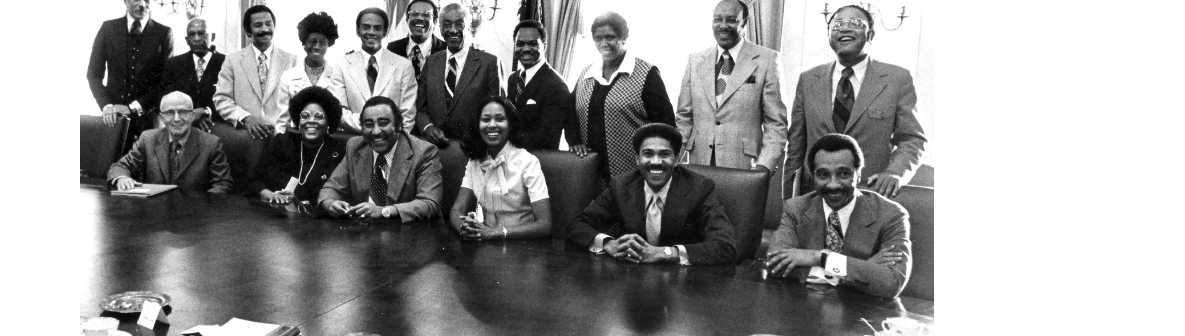 صورة لاعضاء الكتلة السوداء في الكونغرس عام (1974م) (United States House of Representatives, n.d.).
Margins:
-
() يتم سرد الممثلين حسب الأقدمية. ↑
-
() توفي في تشرين الثاني (1970م). ↑
-
() هُزم في الانتخابات التمهيدية في هارلم، حزيران (1970م). ↑
-
() توفي في كانون الأَول (1972م). ↑
-
() أُنتخبت لتحل محل زوجها الراحل جورج كولينز، في انتخابات خاصة في حزيران (1973م). ↑
-
() أُنتخب كمندوب عن واشنطن العاصمة، آذار (1970م). ↑
-
() تعني*: رئيس اللجنة الفرعية.
تعني**: رئيس اللجنة الدائمة.
تعني -: بأن العضو لم يكن ضمن اللجان المرتبطة بالكتلة. ↑
 English
  Arabic