

أثر تطبيق اللوائح الفنية والمواصفات القياسية على جودة المواد الغذائية المستوردة في المملكة العربية السعودية
خالد بن يحيى آل حرمان1
1 قسم إدارة الأعمال، كلية البحرين الجامعية، البحرين
بريد الكتروني: bounte_1985@hotmail.com
The Impact of Implementing Technical Regulations and Standards on the Quality of Imported Food Products in Saudi Arabia
Khaled bin Yahya Al-Harman¹
¹ Department of Business Administration, University College of Bahrain, Bahrain.
Email: bounte_1985@hotmail.com
DOI: https://doi.org/10.53796/hnsj710/14
المعرف العلمي العربي للأبحاث: https://arsri.org/10000/710/14
المجلد (7) العدد (10). الصفحات: 240 - 250
تاريخ الاستقبال: 2026-09-05 | تاريخ القبول: 2026-09-15 | تاريخ النشر: 2026-10-01
المستخلص: هدفت الدراسة إلى تحليل أثر تطبيق اللوائح الفنية والمواصفات القياسية في جودة الأغذية المستوردة إلى المملكة العربية السعودية، من خلال أربعة أبعاد هي: شمولية اللوائح ووضوحها، وكفاءة إجراءات الرقابة، والتزام المستوردين، وتحديث اللوائح وتطويرها. اعتمدت الدراسة المنهج الوصفي التحليلي وتصميم المسح المقطعي، واستخدمت استبانة وُزعت على 400 من العاملين في الجهات الرقابية وشركات استيراد الأغذية والمختبرات المعتمدة. وحُللت البيانات باستخدام الإحصاء الوصفي والانحدار الخطي والمتعدد وتحليل التباين. أظهرت النتائج ارتفاع مستوى تطبيق اللوائح الفنية بمتوسط بلغ (3.92 من 5)، وارتفاع مستوى جودة الأغذية المستوردة كما يدركها المشاركون بمتوسط بلغ (4.08 من 5). كما ظهر ارتباط موجب بين تطبيق اللوائح والجودة (R = 0.782)، وفسّر نموذج الانحدار 61.2% من التباين في تقديرات الجودة (R² = 0.612). وكانت شمولية اللوائح ووضوحها أقوى الأبعاد ارتباطًا بالجودة في نموذج الانحدار المتعدد (β = 0.285)، تلاها تحديث اللوائح وتطويرها (β = 0.254)، ثم كفاءة إجراءات الرقابة (β = 0.218)، والتزام المستوردين (β = 0.199). وظهرت فروق دالة إحصائيًا في تقديرات المشاركين تبعًا للمسمى الوظيفي. وتخلص الدراسة إلى أهمية وضوح المتطلبات التنظيمية وتحديثها، مع تعزيز تعاون المستوردين والجهات الرقابية وتطوير أدوات التفتيش، لتحسين جودة الأغذية المستوردة.
الكلمات المفتاحية: اللوائح الفنية، المواصفات القياسية، جودة الأغذية المستوردة، سلامة الغذاء، الرقابة الغذائية، المملكة العربية السعودية.
Abstract: This study examined the impact of implementing technical regulations and standards on the quality of food products imported into Saudi Arabia. It focused on four dimensions: the comprehensiveness and clarity of regulations, the efficiency of inspection procedures, importer compliance, and the updating and development of regulations. The study employed a descriptive analytical approach and a cross-sectional survey. A questionnaire was distributed to 400 professionals working in regulatory bodies, food-importing companies, and accredited laboratories. Data were analyzed using descriptive statistics, linear and multiple regression, and analysis of variance. The findings indicated a high perceived level of implementation of technical regulations (mean = 3.92 out of 5) and a high perceived level of imported food quality (mean = 4.08 out of 5). Implementation of regulations was positively correlated with quality (R = 0.782), while the regression model explained 61.2% of the variance in quality ratings (R² = 0.612). In the multiple regression model, regulatory comprehensiveness and clarity had the strongest association with quality (β = 0.285), followed by regulatory updating and development (β = 0.254), inspection efficiency (β = 0.218), and importer compliance (β = 0.199). Ratings also differed significantly by job role. The study concludes that clear and regularly updated regulatory requirements, closer cooperation between importers and regulators, and improved inspection tools can help enhance the quality of imported food products.
Keywords: Technical regulations; standards; imported food quality; food safety; food inspection; Saudi Arabia.
-
مقدمة
تُعدّ سلامة وجودة الغذاء عنصرين حيويين ليس فقط للصحة العامة، بل وللاستقرار الاقتصادي في ظل الاقتصاد العالمي المعاصر ولذا، تُعتبر جهود الحكومات لتوفير نظام غذائي صحي ومتوازن للمواطنين، بما يُسهم في نهاية المطاف في التنمية البشرية، أولوية قصوى في الوقت الراهن وقدّرت منظمة الصحة العالمية عدد الأشخاص الذين يُصابون بالأمراض سنويًا بسبب تلوث الغذاء بنحو 600 مليون شخص (منظمة الصحة العالمية، 2021) وتتفاقم هذه المشكلة مع ازدياد عولمة التجارة، مما يستدعي وضع قواعد صارمة لتنظيم عملية استيراد السلع بأكملها.
بالنسبة للمملكة العربية السعودية، التي تستورد أكثر من 70% من احتياجاتها الغذائية (أحمد وآخرون، 2024)، تُعدّ مراقبة الواردات أولوية قصوى ويتعرض الغذاء المستورد لمخاطر عديدة خلال سلسلة التوريد بأكملها، بدءًا من الإنتاج في بلد المنشأ وصولًا إلى النقل والتخزين، وبالتالي، يتطلب الأمر إدارة فعّالة لنقاط الدخول (الروبيش، 2020).
تُعدّ سلامة وجودة الغذاء عنصرين حيويين ليس فقط للصحة العامة، بل أيضًا للاستقرار الاقتصادي في ظل الاقتصاد العالمي المعاصر لا يُغني اعتماد أكثر من 2006 من اللوائح والمعايير الفنية المعتمدة عن الحاجة إلى التقييم المستمر لفعالية هذه الأنظمة بهدف تحسين الجودة الحقيقية للمنتجات الموجهة للمستهلكين وتشير الدراسات السابقة إلى أنه حتى مع وجود أحكام قانونية بشأن الأطر التنظيمية المتاحة، فإن سيناريو تدخلات الأمن الغذائي في الدول التي تعتمد على الاستيراد معقد (الروبيش، 2020) علاوة على ذلك، تشير الاختلافات في فهم واستخدام أدوات إدارة الجودة في مختلف القطاعات الصناعية إلى وجود ثغرات محتملة في الامتثال (عبد الواحد والباز، 2018).
1.1 العناصر الأساسية ومراجعة الأدبيات
يقدم هذا القسم ملخصًا للمفاهيم الأساسية والدراسات البحثية السابقة ذات الصلة المباشرة بمجال الدراسة تشمل حوكمة سلامة الغذاء اللوائح والمعايير الأساسية التي تضعها السلطات للحفاظ على معايير السلامة وضمان الامتثال الصحي والديني (الروبيش، 2020) تُدير الهيئة العامة للغذاء والدواء السعودية الإطار التنظيمي من خلال نظام مراقبة شامل يتضمن تقييم الوثائق وعمليات التفتيش الميداني والتحليلات المخبرية وتستمد اللوائح الوطنية توجيهاتها الرئيسية من المعايير الدولية، بما في ذلك معايير المنظمة الدولية للمقاييس (ISO) ومعايير هيئة الدستور الغذائي (Codex Alimentarius) ويُعدّ تطبيق معايير ISO 22000 ونظام تحليل المخاطر ونقاط التحكم الحرجة (HACCP) ضروريًا للحفاظ على سلامة العمليات مع تحقيق خفض الهدر (Kotsanopoulos and Arvanitoyannis, 2017)
يتأثر أداء أي مؤسسة بتطبيق نظام مراقبة الجودة الذي يستخدم أساليب تشغيلية تضمن الحفاظ على معايير جودة المنتج. وتشمل هذه العملية تقييم جودة المنتج في نهاية الإنتاج، بالإضافة إلى تطوير أساليب لمنع حدوث مشكلات الجودة في جميع مراحل التصنيع تُظهر الدراسات البحثية أن تطبيق إدارة الجودة الشاملة، إلى جانب الالتزام بالمعايير، يُؤدي إلى تحسينات ملحوظة في الأعمال التجارية، مع زيادة رضا العملاء، وذلك وفقًا لنتائج دراسة حسين (2025) وعبد الواحد والباز (2018) وتُتيح مقارنة الإطار التنظيمي السعودي بالمعايير الدولية طريقة فعّالة لتعزيز فهم متطلباته التنظيمية وقد أنشأ الاتحاد الأوروبي نظام الإنذار السريع للأغذية والأعلاف (RASFF)، الذي يُمكّن الدول الأعضاء من تبادل المعلومات بسرعة، مما يُقلل الوقت اللازم لمعالجة المخاطر المحتملة في الحاويات، وفقًا للمفوضية الأوروبية (2023) وتُشغّل إدارة الغذاء والدواء الأمريكية برنامج التحقق من الموردين الأجانب (FSVP)، الذي يُلزم المستوردين بالتحقق من امتثال مورديهم الأجانب للوائح الأمريكية وتُوفر الأنظمة التكنولوجية المتقدمة، التي تُتيح التعاون الدولي، مزايا للمملكة العربية السعودية في تطوير أنظمة المراقبة الخاصة بها.
وتُمثل مراقبة الأغذية المستوردة تحديات مختلفة عن مراقبة الإنتاج الغذائي المحلي وتشمل هذه التحديات ثلاثة عوامل رئيسية، تتمثل في الكميات الكبيرة من السلع المستوردة وتعدد الدول المُصدّرة لها، بالإضافة إلى تعقيد شبكات التوريد الدولية لا يزال نظام المراقبة السعودي، الذي وصفه الروباش (2020) بأنه متطور، يواجه صعوبات في التحقق من مطابقة المنتجات بين الدول، وفي تعزيز التعاون بين الشركاء التجاريين الدوليين (أبو مالح ، 2022).
2.2 الأدوات والمقاييس
كانت طريقة جمع البيانات الأساسية عبارة عن استبيان إلكتروني مُهيكل، تم إعداده بناءً على مراجعة الأدبيات ذات الصلة، بما في ذلك دراسات الروباش (2020) وأبو مالح (2022) تألف الاستبيان من ثلاثة أقسام: البيانات الديموغرافية والمتغير المستقل (تطبيق اللوائح الفنية) سجلت البيانات الديموغرافية ست خصائص، هي: الجنس، والعمر، والمؤهلات، والخبرة، والمسمى الوظيفي.
أما بنود المتغير المستقل (تطبيق اللوائح الفنية)، وعددها 16 بندًا، فقد وُزعت على أربعة أبعاد، شملت العناصر التالية: شمولية اللوائح ووضوحها: تحليل تغطية المخاطر وفهم النصوص كفاءة إجراءات الرقابة: التحقق من عمليات التفتيش ودقة العينات المأخوذة درست هذه الدراسة مدى التزام مؤسسات القطاع الخاص والمؤسسات العامة بمعايير مراقبة الجودة والمتغير التابع (جودة الأغذية المستوردة): تم تقييم سلامة المنتج وخصائصه الحسية ومدى امتثاله للمعايير باستخدام ثمانية معايير.
عملية جمع البيانات: أُجري الاستطلاع عبر الإنترنت باستخدام نماذج جوجل، كما استُخدمت الشبكات المهنية للهيئة العامة للغذاء والدواء وجمعيات القطاع الخاص للوصول إلى المستجيبين بشكل أكثر فعالية وللحد من تحيز الاستجابة، وُعد المستجيبون بسرية إجاباتهم، وأُرسلت رسائل تذكيرية بعد أسبوعين لمن لم يشاركوا بعد لحثهم على المشاركة أُجري اختبار أولي على 30 شخصًا لتحسين صياغة الأسئلة لتكون مفهومة ومناسبة للثقافة المحلية.
2.3 الموثوقية والصلاحية
خضعت الأداة لعدد من الاختبارات المصممة لتحديد صلاحيتها وموثوقيتها. استُخدمت مراجعة الخبراء للتحقق من الصلاحية الظاهرية ومعامل الارتباط بين الأداة والبنية لتقييم صلاحية الأداة. وكانت معاملات ارتباط بيرسون، التي أظهرت ارتباطات قوية وإيجابية وذات دلالة إحصائية (p < 0.01) مع جميع الأبعاد، هي الوسيلة التي تم من خلالها تحديد البنية. وتم التحقق من الموثوقية باستخدام معامل ألفا لكرونباخ.
2.4 تحليل البيانات
تم تحليل البيانات باستخدام برنامج الحزمة الإحصائية للعلوم الاجتماعية (SPSS، الإصدار 25) شملت عملية التحليل تطبيق الإحصاء الوصفي (التكرارات، المتوسطات، الانحرافات المعيارية) لعرض البيانات، والإحصاء الاستدلالي (معامل ارتباط بيرسون، الانحدار الخطي المتعدد، اختبار t، وتحليل التباين) للتحقق من صحة فرضيات البحث ودراسة تأثير المتغيرات المستقلة على المتغير التابع.
3.الإطار المفاهيمي
يستند البحث إلى إطار مفاهيمي يوضح الروابط بين البيئة التنظيمية ونتائج جودة الغذاء في الشكل 1، يُصوَّر “إنفاذ اللوائح والمعايير الفنية” كمتغير مستقل يتكون من أربعة أبعاد مختلفة قد تؤثر على كل من المنظمات والهيئات التنظيمية أما المتغير التابع فهو “جودة الأغذية المستوردة” الذي يمثل نتيجة الحوكمة الرشيدة يفترض الإطار أن تحسين جودة وسلامة الأغذية المستوردة سيكون النتيجة النهائية لتحسينات وضوح اللوائح، وفعالية تدابير الرقابة، ومشاركة المستوردين، والتحديث المستمر للمعايير.
وتعتمد إدارة سلامة الغذاء الحديثة إطارها التشغيلي على التكنولوجيا الحالية ومعايير السلامة المعاصرة. ويؤدي تطبيق الذكاء الاصطناعي، إلى جانب تقنية سلسلة الكتل (البلوك تشين) والأنظمة الإلكترونية، إلى تحسين كفاءة أنظمة التفتيش والمراقبة (جا، 2023) وتوظف المملكة العربية السعودية عناصر ثقافية ودينية في لوائح سلامة الغذاء لديها لخلق بيئة آمنة وتتضمن المعايير التي تحدد قبول المستهلك معايير علمية ومتطلبات حلال يجب أن تلتزم المنتجات الغذائية المستوردة، التي تشترطها الهيئة العامة للغذاء والدواء، بأحكام الشريعة الإسلامية، إذ يجب ألا تحتوي على أي مكونات محرمة، كما يجب تجنب استخدام تقنيات معالجة معينة يتطلب النظام الرقابي من الأفراد الالتزام باللوائح الصحية والأحكام الدينية، مما يخلق نظامًا مميزًا يختلف عن الأنظمة الرقابية العلمانية الموجودة في دول أخرى.
3. المنهجية
3.1 تصميم البحث وجمع البيانات
استخدم الباحثون منهجًا وصفيًا وتحليليًا كميًا لدراسة كيفية تأثير اللوائح والمعايير الفنية على جودة المنتجات في صناعة الأغذية اعتمدت الدراسة تصميم مسح مقطعي أحادي لجمع البيانات، مما سمح للباحثين بتقييم كيفية تفاعل المتغيرات المختلفة في لحظة محددة استهدف البحث الوصول إلى المهنيين العاملين مباشرة في عمليات استيراد الأغذية ومراقبتها في جميع أنحاء المملكة العربية السعودية قُسّم مجتمع الدراسة إلى ثلاث مجموعات رئيسية: مفتشو وموظفو الهيئة العامة للغذاء والدواء بصفتهم جهات رقابية، وكبار مديري شركات الأغذية الخاصة المسؤولين عن الجودة والاستيراد، والخبراء الفنيين العاملين في مختبرات خاصة معتمدة. استُخدمت تقنية أخذ العينات الاحتمالية لإنشاء عينة تمثل مجتمع الدراسة بأكمله.
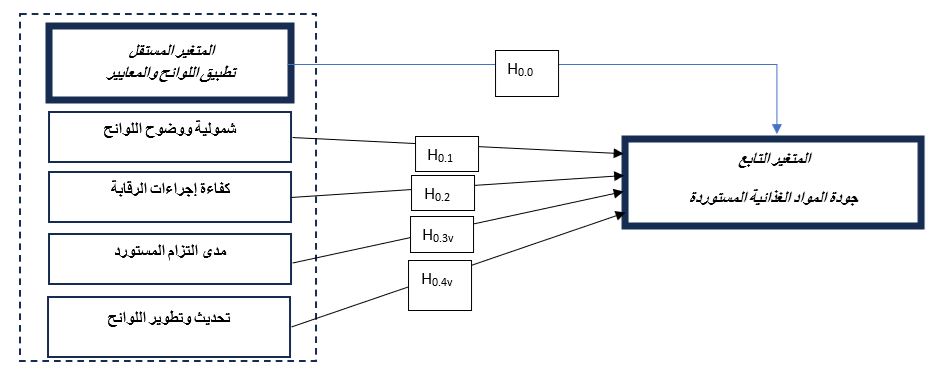
الشكل 1: مخطط الإطار المفاهيمي
٤. النتائج
٤.١ التحليل الوصفي للمتغيرات: لفهم تصورات المشاركين حول متغيرات الدراسة، تم حساب الإحصاءات الوصفية، بما في ذلك المتوسطات والانحرافات المعيارية والأهمية النسبية وقد أبدى الخبراء آراءً إيجابية للغاية بشأن تطبيق اللوائح وجودة واردات الأغذية بشكل عام.
٤.١.١ المتغير المستقل: تطبيق اللوائح الفنية
يوضح الجدول ١ المتغيرات المستقلة وتحليلها الوصفي لأبعادها الأربعة. بلغ المتوسط الإجمالي لتطبيق اللوائح الفنية ٣.٩٢، مما يشير إلى مستوى عالٍ من التطبيق ومن بين الأبعاد، احتل بُعد “شمولية ووضوح اللوائح” المرتبة الأولى بمتوسط ٤.١٥، مما يدل على ثقة عالية في النظام الرقابي. يليه بُعد “فعالية إجراءات الرقابة” بمتوسط ٣.٩٨ كان “تحديث وتطوير الأنظمة” ثالث أهم بند (بمتوسط 3.85)، بينما كان “مدى تفاعل المستوردين” آخر بند بمتوسط 3.71 وعلى الرغم من أن تفاعل المستوردين لا يزال مرتفعًا، إلا أن انخفاض التقييم يشير إلى كونه الحلقة الأضعف في سلسلة الأنظمة.
الجدول 1: المتوسطات والانحرافات المعيارية لأبعاد المتغيرات المستقلة (تطبيق الأنظمة)
|
البعد / البند |
المتوسط |
الانحراف المعياري |
الأهمية (%) |
الترتيب |
الدرجة |
|
الشمولية والوضوح |
4.15 |
0.68 |
83.0 |
1 |
مرتفع |
|
تغطّي اللوائح المخاطر بشكل شامل |
4.21 |
0.75 |
84.2 |
1 |
مرتفع |
|
نصوص المواصفات واضحة |
4.08 |
0.81 |
81.6 |
3 |
مرتفع |
|
متطلبات وضع الملصقات كافية |
4.19 |
0.72 |
83.8 |
2 |
مرتفع |
|
الحدود الميكروبيولوجية واضحة |
4.12 |
0.84 |
82.4 |
4 |
مرتفع |
|
كفاءة إجراءات الرقابة |
3.98 |
0.74 |
79.6 |
2 |
مرتفع |
|
إجراءات التفتيش فعّالة |
3.89 |
0.88 |
77.8 |
3 |
مرتفع |
|
آليات أخذ العينات دقيقة |
3.85 |
0.91 |
77.0 |
4 |
مرتفع |
|
كفاءة المفتشين |
4.15 |
0.79 |
83.0 |
1 |
مرتفع |
|
الأنظمة الإلكترونية تسهم في الكفاءة |
4.03 |
0.85 |
80.6 |
2 |
مرتفع |
|
مدى التزام المستوردين |
3.71 |
0.79 |
74.2 |
4 |
مرتفع |
|
وعي المستوردين كافٍ |
3.65 |
0.95 |
73.0 |
4 |
متوسط |
|
الالتزام بأنظمة الجودة |
3.73 |
0.89 |
74.6 |
2 |
مرتفع |
|
السمعة كدافع للامتثال |
3.88 |
0.82 |
77.6 |
1 |
مرتفع |
|
التعاون الفعّال مع الجهات الرقابية |
3.58 |
1.01 |
71.6 |
3 |
متوسط |
|
تحديث وتطوير اللوائح |
3.85 |
0.71 |
77.0 |
3 |
مرتفع |
|
التحديث الدوري للوائح |
3.91 |
0.82 |
78.2 |
2 |
مرتفع |
|
التحديثات مبنية على أسس علمية |
4.05 |
0.77 |
81.0 |
1 |
مرتفع |
|
مراعاة مقترحات القطاع الخاص |
3.66 |
0.93 |
73.2 |
4 |
متوسط |
|
التوافق مع معايير الكودكس |
3.78 |
0.86 |
75.6 |
3 |
مرتفع |
|
المتغير المستقل الكلي |
3.92 |
0.65 |
78.4 |
— |
مرتفع |
4.1.2 المتغير التابع: جودة الأغذية المستوردة
يوضح الجدول 2 نتائج المتغير التابع يشير متوسط الدرجة 4.08 إلى مستوى عالٍ من الثقة في جودة الأغذية المطروحة في السوق حصلت خاصية “موثوقية سلامة المنتج” على أعلى درجة (متوسط = 4.25)، مما يؤكد كفاءة النظام في مجال السلامة في المقابل، حصلت خاصية “الشفافية في إجراءات سحب المنتجات” على أقل درجة (متوسط = 3.88)، ولكنها شهدت أكبر تباين (1.05)، مما يشير إلى اختلاف آراء المستهلكين بشكل كبير حول مدى وضوح مراقبة ما بعد التسويق.
الجدول 2: المتوسطات والانحرافات المعيارية للمتغير التابع (جودة الأغذية)
|
البند |
المتوسط |
الانحراف المعياري |
الأهمية (%) |
الترتيب |
الدرجة |
|
الخصائص الحسية مقبولة |
4.12 |
0.81 |
82.4 |
4 |
مرتفع |
|
القيمة الغذائية مطابقة للملصق |
4.08 |
0.85 |
81.6 |
5 |
مرتفع |
|
خالٍ من العيوب التصنيعية |
3.95 |
0.92 |
79.0 |
7 |
مرتفع |
|
موثوقية كونه آمنًا |
4.25 |
0.77 |
85.0 |
1 |
مرتفع |
|
يحافظ على خصائصه طوال فترة الصلاحية |
4.18 |
0.79 |
83.6 |
2 |
مرتفع |
|
الشفافية في إجراءات السحب والاسترجاع |
3.88 |
1.05 |
77.6 |
8 |
مرتفع |
|
مظهر المنتج متسق |
4.15 |
0.83 |
83.0 |
3 |
مرتفع |
|
يصل مطابقًا للمواصفات |
4.01 |
0.90 |
80.2 |
6 |
مرتفع |
|
المتغير التابع الكلي |
4.08 |
0.73 |
81.6 |
— |
مرتفع |
4.2 اختبار الفرضيات
4.2.1 اختبار الفرضية الرئيسية
لغرض التحقق من الفرضية الرئيسية H₀: لا يؤثر تطبيق اللوائح والمعايير الفنية على جودة الأغذية المستوردة)، تم إجراء تحليل الانحدار الخطي.
الجدول 3: نتائج تحليل الانحدار للفرضية الرئيسية
|
القيمة |
R |
R² |
قيمة F |
Sig. |
القرار |
|
نتائج نموذج الانحدار |
0.782 |
0.612 |
155.87 |
0.000 |
رفض فرضية العدم |
تشير نتائج الجدول 3 إلى قيمة F تساوي 155.87 وقيمة p تساوي 0.000 (p < 0.05)، مما يؤدي إلى رفض الفرضية الصفرية ويكشف معامل الانحدار البالغ 0.612 أن تطبيق اللوائح والمعايير الفنية مسؤول عن 61.2% من فجوة الجودة في الأغذية المستوردة.
4.2.2 اختبار الفرضيات الفرعية
باستخدام تحليل الانحدار المتعدد، يمكن تحديد تأثير كل بُعد من أبعاد المتغير المستقل على المتغير التابع.
الجدول 4: تحليل الانحدار المتعدد للفرضيات الفرعية (تأثير الأبعاد)
|
المتغير المستقل |
معامل بيتا (β) |
قيمة t |
Sig |
القرار |
|
الشمولية والوضوح |
0.285 |
6.412 |
0.000 |
رفض |
|
كفاءة إجراءات الرقابة |
0.218 |
5.087 |
0.000 |
رفض |
|
التزام المستوردين |
0.199 |
4.876 |
0.000 |
رفض |
|
تحديث وتطوير اللوائح |
0.254 |
5.981 |
0.000 |
رفض |
يوضح الجدول 4 أن جميع الجوانب الأربعة كان لها تأثير إيجابي ذو دلالة إحصائية على جودة الغذاء (p < 0.05) تكشف معاملات بيتا المعيارية عن القوة النسبية لكل جانب:
-
الشمولية والوضوح (β = 0.285): العامل الأقوى، مما يدل على أهمية وجود أساس قانوني متين.
-
تحديث وتطوير اللوائح (β = 0.254): ثاني أفضل مؤشر، مما يدل على ضرورة وجود معايير مرنة.
-
كفاءة إجراءات الرقابة (β = 0.218): تأثير كبير يدل على التطبيق الميداني.
-
التزام المستورد (β = 0.199): الأقل تأثيرًا، ولكنه مع ذلك الأكثر أهمية، وفقًا للنتائج المذكورة أعلاه، مما يشير إلى أن هذا المجال هو الأكثر حاجة إلى التحسين.
4.3 الاختلافات بناءً على المتغيرات الديموغرافية
أُجري تحليل التباين لتقييم ما إذا كان هناك اختلاف في تصورات المستجيبين بناءً على العوامل الديموغرافية.
الجنس والمستوى التعليمي: لم تُظهر اختبارات T وتحليل التباين (ANOVA) أي فروق دالة إحصائيًا (p > 0.05) مرتبطة بالجنس أو المستوى التعليمي، مما يشير إلى وجود توافق بين المهنيين بغض النظر عن هذه الخصائص وسنوات الخبرة تم رصد فروق دالة إحصائيًا في “فعالية الرقابة” (p = 0.002) و”التزام المستورد” (p = 0.014) ، مما يدل على أن عمق الخبرة يؤدي إلى آراء أكثر دقة حول أداء العمليات التجارية ولوحظت أبرز الاختلافات وفقًا للمسمى الوظيفي.
الجدول 5: نتائج تحليل التباين (ANOVA) للفروق بناءً على المسمى الوظيفي
|
المتغير / البعد |
قيمة F |
Sig. |
النتيجة |
|
الشمولية والوضوح |
7.641 |
0.001 |
دال إحصائيًا |
|
كفاءة الرقابة |
14.881 |
0.000 |
دال إحصائيًا |
|
التزام المستوردين |
9.172 |
0.000 |
دال إحصائيًا |
|
تحديث اللوائح |
9.183 |
0.000 |
دال إحصائيًا |
|
المتغير المستقل الكلي |
17.511 |
0.000 |
دال إحصائيًا |
|
المتغير التابع (الجودة) |
9.776 |
0.000 |
دال إحصائيًا |
يُظهر الجدول 5 اختلافاتٍ ملحوظة إحصائيًا في جميع الأبعاد وفقًا لدور المستجيبين (مدير الهيئة العامة للغذاء والدواء، القطاع الخاص، خبير المختبر) يشير هذا إلى أن دور الفرد في النظام البيئي له تأثير كبير على وجهات نظره الفردية فيما يتعلق بكفاءة النظام الرقابي.
5. المناقشة
5.1 تفسير النتائج
كان الهدف الرئيسي لهذه الدراسة هو تقييم تأثير اللوائح والمعايير الفنية على جودة الأغذية المستوردة إلى المملكة العربية السعودية وقد كشفت نتائج التحليل الإحصائي عن وجود ارتباط إيجابي قوي جدًا (R² = 61.2%)، مما يُشير إلى أن الإطار الرقابي المتين يُعد عاملًا بالغ الأهمية لجودة الأغذية المستوردة في المملكة العربية السعودية وبالتالي، ووفقًا Kotsanopoulos & Arvanitoyannis (2017)، فإن الامتثال لمعايير سلامة الأغذية، مثل ISO 22000 وHACCP، يُعد شرطًا أساسيًا للمستهلكين والشركات على حدٍ سواء، من حيث الحماية والكفاءة على التوالي.
يرى Kotsanopoulos & Arvanitoyannis (2017) أن الامتثال لمعايير سلامة الأغذية، مثل ISO 22000 وHACCP، يُعد شرطًا أساسيًا للمستهلكين والشركات على حدٍ سواء، من حيث الحماية والكفاءة على التوالي بحسب الدراسة، يُعدّ “اكتمال ووضوح اللوائح” العامل الأبرز المؤثر على جودة الغذاء (β = 0.285)وهذا يعني أن الوثائق أو النصوص القانونية تُشكّل أساس نظام الرقابة الفعال فعندما تكون اللوائح سهلة الفهم وتُغطي المخاطر بشكل كامل فإنها تُوفّر أساسًا متينًا للامتثال والتنفيذ.
جاء عامل “تحديثات وتطوير اللوائح” في المرتبة الثالثة ضمن أهم العوامل المؤثرة على سلامة الغذاء وهذا يُؤكد الحاجة إلى إطار تنظيمي يتطور باستمرار ويتماشى في الوقت نفسه مع المعايير الدولية، مثل معايير هيئة الدستور الغذائي (Codex Alimentarius) إن طبيعة النظام في التكيف مع التغيير تضمن قدرته على مواجهة المخاطر الجديدة التي قد تنشأ؛ وقد أشار هينسون (2008) إلى أن المعايير الدولية هي الجهات المنظمة للأسواق.
الآثار الاجتماعية والاقتصادية الأوسع نطاقًا: إلى جانب التحسينات المباشرة في الجودة، لن تساهم الأنظمة الجيدة في تحقيق رؤية المملكة العربية السعودية 2030 لأهدافها الاقتصادية والصحية فحسب، بل ستدعم أيضًا التنويع الاقتصادي والصحة العامة ويمكن تقليل تكاليف الرعاية الصحية المرتبطة مباشرة بالأمراض المنقولة بالغذاء من خلال تحسين الرقابة على واردات الغذاء، وفي الوقت نفسه، يمكن أن تتأثر ثقة المستهلكين في الإنفاق بشكل إيجابي.
5.2 الآثار
يشير الاختلاف الملحوظ في تصورات مختلف المسميات الوظيفية إلى أن النظام قوي نظريًا، ولكنه لا يزال يواجه بعض التحديات عمليًا ويختلف رأي الجهات الرقابية (الهيئة العامة للغذاء والدواء) ومديري القطاع الخاص بشأن كفاية تدابير الرقابة، ومن المرجح أن يكون هذا الاختلاف ناتجًا عن اختلاف مواقعهم في عملية الامتثال ولذلك، سيتطلب الأمر قدرًا كبيرًا من التواصل والشفافية لسد هذه الفجوة ويشير الاختلاف الملحوظ في وجهات النظر بين مختلف المسميات الوظيفية إلى أن النظام قوي نظريًا، ولكنه لا يزال يواجه بعض العقبات عمليًا.
القيود والتوجهات المستقبلية: على الرغم من أن هذه الدراسة تقدم معلومات غزيرة، إلا أنها تعاني من بعض القيود، بما في ذلك الاعتماد على الإبلاغ الذاتي، مما قد يؤدي إلى تحيز، واقتصارها على المملكة العربية السعودية، مما يؤثر على إمكانية تعميم نتائجها.
6. الخلاصة والتوصيات
6.1 الخلاصة
تُظهر الدراسة البحثية أن اللوائح الفنية والمواصفات القياسية تؤثر بشكل مباشر على جودة المنتجات الغذائية المستوردة في المملكة العربية السعودية يوفر الإطار التنظيمي للهيئة العامة للغذاء والدواء حماية أساسية تضمن سلامة وجودة المنتجات الغذائية كما تُظهر الدراسة أن المستوردين يمثلون المجال الرئيسي الذي يحتاج إلى تطوير في هذه العملية. تتطلب سلامة الغذاء لوائح حكومية ومشاركة القطاع الخاص من خلال تطوير ثقافة الجودة.
6.2 التوصيات
تؤدي النتائج إلى التوصيات التالية:
-
تحسين الحوار بين القطاعين العام والخاص: ينبغي على الهيئة العامة للغذاء والدواء إرساء أساليب تواصل أفضل مع شركاء القطاع الخاص خلال عمليات تطوير اللوائح لتحسين النتائج العملية وزيادة الامتثال الطوعي من جانب أصحاب المصلحة.
-
تبني تقنيات التحكم الذكية: يحتاج نظام التفتيش الحالي إلى التوسع من خلال الذكاء الاصطناعي والأنظمة الإلكترونية، مما سيساعد في معالجة الواردات بكميات كبيرة مع تسريع العمليات برمتها.
-
تطوير ثقافة الجودة: تحتاج الشركات إلى تطبيق أنظمة إدارة الجودة الشاملة التي تعتبر سلامة المستهلك قيمتها الأساسية لتحقيق أكثر من مجرد الامتثال للوائح القائمة.
المراجع
عبد الواحد، م. س.، والباز، م. أ. (2018). أثر تطبيق إدارة الجودة الشاملة: تقييم للصناعة السعودية. المجلة الجنوب أفريقية للهندسة الصناعية، 29(1)، 97–107.
Abd-Elwahed, M. S., & El-Baz, M. A. (2018). Impact of implementation of total quality management: An assessment of the Saudi industry. The South African Journal of Industrial Engineering, 29(1), 97–107.
أبو مالح، ع. م.، ومدكور، م. ح.، وعبد الرازق، م. م. (2022). تقييم تطبيق ممارسات التصنيع الجيدة (GMP) في بعض مصانع منتجات الدواجن في مكة المكرمة، المملكة العربية السعودية. مجلة العلوم الزراعية والبيئية والبيطرية، 6(3)، 20–46.
Abumalih, A. M., Madkour, M. H., & AbdEl-Razik, M. M. (2022). An evaluation of the application of good manufacturing practices (GMP) in some poultry products factories in Makkah Al-Mukarramah, KSA. Journal of Agricultural, Environmental and Veterinary Sciences, 6(3), 20–46.
الخنيزان، ع.، وشاو، ت. (2010). تقييم معايير الاعتماد للهيئة المركزية لاعتماد المؤسسات الصحية في المملكة العربية السعودية وفقًا لمبادئ الجمعية الدولية للجودة في الرعاية الصحية (ISQua). حوليات الطب السعودي، 30(5)، 386–389.
Alkhenizan, A., & Shaw, C. (2010). Assessment of the accreditation standards of the Central Board for Accreditation of Healthcare Institutions in Saudi Arabia against the principles of the International Society for Quality in Health Care (ISQua). Annals of Saudi Medicine, 30(5), 386–389.
الروباش، و. س.، وفليريك، ب.، ولونينغ، ب. أ.، وجاكسينز، ل. (2021). حوكمة سلامة الغذاء في المملكة العربية السعودية: تحديات الرقابة على الأغذية المستوردة. مجلة علوم الأغذية، 86(1)، 16–30.
Alrobaish, W. S., Vlerick, P., Luning, P. A., & Jacxsens, L. (2021). Food safety governance in Saudi Arabia: Challenges in control of imported food. Journal of Food Science, 86(1), 16–30.
دي، س.، وناجابابو، ب. هـ. (2022). تطبيقات ألوان الطعام والمواد الحافظة الحيوية في الغذاء وتأثيرها في صحة الإنسان. تطورات كيمياء الأغذية، 1، 100019.
Dey, S., & Nagababu, B. H. (2022). Applications of food color and bio-preservatives in the food and its effect on the human health. Food Chemistry Advances, 1, 100019.
دجيكيتش، إ.، ورايكوفيتش، أ.، وتوميتش، ن.، وسميجيتش، ن.، ورادوفانوفيتش، ر. (2014). آثار الإدارة البيئية في شركات الأغذية الصربية المعتمدة. مجلة الإنتاج الأنظف، 76، 196–199.
Djekic, I., Rajkovic, A., Tomic, N., Smigic, N., & Radovanovic, R. (2014). Environmental management effects in certified Serbian food companies. Journal of Cleaner Production, 76, 196–199.
فونسيكا، ل. (2015). ISO 14001:2015: أداة محسّنة للاستدامة. مجلة الهندسة الصناعية والإدارة، 8(1)، 37–50.
Fonseca, L. (2015). ISO 14001:2015: An improved tool for sustainability. Journal of Industrial Engineering and Management, 8(1), 37–50.
هينسون، س. (2008). دور المعايير العامة والخاصة في تنظيم أسواق الغذاء الدولية. مجلة التجارة والتنمية الزراعية الدولية، 4(1)، 63–81.
Henson, S. (2008). The role of public and private standards in regulating international food markets. Journal of International Agricultural Trade and Development, 4(1), 63–81.
حسين، م. (2025). أثر ممارسات الجودة الشاملة في الأداء بصناعة الألبان: رؤى من شركة المراعي في المملكة العربية السعودية. مجلة هندسة نظم المعلومات والإدارة، 10(35s)، 1192–1209.
Hussein, M. (2025). The impact of total quality practices on performance in dairy industry: Insights from Almarai, Saudi Arabia. Journal of Information Systems Engineering and Management, 10(35s), 1192–1209.
كوتسانوبولوس، ك. ف.، وأرفانيتويانيس، إ. س. (2017). دور التدقيق ومعايير سلامة الغذاء وجودته في صناعة الأغذية: مراجعة. مراجعات شاملة في علوم الأغذية وسلامة الغذاء، 16(5)، 760–775.
Kotsanopoulos, K. V., & Arvanitoyannis, I. S. (2017). The role of auditing, food safety, and food quality standards in the food industry: A review. Comprehensive Reviews in Food Science and Food Safety, 16(5), 760–775.
كريجسي، ر. ف.، ومورغان، د. و. (1970). تحديد حجم العينة للأنشطة البحثية. القياس التربوي والنفسي، 30(3)، 607–610.
Krejcie, R. V., & Morgan, D. W. (1970). Determining sample size for research activities. Educational and Psychological Measurement, 30(3), 607–610.
منصور، م.، والسلمي، ص. (2021). تقييم العلاقة بين تطبيق إرشادات ISO 14031 وشهادة ISO 14001 في القطاع الصناعي بالمملكة العربية السعودية. مجلة الهندسة البيئية وإدارة المناظر الطبيعية، 29(1)، 61–71.
Mansour, M., & Alsulamy, S. (2021). Evaluating association between implementation of ISO 14031 guidelines and ISO 14001 certification by industrial sector in Saudi Arabia. Journal of Environmental Engineering and Landscape Management, 29(1), 61–71.
أوكبالا، سي. أو. آر.، وكورزينوفسكا، م. (2023). أهمية إدارة الجودة في صناعة المنتجات الزراعية الغذائية: من الاعتبارات الأخلاقية إلى ضمان معايير النظافة والجودة والسلامة الغذائية والعمليات المرتبطة بها. مراجعات الأغذية الدولية، 39(4)، 1879–1952.
Okpala, C. O. R., & Korzeniowska, M. (2023). Understanding the relevance of quality management in agro-food product industry: From ethical considerations to assuring food hygiene quality safety standards and its associated processes. Food Reviews International, 39(4), 1879–1952.
بسوماس، إي. إل.، وفوتوبولوس، سي. في. (2010). ممارسات إدارة الجودة الشاملة ونتائجها في شركات الأغذية. المجلة الدولية للإنتاجية وإدارة الأداء، 59(7)، 668–687.
Psomas, E. L., & Fotopoulos, C. V. (2010). Total quality management practices and results in food companies. International Journal of Productivity and Performance Management, 59(7), 668–687.
الهيئة العامة للغذاء والدواء السعودية. (د. ت.). اللائحة التنفيذية لنظام الغذاء.
Saudi Food and Drug Authority. (n.d.). Implementing regulations of the Food Law.
مجموعة البنك الدولي. (2007). الإرشادات البيئية والصحية والمتعلقة بالسلامة لتصنيع الأغذية والمشروبات.
World Bank Group. (2007). Environmental, health, and safety guidelines for food and beverage processing.
منظمة الصحة العالمية. (1996). إرشادات لتعزيز برنامج وطني لسلامة الغذاء.
World Health Organization. (1996). Guidelines for strengthening a national food safety programme.
منظمة الصحة العالمية. (2021). سلامة الغذاء.
World Health Organization. (2021). Food safety.
 English
  Arabic