
Serum Calcium Status Among Pregnant Women Using Calcium-Vitamin D and Natural Supplements: A Comparative Cross-Sectional Study
مستوى الكالسيوم في الدم لدى النساء الحوامل المستخدمات لمكملات الكالسيوم وفيتامين (د) والمكملات الطبيعية: دراسة مقطعية مقارنة
Tawfik Alglely1, Fathi Younis Mansour Hamed2, Mohamed M. Abouzreeq3
1 Lecturer, Faculty of Medical Technology, University of Elmergib, Msallata, Libya.
Email Tawfik.alglely87@gmail.com
2 Lecturer, Faculty of Medical Technology, University of Elmergib, Msallata, Libya.
Email: fathiyhamed@gmail.com
3 Faculty of Medical Technology, University of Elmergib, Msallata, Libya.
Author for Correspondence: Tawfik Alglely Tawfik.alglely87@gmail.com
DOI: https://doi.org/10.53796/hnsj78/5
Arabic Scientific Research Identifier: https://arsri.org/10000/78/5
Volume (7) Issue (8). Pages: 75 - 86
Received at: 2026-07-05 | Accepted at: 2026-07-15 | Published at: 2026-08-01
Abstract: Calcium is an important part of pregnancy because it helps with the mother's neuromuscular action, blood vessel tone, bone metabolism, and the formation of baby bones. Serum calcium levels that aren't normal during pregnancy could be caused by not getting enough vitamin D, not getting enough calcium-regulating hormones, having low albumin, or not getting enough calcium from food. This study looked at the levels of calcium in pregnant women's blood and compared the levels of abnormal calcium in women who took calcium-vitamin D pills and women who took natural supplements. Methods: Between December 2023 and May 2024, 60 expecting women were studied. They were split evenly into two groups: 30 women who took calcium-vitamin D supplements and 30 women who took natural supplements. Age, supplemental group, blood calcium value, and calcium state (normal or abnormal) were some of the variables that were looked at. We used grouped summary data and frequency tables to make descriptive and comparison figures. The average amount of calcium in the blood was 6.51 ± 1.37 in the group that took calcium and vitamin D and 6.73 ± 1.72 in the group that took natural supplements. There was no statistically significant difference between the groups (p = 0.586). 29 out of 30 women who took calcium-vitamin D supplements (96.7%) and 23 out of 30 women who took natural supplements (76.7%) had abnormal calcium levels (Fisher exact p = 0.052). In both treatment groups, there were a lot of cases of abnormal blood calcium levels. It was important to be careful when interpreting the numerically higher abnormal percentage among calcium-vitamin D users because the cross-sectional design can't prove cause and effect and several clinical, biochemical, food, and supplementation factors were not included in the dataset.
Keywords: Pregnancy; calcium deficiency; hypocalcemia; serum calcium; vitamin D; supplementation.
المستخلص: يُعدّ الكالسيوم عنصرًا مهمًا خلال فترة الحمل؛ إذ يسهم في الوظائف العصبية العضلية لدى الأم، وتنظيم توتر الأوعية الدموية، واستقلاب العظام، وتكوين عظام الجنين. وقد تنجم المستويات غير الطبيعية للكالسيوم في مصل الدم أثناء الحمل عن نقص فيتامين (د)، أو اضطراب الهرمونات المنظمة للكالسيوم، أو انخفاض مستوى الألبومين، أو عدم كفاية تناول الكالسيوم في النظام الغذائي. هدفت هذه الدراسة إلى قياس مستويات الكالسيوم في مصل الدم لدى النساء الحوامل، ومقارنة معدل انتشار المستويات غير الطبيعية للكالسيوم بين النساء اللاتي تناولن مكملات الكالسيوم وفيتامين (د) واللاتي تناولن مكملات طبيعية. المنهجية: أُجريت الدراسة خلال الفترة الممتدة من ديسمبر 2023م إلى مايو 2024م، وشملت 60 امرأة حامل، وُزّعن بالتساوي على مجموعتين: ضمت المجموعة الأولى 30 امرأة تناولن مكملات الكالسيوم وفيتامين (د)، بينما ضمت المجموعة الثانية 30 امرأة تناولن مكملات طبيعية. وشملت المتغيرات التي جرى تحليلها: العمر، ونوع المكملات، ومستوى الكالسيوم في مصل الدم، وحالة الكالسيوم (طبيعية أو غير طبيعية). واستُخدمت البيانات الملخصة المجمعة والجداول التكرارية لإجراء التحليلات الوصفية والمقارنة. النتائج: بلغ متوسط مستوى الكالسيوم في مصل الدم 6.51 ± 1.37 لدى مجموعة مكملات الكالسيوم وفيتامين (د)، مقابل 6.73 ± 1.72 لدى مجموعة المكملات الطبيعية، ولم يظهر فرق ذو دلالة إحصائية بين المجموعتين (p = 0.586). وسُجّلت مستويات غير طبيعية للكالسيوم لدى 29 امرأة من أصل 30 امرأة في مجموعة مكملات الكالسيوم وفيتامين (د)، بنسبة 96.7%، ولدى 23 امرأة من أصل 30 امرأة في مجموعة المكملات الطبيعية، بنسبة 76.7% (اختبار فيشر الدقيق: p = 0.052). الاستنتاج: لوحظ ارتفاع معدل انتشار المستويات غير الطبيعية للكالسيوم في مصل الدم لدى مجموعتي الدراسة. ومع ذلك، ينبغي توخي الحذر عند تفسير الارتفاع العددي في نسبة الحالات غير الطبيعية لدى مستخدمات مكملات الكالسيوم وفيتامين (د)؛ لأن تصميم الدراسة المقطعية لا يسمح بإثبات العلاقة السببية، فضلًا عن عدم تضمين عدد من العوامل السريرية والكيميائية الحيوية والغذائية والعوامل المتعلقة باستخدام المكملات في بيانات الدراسة.
الكلمات المفتاحية: الحمل؛ نقص الكالسيوم؛ نقص كالسيوم الدم؛ كالسيوم مصل الدم؛ فيتامين (د)؛ المكمّلات الغذائية.
1. Introduction
Calcium is the most common chemical element in the body. It is needed for bone formation, nerve and muscle function, blood vessel movement, hormone release, cell communication, and blood clotting. The skeleton holds most of the body’s calcium, but the circulatory amount is the part that is most important for clinical biochemistry right now. In medicine, total blood calcium, ionized calcium, and protein-bound calcium are not all the same thing. These tests can be read differently during pregnancy because of changes in plasma volume, serum albumin, mineral-regulating hormones, and how the kidneys are used (Hacker et al., 2012; Institute of Medicine, 2011; Peacock, 2010; Pu et al., 2016; Robertson & Marshall, 1979).
The body needs certain minerals while pregnant because the baby needs calcium to build its bones, especially as the pregnancy goes on. When this happens, the mother’s body goes through organized changes in her intestines, kidneys, muscles, and hormones. When a baby is born, the mother’s homeostasis and the baby’s mineral supply stay stable. This is done by calcium-regulating pathways that involve vitamin D metabolites, PTH, parathyroid hormone-related protein, and bone turnover (Cross et al., 1995; Kovacs & Kronenberg, 1997; Kovacs, 2005, 2016; Olausson et al., 2012; Prentice, 2000).
Not only does calcium help the baby’s bones grow during pregnancy, it’s also important for other things. If you don’t look at protein binding or ionized calcium along with total calcium, you might not be able to figure out what’s wrong. Low calcium levels in the blood, or hypocalcemia, can lead to muscle pain (tetany in the worst cases), heart issues, and trouble figuring out what’s wrong. Some groups are more likely to have problems with this issue than others. These groups may not get enough calcium from their food, have trouble getting dairy or fortified foods, or not get regular prenatal biochemical monitoring (Almaghamsi et al., 2018; Cormick et al., 2019; Nordin, 1976; Parfitt & Kleerekoper, 1980; Schneider & Sherwood, 1975; Shlisky et al., 2022).
Additionally, scientists have looked into how much calcium a pregnant woman eats and how that might impact her high blood pressure. It was first proposed many years ago that not getting enough calcium can cause swelling, proteinuria, and high blood pressure, which is also known as gestesis. This idea has continued to drive research and public health advice (Belizan et al., 1980). Researchers have tested calcium supplements on women and people who don’t get enough calcium naturally (Belizan et al., 1991; Gomes et al., 2022; Hofmeyr et al., 2018; Imdad & Bhutta, 2012; World Health Organization, 2018). They found that they can help prevent hypertensive disorders and other problems that are linked to them.
Vitamin D helps the body process calcium and keep minerals in balance, which is why the two are closely linked. It has been talked about how not getting enough vitamin D during pregnancy affects both the mother and the baby, but the strength of the evidence varies by study and result. Because a woman may say she takes calcium supplements but still have issues with absorption or calcium metabolism if she doesn’t get enough vitamin D, her vitamin D status is important for calcium studies (Bodnar et al., 2007; De-Regil et al., 2016; Haussler & McCain, 1977; Holick, 2007; Roth et al., 2017; Saraf et al., 2016).
Additionally, it is crucial to understand the difference between metabolic balance and reported vitamin use. Calcium and vitamin D pills may be given to women who are thought to be at nutritional risk. This can make it harder to compare data. Depending on the type of diet, how well people stick to it, their social status, the time of their pregnancy, or how much they know about health, taking natural vitamins or depending on calcium-rich foods may show a difference. You can see links between supplementation groups by comparing them, but you can’t say which treatment is better unless you look at the starting point, the amount, the time, the commitment, and other factors (Buppasiri et al., 2015; Ettinger et al., 2014; Kumar & Kaur, 2017).
Two kinds of supplements were used in this study to check the levels of calcium in the blood of pregnant women: natural supplements and calcium-vitamin D pills. The purpose was to use a compared cross-sectional observing method to find out how much calcium was in the blood and how many times people in different groups had calcium readings that were not normal. The study was set up so that it could give a scientifically sound assessment of calcium state without making any claims about what causes supplement effectiveness.
2. Materials and Methods
2.1 Study Design and Reporting Approach
Between December 2023 and May 2024, pregnant women took part in a comparison cross-sectional observational study. The study compared the levels of calcium in the blood of two naturally occurring groups based on how they reported supplementing: those who took calcium-vitamin D supplements and those who didn’t. Observational reporting, in line with STROBE principles, was used to write the paper. It focused on giving a clear explanation of the design, subjects, factors, statistical methods, and limits (Vandenbroucke et al., 2007). Researchers didn’t give any help to the groups, so they weren’t used as randomized treatment arms. The research talks about the molecular state at the time of the assessment and compared calcium results at the group level. Claims about the cause of a supplement’s impact, effectiveness, or advantage were not made.
2.2 Participants and Grouping
The study group was expecting women whose blood calcium levels were recorded during the study time. Participants were qualified if the study record showed that they were not pregnant, were taking supplements, were of a certain age, had a blood calcium value, or were classified as having a calcium status. Women who refused to take part were not allowed to. Sixty expecting women were used in the final sample. They were split evenly into two groups: 30 women who took calcium-vitamin D supplements and 30 women who took natural supplements. The pattern of addition was used to create the grouping variable. The natural-supplement group was kept the same as it was in the study dataset, but it was seen as an exposure category based on observations rather than a normal intervention.
2.3 Variables and Outcome Definitions
The factors that could be used were the mother’s age, her age group, the group that took supplements, her serum calcium level, and her calcium state, which could be normal or abnormal. Minimum, maximum, mean, and standard deviation were used to describe age. There were four age groups listed: 18–20 years, >20–30 years, >30–40 years, and >40–52 years. The blood calcium number was the most important biological factor. The main result was abnormal blood calcium status, which was described as either normal or abnormal. It was the study record’s normal/abnormal rating that was used to set the practical result. This method kept the original dataset’s classification while letting the results be interpreted in a way that is safe for clinical use.
2.4 Data Collection and Ethical Considerations
During the study time, pregnant women who decided to take part gave information. Age, supplements history, blood calcium level, and calcium status classification were some of the pieces of information that were available. People who took part in the study were told what its goal was and gave their written permission to take part. People could choose not to engage, and if they did, they were left out. The data were treated secretly and were reported as a whole. People who took part in the study did so voluntarily, and the results were reported without revealing their identities. There is no personal information that can be used to identify anyone in this document.
2.5 Statistical Analysis
Mean, standard deviation, minimum, and maximum were used to sum up continuous data. There was a summary of categorical factors as a number and a percentage. We used Welch’s t-test to compare the groups’ mean ages and mean levels of calcium in the blood. The test was based on group summary data. A chi-square test was used to compare the spread of age groups. We used Fisher’s exact test to see if there was a change in the abnormal calcium state between the groups since one expected cell count was low. The effect size was shown as a risk ratio with a 95% confidence interval for abnormal calcium levels in the group that took calcium and vitamin D compared to the group that took a natural product. It was considered statistically significant if the two-sided p-value was less than 0.05. Inferential results were seen as helpful rather than definite because the sample size was small and clinically important factors were not included in the dataset.
3. Results
3.1 Participant Characteristics
The study looked at 60 expecting women. Thirty were in the group that took calcium and vitamin D, and the other thirty were in the group that took natural supplements. In the calcium-vitamin D group, the people were 19 to 49 years old, and in the natural supplement group, they were 18 to 52 years old. It was 30.0 ± 8.3 years for the first group and 31.5 ± 9.0 years for the second. It was not statistically important that the mean ages were different (p = 0.505). Most of the people who took part were between the ages of 20 and 30. It was found that 14 women (46.7%) in the calcium-vitamin D group were between the ages of 20 and 30. In the natural supplement group, the same was true for 12 women (40%). The overall breakdown of age groups did not differ significantly between groups (chi-square p = 0.890). In Table 1, you can see the starting age statistics for each supplemental group.
Table 1. Baseline age characteristics of pregnant women by supplementation group
|
Variable |
Calcium-Vitamin D Group (n=30) |
Natural-Supplement Group (n=30) |
Total (n=60) |
p-value |
|---|---|---|---|---|
|
Age, years, mean ± SD |
30.0 ± 8.3 |
31.5 ± 9.0 |
30.8 ± 8.6 |
0.505 |
|
Age range, years |
19–49 |
18–52 |
18–52 |
— |
|
18–20 years, n (%) |
4 (13.3%) |
3 (10.0%) |
7 (11.7%) |
0.890* |
|
>20–30 years, n (%) |
14 (46.7%) |
12 (40.0%) |
26 (43.3%) |
|
|
>30–40 years, n (%) |
8 (26.7%) |
10 (33.3%) |
18 (30.0%) |
|
|
>40–52 years, n (%) |
4 (13.3%) |
5 (16.7%) |
9 (15.0%) |
Note. Total mean and SD were derived from grouped summary statistics. *p-value for overall age-category distribution (chi-square).
3.2 Serum Calcium Values
The calcium status rating showed that serum calcium levels were low in both treatment groups. Serum calcium levels in the calcium-vitamin D group ranged from 3.63 to 8.79, with a mean of 6.51 ± 1.37. Serum calcium levels in the natural supplement group ranged from 3.17 to 9.18, with a mean of 6.73 ± 1.72. Based on the grouped results, the total mean was about 6.62 ± 1.55. The absolute mean difference between the groups was -0.22, which means that the calcium-vitamin D group had a slightly lower mean. Welch comparison: p = 0.586 shows that this change was not statistically important. The blood calcium levels are shown in Table 2 by fortification group, and the group means with standard deviation error bars are shown in Figure 1.
Table 2. Serum calcium values by supplementation group
|
Group |
Minimum |
Maximum |
Mean ± SD |
Mean Difference |
p-value |
|---|---|---|---|---|---|
|
Calcium-Vitamin D group |
3.63 |
8.79 |
6.51 ± 1.37 |
−0.22 |
0.586 |
|
Natural-supplement group |
3.17 |
9.18 |
6.73 ± 1.72 |
Reference |
Note. p-value from Welch comparison using group summary statistics.
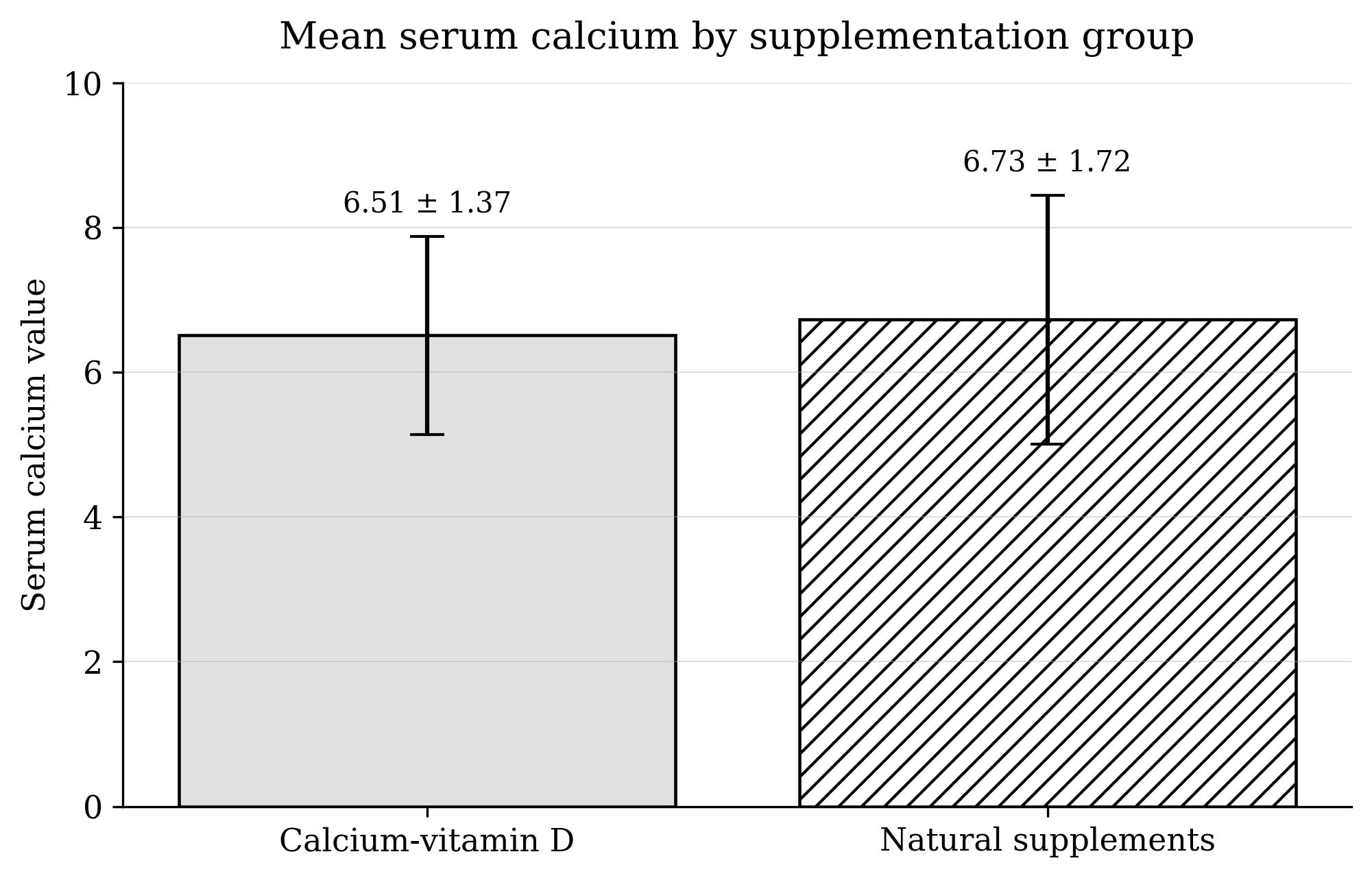
Figure 1. Mean serum calcium value by supplementation group. Error bars represent standard deviation.
3.3 Frequency of Abnormal Calcium Status
Abnormal calcium levels were common in both groups. Ninety-six percent of the women in the calcium-vitamin D group had poor calcium status, while only three percent of the women had normal calcium status. It was decided that 23 out of 30 women in the natural supplement group were odd and 7 out of 30 women were normal. Within the whole group of 60 women, abnormal calcium status was reported by 52 (86.7%), and normal calcium status was reported by 8 (13.3%). As a comparison, the risk ratio for abnormal calcium status was 1.26 (95% CI: 1.02–1.55) in the calcium-vitamin D group versus the natural supplement group. Using Fisher’s exact test, a p-value of 0.052 was near the significance level. Here is a summary of the calcium status variation by supplements group in Table 3 and Figure 2.
Table 3. Calcium status by supplementation group
|
Calcium Status |
Calcium-Vitamin D Group (n=30) |
Natural-Supplement Group (n=30) |
Total (n=60) |
Comparative Estimate |
|---|---|---|---|---|
|
Abnormal |
29 (96.7%) |
23 (76.7%) |
52 (86.7%) |
RR 1.26 (95% CI, 1.02–1.55) |
|
Normal |
1 (3.3%) |
7 (23.3%) |
8 (13.3%) |
Fisher exact p = 0.052 |
|
Total |
30 (100.0%) |
30 (100.0%) |
60 (100.0%) |
— |
Note. RR indicates risk ratio for abnormal calcium status in the calcium-vitamin D group compared with the natural-supplement group.
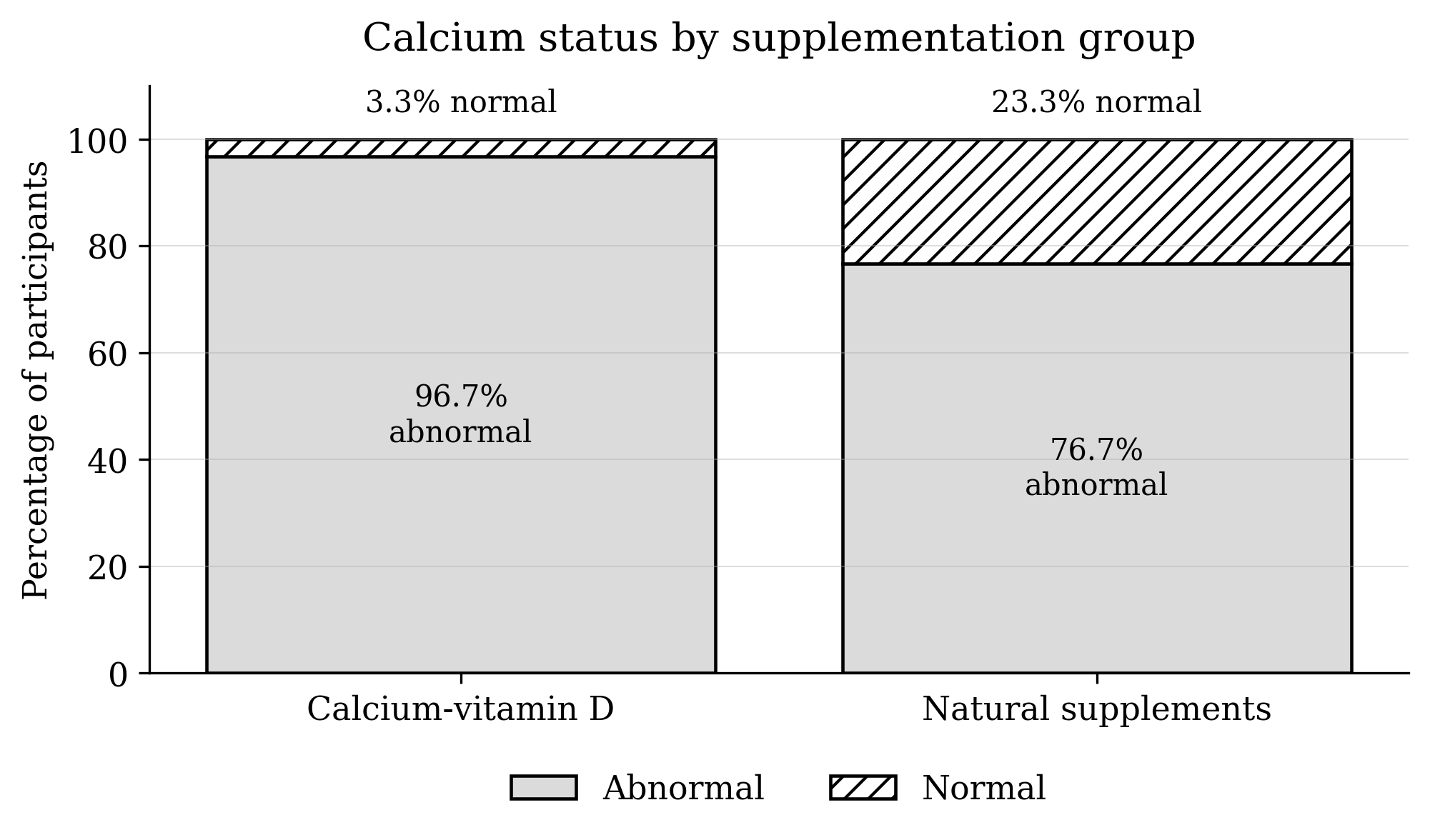
Figure 2. Distribution of normal and abnormal calcium status by supplementation group.
3.4 Integrated Interpretation of Results
The age spread of the two supplements groups was about the same. The numbers for the mean blood calcium levels were close, and the change in mean calcium levels was not statistically important. However, the whole group had a lot of cases of abnormal calcium status, and the number of cases was higher among women who took calcium-vitamin D tablets. This trend backs up the idea that the use of supplements recorded did not always match up with normal serum calcium levels in this group. The result doesn’t mean that taking calcium and vitamin D supplements made calcium levels worse or that taking natural supplements was better. The cross-sectional study could show changes in starting conditions, clinical risk, when supplements were started, how well they were taken, food intake, or biological factors that couldn’t be measured.
4. Discussion
4.1 Principal Findings
This cross-sectional study compared two different supplementation trends and found that a lot of pregnant women had calcium levels in their blood that weren’t normal. 86.7% of the women in the group had an abnormal calcium status. This included 96.7% of the women who took calcium-vitamin D supplements and 76.7% of the women who took natural supplements. The recorded description said that the mean blood calcium levels were low, and there wasn’t a big difference between the groups. These results show that this pregnant group may have a lot of calcium results that aren’t normal, and that supplement use may not be enough to ensure normal biological state. The results should be seen as informative and leading to new hypotheses. The study didn’t give out treatments or do long-term follow-up, and it wasn’t meant to test how well vitamins work. It’s important to remember that the higher number of problems in the calcium-vitamin D group is just an observational link in a clinical sample and not proof that the supplement is dangerous.
4.2 Biological Interpretation of Calcium Status in Pregnancy
Calcium intake changes while a woman is pregnant. The mother’s gut diet generally goes up during pregnancy, and so does the baby skeleton’s. The hormonal pathways of the mother also change to protect both the mineralization of the fetus and the balance of minerals in the mother (Kovacs & Kronenberg, 1997; Kovacs, 2005, 2016; Olausson et al., 2012; Prentice, 2000). These changes might be enough for some women, but they can hurt themselves if they don’t eat well, don’t get enough vitamin D, have trouble absorbing nutrients, have kidney disease, or don’t take their pills as directed. Many of the people in this study who had an abnormal calcium level may not be getting enough nutrients or energy. Calcium is generally found in bones, but it also helps nerves and muscles work, blood vessels stay open, hormones get released, and cells talk to each other (Peacock, 2010; Pu et al., 2016). Because the body’s needs for both the mother and the baby are linked, not getting enough calcium during pregnancy can be clinically important.
Molecular classification, on the other hand, needs to be carefully understood as well. Calcium can be ionized, complexed, or attached to proteins. Although ionized calcium is the physically active part, albumin and other binding factors can change total calcium (McLean & Hastings, 1935; Robertson & Marshall, 1979). Blood thinning and changes in albumin levels during pregnancy may lower total calcium without lowering ionized calcium in the same way. To better understand why measuring calcium during pregnancy is more useful when looking at it along with other factors like albumin levels, kidney function, vitamin D, PTH, magnesium, and phosphate (Jafri et al., 2014; Nordin, 1976; Parfitt & Kleerekoper, 1980; Schneider & Sherwood, 1975), this methodological issue is discussed.
4.3 Interpretation of Supplementation Patterns
It may not make sense that the calcium-vitamin D group has a higher number of abnormal cells. But in an observational study, women who are already thought to be at a higher health or clinical risk may be more likely to use supplements. Doctors may give calcium-vitamin D to women who have symptoms, a history of low calcium, a restricted diet, low vitamin D, or a higher reported chance of pregnancy. This is called “confounding by indication,” and it can make a group that has been given supplements look worse even though the supplements themselves are not dangerous. There may also be unmeasured differences in the herbal supplement group. Some women who use natural vitamins may already have a more varied diet, eat more calcium-rich foods, look for health care in different ways, or start their pregnancies at different times. If you don’t have standard dose, length, adherence, dietary calcium projections, or initial metabolic state data, you should just describe the difference between the groups and not get too excited about it. Recent studies on supplements have shown that the biological effect of calcium or supplements related to calcium depends on how much was taken at first, how often, how well, when, and what the result was (Buppasiri et al., 2015; Ettinger et al., 2014; Imdad & Bhutta, 2012). This explanation fits with that research.
4.4 Relationship with Previous Literature
These findings support earlier research that found moms still have a big health problem when they don’t get enough calcium. Many studies around the world have found that pregnant women don’t get enough calcium from the food they eat. What the WHO says about calcium pills (World Health Organization, 2018) shows that this issue is important for public health. Some trials and reviews have focused on hypertensive diseases during pregnancy, not just getting blood calcium levels back to normal. It has been studied whether calcium supplements can help women prevent preeclampsia and other problems, especially those who don’t get enough calcium (Belizan et al., 1980, 1991; Gomes et al., 2022; Hofmeyr et al., 2018). Vitamin D is still very important. Vitamin D helps the body receive calcium and keep chemicals in balance, according to a lot of basic and clinical research (Haussler & McCain, 1977; Holick, 2007). People talk a lot about vitamin D levels and how they affect the health of the mother and baby during pregnancy. But checking calcium levels by themselves doesn’t fully show how vitamin D and calcium are connected (Bodnar et al., 2007; De-Regil et al., 2016; Roth et al., 2017; Saraf et al., 2016).
4.5 Clinical and Public Health Implications
The study backs up a more thorough review of nutrition before birth from a clinical point of view. It is important to check a woman who says she takes vitamins for stomach problems, drug interactions, maternal age, genetic markers, and the quality of her food when it is really necessary. People who are getting guidance should be told about foods that are high in calcium, the right way to take supplements, how to avoid buying goods twice, and how to follow up on any strange lab results. Checking a woman’s calcium level during pregnancy is an important part of making sure she gets the nutrition she needs for her baby. Things like how easy it is for pregnant women to get food, how well their doctors recommend calcium pills, and how well the labs report their results all play a role in how well pregnant women get calcium care. Organize programs to make screening, counseling, nutrition, and follow-up better in places where people don’t get enough calcium from their food.
4.6 Strengths and Limitations
Additionally, it has a special pregnancy dataset, two comparison groups that are similar, a molecular finding that can be used in clinical settings, and a clear goal for description. There are expectations of the effects, but no claims about reasons that aren’t backed up by proof. The study keeps the observed quality of the data. By mixing calcium chemistry, pregnant food, and lab research, the study puts the data in a useful perspective. It also has some big problems. The study only used 30 women in each group, which is relatively few. The study didn’t look at the number of kids, gravidity, gestational age, phase, calcium intake, vitamin D level, albumin, PTH, phosphate, magnesium, kidney function, supplement amount, length, time, obedience, or diseases that were already present. The study used the dataset to describe the calcium state instead of measuring albumin-corrected or ionized calcium on its own. Due to these issues, it’s more difficult to distinguish between true hypocalcemia that has biological effects and changes in total calcium that are brought on by pregnancy or protein binding. Because the study was cross-sectional, it is not possible to say what caused the problems, and the lab method and reference time could change how odd the state is classified.
4.7 Future Research
In future research, potential forms that are bigger and have more than one point should be used. These plans should get details like the number of babies, BMI, gestational age, trimester, calcium intake from food, supplement type, dose, duration, adherence, and when the first dose was given. They should also ask about biochemical markers like albumin, ionized or corrected calcium, vitamin D, PTH, phosphate, magnesium, and renal function. After getting advice or supplements, long-term follow-up would help find out if the calcium status changes and if an abnormal calcium status is connected to heart disease, signs in the mother, fetal growth, birth weight, the calcium status of the baby, or other clinical events. More study needs to be done on the different ways people get calcium, like calcium from food, calcium-vitamin D pills, foods that have had calcium added to them, and natural items sold in stores. This will help researchers better understand the different types of exposure and turn biochemical findings into antenatal nutrition strategies that can be used in real life.
5. Conclusion
Pregnant women in both supplements groups often had abnormal levels of calcium in their blood. It’s true that women who took calcium-vitamin D supplements were more likely than women who took natural supplements to have abnormal findings, but this difference should not be taken too seriously because the study was cross-sectional and didn’t look at many clinical, dietary, biochemical, laboratory, or supplementation-related factors. Findings do not show a cause-and-effect link between dosage pattern and calcium levels. They say that supplement use may not be enough to guarantee normal blood calcium levels during pregnancy and that prenatal calcium testing should be understood in a larger clinical and nutritional context.
6. Clinical Implications
-
When it’s truly necessary, doctors should check a woman’s blood calcium level, especially if she has symptoms, a bad diet, doesn’t eat many calcium-rich foods, is pregnant or is thought to be nutritionally deficient.
-
When possible, calcium readings should be understood along with vitamin D levels, kidney function, phosphate, magnesium, albumin or ionic calcium, and any relevant medical background.
-
To better understand what molecular results mean in a clinical setting, antenatal records should include information about the type of supplement, amount, length, adherence, and calcium intake from food.
-
Firm suggestions about changes in nutrition habits need bigger studies that look at biochemistry and food in more detail.
References
Almaghamsi, A., Almalki, M. H., & Buhary, B. M. (2018). Hypocalcemia in pregnancy: A clinical review update. Oman Medical Journal, 33(6), 453–462. https://doi.org/10.5001/omj.2018.85
Belizan, J. M., Villar, J., & Repke, J. (1980). The relationship between calcium intake and edema-, proteinuria-, and hypertension-gestosis: An hypothesis. The American Journal of Clinical Nutrition, 33(10), 2202–2210. https://doi.org/10.1093/ajcn/33.10.2202
Belizan, J. M., Villar, J., Gonzalez, L., Campodonico, L., & Bergel, E. (1991). Calcium supplementation to prevent hypertensive disorders of pregnancy. The New England Journal of Medicine, 325(20), 1399–1405. https://doi.org/10.1056/NEJM199111143252002
Bodnar, L. M., Catov, J. M., Simhan, H. N., Holick, M. F., Powers, R. W., & Roberts, J. M. (2007). Maternal vitamin D deficiency increases the risk of preeclampsia. The Journal of Clinical Endocrinology & Metabolism, 92(9), 3517–3522. https://doi.org/10.1210/jc.2007-0718
Buppasiri, P., Lumbiganon, P., Thinkhamrop, J., Ngamjarus, C., Laopaiboon, M., & Medley, N. (2015). Calcium supplementation (other than for preventing or treating hypertension) for improving pregnancy and infant outcomes. Cochrane Database of Systematic Reviews, 2015(2), CD007079. https://doi.org/10.1002/14651858.CD007079.pub3
Cormick, G., Betran, A. P., Romero, I. B., Lombardo, C. F., Gulmezoglu, A. M., Ciapponi, A., & Belizan, J. M. (2019). Global inequities in dietary calcium intake during pregnancy: A systematic review and meta-analysis. BJOG: An International Journal of Obstetrics & Gynaecology, 126(4), 444–456. https://doi.org/10.1111/1471-0528.15512
Cross, N. A., Hillman, L. S., Allen, S. H., Krause, G. F., & Vieira, N. E. (1995). Calcium homeostasis and bone metabolism during pregnancy, lactation, and postweaning: A longitudinal study. The American Journal of Clinical Nutrition, 61(3), 514–523. https://doi.org/10.1093/ajcn/61.3.514
De-Regil, L. M., Palacios, C., Lombardo, L. K., & Pena-Rosas, J. P. (2016). Vitamin D supplementation for women during pregnancy. Cochrane Database of Systematic Reviews, 2016(1), CD008873. https://doi.org/10.1002/14651858.CD008873.pub3
Ettinger, A. S., Lamadrid-Figueroa, H., Mercado-Garcia, A., Kordas, K., Wood, R. J., Peterson, K. E., Hu, H., & Tellez-Rojo, M. M. (2014). Effect of calcium supplementation on bone resorption in pregnancy and the early postpartum: A randomized controlled trial in Mexican women. Nutrition Journal, 13, 116. https://doi.org/10.1186/1475-2891-13-116
Gomes, F., Ashorn, P., Askari, S., Belizan, J. M., Boy, E., Cormick, G., Dickin, K. L., Driller-Colangelo, A. R., Fawzi, W., Hofmeyr, G. J., Humphrey, J., Khadilkar, A., Mandlik, R., Neufeld, L. M., Palacios, C., Roth, D. E., Shlisky, J., Sudfeld, C. R., Weaver, C., & Bourassa, M. W. (2022). Calcium supplementation for the prevention of hypertensive disorders of pregnancy: Current evidence and programmatic considerations. Annals of the New York Academy of Sciences, 1510(1), 52–67. https://doi.org/10.1111/nyas.14733
Hacker, A. N., Fung, E. B., & King, J. C. (2012). Role of calcium during pregnancy: Maternal and fetal needs. Nutrition Reviews, 70(7), 397–409. https://doi.org/10.1111/j.1753-4887.2012.00491.x
Haussler, M. R., & McCain, T. A. (1977). Basic and clinical concepts related to vitamin D metabolism and action. The New England Journal of Medicine, 297(18), 974–983; 297(19), 1041–1050.
Hofmeyr, G. J., Lawrie, T. A., Atallah, A. N., & Torloni, M. R. (2018). Calcium supplementation during pregnancy for preventing hypertensive disorders and related problems. Cochrane Database of Systematic Reviews, 2018(10), CD001059. https://doi.org/10.1002/14651858.CD001059.pub5
Holick, M. F. (2007). Vitamin D deficiency. The New England Journal of Medicine, 357(3), 266–281. https://doi.org/10.1056/NEJMra070553
Imdad, A., & Bhutta, Z. A. (2012). Effects of calcium supplementation during pregnancy on maternal, fetal and birth outcomes. Paediatric and Perinatal Epidemiology, 26(Suppl. 1), 138–152. https://doi.org/10.1111/j.1365-3016.2012.01274.x
Institute of Medicine. (2011). Dietary reference intakes for calcium and vitamin D. National Academies Press. https://doi.org/10.17226/13050
Jafri, L., Khan, A. H., & Azeem, S. (2014). Ionized calcium measurement in serum and plasma by ion selective electrodes: Comparison of measured and calculated parameters. Indian Journal of Clinical Biochemistry, 29(3), 327–332. https://doi.org/10.1007/s12291-013-0360-x
Kovacs, C. S. (2005). Calcium and bone metabolism during pregnancy and lactation. Journal of Mammary Gland Biology and Neoplasia, 10(2), 105–118. https://doi.org/10.1007/s10911-005-5394-0
Kovacs, C. S. (2016). Maternal mineral and bone metabolism during pregnancy, lactation, and post-weaning recovery. Physiological Reviews, 96(2), 449–547. https://doi.org/10.1152/physrev.00027.2015
Kovacs, C. S., & Kronenberg, H. M. (1997). Maternal-fetal calcium and bone metabolism during pregnancy, puerperium, and lactation. Endocrine Reviews, 18(6), 832–872. https://doi.org/10.1210/edrv.18.6.0319
Kumar, A., & Kaur, S. (2017). Calcium: A nutrient in pregnancy. The Journal of Obstetrics and Gynecology of India, 67(5), 313–318. https://doi.org/10.1007/s13224-017-1007-2
McLean, F. C., & Hastings, A. B. (1935). The state of calcium in the fluids of the body. I. The conditions affecting the ionization of calcium. Journal of Biological Chemistry, 108, 285–322.
Nordin, B. E. C. (1976). Plasma calcium and plasma magnesium homeostasis. In B. E. C. Nordin (Ed.), Calcium, phosphate and magnesium metabolism. Churchill Livingstone.
Olausson, H., Goldberg, G. R., Laskey, M. A., Schoenmakers, I., Jarjou, L. M. A., & Prentice, A. (2012). Calcium economy in human pregnancy and lactation. Nutrition Research Reviews, 25(1), 40–67. https://doi.org/10.1017/S0954422411000187
Parfitt, A. M., & Kleerekoper, M. (1980). Clinical disorders of calcium, phosphorus and magnesium metabolism. In M. H. Maxwell & C. R. Kleeman (Eds.), Clinical disorders of fluid and electrolyte metabolism (3rd ed., pp. 947–1151). McGraw-Hill.
Peacock, M. (2010). Calcium metabolism in health and disease. Clinical Journal of the American Society of Nephrology, 5(Suppl. 1), S23–S30. https://doi.org/10.2215/CJN.05910809
Prentice, A. (2000). Calcium in pregnancy and lactation. Annual Review of Nutrition, 20, 249–272. https://doi.org/10.1146/annurev.nutr.20.1.249
Pu, F., Chen, N., & Xue, S. (2016). Calcium intake, calcium homeostasis and health. Food Science and Human Wellness, 5(1), 8–16. https://doi.org/10.1016/j.fshw.2016.01.001
Robertson, W. G., & Marshall, R. W. (1979). Calcium measurements in serum and plasma—total and ionized. CRC Critical Reviews in Clinical Laboratory Sciences, 11(3), 271–304. https://doi.org/10.3109/10408367909105859
Roth, D. E., Leung, M., Mesfin, E., Qamar, H., Watterworth, J., & Papp, E. (2017). Vitamin D supplementation during pregnancy: State of the evidence from a systematic review of randomised trials. BMJ, 359, j5237. https://doi.org/10.1136/bmj.j5237
Saraf, R., Morton, S. M. B., Camargo, C. A., Jr., & Grant, C. C. (2016). Global summary of maternal and newborn vitamin D status: A systematic review. Maternal & Child Nutrition, 12(4), 647–668. https://doi.org/10.1111/mcn.12210
Schneider, A. B., & Sherwood, L. M. (1975). Pathogenesis and management of hypoparathyroidism and other hypocalcemic disorders. Metabolism, 24(7), 871–898. https://doi.org/10.1016/0026-0495(75)90134-1
Shlisky, J., Mandlik, R., Askari, S., Abrams, S., Belizan, J. M., Bourassa, M. W., Cormick, G., Gomes, F., Khadilkar, A., Owino, V., Pettifor, J. M., Rana, Z. H., Roth, D. E., & Weaver, C. (2022). Calcium deficiency worldwide: Prevalence of inadequate intakes and associated health outcomes. Annals of the New York Academy of Sciences, 1512(1), 10–28. https://doi.org/10.1111/nyas.14758
Vandenbroucke, J. P., von Elm, E., Altman, D. G., Gotzsche, P. C., Mulrow, C. D., Pocock, S. J., Poole, C., Schlesselman, J. J., & Egger, M. (2007). Strengthening the Reporting of Observational Studies in Epidemiology (STROBE): Explanation and elaboration. PLoS Medicine, 4(10), e297. https://doi.org/10.1371/journal.pmed.0040297
World Health Organization. (2018). WHO recommendation: Calcium supplementation during pregnancy for prevention of pre-eclampsia and its complications. World Health Organization.
 Arabic
  English