
أثر مستوى أخلاقيات المعلم القدوة في تحسين المناخ الصفي وتنمية السلوك الإيجابي لدى طلبة المرحلة الإعدادية في مدارس الجليل الغربي – لواء الشمال في الداخل الفلسطيني
منال أمين حمدو1، رنده أمين أغا1
1 جامعة النجاح الوطنية، نابلس، فلسطين.
بريد الكتروني الباحث المراسل: Manal851@gmail.com
The Impact of the Role-Model Teacher’s Ethical Standards on Improving Classroom Climate and Promoting Positive Behavior among Preparatory-Stage Students in the Schools of Western Galilee – Northern District in the Palestinian Interior
Manal Amin Hamdo1, Randa Amin Agha1
1 An-Najah National University, Nablus, Palestine. Corresponding author
email: Manal851@gmail.com
DOI: https://doi.org/10.53796/hnsj75/22
المعرف العلمي العربي للأبحاث: https://arsri.org/10000/75/22
المجلد (7) العدد (5). الصفحات: 408 - 435
تاريخ الاستقبال: 2026-04-15 | تاريخ القبول: 2026-04-22 | تاريخ النشر: 2026-05-01
المستخلص: هدفت هذه الدراسة إلى الكشف عن أثر مستوى أخلاقيات المعلم القدوة في تحسين المناخ الصفي وتنمية السلوك الإيجابي لدى طلبة المرحلة الإعدادية في مدارس الجليل الغربي – لواء الشمال في الداخل الفلسطيني. واعتمدت الدراسة المنهج الوصفي الارتباطي، نظرًا لملاءمته لطبيعة البحث في تفسير العلاقات بين المتغيرات التربوية محل الدراسة. وتكوّن مجتمع الدراسة من معلمي ومعلمات المرحلة الإعدادية في مدارس الجليل الغربي، فيما بلغت عينة الدراسة الأساسية (223) معلماً ومعلمة جرى اختيارهم بطريقة عشوائية بسيطة. ولتحقيق أهداف الدراسة، طوّرت الباحثتان ثلاث أدوات تمثلت في: مقياس أخلاقيات المعلم القدوة، ومقياس المناخ الصفي، ومقياس تنمية السلوك الإيجابي، وقد أظهرت الأدوات درجات مناسبة من الصدق والثبات. أظهرت النتائج أن مستوى أخلاقيات المعلم القدوة جاء مرتفعًا، كما جاء مستوى المناخ الصفي ومستوى تنمية السلوك الإيجابي لدى الطلبة بدرجة مرتفعة أيضًا. وبينت النتائج وجود أثر مباشر ودال إحصائيًا لأخلاقيات المعلم القدوة في تحسين المناخ الصفي وتنمية السلوك الإيجابي لدى الطلبة، بما يؤكد أهمية الدور الأخلاقي للمعلم في بناء بيئة صفية داعمة وآمنة ومحفزة على التفاعل الإيجابي. كما كشفت النتائج عن عدم وجود فروق ذات دلالة إحصائية في مستوى أخلاقيات المعلم تُعزى إلى متغير الجنس، في حين ظهرت فروق دالة في بعض أبعاد المناخ الصفي وتنمية السلوك الإيجابي تبعًا لمتغيري سنوات الخبرة والمؤهل العلمي. وتؤكد الدراسة أن أخلاقيات المعلم لا تمثل بُعدًا مهنيًا فحسب، بل تُعد ركيزة أساسية في تعزيز جودة التفاعل الصفي، وترسيخ القيم الإيجابية، والحد من السلوكيات غير المرغوبة لدى الطلبة. وتوصي الدراسة بضرورة تعزيز أخلاقيات مهنة التعليم في برامج إعداد المعلمين وتدريبهم، وتوجيه السياسات التربوية نحو دعم الممارسات الأخلاقية التي تسهم في بناء مناخ صفي إيجابي وتنمية السلوك الإيجابي لدى الطلبة.
الكلمات المفتاحية: أخلاقيات المعلم القدوة، المناخ الصفي، السلوك الإيجابي، المرحلة الإعدادية، الجليل الغربي.
Abstract: This study aimed to examine the impact of the role-model teacher’s ethical standards on improving classroom climate and promoting positive behavior among preparatory-stage students in the schools of Western Galilee, Northern District, in the Palestinian interior. To achieve the objectives of the study, the researchers adopted a descriptive correlational approach, as it is appropriate for investigating the relationships among the educational variables under study. The study population consisted of male and female preparatory-stage teachers in the schools of Western Galilee, and the main sample included 223 teachers selected through simple random sampling. To collect the data, the researchers developed three instruments: a Role-Model Teacher Ethics Scale, a Classroom Climate Scale, and a Positive Behavior Development Scale. The instruments demonstrated acceptable levels of validity and reliability. The findings revealed that the level of role-model teacher ethics was high. Likewise, both the level of classroom climate and the level of positive behavior development among students were found to be high. The results also indicated a direct and statistically significant effect of the role-model teacher’s ethical standards on both classroom climate and the development of positive student behavior, confirming the importance of the teacher’s ethical role in creating a supportive, safe, and interaction-enhancing classroom environment. In addition, the findings showed no statistically significant differences in the level of teacher ethics attributable to gender, whereas significant differences were found in some dimensions of classroom climate and positive behavior development according to years of experience and academic qualification. The study concludes that teacher ethics are not merely a professional dimension, but rather a fundamental pillar in enhancing the quality of classroom interaction, reinforcing positive values, and reducing undesirable student behaviors. The study recommends strengthening teaching ethics in teacher preparation and training programs and directing educational policies toward supporting ethical practices that contribute to building a positive classroom climate and promoting positive student behavior.
Keywords: Role-model teacher ethics, classroom climate, positive behavior, preparatory stage, Western Galilee.
المقدمة:
تُعد الأخلاقيات التربوية الأساس القيمي الذي تستند إليه العملية التعليمية، لما لها من دور محوري في بناء شخصية المتعلم وتشكيل سلوكه وتعزيز تفاعله الإيجابي داخل البيئة المدرسية ولا يقتصر دور المعلم في المدرسة الحديثة على نقل المعارف الأكاديمية، بل يتجاوز ذلك إلى كونه نموذجًا أخلاقيًا وسلوكيًا يمثل قدوة عملية للطلبة، تترك بصماتها العميقة في اتجاهاتهم وقيمهم وسلوكهم اليومي.
وتشير الأدبيات التربوية إلى أن سلوك المعلم وأخلاقياته المهنية تشكّل أحد أهم محددات المناخ الصفي، إذ تؤثر في طبيعة العلاقة بين المعلم والطلبة، وفي مستوى الشعور بالأمان والانتماء، وفي درجة الانضباط الذاتي والمشاركة الصفية. وتؤكد نظرية التعلم الاجتماعي أن الطلبة يتعلمون من خلال الملاحظة والتقليد، مما يجعل المعلم مصدرًا أساسيًا لاكتساب القيم والسلوكيات داخل الصف.
وتزداد أهمية أخلاقيات المعلم في المرحلة الإعدادية، نظرًا لما تمر به هذه المرحلة من تحولات نفسية واجتماعية وسلوكية عميقة تتطلب بيئة صفية مستقرة وداعمة. وفي ظل التحديات المجتمعية المتزايدة، وارتفاع مظاهر السلوكيات السلبية والعنف المدرسي، تبرز الحاجة الملحة إلى دراسات علمية تسلط الضوء على دور أخلاقيات المعلم القدوة في تحسين المناخ الصفي وتنمية السلوك الإيجابي لدى الطلبة، لا سيما في السياق التربوي المحلي.
تعد الاخلاق السمة الحقيقية والركيزة العليا لبناء مجتمع ناجح، قوي، ثابت، يرتكز على المبادئ الأخلاقية، فالأخلاق الحسنة تعزز وتحث على القيم الإنسانية الحسنة لدى المجتمع وتقوي العلاقات والروابط الأخلاقية فقد أجاد أحمد شوقي وصفها:
انما الأمم الاخلاق ما بقيت فان هم ذهبت اخلاقهم ذهبوا
وقد أولت الديانات الأخلاق مكانة مركزية فزخر القران بايات مكارم الأخلاق التي تنظم علاقة الانسان بربه، وبنفسه وبالأخرين مرسيا قيم الصدق والعدل والرحمة. فهو دستور الاخلاق حيث ورد فيه ما يقارب 1500 اية تتحدث عن الأخلاق وتعزز الفضائل وترسخها في النفوس.
فخاطب النبي (وإنك لعلى خلق عظيم) آيات التزكية في سورة (القلم 4)
) إِنَّ الذين ءَامَنُواْ وَعَمِلُواْ ٱلصَّٰلِحَٰتِ أُوْلَٰٓئِكَ هُمۡ خَيۡرُ ٱلۡبَرِيَّةِ (7) جَزَآؤُهُمۡ عِندَ رَبِّهِمۡ جَنَّٰتُ عَدۡنٖ تَجۡرِي مِن تَحۡتِهَا ٱلۡأَنۡهَٰرُ خَٰلِدِينَ فِيهَآ أَبَدٗاۖ رَّضِيَ ٱللَّهُ عَنۡهُمۡ وَرَضُواْ عَنۡهُۚ ذَٰلِكَ لِمَنۡ خَشِيَ رَبَّهُ) (البينة 7)
ويقول تعالى (وَلَا تَسْتَوِي الْحَسَنَةُ وَلَا السَّيِّئَةُ ادْفَعْ بِالَّتِي هِيَ أَحْسَنُ فَإِذَا الَّذِي بَيْنَكَ وَبَيْنَهُ عَدَاوَةٌ كَأَنَّهُ وَلِيٌّ حَمِيم) (فصلت 34)
كما قدم الكتاب المقدس رؤية عميقة للاخلاق تبني الايمان وتستند الى نعمة الرب والاتزام بالوصايا العشر كركيزة للسلوك (فكل ما تريدون أن يفعل الناس بكم افعلوا أنتم أيضا بهم) (متى 12:7) محتملين بعضكم بعضا، ومتسامحين بعضكم بعضا …كما غفر لكم المسيح (كولوسي 13:3)
من هنا فأن اعتماد التربية للأخلاق والقيم هي محصن للنشأ الجديد والمجتمع، واعتماد مناهج التعليم التربية الخلقية حل يطرح في ضوء ما يعيشه المجتمع العربي في الداخل الفلسطيني، من التحديات والتصعيدات الخطيرة في جرائم العنف المستشرية.
يشمل التعلم جوانب التنشئة الاجتماعية والسلوك الأخلاقي التي يتعلمها الطلبة من نماذجهم التربوية وعلى رأسهم المعلم القدوه ( Bandora,1977) .ولا يقتصر دور المعلم على نقل المعرفة فقط ، بل هو مرتكز أساسي في التربية الأخلاقية ، وبناء السلوك وترسيخ القيم والثقافة وبناء شخصية ثابتة، متوازنة ، مبدعة قادره على تغيير المجتمع .وقدوة أخلاقية تربوية يؤثر سلوكه وأخلاقه تأثيرا مباشرا في الطلبة بقصد أو دون قصد من خلال التفاعل اليومي داخل الصف وخارجه( زيتون2017).لهذا فان أخلاقياته هي من أهم العوامل في توجيه السلوك وتنمية القيم في البيئة المدرسية. يرسخ ويعمق ويعزز ويبني المعرفة والمهارات والاستراتيجيات والابداع، ويغرس المبادئ والقيم مما يساعد في خلق مناخ أمن وجو إيجابي داخل إطار المدرسة، يضمن تحقيق الذات ويرفع مستوى التحصيل الأكاديمي.
وتعتبر مرحلة التعليم الاعدادي من أكثر المراحل التربوية حساسية في تشكيل شخصية الطالب وبناء منظومته القيمية والسلوكيه. لتزامنها مع مرحلة المراهقة وتحولاتها الجسدية والنفسية والاجتماعية والسلوكية للطالب. حيث تؤكد نظريات التعليم الاجتماعي أن الطلاب في هذه المرحلة العمرية يتعلمون بالملاحظة والتقليد والمحاكاة ( Bandora,1977) . وقد اثبتت دراسات حديثة أن الطلبة في هذه المرحلة العمرية يتأثرون بشكل أكبر بسلوك المعلم العملي مقارنه بالتوجيهات اللفظية مما يجعل أخلاقيات المعلم عنصرا حاسما في توجية السلوك الإيجابي أو السلبي لديهم(Wentzel 2012) .
في حين أشار عدد من الباحثين الى أن المناخ الصفي الإيجابي يعد عاملا حاسما في التعليم الفعال لأنه يسهم في رفع الدافعية، تعزيز الانضباط الذاتي وتنمية السلوك الإيجابي لدى الطلاب (الحيلة 2012 , أبو عطيلة 2016).
من هنا تنبع أهمية هذه الدراسة في تسليط الضوء على أثر اخلاقيات المعلم القدوة في تحسين المناخ الصفي وتنمية السلوك الإيجابي وضبط السلوك لدى الطلبة في المدارس الإعدادية في الجليل الغربي، بما يسهم في تطوير الممارسات التربوية والارتقاء بجودة التعليم وارتفاع التحصيلات الاكاديمية وتعزيز الشعور بالانتماء.
مشكلة الدراسة:
على الرغم من التأكيد النظري والمهني المستمر على أهمية أخلاقيات المعلم، إلا أن الممارسة التربوية الواقعية تشير إلى وجود بعض الممارسات الصفية التي قد تُضعف المناخ الصفي، مثل التمييز بين الطلبة، أو ضعف العدالة الصفية، أو استخدام أساليب ضبط غير تربوية، إضافة إلى التحديات المرتبطة بالتواصل مع أولياء الأمور. وقد انعكس ذلك في بروز سلوكيات صفية سلبية، وضعف الانضباط الذاتي لدى الطلبة. ومن هنا، تتمحور مشكلة الدراسة في التساؤل عن مدى إسهام أخلاقيات المعلم القدوة في تحسين المناخ الصفي وتنمية السلوك الإيجابي لدى طلبة المرحلة الإعدادية
أسئلة الدراسة:
سعت الدراسة للإجابة عن الأسئلة الآتية
ما أثر مستوى أخلاقيات المعلم القدوة في تحسين المناخ الصفي وتنمية السلوك الإيجابي لدى طلبة المرحلة الأعدادية في مدارس الجليل الغربي؟
هل توجد فروق ذات دالة إحصائية في مستوى أخلاقيات المعلم تعزى إلى متغيرات الجنس، سنوات الخبرة، والمؤهل العلمي؟
فرضيات الدراسة:
سعت هذه الدراسة للإجابة عن الفرضيات الصفرية الاتية:
الفرضية الأولى: لا توجد فروق ذات دلالة إحصائية عند مستوى دلالة ( α ≤ 0.05) أثرمستوى اخلاقيات المعلم ودورها في تحسين المناخ الصفي وتنمية السلوك الإيجابي لدى الطلبة تعزى الى متغير الجنس
الفرضية الثانية: لا توجد فروق ذات دلالة إحصائية عند مستوى دلالة (α ≤ 0.05) أثر مستوى أخلاقيات المعلم ودورها في تحسين المناخ الصفي وتنمية السلوك الإيجابي لدى الطلبة تعزى الى التخصص الأكاديمي لدى المعلمين
الفرضية الثالثة: لا توجد فروق ذات دلالة إحصائية عند مستوى دلالة (α ≤ 0.05) أثر مستوى أخلاقيات المعلم ودورها في تحسين المناخ الصفي وتنمية السلوك الإيجابي لدى الطلبة تعزى الى سنوات الخبرة.
الفرضية الرابعة: لا توجد فروق ذات دلالة إحصائية عند مستوى دلالة (α ≤ 0.05) أثر مستوى أخلاقيات المعلم ودورها في تحسين المناخ الصفي وتنمية السلوك الإيجابي لدى الطلبة تعزى الى المرحلة العمرية اعدادي
أهداف الدراسة:
هدفت هذه الدراسة للتعرف إلى: –
- تحليل أَثر مستوى اخلاقيات المعلم في تحسين المناخ الصفي لدى الطلبة.
- توجيه هيئة أعضاء التدريس الى أهمية أخلاقيات المعلم وتأثيرها على المناخ الصفي لدى الطلبة.
- معرفة رأي هيئة التدريس في مدى فاعلية أثر أخلاقيات المعلم على المناخ الصفي.
- مستوى أخلاقيات المعلم في المرحلة الإعدادية في مدارس الجليل الغربي.
- الكشف عن طبيعة المناخ الصفي السائد في المدارس الإعدادية في الجليل الغربي.
- بيان دور أخلاقيات المعلم في تنمية السلوك الإيجابي لدى الطلبة.
أهمية الدراسة:
سعت هذه الدراسة إلى تحقيق الأهمية الآتية:
أولا: الأهمية النظرية:-
نتيجة لتجربة واقعية قد عايشتها الباحثتين في المدراس الإعدادية في الجليل الغربي والتي تؤكد التأثير الإيجابي لأخلاقيات المعلم القدوة في تحسين المناخ التربوي الصفي والمدرسي. وجدتا الأهمية بمكان اثراء الادبيات التربوية العربية بدراسة حديثة تربط الاخلاقيات بالمناخ التربوي وتقليل السلوكيات السلبية. وبهذا توفر اطارا نظريا يمكن الإفادة منه في دراسات مستقبلية.
ثانيا: الأهمية التطبيقية: –
يؤمل من هذه الدراسة وما تضمنتها من دراسة أدبيات تطرقت للموضوع، والبحث الميداني الذي أجري بالاستبانات، أن تفيد نتائج الدراسة في تحسين السياسات التربوية التي توجه المعلم نحو ممارسات أخلاقية تعزز المناخ الصفي الامن، وتقلل السلوكيات السلبية، وتساعد الإدارات التربوية في بناء برامج تدريبية واستكمالات تعنى بتعزيز وتذويت أخلاقيات مهنة التعليم.
التعريفات الاصطلاحيه والاجرائية
1. اخلاقيات المعلم:
منظومة متكامله من القيم والمبادئ والمعايير السلوكية والمهنية التي تحكم المعلم داخل وخارج المدرسة وتوجه ممارساته التربوية مع المجتمع المدرسي.
مما تضمن العدالة والاحترام المتبادل والمسؤولية والمهنية، والنزاهة، والالتزام برسالة التعليم التربوية والإنسانية (الحيلة 2012، الغيبي 2014)
ويعرف هذا المفهوم اجرائيا في الدراسة: – الدرجة التي يحصل عليها المعلم في استبانة اخلاقيات المعلم المعدة لأغراض الدراسة.
2. المناخ الصفي: – مجموعة الخصائص النفسية والاجتماعية والتنظيمية والبيئية في غرفة الصف. وتنعكس في طبيعة العلاقة بين المعلم والطلبة، وبين الطلبة أنفسهم، وفي أساليب التفاعل ومستوى الدعم، والشعور بالأمان، والانتماء، والاحترام داخل البيئة الصفية (أبو عطية 2016، الحارثي 2017)
وتشير الدراسات الى أن المناخ الإيجابي يسهم في تحسين التحصيل الأكاديمي. وخفض السلوكيات السلبية في الصف والمدرسة، وتعزيز الدافعية للتعلم (الزهراني2018، Fraser2012). كما يؤكد ((Wentzel 2015 أن الصفوف التي يسودها مناخ إيجابي تتميز بارتفاع مستوى المشاركة الطلابية وتحسن العلاقات الاجتماعية لدى الطلبة.
تشير الباحثتان الى أن اخلاقيات المعلم القدوة هي مفتاح قيمي هام، تقوم من خلاله تنشئة الاجيال على الاحترام، والشعور بالمسؤولية اتجاه النفس والمجموعة. وأن العلاقة بين المعلم والطالب تتيح خلق مناخ صفي داعم، وتحصيل أعلى، وتحقيق للذات في أعلى درجات سلم ماسلو.
حدود الدراسة:
1.الحدود البشرية: – تم تطبيق هذه الدراسة على عينة من معلمي ومعلمات المرحلة الإعدادية في مدارس الجليل الغربي.
2.الحدود الزمنية: – تم تنفيذ هذه الدراسة في الفصل الدراسي الأول في العام الأكاديمي 2025-2026 وبالتالي فأن النتائج تعكس واقع تلك الفترة الزمنية فقط.
3. الحدود المكانية: – تم تطبيق هذه الدراسة في المدارس الإعدادية في الجليل الغربي فقط، ولا يمكن تعميم نتائجها على مدارس مناطق أخرى تختلف ظروفها الاجتماعية أو الإدارية أو التربوية.
4.الحدود الموضوعية: – اقتصر موضوع الدراسة على بحث أثر مستوى اخلاقيات المعلم القدوة في تحسين المناخ الصفي وتنمية السلوك الإيجابي لدى الطلبة. ولم تتناول متغيرات تربوية أخرى قد يكون لها تأثيرا في المناخ الصفي او السلوك الطلابي مثل: أساليب التدريس، المناهج، التحصيل، البيئة المادية.
5-الحدود الإجرائية:- تعتمد نتائج الدراسة على التعريفات الإجرائية للمفاهيم الواردة فيها حيث تم قياس مستوى أخلاقيات المعلم، والمناخ التربوي الصفي، والسلوك الإيجابي من خلال أدوات أعدت لأغراض الدراسة، وقد يؤثر ذلك على درجة المقارنة مع دراسات أخرى استخدمت أدوات أخرى.
6.الحدود المنهجية: – استخدمت الدراسة المنهج الوصفي الارتباطي مما يحد من إمكانية تفسير النتائج تفسيرا مباشرا. وقد اعتمدت أدوات الدراسة على الاستبانة، والتي تتأثر باستجابات الافراد ودرجة صدقهم. واقتصر التحليل الإحصائي على الأساليب الملائمة لطبيعة المنهج المستخدم.
الدراسات السابقة: –
وبعد اطلاع الباحثتين على الأدب التربوي والدراسات السابقة، وعلى مقاييس أخلاقيات المعلم والعلاقة التربوية المستخدمة في دراسات عربية وأجنبية، ومنها زيتون (2017)، والحارثي (2017)، وكذلك الدراسات الحديثة التي تناولت جودة العلاقة بين المعلم والطلبة وأبعادها الأخلاقية والتربوية (Spilt & Komen, 2022; Cornelius-White et al., 2024)، قامت الباحثتان بتطوير المقياس بما يتناسب مع أهداف الدراسة الحالية
تُعد أخلاقيات المعلم من المرتكزات الأساسية في العملية التربوية، لما لها من أثر مباشر في تشكيل المناخ الصفي وتنمية السلوك الإيجابي لدى الطلبة، ولا سيما في المرحلة الإعدادية التي تتسم بحساسية عالية في بناء الشخصية وتكوين الاتجاهات والقيم. وانطلاقًا من ذلك، تناولت العديد من الدراسات العربية والأجنبية العلاقة بين أخلاقيات المعلم، والمناخ الصفي، والسلوك الطلابي، كلٌّ من زاوية بحثية مختلفة.
فقد توصلت دراسة العتيبي، (2014) بعنوان ” درجة التزام مديري المدارس الثانوية بأخلاقيات المهنة من وجهة نظر المعلمين” في مجلة التربية المعاصرة، العدد 98. والتي استخدمت المنهج الوصفي المسحي، الى أن درجة الالتزام بأخلاقيات المهنة جاءت عالِية نسبيًا، وأن هذا الالتزام يتفاوت باختلاف مجالات الأخلاق المهنية مثل الاحترام، والتعامل مع الطلبة، والزملاء والمجتمع. كما أوصت الدراسة بضرورة تعزيز أخلاقيات مهنة التعليم من خلال برامج الإعداد والتدريب، ونشر مواثيق أخلاقيات المهنة، وتفعيل دور القيادة التربوية في دعم السلوك المهني الأخلاقي وترسيخ السلوك التربوي الإيجابي، إضافة إلى الدعوة لإجراء دراسات مستقبلية تتناول أخلاقيات مهنة التعليم في سياقات تربوية مختلفة.
وفي السياق نفسه أشارت دراسة الحارثي (2017) أن التزام المعلم بأخلاقيات المهنة وبخاصة فيما يتعلق باحترام وضبط الانفعالات، والعدالة في التعامل، يسهم في تحسين الانضباط الصفي، ويحد من المشكلات السلوكية، ويعزز التفاعل الإيجابي داخل البيئة الصفية.
كما أظهرت دراسة قشمر (2017) بعنوان ” درجة التزام معلمي ومعلمات المدارس الفلسطينية بأخلاقيات مهنة التعليم وقواعد السلوك من وجهة نظر مديري المدارس”، والتي اعتمدت المنهج الوصفي المسحي، أن درجة التزام المعلمين بأخلاقيات المهنة جاءت مرتفعة في المجالات المتعلقة بأخلاقيات المعلم تجاه الطلبة، وإدارة الصف، والتفاعل المهني، والإدارة المدرسية، والمجتمع المحلي. كما بينت نتائجها أن هذا الالتزام يسهم في تعزيز الانضباط الصفي، وتقليل السلوكيات السلبية، وتحسين المناخ التربوي العام داخل المدرسة.
أما دراسة أبو عيطة (2016) حول المناخ الصفي وعلاقته بسلوك الطلبة، فقد أكدت من خلال مراجعة تحليلية للأدبيات التربوية أن المناخ الصفي الإيجابي يرتبط ارتباطًا وثيقًا بالسلوك الإيجابي لدى الطلبة، وأن أساليب المعلم القائمة على الاحترام، والتشجيع، والدعم النفسي، والعدالة الصفية تسهم في الحد من المشكلات السلوكية، وتعزيز الانضباط والمشاركة داخل الصف.
وعلى المستوى الدولي، أكدت دراسة Wentzel (2015)، في مقالة علمية تحليلية ومراجعة نظرية مدعومة بدراسات تجريبية وتحليل ادبيات وبحوث سابقة أجريت غالبيتها في أوروبا والولايات المتحدة حول: العلاقة بين علاقة المعلم والطالب ودورها في الدافعية والمشاركة الصفية وارساء السلوك الاجتماعي الإيجابي. أن أقوى المتنبئات بالسلوك الإيجابي للطلبة ومشاركتهم في الصف، هي العلاقة الإيجابية مع المعلم القائمة على الاحترام والدعم والعدالة. كما أكدت الدراسة أن المعلمين الملتزمين بأخلاقيات المهنة يسهمون في بناء مناخ صفي داعم نفسيا واجتماعيًا، الأمر الذي ينعكس إيجابًا على سلوك الطلبة وتفاعلهم داخل الصف. وبقدرتهم على التفاعل الأكاديمي والاجتماعي بصورة سليمة.
كما بينت دراسة Fraser (2012) الذي يعد من أبرز الباحثين عالميا في المناخ الصفي، والذي قام خلالها بمراجعة نظرية تحليلية لأدبيات ودراسات ميدانية سابقة معتمدا على دراسات أُجريت في دول متعددة شملت طلبة، معلمين وصفوف دراسية، أن المناخ الصفي يتشكل بدرجه كبيرة من سلوك المعلم وتفاعل الطلبة معه وأن الصفوف التي تتميز بانخفاض المشاكل السلوكية يسودها تفاعل أخلاقي إيجابي قائم على الاحترام والدعم، الأمر الذي يسهم في رفع دافعية الطلبة للتعلم وتحسين مشاركتهم الصفية.
وبالإضافة إلى ما سبق، دعمت الأدبيات الحديثة هذا التوجه بشكل واضح؛ إذ بينت دراسة Wang & Xian (2024) أن العلاقة الإيجابية بين المعلم والطالب ترتبط ارتباطًا مباشرًا بالمناخ المدرسي الداعم، وأن هذا المناخ يلعب دورًا وسيطًا في الحد من الاحتراق النفسي لدى الطلبة، وتعزيز اندماجهم الأكاديمي والاجتماعي كما أوضحت الدراسة أن جودة التفاعل اليومي بين المعلم والطلبة تمثل عنصرًا حاسمًا في شعور الطلبة بالأمان والانتماء داخل المدرسة.
وفي السياق نفسه، أشارت دراسة Karlberg, Klang, & Svahn (2024) إلى أن بناء مناخ صفي ومدرسي إيجابي يمثل مدخلًا أساسيًا لتعزيز الرفاه النفسي والتعلم والسلوك الاجتماعي لدى الطلبة، وأن البرامج التربوية الداعمة للسلوك الإيجابي داخل المدرسة تؤدي إلى تحسن في البيئة الصفية، وانخفاض في السلوكيات الإشكالية، وارتفاع في السلوكيات الاجتماعية الإيجابية. كما أكدت الدراسة أن الدور اليومي للمعلم في تنظيم البيئة الصفية وتوجيه التفاعل الأخلاقي داخلها يُعد محورًا أساسيًا في نجاح هذا النوع من البرامج.
كما أوضحت دراسة Walker et al. (2023) في مراجعة علمية حول نظم الدعم السلوكي الإيجابي أن تطبيق أنظمة الدعم السلوكي الإيجابي في المدارس يسهم في خلق بيئات تعليمية أكثر أمانًا وعدالة واحتواءً، ويرتبط بتحسن في سلوك الطلبة، وشعورهم بالانتماء، وارتفاع فاعلية المدرسة في التعامل مع التحديات السلوكية.
وفي الإطار ذاته، بينت دراسة Estrapala, Rila, & Bruhn (2021) أن تطبيق المستوى الأول من نظم الدعم السلوكي الإيجابي (Tier 1 PBIS) في المدارس الثانوية يسهم في تحسين المناخ المدرسي، وخفض المشكلات السلوكية، ودعم نجاح الطلبة أكاديميًا واجتماعيًا، مع التأكيد على أهمية دور المعلم في تفعيل هذه الممارسات على المستوى الصفّي.
التعقيب على الدراسات السابقة
يتضح من استعراض الدراسات السابقة، العربية والأجنبية، وجود اتفاق واضح على أن أخلاقيات المعلم تمثل أحد المتغيرات الجوهرية المؤثرة في جودة البيئة التعليمية داخل الصف والمدرسة. فقد أجمعت أغلب الدراسات على أن المعلم الذي يتصف بالعدالة، والاحترام، والانضباط، وضبط الانفعالات، والقدرة على بناء علاقات تربوية إنسانية متوازنة، يسهم بدرجة كبيرة في تحسين المناخ الصفي، والحد من السلوكيات السلبية، وتنمية السلوك الإيجابي لدى الطلبة.
وتُظهر الدراسات العربية، مثل العتيبي (2014)، والحارثي (2017)، وقشمر (2017)، وأبو عيطة (2016)، أن الالتزام بأخلاقيات مهنة التعليم يرتبط بوضوح بتحسين الانضباط الصفي، وتعزيز الاحترام المتبادل، وتخفيف المشكلات السلوكية داخل البيئة التعليمية. أما الدراسات الأجنبية، مثل Wentzel (2015)، وFraser (2012)، وSugai & Horner (2009)، فقد دعمت هذا التوجه من خلال التأكيد على أن المناخ الصفي الإيجابي لا ينفصل عن جودة العلاقة الأخلاقية والتربوية بين المعلم والطالب.
كما عززت الدراسات الحديثة هذا الاتجاه، إذ أكدت أن المناخ الصفي والمدرسي الداعم لا يُبنى فقط من خلال الأنظمة المدرسية الرسمية، بل يتشكل أيضًا من خلال التفاعلات اليومية التي يقودها المعلم داخل الصف، ومن خلال إدراك الطلبة للعدالة، والأمان، والاحترام، والانتماء، والدعم النفسي والاجتماعي. وهذا ما أكدته الدراسات الحديثة مثل Wang & Xian (2024)، وKarlberg et al. (2024)، وWalker et al. (2023)، التي ربطت بين جودة العلاقة التربوية، والمناخ المدرسي، والسلوك الإيجابي، والرفاه النفسي، والانخراط الأكاديمي لدى الطلبة
من حيث أوجه الاختلاف، فقد تباينت الدراسات السابقة في عدد من الجوانب، مثل: المرحلة التعليمية المستهدفة، والمنهج المستخدم، وطبيعة العينة، والسياق الثقافي والجغرافي. فبعض الدراسات ركزت على أخلاقيات المعلم كمتغير مستقل، وبعضها تناول المناخ الصفي بوصفه محورًا رئيسًا، في حين ركزت دراسات أخرى على السلوك الإيجابي والانضباط والدافعية والتحصيل كنتائج مترتبة على نوعية العلاقة الصفية والمناخ التربوي.
وعلى الرغم من غنى الأدب التربوي في هذا المجال، إلا أن ثمة فجوة بحثية ما تزال قائمة، تتمثل في قلة الدراسات التي تجمع بين أخلاقيات المعلم، والمناخ الصفي، والسلوك الإيجابي لدى الطلبة ضمن نموذج تفسيري واحد، وخاصة في السياق المحلي الفلسطيني داخل مدارس الجليل الغربي. ومن هنا، تكتسب الدراسة الحالية أهميتها؛ لأنها تحاول الربط بين هذه الأبعاد الثلاثة في إطار واحد، بما يسهم في تعميق الفهم العلمي لدور أخلاقيات المعلم القدوة في تحسين البيئة الصفية وتنمية السلوك الإيجابي لدى الطلبة.
يتضح من مجمل الدراسات السابقة أنها تشترك في تركيزها على أثر أخلاقيات المعلم وسلوكياته المهنية في المناخ التربوي داخل الصف والمدرسة، سواء على مستوى العلاقة بين المعلم والطالب، أ العلاقة بين المعلم والإدارة المدرسية، أو على مستوى العوامل المؤثرة في العملية التعليمية مثل الدافعية للتعلم والثقة بالنفس، وتطوير طرائق التدريس، ومواكبة التطور التكنولوجي في التعليم، إضافة إلى دعم السلوك الاجتماعي الإيجابي لدى الطلبة.
فمن الواضح من مجمل الدراسات السابقة، العربية والأجنبية، وجود اتفاق واسع على أن أخلاقيات المعلم تمثل المتغير المستقل الجوهري الذي يؤثر في المناخ الصفي والسلوك الإيجابي لدى الطلبة بصورة مباشرة، ويترك أثرًا غير مباشر في التحصيل العلمي عبر متغيرات وسيطة مثل الدافعية والمشاركة الصفية. فقد أكدت دراسات عربية ميدانية مثل العتيبي (2014)، والحارثي (2017)، والحيلة (2012)، أن التزام المعلم بالقيم المهنية، كالاحترام والعدالة وضبط الانفعالات، يسهم في خفض المشكلات السلوكية وتعزيز الانضباط الصفي، وهو ما يتوافق مع متغير السلوك الإيجابي في الدراسة الحالية. كما دعمت دراسات مثل زيتون (2017)، هذا الاتجاه من خلال إبراز الأثر غير المباشر لأخلاقيات المعلم في التحصيل الأكاديمي عبر تحسين المناخ الصفي.
كما يلاحظ أن معظم الدراسات اتبعت المنهج الوصفي التحليلي أو المنهج النوعي، مع توظيف أدوات جمع بيانات متنوعة أبرزها الاستبانة، مما يدل على اهتمام الباحثين بجمع بيانات كمية وكيفية لفهم تأثير أخلاقيات المعلم كعنصر أساسي بعمق في السياق نفسه، ركزت دراسات نظرية وتحليلية مثل أبوعيطة(2012) ، Fraser ،(2012) الى أن المناخ الصفي يتشكل بدرجة كبيرة من سلوك المعلم وتفاعله الأخلاقي مع الطلبة، وأن الصفوف التي يسودها تفاعل قائم على الاحترام والدعم تشهد انخفاضًا في المشكلات السلوكية وارتفاعًا في الدافعية للتعلم، وهو ما ينسجم مع فرضية الدراسة الحالية التي تنظر إلى المناخ الصفي بوصفه متغيرًا وسيطًا بين مستوى أخلاقيات المعلم والسلوك الإيجابي والتحصيل. كما أبرزت دراسات أجنبية، مثل (Wentzel (2012، وأيضا دراسته (2015)، أن العلاقة الإيجابية الأخلاقية بين المعلم والطالب تُعد من أقوى المتنبئات بالسلوك الإيجابي والمشاركة الصفية والدافعية، وأنها تنعكس إيجابًا على التحصيل الأكاديمي، وهو ما يعزز توافق هذه الدراسات مع نموذج البحث الحالي. وتدعم هذا التوجه الأسس النظرية للتعلم الاجتماعي لدى Bandura (1977)، التي تؤكد دور المعلم بوصفه قدوة أخلاقية في تشكيل سلوك الطلبة عبر النمذجة. ومن منظور النظم الداعمة، بينت دراسات Sugai وHorne ا(2010) أن تطبيق نماذج دعم السلوك الإيجابي (PBIS) يؤدي إلى تحسن واضح في السلوك وانخفاض السلوكيات المخالفة.
واتفقت أغلب الدراسات على أن الاحترام المتبادل، والعدالة التربوية، وضبط الانفعالات، والتواصل الإيجابي، والقدوة الحسنة تعد من أبرز العوامل التي تسهم في تحسين المناخ الصفي، وتعزيز السلوك الإيجابي، وزيادة المشاركة الصفية، ورفع مستوى الدافعية للتعلم لدى الطلبة، كما تؤثر بصورة غير مباشرة في تحسين التحصيل الأكاديمي.
أما من حيث أوجه الاختلاف، فعلى الرغم من الاتفاق العام بين الدراسات، الى أنها تُظهر اختلافات منهجية وسياقية؛ إذ تباينت في المستوى التعليمي (ابتدائي، ثانوي، تعليم عالٍ)، وحجم العينة، والسياق الجغرافي (محلي/عربي/دولي)، وزاوية المعالجة؛ فبينما ركزت بعض الدراسات على الانضباط والسلوك (العتيبي، الحارثي)، اهتمت أخرى بالمناخ الصفي )أبو عيطة، Fraser ) أو بالعلاقة الأخلاقية والدافعية والتحصيل (Wentzel)، أو بالدعم السلوكي المنظم (Sugai & Horner) وتأتي الدراسة الحالية لتسد فجوة تكاملية من خلال دمج هذه المتغيرات في نموذج واحد يفسر أثر أخلاقيات المعلم في المناخ الصفي وتنمية السلوك الإيجابي وانعكاس ذلك على التحصيل العلمي في سياق محلي محدد.
وتشير هذه الاختلافات إلى أن موضوع أخلاقيات المعلم موضوع متعدد الأبعاد، يتأثر بالسياق التعليمي والثقافي، ويحتاج إلى دراسات تكاملية تجمع بين الجانب الأخلاقي، والسلوكي، والتعليمي لفهم دوره الحقيقي في تحسين البيئة التعليمية ومخرجاتها.
ومن الجدير بالذكر أن بعض الدراسات الحديثة مثل المطيري (2025) أظهرت اتجاهًا نحو ربط تعلم اللغة بالتقنيات الحديثة والدافعية الذاتية، وهو تطور ملحوظ مقارنة بالدراسات الأقدم التي ركزت على الجوانب اللغوية البحتة.
بناءً على ما سبق، يمكن القول إن الدراسات السابقة، العربية والأجنبية، أسهمت في تكوين صورة شاملة حول أثر أخلاقيات المعلم وسلوكياته المهنية في تحسين المناخ الصفي وتنمية السلوك الإيجابي لدى الطلبة، وانعكاس ذلك بصورة غير مباشرة على التحصيل العلمي. إلا أن هذه الدراسات، على الرغم من أهميتها، كشفت عن فجوة بحثية تتمثل في ندرة الدراسات التي تدمج بين أخلاقيات المعلم بوصفها متغيرًا مستقلًا، والمناخ الصفي كمتغير وسيط، والسلوك الإيجابي والتحصيل العلمي كمتغيرات تابعة ناتجة ضمن نموذج تفسيري واحد، خاصة في السياق التربوي المحلي في مدارس الجليل الغربي في الداخل الفلسطيني. وعليه، تأتي الدراسة الحالية لسد هذه الفجوة من خلال تقديم معالجة تكاملية تربط بين الأبعاد الأخلاقية والنفسية والتربوية للعملية التعليمية، بما يسهم في تعميق الفهم العلمي لدور أخلاقيات المعلم في تحسين البيئة الصفية ومخرجات التعلم.
منهج الدراسة
اعتمدت الدراسة المنهج الوصفي الارتباطي، لملاءمته طبيعة الدراسة التي تسعى إلى الكشف عن طبيعة العلاقة بين أخلاقيات المعلم وكل من المناخ الصفي والسلوك الإيجابي
مجتمع الدراسة وعينتها
تكون مجتمع الدراسة من معلمي ومعلمات المرحلة الإعدادية في مدارس الجليل الغربي. تم اختيار عينة الدراسة بطريقة عشوائية بسيطة، وبلغ حجمها (223) معلماً ومعلمة
أدوات الدراسة
استخدمت الدراسة ثلاث مقاييس:
مقياس أخلاقيات المعلم القدوة
مقياس المناخ الصفي
مقياس تنمية السلوك الإيجابي
وقد خضعت الأدوات لإجراءات الصدق والثبات، وأظهرت معاملات ثبات مرتفعة باستخدام معامل كرو نباخ ألفا، مما يدل على صلاحيتها للتطبيق
الإطار النظري:
التزام المعلم بأخلاقيات مهنة التعليم هو عنصر حاسم في بناء شخصية الطالب وتنمية سلوكه الأخلاقي.
أولا:- مفهوم اخلاقيات المعلم القدوة وهي مجموعة القيم والسلوكيات التي يتبناها المعلم في تعامله مع طلابه يشمل: الصدق، العداله،الاحترام،المساوة ،الانضباط ولتواضع .وتعد القدوة السلوكية وسيلة تعليم غير مباشرة تؤثر في الاتجاهات والقيم لدى الطلاب .
ويؤكد التربويون أن المعلم بقيمة واخلاقياته يسهم في بناء علاقات ايجابية داخل الصف ويعزز الثقة المتبادلة بينه وبين طلابه.
ثانيا:-المناخ المدرسي وهو البيئة النفسية والاجتماعية والفيزيائية التي يعيشها الطالب داخل الصف والمدرسة وتؤثر بشكل مباشر على تحصيله وسلوكه وبناء شخصيته وتشكيل هويته.
ثالثا:- السلوك الإيجابي لدى الطلبة وهو مجموعة الأفعال التي تعكس قيما أخلاقيه عالية مثل : المسؤولية، الصدق، التواضع، الاحترام وتساهم في تطوير شخصية الطالب .
الاطار المفاهيمي للدراسة: – يقوم الاطار المفاهيمي لهذه الدراسة على أن اخلاقيات المعلم(المتغير المستقل) تؤثر بشكل مباشر على المناخ الصفي والذي بدوره يسهم في تنمية السلوك الإيجابي لدى الطلبة (المتغير التابع)
الطريقة والإجراءات
منهجية الدراسة: اعتمدت هذه الدراسة المنهج الوصفي الارتباطي (Descriptive Correlational)، كونه المنهج الملائم لطبيعة هذه الدراسة؛ بهدف التحقق من دور أخلاقيات المعلم القدوة في تحسين المناخ الصفي وتنمية السلوك الإيجابي لدى الطلاب في المدارس الإعدادية في الجليل الغربي، إذ يتيح هذا المنهج وصف خصائص الظاهرة وتحليل قوة واتجاه العلاقات ولبيان درجة الأثر ونوعه بين المتغيرات دون التدخل فيها، مما يسمح باستخلاص استنتاجات موضوعية (Aggarwal & Ranganathan, 2019).
مجتمع الدراسة وعينتها
– مجتمع الدراسة: تكون مجتمع الدراسة من المعلمين العرب في المدارس الإعدادية في الجليل الغربي، (والبالغ عددهم (1169) معلماً ومعلمة وفقاً لإحصائية رسمية لوزارة المعارف للعام الدراسي (2026-2025).
– عينة الدراسة:
اختيرت عينة الدراسة كالآتي:
أولاً – العينة الاستطلاعية(Pilot Study): اختيرت عينة استطلاعية مكونة من (30) معلماً ومعلمة من المعلمين في المدارس الإعدادية في الجليل الغربي، ومن خارج عينة الدراسة المستهدفة، وذلك بغرض التأكد من صلاحية أدوات الدراسة واستخدامها لحساب الصدق والثبات.
ثانياً – عينة الدراسة (Sample Study): تكونت عينة الدراسة من (223) معلماً ومعلمة، وقد اختيرت العينة بطريقة عشوائية بسيطة، شملت ذكورا واناثا في 11مدرسة والجدول (1) يوضح توزيع عينة الدراسة حسب متغيراتها الديمغرافية.
جدول (1) توزيع عينة الدراسة حسب متغيراتها الديمغرافية
|
المتغير |
المستوى |
العدد |
النسبة% |
|
الجنس |
ذكر |
62 |
27.8 |
|
أنثى |
161 |
72.2 |
|
|
المجموع |
223 |
100.0 |
|
|
سنوات الخبرة |
أقل من 5 سنوات |
52 |
23.3 |
|
من 5 -10 سنوات |
69 |
30.9 |
|
|
أكثر من 10 سنوات |
102 |
45.7 |
|
|
المجموع |
223 |
100.0 |
|
|
بكالوريوس |
78 |
35.0 |
|
|
ماجستير |
122 |
54.7 |
|
|
دكتوراه |
23 |
10.3 |
|
|
المجموع |
223 |
100.0 |
أدوات الدراسة:
لتحقيق أهداف الدراسة، اعتمُدت ثلاثة مقاييس لجمع البيانات، هي: مقياس أخلاقيات المعلم القدوة، مقياس المناخ الصفي، ومقياس تنمية السلوك الإيجابي، كما يلي:
أولاً: مقياس أخلاقيات المعلم القدوة
من أجل تحقيق الغاية المرجوة من الدراسة الحالية، وبعد اطلاع الباحثتان على الأدب التربوي والدراسات السابقة وعلى مقاييس أخلاقيات المعلم القدوة المستخدمة في بعض الدراسات ومنها: دراسة زيتون (2017) ودراسة الحارثي (2017)، قامت الباحثتان بتطوير مقياس أخلاقيات المعلم القدوة استناداً إلى تلك الدراسات.
من أجل تحقيق الغاية المرجوة من الدراسة الحالية، وبعد اطلاع الباحثتان على الأدب التربوي والدراسات السابقة وعلى مقاييس المناخ الصفي المستخدمة في بعض الدراسات ومنها: دراسة الحيلة (2012) ودراسة fraser(2012)، قامت الباحثتان بتطوير مقياس المناخ الصفي استناداً إلى تلك الدراسات.
ثالثاً: مقياس تنمية السلوك الإيجابي
من أجل تحقيق الغاية المرجوة من الدراسة الحالية، وبعد اطلاع الباحثتان على الأدب التربوي والدراسات السابقة وعلى مقاييس تنمية السلوك الإيجابي المستخدمة في بعض الدراسات ومنها: دراسة wentzel (2015) ودراسة horne (2010)، قامت الباحثتان بتطوير مقياس تنمية السلوك الإيجابي استناداً إلى تلك الدراسات. هل يجب استبدال الدراسات بدراسات اخرى
الصدق الظاهري (Face validity) لمقاييس الدراسة
للتحقق من الصدق الظاهري أو ما يعرف بصدق المحكمين لمقاييس الدراسة الثلاثة: مقياس أخلاقيات المعلم القدوة، مقياس المناخ الصفي، مقياس تنمية السلوك الإيجابي، عرُضت هذه المقاييس في صورتها الأولية على مجموعة من ذوي الخبرة والاختصاص ممن يحملون درجة الدكتوراه، وقد بلغ عددهم (10) محكمين، إذ أعتمد معيار الاتفاق (80%) كحد أدنى لقبول الفقرة. وبناءً على ملاحظات وآراء المحكمين، أجريت التعديلات المقترحة، فعُدلت صياغة بعض الفقرات، وصولاً إلى الصورة المعدة للتطبيق على العينة الاستطلاعية، وفحص الخصائص السيكومترية لكل منها.
الخصائص السيكومترية لمقاييس الدراسة
من أجل فحص الخصائص السيكومترية لمقاييس الدراسة الثلاثة، طبقت المقاييس على عينة استطلاعية مكونة من (30) من المعلمين في المدارس الإعدادية في الجليل الغربي، وكانت النتائج كالآتي:
أ) صدق البناء لمقاييس الدراسة (Construct Validity):
استخدم صدق البناء، إذ حُسب معامل ارتباط بيرسون (Pearson Correlation) لاستخراج قيم معاملات ارتباط الفقرات مع الدرجة الكلية لكل مقياس من مقاييس الدراسة، كما هو مبين في الجداول (2)، (3)، (4):
جدول (2) قيم معاملات ارتباط فقرات مقياس أخلاقيات المعلم القدوة مع الدرجة الكلية للمقياس (ن=30)
|
الفقرة |
الارتباط مع الدرجة الكلية |
|
1 |
.81** |
|
2 |
.91** |
|
3 |
.90** |
|
4 |
.92** |
|
5 |
.89** |
|
6 |
.82** |
**دال إحصائياً عند مستوى الدلالة (** p < .01)
يظهر من الجدول (2) أن قيم معامل ارتباط الفقرات تراوحت ما بين (82. – 92.)، وكانت ذات درجات مقبولة ودالة إحصائياً. وفي ضوء ما أشار إليه جارسيا Garcia, 2011))، أن قيمة معامل الارتباط التي تقل عن (30.) تعتبر ضعيفة، والقيم التي تقع ضمن المدى (30.- أقل أو يساوي 70.) تعتبر متوسطة، والقيمة التي تزيد عن (70.) تعتبر قوية، لذلك لم تحذف أي فقرة من فقرات المقياس.
جدول (3) قيم معاملات ارتباط فقرات مقياس المناخ الصفي مع الدرجة الكلية للمقياس (ن=30)
|
الفقرة |
الارتباط مع الدرجة الكلية |
|
1 |
.73** |
|
2 |
.80** |
|
3 |
.82** |
|
4 |
.74** |
|
5 |
.74** |
|
6 |
.78** |
**دال إحصائياً عند مستوى الدلالة (** p < .01)
يلاحظ من الجدول (3) أن قيم معامل ارتباط الفقرات تراوحت ما بين (73.- 82.)، وكانت ذات درجات مقبولة ودالة إحصائياً؛ في ضوء ما أشار إليه جارسيا Garcia, 2011)) فلم تحذف أي فقرة من فقرات المقياس.
جدول (4) قيم معاملات ارتباط فقرات مقياس تنمية السلوك الإيجابي مع الدرجة الكلية للمقياس (ن=30)
|
الفقرة |
الارتباط مع الدرجة الكلية |
|
1 |
.84** |
|
2 |
.68** |
|
3 |
.74** |
|
4 |
.80** |
|
5 |
.79** |
|
6 |
.77** |
|
7 |
.81** |
|
8 |
.78** |
|
9 |
.75** |
|
10 |
.82** |
**دال إحصائياً عند مستوى الدلالة (** p < .01)
يظهر من الجدول (4) أن قيم معامل ارتباط الفقرات فقد تراوحت ما بين (68. – 84.)، وكانت ذات درجات مقبولة ودالة إحصائياً. وفي ضوء ما أشار إليه جارسيا Garcia, 2011))، فلم تحذف أي فقرة من فقرات المقياس.
ب) الثبات لمقاييس الدراسة:
للتأكد من ثبات مقاييس الدراسة الثلاثة، فقد جرى التحقق من ثبات الاتساق الداخلي لكل مقياس، باستخدام معامل كرونباخ ألفا (Cronbach’s Alpha) على بيانات العينة الاستطلاعية، بعد استخراج الصدق لكل مقياس، والجدول (5) يوضح ذلك:
جدول (5) قيم معاملات الثبات بطريقة كرونباخ ألفا لمقاييس الدراسة
|
المقياس |
عدد الفقرات |
كرونباخ ألفا |
|
6 |
94. |
|
|
المناخ الصفي |
6 |
85. |
|
تنمية السلوك الإيجابي |
10 |
92. |
يتضح من الجدول (5) أن قيمة معامل ثبات كرونباخ ألفا لمقياس أخلاقيات المعلم القدوة بلغت (94.). أما قيمة معامل ثبات كرونباخ ألفا لمقياس المناخ الصفي فقد بلغت (85.). أما قيمة معامل ثبات كرونباخ ألفا لمقياس تنمية السلوك الإيجابي فقد بلغت (92.) وتعتبر هذه القيمة مناسبة، وبناءً عليه وتعتبر هذه القيم قابلة للتطبيق على العينة الأصلية.
أولاً: مقياس أخلاقيات المعلم القدوة: تكون مقياس أخلاقيات المعلم القدوة في صورته النهائية من (6)، فقرات، وقد مثلت جميع هذه الفقرات الاتجاه الإيجابي لأخلاقيات المعلم القدوة.
ثانياً: مقياس المناخ الصفي: تكون مقياس المناخ الصفي في صورته النهائية من (6)، فقرات، وقد مثلت جميع هذه الفقرات الاتجاه الإيجابي للمناخ الصفي.
ثالثاً: مقياس تنمية السلوك الإيجابي: تكون مقياس تنمية السلوك الإيجابي في صورته النهائية من (10)، فقرات، وقد مثلت جميع الفقرات الاتجاه الإيجابي لتنمية السلوك الإيجابي.
وقد طلب من المستجيب تقدير إجاباته عن طريق تدرج ليكرت (Likert) خماسي، وأعطيت الأوزان للفقرات كما يلي: أوافق بشدة (5) درجات، أوافق (4) درجات، محايد (3) درجات، لا أوافق (2) درجتان، لا أوافق بشدة (1)، درجة واحدة.
ولغايات تفسير المتوسطات الحسابية، ولتحديد مستوى أخلاقيات المعلم القدوة، والمناخ الصفي، و تنمية السلوك الإيجابي لدى عينة الدراسة، حولت العلامة وفق المستوى الذي يتراوح ما بين (1-5) درجات، وتصنيف المستوى إلى ثلاثة مستويات: عالية، متوسطة، ومنخفضة، وذلك وفقاً للمعادلة الآتية: الحد الأعلى للتدرج- الحد الأدنى للتدرج/عدد المستويات المفترضة (5-1/3)=1.33. وبناءً على ذلك، فإنّ مستويات الإجابة على المقاييس تكون على النحو الآتي: (2.33 فأقل) مستوى منخفض، (2.34-3.67) مستوى متوسط، (3.68-5) مستوى مرتفع.
متغيرات الدراسة
اشتملت الدراسة على المتغيرات الآتية:
المتغير المستقل: أخلاقيات المعلم القدوة.
المتغيرات التابعة: المناخ الصفي، تنمية السلوك الإيجابي.
المتغيرات الديمغرافية:
الجنس: وله مستويان، هما: (1- ذكر، 2- أنثى).
سنوات الخبرة: وله ثلاثة مستويات، هي: (1- أقل من 5 سنوات، 2- من 5 -10 سنوات، 3- أكثر من 10 سنوات).
المؤهل العلمي: وله ثلاثة مستويات، هي: (1- بكالوريوس، 2- ماجستير، 3- دكتوراه).
إجراءات تنفيذ الدراسة
نفُذت الدراسة وفق الخطوات الآتية:
جمع المعلومات من العديد من المصادر كالكتب، الأبحاث المنشورة، الرسائل الجامعية، وغيرها، وذلك من أجل وضع الإطار النظري للدراسة.
تحديد مجتمع الدراسة، ومن ثم تحديد عينة الدراسة.
تطوير أدوات الدراسة من خلال مراجعة الأدب التربوي في هذا المجال.
تحكيم أدوات الدراسة المراد تطبيقها على عينة الدراسة.
تطبيق أدوات الدراسة على عينة استطلاعية ومن خارج عينة الدراسة الأساسية، إذ شملت (30) من المعلمين في المدارس الإعدادية في الجليل الغربي، وذلك بهدف التأكد من دلالات صدق وثبات أدوات الدراسة.
تطبيق أدوات الدراسة على العينة الأصلية، والطلب منهم الإجابة على فقراتها بكل صدق وموضوعية، وذلك بعد إعلامهم بأن إجابتهم لن تستخدم إلا لأغراض البحث العلمي.
إدخال البيانات إلى ذاكرة الحاسوب، حيث استخدم برنامج الرزمة الإحصائي (SPSS, 28) لتحليل البيانات، وإجراء التحليل الإحصائي المناسب.
مناقشة النتائج التي أسفر عنها التحليل في ضوء الأدب النظري والدراسات السابقة، والخروج بمجموعة من التوصيات والمقترحات البحثية.
نتائج الدراسة ومناقشتها
النتائج المتعلقة بالسؤال الأول: ما مستوى أخلاقيات المعلم القدوة من وجهة نظر المعلمين في المدارس الإعدادية في الجليل الغربي ؟
للإجابة عن السؤال الأول، حُسبت المتوسطات الحسابية والانحرافات المعيارية والنسب المئوية لمقياس أخلاقيات المعلم القدوة من وجهة نظر المعلمين في المدارس الإعدادية في الجليل الغربي، والجدول (6) يوضح ذلك:
جدول (6) المتوسطات الحسابية والانحرافات المعيارية والنسب المئوية لمقياس أخلاقيات المعلم القدوة
|
الرتبة |
رقم الفقرة |
الفقرة |
المتوسط الحسابي |
الانحراف المعياري |
النسبة المئوية |
المستوى |
|
1 |
5 |
أعد قدوة حسنة للطلبة في السلوك. |
4.56 |
.694 |
91.2 |
مرتفع |
|
2 |
3 |
أراعي الفروقات الفردية بين الطلبة أثناء التعليم. |
4.53 |
.715 |
90.6 |
مرتفع |
|
3 |
6 |
ألتزم بأخلاقيات المهنة: كالصدق مثلا في جميع المواقف داخل المدرسة. |
4.52 |
.690 |
90.4 |
مرتفع |
|
4 |
4 |
أستخدم أساليب تربوية أخلاقية تربوية في معالجة السلوكية للطلاب. |
4.43 |
.779 |
88.6 |
مرتفع |
|
5 |
1 |
أحترم أراء الطلبة حتى وأن أختلف مع وجهة نظري. |
4.40 |
.869 |
88.0 |
مرتفع |
|
6 |
2 |
أحرص على ضبط انفعالاتي داخل الصف. |
4.38 |
.835 |
87.6 |
مرتفع |
|
الدرجة الكلية لمقياس أخلاقيات المعلم القدوة |
4.47 |
.590 |
89.4 |
مرتفع |
||
يتضح من الجدول (6) أن المتوسط الحسابي لتقديرات عينة الدراسة على مقياس أخلاقيات المعلم القدوة ككل بلغ (4.47) وبنسبة مئوية (89.4%) وبمستوى مرتفع، أما المتوسطات الحسابية لإجابات أفراد عينة الدراسة عن فقرات مقياس أخلاقيات المعلم القدوة تراوحت ما بين (4.56 – 4.38)، وجاءت فقرة ” أعد قدوة حسنة للطلبة في السلوك.” بالمرتبة الأولى بمتوسط حسابي قدره (4.56) وبنسبة مئوية (91.2%) وبمستوى مرتفع، بينما جاءت فقرة ” أحرص على ضبط انفعالاتي داخل الصف” في المرتبة الاخيرة، بمتوسط حسابي بلغ (4.38) وبنسبة مئوية (87.6%) وبمستوى مرتفع.
النتائج المتعلقة بالسؤال الثاني: ما مستوى المناخ الصفي من وجهة نظر المعلمين في المدارس الإعدادية في الجليل الغربي ؟
للإجابة عن السؤال الثاني، حُسبت المتوسطات الحسابية والانحرافات المعيارية والنسب المئوية لمقياس المناخ الصفي من وجهة نظر المعلمين في المدارس الإعدادية في الجليل الغربي، والجدول (7) يوضح ذلك:
جدول (7) المتوسطات الحسابية والانحرافات المعيارية والنسب المئوية لمقياس المناخ الصفي
|
الرتبة |
رقم الفقرة |
الفقرة |
المتوسط الحسابي |
الانحراف المعياري |
النسبة المئوية |
المستوى |
|
1 |
5 |
يسهم أسلوبي الأخلاقي في زيادة مشاركة الطلبة في الأنشطة الصفية. |
4.48 |
.734 |
89.6 |
مرتفع |
|
2 |
2 |
المناخ الصفي في صفي يساعد الطلبة على التركيز والتعليم. |
4.47 |
.676 |
89.4 |
مرتفع |
|
3 |
6 |
ألاحظ تطورا في السلوك الإيجابي للطلبة نتيجة أسلوبي السلوكي في التعامل معهم. |
4.46 |
.715 |
89.2 |
مرتفع |
|
4 |
4 |
يؤثر المناخ الصفي الإيجابي في دافعية الطلبة للتعليم. |
4.45 |
.820 |
89.0 |
مرتفع |
|
5 |
3 |
أستخدم أساليب تربوية تساعد على الحد من التوتر داخل المناخ. |
4.40 |
.826 |
88.0 |
مرتفع |
|
6 |
1 |
يسود صفي جو من التعاون والتفاعل الايجابي بين الطلبة. |
4.31 |
.816 |
86.2 |
مرتفع |
|
الدرجة الكلية لمقياس المناخ الصفي |
4.43 |
.558 |
88.6 |
مرتفع |
يتضح من الجدول (7) أن المتوسط الحسابي لتقديرات عينة الدراسة على مقياس المناخ الصفي ككل بلغ (4.43) وبنسبة مئوية (88.6%) وبمستوى مرتفع، أما المتوسطات الحسابية لإجابات أفراد عينة الدراسة عن فقرات مقياس المناخ الصفي تراوحت ما بين (4.48 – 4.31)، وجاءت فقرة ” يسهم أسلوبي الأخلاقي في زيادة مشاركة الطلبة في الأنشطة الصفية.” بالمرتبة الأولى بمتوسط حسابي قدره (4.48) وبنسبة مئوية (89.6%) وبمستوى مرتفع، بينما جاءت فقرة ” يسود صفي جو من التعاون والتفاعل الايجابي بين الطلبة.” في المرتبة الاخيرة، بمتوسط حسابي بلغ (4.31) وبنسبة مئوية (86.2%) وبمستوى مرتفع.
النتائج المتعلقة بالسؤال الثالث: ما مستوى تنمية السلوك الإيجابي من وجهة نظر المعلمين في المدارس الإعدادية في الجليل الغربي ؟
للإجابة عن السؤال الثالث، حُسبت المتوسطات الحسابية والانحرافات المعيارية والنسب المئوية لمقياس تنمية السلوك الإيجابي من وجهة نظر المعلمين في المدارس الإعدادية في الجليل الغربي، والجدول (8) يوضح ذلك:
جدول (8) المتوسطات الحسابية والانحرافات المعيارية والنسب المئوية لمقياس تنمية السلوك الإيجابي
|
الرتبة |
رقم الفقرة |
الفقرة |
المتوسط الحسابي |
الانحراف المعياري |
النسبة المئوية |
المستوى |
|
1 |
8 |
استخدم أسلوب التعزيز الإيجابي لتشجيع السلوك المرغوب. |
4.57 |
.579 |
91.4 |
مرتفع |
|
2 |
10 |
التزامي الأخلاقي ينعكس إيجابًا على سلوك الطلبة داخل الصف |
4.55 |
.675 |
91.0 |
مرتفع |
|
3 |
6 |
ألاحظ تحسنًا في تحصيل الطلبة عندما يسود الصف جو من الاحترام. |
4.50 |
.703 |
90.0 |
مرتفع |
|
4 |
9 |
أسهم في الحد من السلوكيات المخالفة من خلال الحوار والتوجيه. |
4.49 |
.684 |
89.8 |
مرتفع |
|
5 |
7 |
العلاقة الإيجابية بيني وبين الطلبة تنعكس على أدائهم الأكاديمي. |
4.45 |
.798 |
89.0 |
مرتفع |
|
6 |
2 |
يتعاون الطلبة فيما بينهم أثناء الأنشطة الصفية. |
4.35 |
.693 |
87.0 |
مرتفع |
|
7 |
5 |
ألاحظ تطورا في السلوك الايجابي للطلبة نتيجة سلوكي وأسلوبي في التعامل معهم. |
4.30 |
.813 |
86.0 |
مرتفع |
|
8 |
1 |
ألاحظ التزام الطلبة بقواعد السلوك الصفي. |
4.20 |
.935 |
84.0 |
مرتفع |
|
9 |
3 |
يظهر الطلبة احتراما متبادلا داخل الصف. |
4.17 |
.860 |
83.4 |
مرتفع |
|
10 |
4 |
يلتزم الطلبة بالانضباط الذاتي دون الحاجة للعقاب المتكرر. |
4.10 |
.953 |
82.0 |
مرتفع |
|
الدرجة الكلية لمقياس تنمية السلوك الإيجابي |
4.37 |
.565 |
87.4 |
مرتفع |
||
يتضح من الجدول (8) أن المتوسط الحسابي لتقديرات عينة الدراسة على مقياس تنمية السلوك الإيجابي ككل بلغ (4.10) وبنسبة مئوية (87.4%) وبمستوى مرتفع، أما المتوسطات الحسابية لإجابات أفراد عينة الدراسة عن فقرات مقياس تنمية السلوك الإيجابي تراوحت ما بين (4.57 – 4.10)، وجاءت فقرة ” استخدم أسلوب التعزيز الإيجابي لتشجيع السلوك المرغوب.” بالمرتبة الأولى بمتوسط حسابي قدره (4.57) وبنسبة مئوية (91.4%) وبمستوى مرتفع، بينما جاءت فقرة ” يلتزم الطلبة بالانضباط الذاتي دون الحاجة للعقاب المتكرر.” في المرتبة الاخيرة، بمتوسط حسابي بلغ (4.10) وبنسبة مئوية (82.0%) وبمستوى مرتفع.
النتائج المتعلقة بالسؤال الرابع: هل يوجد دور دال إحصائياً عند مستوى الدّلالة (α<.05) لأخلاقيات المعلم القدوة في تحسين المناخ الصفي وتنمية السلوك الإيجابي لدى الطلاب في المدارس الإعدادية في الجليل الغربي ؟
للإجابة عن هذا السؤال، ومن أجل قياس دور أخلاقيات المعلم القدوة في تحسين المناخ الصفي وتنمية السلوك الإيجابي لدى الطلاب في المدارس الإعدادية في الجليل الغربي، استخدم أسلوب تحليل المسار (Path Analysis)، بهدف تقدير معاملات الانحدار، ونظراً لوجود متغيران تابعان وبهدف تقدير تأثير المتغيرات المستقل (أخلاقيات المعلم القدوة) على المتغيرات التابعة: (المناخ الصفي وتنمية السلوك الإيجابي) في آن واحد، استخدام برنامج (AMOS, 24)، وقد حُسبت معاملات الانحدار للمسارات السببية بالقيم المعيارية وغير المعيارية والدلالة الإحصائية لمتغير أخلاقيات المعلم القدوة كمتغير متنَبِئ على المتغيرات المتنَبأ بها (المناخ الصفي وتنمية السلوك الإيجابي)، وشكل (1) والجدول (9) يوضحان ذلك.
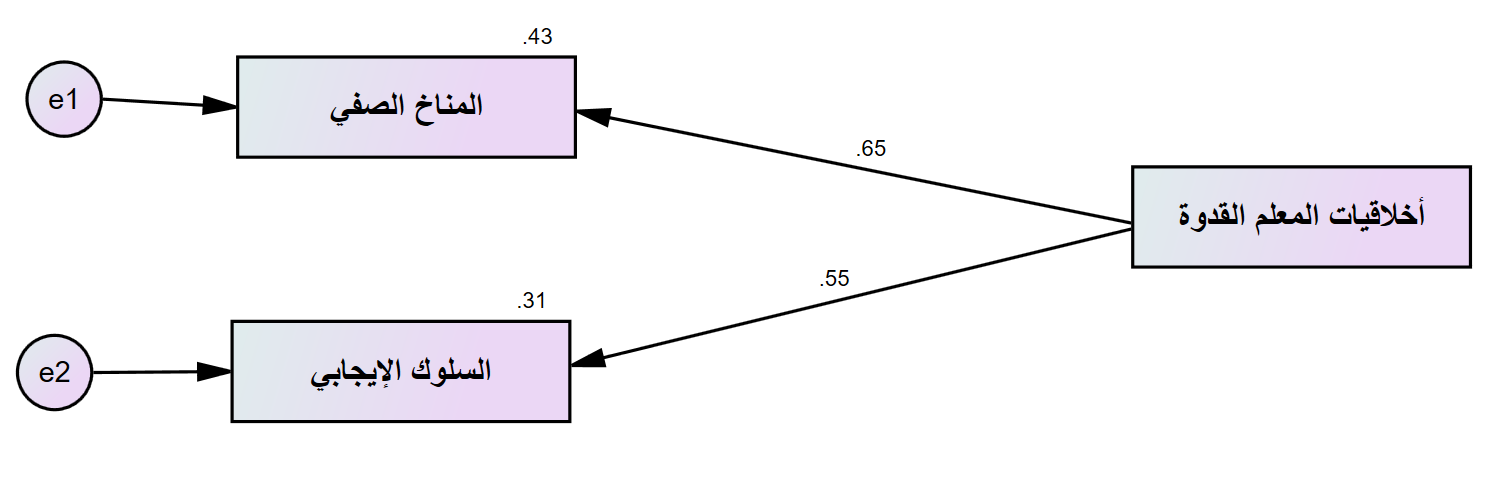
شكل (1) المسارات السببية وقيم معاملات الانحدار المعيارية الخاصة بالنموذج للنموذج
جدول (9) قيم معاملات الانحدار للمسارات السببية بالقيم المعيارية وغير المعيارية والدلالة الإحصائية
|
المسار السببي |
معاملات الانحدار |
الخطأ المعياري |
قيمة ت الحرجة |
الدلالة الإحصائية |
|||
|
المعيارية |
غير المعيارية |
||||||
|
أخلاقيات المعلم القدوة |
<– |
المناخ الصفي |
.654 |
.618 |
.048 |
12.864 |
.000* |
|
أخلاقيات المعلم القدوة |
<– |
السلوك الإيجابي |
.554 |
.530 |
.053 |
9.914 |
.000* |
دال إحصائياً عند مستوى الدلالة ( p < .05)
يتضح من شكل (1) والجدول (9) الآتي:
الأثر المباشرة لأخلاقيات المعلم القدوة على المناخ الصفي بلغ: (β = .654, SE = .048, t = 12.864, p < .001). أي أنّ كل زيادة بمقدار انحراف معياري واحد في (أخلاقيات المعلم القدوة) ترتبط بزيادة مقدارها (0.65) انحراف معياري في (المناخ الصفي).
الأثر المباشرة لأخلاقيات المعلم القدوة على السلوك الإيجابي بلغ: (β = .554, SE = .053, t = 9.914, p < .001). أي أنّ كل زيادة بمقدار انحراف معياري واحد في (أخلاقيات المعلم القدوة) ترتبط بزيادة مقدارها (0.55) انحراف معياري في (السلوك الإيجابي).
النتائج المتعلقة بالسؤال الخامس: هل توجد فروق ذات دلالة إحصائيّة عند مستوى الدّلالة (α<.05) بين متوسطات أخلاقيات المعلم القدوة من وجهة نظر المعلمين في المدارس الإعدادية في الجليل الغربي تعزى إلى متغيرات: الجنس، سنوات الخبرة، المؤهل العلمي؟
ومن أجل فحص السؤال الخامس، حُسبت المتوسطات الحسابية والانحرافات المعيارية لاستجابات أفراد عينة الدراسة على مقياس أخلاقيات المعلم القدوة من وجهة نظر المعلمين في المدارس الإعدادية في الجليل الغربي تعزى إلى متغيرات: الجنس، سنوات الخبرة، المؤهل العلمي، والجدول (10) يبين ذلك:
جدول (10) المتوسطات الحسابية والانحرافات المعيارية لاستجابات عينة الدراسة على مقياس أخلاقيات المعلم القدوة تعزى إلى متغيرات: الجنس، سنوات الخبرة، المؤهل العلمي
|
المتغيرات |
المستوى |
أخلاقيات المعلم القدوة |
|
|
المتوسط |
الانحراف المعياري |
||
|
الجنس |
ذكر |
4.41 |
.623 |
|
أنثى |
4.50 |
.577 |
|
|
سنوات الخبرة |
أقل من 5 سنوات |
4.39 |
.723 |
|
من 5 -10 سنوات |
4.53 |
.536 |
|
|
أكثر من 10 سنوات |
4.47 |
.551 |
|
|
المؤهل العلمي |
بكالوريوس |
4.36 |
.623 |
|
ماجستير |
4.55 |
.543 |
|
|
دكتوراه |
4.41 |
.676 |
|
يتضح من الجدول (10) وجود فروق ظاهرية بين المتوسطات الحسابية على مقياس أخلاقيات المعلم القدوة في ضوء توزيعها حسب متغيرات الدراسة. وللكشف عن دلالة الفروق بين المتوسطات الحسابية لمقياس أخلاقيات المعلم القدوة، فقد أجري تحليل التباين الثلاثي “بدون تفاعل” (3-way ANOVA “without Interaction”)، وقد استوفى الاختبار افتراضاته، حيث أظهر اختبار ليفين (Levene’s Test) لتجانس تباينات الأخطاء للمتغيّر التابع (أخلاقيات المعلم القدوة)، عدم وجود فروق دالة في تباين الخطأ بين المجموعات (F(16, 206) = 1.324, p = .185) ما يشير إلى تحقق افتراض تساوي التباين. والجدول (11) يبين ذلك:
جدول (11) تحليل التباين الثلاثي (بدون تفاعل) على مقياس أخلاقيات المعلم القدوة لدى عينة الدراسة تعزى إلى متغيرات: الجنس، سنوات الخبرة، المؤهل العلمي
|
مصدر التباين |
مجموع المربعات |
درجات الحرية |
متوسط المربعات |
قيمة F |
الدلالة الإحصائية |
|
الجنس |
.190 |
1 |
.190 |
.548 |
.460 |
|
.261 |
2 |
.131 |
.377 |
.686 |
|
|
المؤهل العلمي |
1.267 |
2 |
.634 |
1.830 |
.163 |
|
الخطأ |
75.148 |
217 |
.346 |
يتضح من الجدول (11) الآتي:
عدم وجود فروق دالة إحصائياً عند مستوى الدلالة (05. ≥α) بين متوسطات أخلاقيات المعلم القدوة من وجهة نظر المعلمين في المدارس الإعدادية في الجليل الغربي تعزى إلى متغيرات: الجنس، سنوات الخبرة، المؤهل العلمي.
النتائج المتعلقة بالسؤال السادس: هل توجد فروق ذات دلالة إحصائيّة عند مستوى الدّلالة (α<.05) بين متوسطات المناخ الصفي من وجهة نظر المعلمين في المدارس الإعدادية في الجليل الغربي تعزى إلى متغيرات: الجنس، سنوات الخبرة، المؤهل العلمي؟
لاختبار السؤال السادس، حُسبت المتوسطات الحسابية والانحرافات المعيارية لاستجابات أفراد عينة الدراسة على مقياس المناخ الصفي من وجهة نظر المعلمين في المدارس الإعدادية في الجليل الغربي تعزى إلى متغيرات: الجنس، سنوات الخبرة، المؤهل العلمي، والجدول (12) يبين ذلك:
جدول (12) المتوسطات الحسابية والانحرافات المعيارية لاستجابات عينة الدراسة على مقياس المناخ الصفي تعزى إلى متغيرات: الجنس، سنوات الخبرة، المؤهل العلمي
|
المتغيرات |
المستوى |
المناخ الصفي |
|
|
المتوسط |
الانحراف المعياري |
||
|
الجنس |
ذكر |
4.41 |
.532 |
|
أنثى |
4.43 |
.569 |
|
|
سنوات الخبرة |
أقل من 5 سنوات |
4.47 |
.561 |
|
من 5 -10 سنوات |
4.50 |
.525 |
|
|
أكثر من 10 سنوات |
4.36 |
.575 |
|
|
المؤهل العلمي |
بكالوريوس |
4.31 |
.645 |
|
ماجستير |
4.50 |
.471 |
|
|
دكتوراه |
4.43 |
.619 |
|
يتضح من الجدول (12) وجود فروق ظاهرية بين المتوسطات الحسابية على مقياس المناخ الصفي في ضوء توزيعها حسب متغيرات الدراسة. وللكشف عن دلالة الفروق بين المتوسطات الحسابية لمقياس المناخ الصفي، فقد أجري تحليل التباين الثلاثي “بدون تفاعل” (3-way ANOVA “without Interaction”)، وقد فشل الاختبار في استيفاء افتراضاته، حيث أظهر اختبار ليفين (Levene’s Test) لتجانس تباينات الأخطاء للمتغيّر التابع (المناخ الصفي)، وجود فروق دالة في تباين الخطأ بين المجموعات (F(16, 206) = 1.865, p = .025) ما يشير إلى عدم تحقق افتراض تساوي التباين، وعليه يتوجب في حال وجود فروق دالة استخدام اختبارات بعدية لا تتطلب تجانس التباين، والجدول (13) يبين ذلك:
جدول (13) تحليل التباين الثلاثي (بدون تفاعل) على مقياس المناخ الصفي لدى عينة الدراسة تعزى إلى متغيرات: الجنس، سنوات الخبرة، المؤهل العلمي
|
مصدر التباين |
مجموع المربعات |
درجات الحرية |
متوسط المربعات |
قيمة F |
الدلالة الإحصائية |
|
الجنس |
.013 |
1 |
.013 |
.044 |
.834 |
|
سنوات الخبرة |
1.972 |
2 |
.986 |
3.276 |
.040* |
|
المؤهل العلمي |
2.839 |
2 |
1.420 |
4.716 |
.010* |
|
الخطأ |
65.319 |
217 |
.301 |
يتضح من الجدول (13) الآتي:
عدم وجود فروق دالة إحصائياً عند مستوى الدلالة (05. ≥α) بين متوسطات المناخ الصفي من وجهة نظر المعلمين في المدارس الإعدادية في الجليل الغربي تعزى إلى متغير الجنس.
وجود فروق دالة إحصائياً عند مستوى الدلالة (05. ≥α) بين متوسطات المناخ الصفي من وجهة نظر المعلمين في المدارس الإعدادية في الجليل الغربي تعزى إلى متغيري: سنوات الخبرة، المؤهل العلمي.
وللكشف عن موقع الفروق بين المتوسطات الحسابية لمقياس المناخ الصفي من وجهة نظر المعلمين في المدارس الإعدادية في الجليل الغربي تعزى إلى متغيري: سنوات الخبرة، و المؤهل العلمي، استخدم اختبار جيمس-هاول (Games-Howell) نظرًا لعدم تحقق تجانس التباين بين المجموعات بناءً على قيمة اختبار(Levene’s, p < .05)، إذ يُعد هذا الاختبار خيارًا مناسبًا نظرًا لقدرته على التعامل مع عدم تجانس التباين واختلاف أحجام العينات بين المجموعات، والجدولان (14) و(15) يوضحان ذلك:
جدول (13) نتائج اختبار(Games-Howell) للمقارنات البعدية بين المتوسطات الحسابية على مقياس المناخ الصفي من وجهة نظر المعلمين في المدارس الإعدادية في الجليل الغربي تعزى إلى متغير سنوات الخبرة
|
المتغير |
المستوى |
المتوسط |
أقل من 5 سنوات |
من 5 -10 سنوات |
أكثر من 10 سنوات |
|
المناخ الصفي |
أقل من 5 سنوات |
4.47 |
— |
-0.029 |
0.113 |
|
من 5 -10 سنوات |
4.50 |
|
— |
0.142* |
|
|
أكثر من 10 سنوات |
4.36 |
|
|
— |
*دال إحصائياً عند مستوى الدلالة (* p < .05)
يتبين من الجدول (13) الآتي:
وجود فروق دالة إحصائياً عند مستوى الدلالة (.05≥α)، في المناخ الصفي من وجهة نظر المعلمين في المدارس الإعدادية في الجليل الغربي تعزى إلى متغير سنوات الخبرة بين (من 5 -10 سنوات) و(أكثر من 10 سنوات)، وجاءت الفروق لصالح (من 5 -10 سنوات).
جدول (14) نتائج اختبار(Games-Howell) للمقارنات البعدية بين المتوسطات الحسابية على مقياس المناخ الصفي من وجهة نظر المعلمين في المدارس الإعدادية في الجليل الغربي تعزى إلى متغير المؤهل العلمي
|
المتغير |
المستوى |
المتوسط |
بكالوريوس |
ماجستير |
دكتوراه |
|
المناخ الصفي |
بكالوريوس |
4.31 |
— |
-0.196* |
-0.127 |
|
ماجستير |
4.50 |
|
— |
0.069 |
|
|
دكتوراه |
4.43 |
|
|
— |
*دال إحصائياً عند مستوى الدلالة (* p < .05)
يتبين من الجدول (14) الآتي:
وجود فروق دالة إحصائياً عند مستوى الدلالة (.05≥α)، في المناخ الصفي من وجهة نظر المعلمين في المدارس الإعدادية في الجليل الغربي تعزى إلى متغير المؤهل العلمي بين (بكالوريوس) و (ماجستير)، وجاءت الفروق لصالح (ماجستير).
النتائج المتعلقة بالسؤال السابع: هل توجد فروق ذات دلالة إحصائيّة عند مستوى الدّلالة (α<.05) بين متوسطات تنمية السلوك الإيجابي من وجهة نظر المعلمين في المدارس الإعدادية في الجليل الغربي تعزى إلى متغيرات: الجنس، سنوات الخبرة، المؤهل العلمي؟
لاختبار السؤال السابع، حُسبت المتوسطات الحسابية والانحرافات المعيارية لاستجابات أفراد عينة الدراسة على مقياس تنمية السلوك الإيجابي من وجهة نظر المعلمين في المدارس الإعدادية في الجليل الغربي تعزى إلى متغيرات الجنس، سنوات الخبرة، المؤهل العلمي، والجدول (15) يبين ذلك:
جدول (15) المتوسطات الحسابية والانحرافات المعيارية لاستجابات عينة الدراسة على مقياس تنمية السلوك الإيجابي تعزى إلى متغيرات: الجنس، سنوات الخبرة، المؤهل العلمي
|
المتغيرات |
المستوى |
تنمية السلوك الإيجابي |
|
|
المتوسط |
الانحراف المعياري |
||
|
الجنس |
ذكر |
4.37 |
.539 |
|
أنثى |
4.37 |
.576 |
|
|
سنوات الخبرة |
أقل من 5 سنوات |
4.38 |
.578 |
|
من 5 -10 سنوات |
4.50 |
.485 |
|
|
أكثر من 10 سنوات |
4.27 |
.594 |
|
|
المؤهل العلمي |
بكالوريوس |
4.26 |
.631 |
|
ماجستير |
4.41 |
.527 |
|
|
دكتوراه |
4.53 |
.473 |
|
يتضح من الجدول (15) وجود فروق ظاهرية بين المتوسطات الحسابية على مقياس تنمية السلوك الإيجابي في ضوء توزيعها حسب متغيرات الدراسة. وللكشف عن دلالة الفروق بين المتوسطات الحسابية لمقياس تنمية السلوك الإيجابي، فقد أجري تحليل التباين الثلاثي “بدون تفاعل” (3-way ANOVA “without Interaction”)، وقد استوفى الاختبار افتراضاته، حيث أظهر اختبار ليفين (Levene’s Test) لتجانس تباينات الأخطاء للمتغيّر التابع (تنمية السلوك الإيجابي)، عدم وجود فروق دالة في تباين الخطأ بين المجموعات (F(16, 206) = 1.428, p = .131) ما يشير إلى تحقق افتراض تساوي التباين. والجدول (16) يبين ذلك:
جدول (16) تحليل التباين الثلاثي (بدون تفاعل) على مقياس تنمية السلوك الإيجابي من وجهة نظر المعلمين في المدارس الإعدادية في الجليل الغربي تعزى إلى متغيرات: الجنس، سنوات الخبرة، المؤهل العلمي
|
مصدر التباين |
مجموع المربعات |
درجات الحرية |
متوسط المربعات |
قيمة F |
الدلالة الإحصائية |
|
الجنس |
.026 |
1 |
.026 |
.084 |
.772 |
|
سنوات الخبرة |
2.831 |
2 |
1.415 |
4.630 |
.011* |
|
المؤهل العلمي |
2.345 |
2 |
1.173 |
3.836 |
.023* |
|
الخطأ |
66.349 |
217 |
.306 |
يتضح من الجدول (16) الآتي:
عدم وجود فروق دالة إحصائياً عند مستوى الدلالة (05. ≥α) بين متوسطات تنمية السلوك الإيجابي من وجهة نظر المعلمين في المدارس الإعدادية في الجليل الغربي تعزى إلى متغير الجنس.
وجود فروق دالة إحصائياً عند مستوى الدلالة (05. ≥α) بين متوسطات تنمية السلوك الإيجابي من وجهة نظر المعلمين في المدارس الإعدادية في الجليل الغربي تعزى إلى متغيري: سنوات الخبرة، المؤهل العلمي.
وللكشف عن موقع الفروق بين المتوسطات الحسابية لمقياس تنمية السلوك الإيجابي من وجهة نظر المعلمين في المدارس الإعدادية في الجليل الغربي تعزى إلى متغيري: سنوات الخبرة، و المؤهل العلمي، استخدم اختبار (Scheffe) نظرًا لتحقق تجانس التباين بين المجموعات بناءً على قيمة اختبار(Levene’s, p > .05)، والجدولان (17) و(18) يوضحان ذلك:
جدول (17) نتائج اختبار(Scheffe) للمقارنات البعدية بين المتوسطات الحسابية على مقياس تنمية السلوك الإيجابي من وجهة نظر المعلمين في المدارس الإعدادية في الجليل الغربي تعزى إلى متغير سنوات الخبرة
|
المتغير |
المستوى |
المتوسط |
أقل من 5 سنوات |
من 5 -10 سنوات |
أكثر من 10 سنوات |
|
تنمية السلوك الإيجابي |
أقل من 5 سنوات |
4.38 |
— |
-0.127 |
0.102 |
|
من 5 -10 سنوات |
4.50 |
|
— |
0.230* |
|
|
أكثر من 10 سنوات |
4.27 |
|
|
— |
*دال إحصائياً عند مستوى الدلالة (* p < .05)
يتبين من الجدول (17) الآتي:
وجود فروق دالة إحصائياً عند مستوى الدلالة (.05≥α)، في تنمية السلوك الإيجابي من وجهة نظر المعلمين في المدارس الإعدادية في الجليل الغربي تعزى إلى متغير سنوات الخبرة بين (من 5 -10 سنوات) و(أكثر من 10 سنوات)، وجاءت الفروق لصالح (من 5 -10 سنوات).
جدول (18) نتائج اختبار(Scheffe) للمقارنات البعدية بين المتوسطات الحسابية على مقياس تنمية السلوك الإيجابي من وجهة نظر المعلمين في المدارس الإعدادية في الجليل الغربي تعزى إلى متغير المؤهل العلمي
|
المتغير |
المستوى |
المتوسط |
بكالوريوس |
ماجستير |
دكتوراه |
|
تنمية السلوك الإيجابي |
بكالوريوس |
4.26 |
— |
-0.144 |
-0.272* |
|
ماجستير |
4.41 |
|
— |
-0.128 |
|
|
دكتوراه |
4.53 |
|
|
— |
*دال إحصائياً عند مستوى الدلالة (* p < .05)
يتبين من الجدول (18) الآتي:
وجود فروق دالة إحصائياً عند مستوى الدلالة (.05≥α)، في تنمية السلوك الإيجابي من وجهة نظر المعلمين في المدارس الإعدادية في الجليل الغربي تعزى إلى متغير المؤهل العلمي بين (بكالوريوس) و (دكتوراه)، وجاءت الفروق لصالح (دكتوراه).
نتائج الدراسة
أظهرت نتائج الدراسة ما يأتي:
ارتفاع مستوى أخلاقيات المعلم القدوة من وجهة نظر المعلمين-
ارتفاع مستوى المناخ الصفي وتنمية السلوك الإيجابي لدى الطلبة-
– وجود أثر مباشر ودال إحصائيًا لأخلاقيات المعلم في تحسين المناخ الصفي
– وجود أثر مباشر ودال إحصائيًا لأخلاقيات المعلم في تنمية السلوك الإيجابي
عدم وجود فروق ذات دلالة إحصائية تعزى لمتغير الجنس-
وجود فروق ذات دلالة إحصائية تعزى لمتغيري سنوات الخبرة والمؤهل العلمي-
أظهرت نتائج الدراسة أن مستوى أخلاقيات المعلم القدوة من وجهة نظر المعلمين في المدارس الإعدادية في الجليل الغربي جاء بمستوى مرتفع، وهو ما يعكس إدراكًا مهنيًا وأخلاقيًا جيدًا لدى أفراد العينة لأهمية القيم التربوية في الممارسة التعليمية اليومية. كما تشير النتائج إلى أن أكثر الأبعاد حضورًا تمثلت في: القدوة الحسنة، ومراعاة الفروق الفردية، والالتزام بأخلاقيات المهنة، واستخدام أساليب تربوية أخلاقية في معالجة السلوك، واحترام آراء الطلبة، وضبط الانفعالات داخل الصف، وهي جميعها مؤشرات تدل على نضج تربوي ومهني لدى المعلم في البيئة التعليمية محل الدراسة. وتنسجم هذه النتيجة مع السؤال الأول من أسئلة الدراسة، الذي سعى إلى الكشف عن واقع أثر مستوى أخلاقيات المعلم ودورها في تحسين المناخ الصفي وتنمية السلوك الإيجابي لدى الطلبة، إذ تؤكد النتائج أن ارتفاع مستوى أخلاقيات المعلم يرتبط بتحسن نوعية التفاعل داخل الصف، وارتفاع مستويات الاحترام والانضباط والشعور بالأمان والانتماء، وهي كلها مؤشرات جوهرية للمناخ الصفي
اظهرت نتائج الدراسة أن المناخ الصفي يلعب دورًا وسيطًا يعزز أثر أخلاقيات المعلم في السلوك الإيجابي، إذ يؤدي التفاعل الأخلاقي القائم على الاحترام والعدالة إلى خلق بيئة صفية آمنة تقلل من السلوكيات السلبية وتعزز الانضباط الذاتي. وأن مستوى أخلاقيات المعلم القدوة من وجهة نظر المعلمين في المدارس الإعدادية في الجليل الغربي جاء بمستوى مرتفع، وهو ما يعكس وعيًا مهنيًا وأخلاقيًا جيدًا لدى أفراد العينة بأهمية القيم التربوية في الممارسة الصفية. ويمكن تفسير هذه النتيجة في ضوء طبيعة الدور التربوي الذي يؤديه المعلم في المرحلة الإعدادية، حيث لا يقتصر دوره على نقل المعرفة، بل يتعداه إلى بناء الشخصية، وضبط السلوك، وتشكيل الاتجاهات والقيم لدى الطلبة. وتفسَّر الفروق المتعلقة بسنوات الخبرة والمؤهل العلمي بأن المعلمين الأكثر خبرة وتأهيلاً يكونون أقدر على تحويل القيم الأخلاقية إلى ممارسات صفية عملية ومؤثرة.
كما يمكن تفسير هذه النتيجة في ضوء طبيعة المرحلة الإعدادية، التي تُعد من أكثر المراحل حساسية في تشكيل شخصية الطالب، وتكوين منظومته القيمية والسلوكية. ففي هذه المرحلة، يتأثر الطلبة بدرجة كبيرة بالنماذج السلوكية المحيطة بهم، ويُعد المعلم أحد أهم هذه النماذج، لا سيما في ظل التفاعل اليومي المباشر داخل الصف. وعليه، فإن المعلم الذي يتسم بالعدالة، والاتزان الانفعالي، والاحترام، والتوجيه التربوي الأخلاقي، يهيئ بيئة تعليمية أكثر استقرارًا واحتواءً، وينعكس ذلك إيجابًا على سلوك الطلبة.
ومن زاوية السؤال الثاني، فإن النتائج المرتبطة بالفروق الإحصائية المرتبطة ضوء أن أخلاقيات متغيرات الجنس أو المؤهل العلمي أو سنوات الخبرة، قد تكون نتاجًا لتراكم الخبرة المهنية، والثقافة التنظيمية السائدة في المدرسة، والوعي التربوي الفردي، والتنشئة المهنية السابقة. لذلك، فيمكن تفسيرها في ضوء اختلاف فرص التدريب، أو نوعية الخبرات، أو درجة الاحتكاك بالمواقف الصفية المعقدة.
أما فيما يتعلق بـ السؤال الثالث، والمتعلق بالتحديات التي تواجه المعلم في تحسين المناخ الصفي لدى الطلبة، فإن نتائج الدراسة – عند ربطها بالإطار النظري والدراسات السابقة – تشير إلى أن تحسين المناخ الصفي لا يعتمد فقط على أخلاقيات المعلم الفردية، بل يتأثر أيضًا بعوامل أخرى، مثل كثافة الصفوف، وضغوط العمل، والتحديات السلوكية المتزايدة لدى بعض الطلبة، ومدى تعاون الأسرة، ووضوح السياسات المدرسية الداعمة للانضباط والسلوك الإيجابي. وهذا يعني أن أخلاقيات المعلم تمثل عنصرًا محوريًا، لكنها ليست العامل الوحيد في تشكيل المناخ الصفي.
وتتفق هذه النتيجة مع ما ذهبت إليه الدراسات السابقة العربية والأجنبية، التي أكدت أن العلاقة التربوية الإيجابية بين المعلم والطالب تعد من أقوى المتنبئات بالمشاركة الصفية والانضباط وكذلك الدراسات الأحدث التي بينت أن جودة العلاقة بين المعلم والطلبة ترتبط بانخفاض السلوكيات الإقصائية والانفعالية، وارتفاع الشعور بالأمان والانتماء داخل الصف والسلوك الاجتماعي الإيجابي.
وتتفق نتائج الدراسة الحالية مع ما أشارت إليه الدراسات السابقة، حيث أكدت دراسة أبو عيطة (2016) أن المناخ الصفي الإيجابي يرتبط بالسلوك الإيجابي والانضباط، كما دعمت دراسة الحارثي (2017) فكرة أن احترام المعلم للطلبة وضبطه لانفعالاته يسهمان في تقليل المشكلات السلوكية. كذلك تنسجم النتائج مع دراسة Wentzel (2025) التي أكدت أن العلاقة الإيجابية القائمة على الدعم والاحترام بين المعلم والطالب تعد من أقوى المتنبئات بالسلوك الإيجابي والمشاركة الصفية، كما وتتقاطع مع نتائج الدراسات الحديثة التي بينت أن جودة العلاقة بين المعلم والطلبة ترتبط بمناخ مدرسي داعم وبمستويات اعلى مت الاندماج والرفاه النفسي والسلوك الاجتماعي الإيجابي.
وتتفق نتائج الدراسة الحالية مع ما أشارت إليه الدراسات السابقة، حيث أكدت دراسة أبو عيطة (2016) أن المناخ الصفي الإيجابي يرتبط بالسلوك الإيجابي والانضباط، كما دعمت دراسة الحارثي (2017) فكرة أن احترام المعلم للطلبة وضبطه لانفعالاته يسهمان في تقليل المشكلات السلوكية. كذلك تنسجم النتائج مع دراسة Wentzel (2025) التي أكدت أن العلاقة الإيجابية القائمة على الدعم والاحترام بين المعلم والطالب تعد من أقوى المتنبئات بالسلوك الإيجابي والمشاركة الصفية، كما وتتقاطع مع نتائج الدراسات الحديثة Fraser (2012) التي بينت أن جودة العلاقة بين المعلم والطلبة ترتبط بمناخ مدرسي داعم وبمستويات اعلى من الاندماج والرفاه النفسي والسلوك الاجتماعي الإيجابي.
وفي ضوء ذلك، يمكن القول إن نتائج الدراسة الحالية تؤكد أن أخلاقيات المعلم ليست مجرد بعد قيمي نظري، بل تمثل ممارسة تربوية فعالة ذات أثر مباشر في تحسين المناخ الصفي وتنمية السلوك الإيجابي لدى الطلبة. وهذا يمنح الدراسة الحالية قيمة تطبيقية مهمة، إذ يوجه الأنظار نحو ضرورة الاستثمار في تنمية الجانب الأخلاقي والمهني للمعلم، بوصفه مدخلًا أساسيًا لتحسين جودة التعليم والبيئة الصفية والمدرسية.
وتشير نتائج الدراسة إلى وجود ارتباط إيجابي بين أخلاقيات المعلم من جهة، وتحسين المناخ الصفي وتنمية السلوك الإيجابي لدى الطلبة من جهة أخرى؛ الأمر الذي يؤكد أن الممارسات الأخلاقية اليومية للمعلم، مثل العدالة، والاحترام، وضبط الانفعال، والتواصل الإيجابي، تمثل مدخلًا حقيقيًا لتحسين البيئة الصفية والحد من السلوكيات السلبية. أخلاقيات المعلم القدوة تمثل عاملاً حاسمًا في بناء مناخ صفي إيجابي وتنمية السلوك الإيجابي لدى الطلبة. ويمكن تفسير ذلك في ضوء نظرية التعلم الاجتماعي، التي تؤكد دور النمذجة في اكتساب السلوك، حيث يشكل المعلم نموذجًا سلوكيًا يُحتذى به داخل الصف.
الخلاصة
أجابت نتائج الدراسة عن أسئلتها الرئيسة والفرعية، مؤكدة وجود أثر دال إحصائيًا لأخلاقيات المعلم القدوة في تحسين المناخ الصفي وتنمية السلوك الإيجابي لدى طلبة المرحلة الإعدادية في مدارس الجليل الغربي. كما أظهرت النتائج أن بعض الخصائص المهنية للمعلم تسهم في تعظيم هذا الأثر، مما يعزز أهمية الاستثمار في إعداد المعلم أخلاقيًا ومهنيًا.
التوصيات
في ضوء نتائج الدراسة، توصي الباحثتان بما يأتي:
– إدراج أخلاقيات مهنة التعليم كمكوّن أساسي في برامج إعداد المعلمين قبل الخدمة.
تصميم برامج تدريب مهني مستمر تركز على الممارسات الأخلاقية الصفية.–
تفعيل مواثيق أخلاقيات المهنة داخل المدارس، ومتابعة تطبيقها. –
تبني نماذج دعم السلوك الإيجابي المرتبطة بالمناخ الصفي الأخلاقي. –
– إجراء دراسات مستقبلية تجريبية ونوعية لدراسة متغيرات أخرى مرتبطة بالسلوك والمناخ الصفي.
المراجع العربية
أبو عيطة، [الاسم الأول غير متحقق]. (2016). المناخ الصفي وعلاقته بسلوك الطلبة: مراجعة تحليلية للأدبيات التربوية. [بيانات النشر غير مكتملة وتحتاج إلى التحقق من المجلة أو جهة النشر].
Abu Aita, [first name unverified]. (2016). Classroom Climate and Its Relationship to Students’ Behavior: An Analytical Review of Educational Literature. [Publication details incomplete and need verification of the journal or publisher].
الحارثي، [الاسم الأول غير متحقق]. (2017). أخلاقيات مهنة التعليم وعلاقتها بالانضباط الصفي لدى المعلمين. [بيانات النشر غير مكتملة وتحتاج إلى التحقق من المجلة أو جهة النشر].
Al-Harthi, [first name unverified]. (2017). Teaching Profession Ethics and Their Relationship to Classroom Discipline among Teachers. [Publication details incomplete and need verification of the journal or publisher].
الحيلة، محمد محمود. (1999). التصميم التعليمي: نظرية وممارسة. عمّان، الأردن: دار المسيرة للنشر والتوزيع.
Al-Hila, Mohammad Mahmoud. (1999). Instructional Design: Theory and Practice. Amman, Jordan: Dar Al-Masira for Publishing and Distribution.
الزهراني، [الاسم الأول غير متحقق]. (2018). المناخ الصفي وعلاقته بالدافعية والتحصيل الدراسي. [بيانات النشر غير مكتملة وتحتاج إلى التحقق من المجلة أو جهة النشر].
Al-Zahrani, [first name unverified]. (2018). Classroom Climate and Its Relationship to Motivation and Academic Achievement. [Publication details incomplete and need verification of the journal or publisher].
العتيبي، تركي الحميدي جزاع. (2014). درجة التزام مديري المدارس الثانوية بأخلاقيات المهنة: من وجهة نظر المعلمين بدولة الكويت. التربية المعاصرة، 31(98)، 101–149.
Al-Otaibi, Turki Al-Humaidi Jaza. (2014). The Degree of Secondary School Principals’ Commitment to Professional Ethics from the Perspective of Teachers in the State of Kuwait. Contemporary Education, 31(98), 101–149.
الغيبي، [الاسم الأول غير متحقق]. (2012). أخلاقيات المعلم ودورها في تحسين البيئة التعليمية. [بيانات النشر غير مكتملة وتحتاج إلى التحقق من المجلة أو جهة النشر].
Al-Ghaybi, [first name unverified]. (2012). Teacher Ethics and Their Role in Improving the Educational Environment. [Publication details incomplete and need verification of the journal or publisher].
قشمر، علي لطفي علي داود. (2017). درجة التزام معلمي ومعلمات المدارس الفلسطينية بأخلاقيات مهنة التعليم وقواعد السلوك من وجهة نظر مدراء المدارس. مجلة العلوم الإنسانية لجامعة أم البواقي، (8)، 291–320.
Qashmar, Ali Lutfi Ali Dawood. (2017). The Degree of Commitment of Palestinian School Male and Female Teachers to the Ethics of the Teaching Profession and Rules of Conduct from the Perspective of School Principals. Journal of Human Sciences, University of Oum El Bouaghi, (8), 291–320.
زيتون، حسن حسين. (2001). تصميم التدريس: رؤية منظومية. ط2. القاهرة، مصر: عالم الكتب.
Zeitoun, Hassan Hussein. (2001). Instructional Design: A Systemic Vision (2nd ed.). Cairo, Egypt: Alam Al-Kutub.
المراجع الأجنبية
Bandura, A. (1977). Social learning theory. Englewood Cliffs, NJ: Prentice-Hall.
Cornelius-White, J., et al. (2024). Teacher–student relationships and educational outcomes: A meta-analytic review.
Estrapala, S., Rila, M., & Bruhn, A. L. (2021). Tier 1 PBIS implementation: Outcomes and practices in school settings. Journal of Positive Behavior Interventions.
Fraser, B. J. (2012). Classroom environment research: Development and applications.
Karlberg, K., Klang, M., & Svahn, J. (2024). School climate, wellbeing, and student behavior outcomes.
Spilt, J. L., & Koomen, H. M. Y. (2022). Teacher–student relationships and classroom functioning.
Sugai, G., & Horner, R. H. (2009/2010). School-wide Positive Behavioral Interventions and Supports (PBIS).
Walker, V. L., Conradi, L. A., Strickland-Cohen, M. K., & Johnson, H. N. (2023). School-wide positive behavioral interventions and supports and students with extensive support needs: A scoping review. International Journal of Developmental Disabilities, 69(1), 13–28.
Wang, & Xian. (2024). Teacher–student relationships and school climate: Effects on engagement and wellbeing.
Wentzel, K. R. (2015). Teacher–student relationships and motivation in school contexts.
Aggarwal, R., & Ranganathan, P. (2019). Study designs: Part 2 – Descriptive studies. Perspectives in clinical research, 10(1), 34–36.
https://doi.org/10.4103/picr.PICR_154_18
Garcia, E.(2011). A tutorial on correlation coefficients, information- retrieval-18/7/2018.https://pdfs.semanticscholar.org/c3e1/095209d3f72ff66e07b8f3b152fab099edea.pdf.
 Arabic
  English