

التحقق من الخصائص السيكومترية لمقياس الرهاب الاجتماعي لدى الطلبة المتفوقين في المرحلة الإعدادية
وفاء سلمان1، نهال عبد الحليم2
1 جامعة النجاح الوطنية، نابلس، فلسطين. بريد الكتروني: wafasalman40@gmail.com
2 جامعة النجاح الوطنية، نابلس، فلسطين. بريد الكتروني: Nihal.a.h.92@gmail.com
Verification of the Psychometric Properties of the Social Phobia Scale among Gifted Students in the Preparatory Stage
Wafaa Salman1, Nihal Abdel Halim2
1 An-Najah National University, Nablus, Palestine.
Email: wafasalman40@gmail.com
2 An-Najah National University, Nablus, Palestine.
Email: Nihal.a.h.92@gmail.com
DOI: https://doi.org/10.53796/hnsj75/23
المعرف العلمي العربي للأبحاث: https://arsri.org/10000/75/23
المجلد (7) العدد (5). الصفحات: 436 - 456
تاريخ الاستقبال: 2026-04-15 | تاريخ القبول: 2026-04-22 | تاريخ النشر: 2026-05-01
المستخلص: هدفت هذه الدراسة إلى التحقق من الخصائص السيكومترية لمقياس الرهاب الاجتماعي لدى عينة من الطلبة المتفوقين في المرحلة الإعدادية، نظرًا لأثر الرهاب الاجتماعي في التفاعل الصفي والأداء الأكاديمي. اعتمدت الدراسة المنهج الوصفي الارتباطي والمنهج السيكومتري لفحص صدق وثبات أداة القياس. تكوّن مجتمع الدراسة من الطلبة المتفوقين في المدارس الإعدادية في قرية كفر مندا، بينما شملت العينة (40) طالبًا وطالبة تم اختيارهم بطريقة قصدية خلال الفصل الدراسي الأول من العام الدراسي (2025/2026). استُخدم مقياس الرهاب الاجتماعي الذي أعدّه رولين ووي (1994)، والمعرّب إلى اللغة العربية، ويتكون من (32) فقرة موزعة على ثلاث مجالات: الخوف من التقييم الاجتماعي، والقلق التفاعلي الاجتماعي، والتجنب والانسحاب الاجتماعي. أظهرت النتائج تمتع المقياس بدرجات مقبولة من الصدق البنائي، حيث تراوحت معاملات الارتباط بين الفقرات ومجالاتها والدرجة الكلية بين مستويات ضعيفة إلى مرتفعة، مع استبعاد فقرتين لعدم دلالتهما الإحصائية. كما أظهرت نتائج الثبات باستخدام معامل كرونباخ ألفا، ومعامل أوميغا، والتجزئة النصفية، ومعادلة سبيرمان–براون مستويات ثبات مرتفعة، حيث بلغ معامل الثبات الكلي (0.924). وتشير هذه النتائج إلى صلاحية المقياس وموثوقيته لقياس الرهاب الاجتماعي لدى الطلبة المتفوقين، وإمكانية استخدامه في الدراسات التربوية والنفسية المستقبلية.
الكلمات المفتاحية: الرهاب الاجتماعي، الخصائص السيكومترية، الطلبة المتفوقين، المرحلة الإعدادية، القياس النفسي التربوي.
Abstract: This study aimed to examine the psychometric properties of a Social Phobia Scale among a sample of academically gifted middle school students, given the impact of social phobia on classroom interaction and academic performance. The study employed a descriptive correlational design alongside a psychometric approach to assess the validity and reliability of the instrument. The study population consisted of gifted students in middle schools in the village of Kafr Manda. The sample included 40 male and female students selected purposively during the first semester of the 2025/2026 academic year. The instrument used was the Social Phobia Scale developed by Rawlin and Wei (1994), which was translated into Arabic and consists of 32 items distributed across three dimensions: fear of social evaluation, interactive social anxiety, and social avoidance and withdrawal. The results indicated acceptable construct validity, with item–domain and item–total correlations ranging from low to high values. Two items were excluded due to a lack of statistical significance. Reliability analysis using Cronbach’s alpha, Omega coefficient, split-half reliability, and the Spearman–Brown formula demonstrated high reliability levels, with an overall reliability coefficient of 0.924. These findings suggest that the scale is a valid and reliable instrument for assessing social phobia among gifted students and can be utilized in future educational and psychological research.
Keywords: Social Phobia, Psychometric Properties, Gifted Students, Middle School, Educational Psychological Measurement.
المقدمة
يشهد التعليم وخاصة في السنوات الاخيرة منذ فترة الكورونا وما بعدها تغييرا كبيرة في اساليب التعليم. حيث أُدمِجَ فيه الذكاء الاصطناعي والوسائل الالكترونية وارتفعت فيه قيمة التفاعل والمشاركة الصفية والتشديد على اسلوب التعلم الفعال. في ضل هذا التحول ظهرت ازدادت التحديات النفسية والتي من الصعب ملاحظتها في الصفوف، ولك لها تأثير كبير على عملية التعلم لدى الطلبة وخاصة الطلاب المتفوقين. ومن هنا تأتي الحاجة للبحث في العوامل النفسية التي من الممكن ان تأثر على تفاعل هؤلاء الطلبة رغم قدراتهم المعرفية العالية، ومن هنا تأتي الحاجة للقيام ببحوث ودراسات تخص البحث في العوامل النفسية المؤثرة ضمن اطر قياس دقيقة، موثوقة وغير عشوائية ومن هنا يأتي بحثنا في تقنين مقاييس ملائمة لقياس الرهاب والخواف الاجتماعي.
الرهاب الاجتماعي هو اضطراب نفسي شائع يؤثر في تفاعل الفرد مع المجتمع ومن حوله، ويظهر بشكل خوف من المواقف الاجتماعية وعند شعور الفرد بانه يتم تقييمه او الحكم عليه من قبل الاخرين، وينعكس هذا الخوف على الاداء السلوكي، النفسي والاجتماعي للفرد (الغامدي، 2019؛ الشهري، 2019). تتعدد مظاهر الرهاب الاجتماعي المعرفية والسلوكية والفسيولوجية مما قد يجعلها معيقة للتكييف الاجتماعي خاصة لدى الافراد في المراحل المدرسية.
في التربية تعتمد المدارس الحديثة بشكل كبير على اساليب التعلم التفاعلي كأساليب التعلم عن طريق المشاريع وغيرها والتي تتطلب مشاركة صفية وعمل جماعي، وتواصل دائم بين الطلبة والمعلمين. ولكن الطلبة الذين يعانون من رهاب وخواف اجتماعي يواجهون صعوبات في ضل استخدام هذه الاساليب التعليمية، بسبب خوفهم من التقييم السلبي وقلقهم من التفاعل الاجتماعي وهذا قد يؤثر على تقييمهم في المؤسسات التعليمية ويؤثر على تكييفهم في هذه المؤسسات. (الهريمي والحلبية، 2022).
هذه الاشكالية اخذة في الازدياد خاصة لدى الطلاب المتفوقين. بعض الدراسات تقترح ان هنالك ارتفاع في مستوى التوقعات الذاتية وتوقعات الاخرين وهذا قد يجعل الطلاب المتفوقين أكثر عرضة لقلق التقييم والخوف من الفشل مما يمكن ان يطور لديهم حساسية اجتماعية او رهاب اجتماعي قد يحط من طموحاتهم رغم قدراتهم المعرفية المرتفعة (الشهري، 2019).
بسبب اهمية الكشف المبكر للمشكلات النفسية في الاطر التعليمية، يتميز دور القياس النفسي التربوي كأداة ضرورية لتشخيص الفروق الفردية وتحديد مستويات القلق والرهاب لدى الطلبة مما يسهل تخطيط تدخلات فعالة لمساعدة الطلب ويساعد في بناء برامج علاجية فعالة تخدم مصلحة الطلبة (عبد القادر، 2024). من هنا تأتي الحاجة لتقنين مقياس ملائم وفعال يتمتع بدرجات مناسبة من الصدق والثبات لقياس الرهاب الاجتماعي لدى الطلبة المتفوقين في المرحلة الاعدادية بهدف تطوير البحث العلمي والممارسات التعليمية والتربوية.
مشكلة البحث
من خلال الممارسة التعليمية والتربوية والملاحظة داخل الصفوف وخاصة في المرحلة الاعدادية اكتشفتا الباحثتين ان بعض الطلاب المتفوقين والمتميزين بالرغم من امتلاكهم قدرات معرفية وتعليمية مرتفعة ومستويات تحصيلية مرتفعة الا انهم يترددون في المشاركة في الصف خاصة في الانشطة التعليمية الجماعية ولديهم مشكلة واضحة في التفاعل الصفي. غالبا ما يكون هذا التردد نتيجة لخوف الطلبة من التقييم او خوفهم من توجه الانظار إليهم او خوفا من نظرة الطلبة الاخرين او نظرة المعلم السلبية لهم. هذا التخوف يحد من اندماج الطلبة الملائم في البيئة التعليمية التي تعتمد على التعلم التفاعلي التي تعتمده المؤسسات التعليمية والتربوية والآخذ في الازدياد في مدارسنا الحديثة.
وبسبب شح أدوات القياس المقننة الملائمة لقياس الرهاب الاجتماعي لدى فئة الطلبة المتفوقين في المرحلة الاعدادية تظهر مشكلة في امكانية تشخيص هذه الظاهرة بشكل موضوعي لإتاحة التدخل والدعم التربوي الملائم والسريع. ومن هنا تتمثل مشكلة البحث في التساؤل التالي: الى اي مدى يمكن تقنين مقياس الرهاب الاجتماعي ليكون اداة صادقة وثابتة لقياس مستويات الرهاب الاجتماعي لدى الطلبة المتفوقين في المرحلة الاعدادية؟
أسئلة وأهداف البحث
أسئلة البحث:
للبحث عدة أسئلة نبعت من ضرورة تقنين مقياس الرهاب الاجتماعي ليكون اداة صادقة وثابتة لقياس مستويات الرهاب الاجتماعي لدى الطلبة المتفوقين في المرحلة الاعدادية.
السؤال الرئيسي: الى أي مدى يتمتع مقياس الرهاب الاجتماعي بدلالات صدق وثبات تجعله صالحا للاستخدام لدى الطلبة المتفوقين في المرحلة الاعدادية؟
اما الأسئلة الفرعية فهي ثلاثة:
- ما دلالات الصدق البنائي لمقياس الرهاب الاجتماعي على عينة من الطلاب المتفوقين في المرحلة الاعدادية؟
- ما دلالات ثبات مقياس الرهاب الاجتماعي باستخدام معاملات كرونباخ الفا، وأوميغا، والتجزئة النصفية وسبيرمان براون؟
- ما طبيعة معاملات الارتباط بين فقرات المقياس ومجالاته والدرجة الكلية؟
أهداف البحث:
للبحث عدة اهداف ومنها عامة وخاصة. الهدف العام فهو تقنين مقياس رهاب اجتماعي والتحقق من خصائصه السيكومترية من حيث الصدق والثبات لدى عينة من الطلاب المتفوقين في المرحلة الاعدادية.
اما الاهداف الخاصة فتتمثل فيما يلي:
- التحقق من دلالات الصدق البنائي لمقياس الرهاب الاجتماعي لدى الطلاب المتفوقين في المرحلة الاعدادية.
- التحقق من دلالات ثبات مقياس الرهاب الاجتماعي باستخدام عدد من معاملات الثبات الاحصائية.
- فحص معاملات الارتباط بين فقرات المقياس ومجالاته والدرجة الكلية.
- التأكد من ملائمة المقياس للاستعانة به في البيئة التربوية في المرحلة الاعدادية.
أهمية البحث
لهذا البحث اهميتين، اهمية نظرية وأهمية تطبيقية.
الأهمية النظرية للبحث: تكمن في دوره في دعم المعرفة العلمية في مجال القياسي النفسي التربوي من خلال تقنين مقياس الرهاب الاجتماعي التحقق من خصائصه السيكومترية لدى فئة الطلاب المتفوقين في المرحلة الاعدادية حيث انها لم تكن محط اهتمام في الدراسات العربية السابقة بشكل كبير او بارز. ويساعد البحث في تعميق الفهم المتعلق بالرهاب الاجتماعي في الإطار التعليمي التربوي الذي يعتمد على التعلم التفاعلي، حيث انه يربط بين التفوق التعليمي وقلق التقييم والتفاعل الاجتماعي. البحث هذا يمكن اعتباره كمرجع علمي إضافي للدراسات المستقبلية المتعلقة بالرهاب الاجتماعي، القلق التفاعلي، والصحة النفسية لدى الطلبة المتفوقين.
اما الاهمية التطبيقية فتكمن فيما يلي: البحث يوفر أداة مقننة ذات درجات مناسبة من الصدق والثبات لقياس مستويات الرهاب الاجتماعي لدى الطلاب المتفوقين في المرحلة الاعدادية مما يتيح استخدامها في البيئات التعليمية التربوية. يمكن للعديد الاستفادة من نتائج البحث ومنهم المرشدون النفسيون والتربويون للتشخيص المبكر لحلالات الرهاب الاجتماعي وتوفير برامج علاجية ملائمة. المعلمون وادارات المدارس يمكنهم الاستفادة من نتائج البحث لفهم اسباب قلة المشاركة الصفية لدى بعض الطلبة المتفوقين وملائمة اساليب تدريسية تفاعلية ولكن في نفس الوقت تكون مريحة نفسيا لدى هذه الفئة من الطلبة. صانعي القرار يمكنهم الاستفادة من البحث لبناء خطط تدخل لتحسين الصحة النفسية المدرسية. الباحثين في مجال التربية وعلم النفس يمكنهم استخدام المقياس في الابحاث المستقبلية التي تتعلق بالرهاب الاجتماعي. الطلبة وأولياء امورهم يمكنهم استخدام القياس المقنن للكشف المبكر عن الصعوبات النفسية التي قد تؤثر على تحصيلهم التعليمي.
حدود الدراسة:
الحدود البشرية: اقتصر البحث على جميع الطلبة المتفوقين في مدرسة اعدادية في قرية كفر مندا خلال الفصل الدراسي الأول من العام الدراسي 2025\2026 م.
مصطلحات الدراسة والتعريفات الاجرائية
تقنين: هو مجموعة إجراءات احصائية ومنهجية قامت به الباحثتان للتحقق من الخصائص السيكومترية لمقياس الرهاب الاجتماعي من حيث الصدق والثبات بعد تمريره على عينة من الطلاب المتفوقين في المرحلة الإعدادية للتأكد من صلاحيته للاستخدام في البيئة التعليمية المستهدفة.
الرهاب الاجتماعي: لغويا هو خوف يتبعه فزع يظهر من خلال اعراض الرهاب وهي اعراض معرفية ومنها سوء الذاكرة، تشوه التفكير، تداخل الافكار… اعراض سلوكية نفسية ومنها حساسية مفرطة، ضيق انفعالي، انخفاض معدل الاداء، والحذر من التعامل مع الاخرين… واعراض فسيولوجية منها احمرار الوجه، الرجفة، صعوبة الكلام… اما اصطلاحا فالرهاب الاجتماعي هو القلق او الخوف او الخجل الاجتماعي او الارتباك في المواقف الاجتماعية. (الغامدي، 2019)
تعرف الباحثتين الرهاب الاجتماعي اجرائيا على انه الخوف من التفاعل الاجتماعي والمشاركة في الفعاليات التي تتطلب تفاعلا اجتماعيا وصفيا في بيئة الصف خوفا من نظرات الاخرين والحصول على تقييم سلبي.
القلق التفاعلي الاجتماعي: مجموعة مشاعر سلبية مشتركة تظهر على افراد المجتمع لأسباب عامة مشتركة. (الهريمي & الحلبية، 2022) ويعرف احيانا على انه الامتناع من الاشتراك في الفعاليات الاجتماعية والتواجد بين مجموعة من الناس بسبب القلق والخوف من ان يتم انتقاد الفرد مما يؤثر على قدرته على التواصل بشكل صحيح. (عبد القادر، 2024)
عرفتا الباحثتين القلق الاجتماعي على انه تردد وخوف من الاشتراك والتفاعل في البيئة الصفية نتيجة لخوف غير مبرر من الحصول على تقييم سلبي. وعرفتاه على انه الخوف من التفاعل السليم في الصف وتفضيل الصمت على التفاعل خوفا من الرفض او النقد.
المرحلة المتوسطة (الاعدادية): هي المرحلة التي تسبقها الابتدائية وتليها الثانوية. (الغامدي، 2019)
إجرائيا: المرحلة الاعدادية من صف سابع حتى الصف التاسع وهي المرحلة التي تقنن الباحثتين المقياس لتلائمها.
الإطار النظري والدراسات السابقة
يستند البحث الى إطار نظري يشرح الرهاب الاجتماعي وكيفية تداخله مع القدرات المعرفية والشعورية لفهم الظاهرة قبل البدء بتقنين أدوات المقياس الخاص بالرهاب الاجتماعي. فهم الخلفية العلمية للرهاب الاجتماعي تعتبر امر اساسي لملائمة الاداة المقننة بشكل ملائم للسياق التعليمي التربوي وللفئة المستهدفة وبالذات في البيئات التعليمية التي بدأت تعتمد على التعلم التفاعلي بشكل أكبر في السنوات الأخيرة.
الرهاب الاجتماعي ومظاهره:
الرهاب الاجتماعي هو أحد اضطرابات القلق التي تظهر كخوف زائد عن الحد من المواقف الاجتماعية التي قد يتم تقييم الفرد فيها من قبل الاخرين. يأتي هذا الخوف نتيجة توقعات سلبية بأن يتم انتقاد الفرد او الحكم عليه مما يدقعه لمحاولة تفادي تلك المواقف التي تولد لديه انزعاج وشعور قوي بالقلق (الغامدي، 2019). هذا الاضطراب قد يؤثر على الجوانب التعليمية، الاجتماعية والانفعالية في حياة الافراد خاصة في المواقف التي تتطلب منهم تفاعلا واشتراكا فعالا.
في التربية والتعليم يظهر الرهاب الاجتماعي على الطلبة بتفاديهم المشاركة في الصف، خوفهم من إبداء رأيهم، أو بصورة قلق غير منطقي من التقييم التعليمي، وهذا يؤثر بشكل سلبي على توافقهم النفسي والاجتماعي. تشير الادبيات الى ان القلق الاجتماعي له بعدين اساسيان: قلق التفاعل الاجتماعي سببه توقع مسبق لنتيجة التفاعل مع الاخرين، وقلق حين حدوث مواجهة غير متوقعة ولم يتجهز لها الفرد مسبقا، ويظهر هذا القلق بشكل انسحاب او انواء اجتماعي. (الهريمي & الحلبية، 2022).
كما تظهر المخاوف الاجتماعية بشكل خجل شديد ورهبة اجتماعية قد تؤدي الى ان يتفادى الفرد الخروج من المنزل أو ان ينعزل اجتماعيا خوفا من ان يتعرض لموقف محرج او استغلال اجتماعي فيظهر لدى الفرد ضعف توافق اجتماعي. يمكن وصف الرهاب الاجتماعي بناءا على ما سبق على انه خوف مرضي من المواقف الاجتماعية التي يلازمها توقع الفرد للتقييم السلبي من قبل الاخرين (الشهري، 2019).
التفسيرات النظرية للرهاب الاجتماعي:
يوجد العديد من النظريات النفسية التي فسرت الرهاب الاجتماعي منها نظرية التحليل النفسي التي تقول ان الرهاب يعتبر شكل من أشكال الاضطرابات العصابية التي تظهر في شكل خوف مرضي يدفع الفرد الى محاولة تفادي المثيرات المتعلقة به. اما النظرية المعرفية فتركز على الافكار السلبية والتخيلات المشوهة عن الفرد لذاته، حيث يهتم الفرد بشكل كبير لآراء الاخرين عنه ويقلل من تقييمه لذاته. اما النظرية السلوكية فتقترح ان الرهاب الاجتماعي يبدأ بسبب ارتباط مثيرات اجتماعية طبيعية بتجارب اجتماعية سلبية سابقة مما ينتج عنه خوف الفرد من المواقف الاجتماعية. وتؤكد نظرية التعلم الاجتماعي ان الخوف الاجتماعي يكتسب من الاسرة والافراد الاساسيين في حياة الفرد نفسه. (الشهري، 2019).
الرهاب الاجتماعي والطموح الأكاديمي:
يوجد دراسات تشير الى ان الاطفال الذين يعانون من الرهاب الاجتماعي تكون طموحاتهم اقل من مستوى اداءهم وقدراتهم التعليمية المرتفعة بالمقارنة مع ابناء جيلهم الذين قد لا يساووهم حتى في الاداء والقدرات التعليمية، حيث ان القلق الاجتماعي يحد من ثقتهم بأنفسهم ويقيد مشاركتهم الفعالة فيؤثر على قدرتهم على توظيف قدراتهم الفعلية (الشهري، 2019).
اهمية القياس النفسي في السياق التربوي:
القياس النفسي والتربوي هو اداة ضرورية لفهم الفروق الفردية بين المتعلمين وهو قسمان، قياس مباشر يتعرف على السمات، وقياس غير مباشر يقيس آثار السمة ومظاهرها السلوكية. القياس مهم لتحديد القدرات العقلية، تقييم التحصيل الدراسي، تصنيف الطلبة، توجيه الطلبة تربويا ونفسيا، وتحديد الفئات التي قد تحتاج لتوجه وتدخل ارشادي. (عبد القادر، 2024).
ويهدف القياس النفسي لتحديد الامكانات النفسية المتعددة للفئات العمرية المختلفة، التنبؤ بالأداء المتوقع من الافراد، وتحديد نقاط قوة ونقاط ضعف الافراد بهدف بناء برامج تدخل علاجية تحسن توافقه مع نفسه ومع البيئة التعليمية.
الدراسات السابقة:
هدفت دراسة آل فرحان (2025) للكشف عن نسبة انتشار القلق الاجتماعي لدى عينة من طلاب الجامعات حسب المتغيرات الديموغرافية، واستخدمت المنهج الوصفي المقارن، مجتمع البحث هو طلبة ثلاث جامعات سعودية وهم جامعة الامام محمد بن سعود الاسلامية، وجامعة تبوك، وجامعة الملك عبد العزيز، وتكونت العينة من 433 فرد منهم 148 ذكور و261 إناث، وتم إستخدام استمارة بيانات ديموغرافية مختصرة من إعداد الباحث ومقياس القلق الاجتماعي من اعدا الهجرس واخرون (2022) كأدوات للدراسة. واظهرت النتائج ان أفراد العينة أسوياء للتفاعل الاجتماعي في المواقف الاجتماعية ومستوى القلق لديهم منخفض، توجد فروق ذات دلالة إحصائية في مستوى التفاعل الاجتماعي متجهة للإناث فهن حسب النتائج يعانين من القلق الاجتماعي أكثر من الذكور، نتيجة أخرى تقول انه هنالك دلالة احصائية في مستوى القلق الاجتماعي بين افراد العينة وفقا للمستوى الدراسي في اتجاه الافراد ذو مستوى دراسي اولي اي في سنوات التعليم الاولى حيث انهم حسب الدراسة يعانون من القلق الاجتماعي بشكل أكبر. النتيجة الاخيرة للبحث تدعم البحث الحالي حيث يعزوها الباحث لكون هذا القلق الى رهبة البيئة الجامعية الجديد كما ان هذا البحث الذي يعزو الرهاب والخواف الاجتماعي للخوف من التعرض للمواقف الغير متوقعة والجديدة ويعد هذا شكل من أشكال الرهاب الاجتماعي الذي نسعى كباحثتين لتقنين قياسه. كمان وان الباحث هنا يفسر ظهور هذا القلق بشكل كبر لدى الافراد ذو مستوى دراسي اولي الى كون القلق الاجتماعي يظهر بشكل أكبر في جيل المراهقة وبالمقابل هذا البحث يسعى لتقنين مقياس الرهاب الاجتماعي على عينة من طلبة المرحلة الاعدادية الا وهي فترة بداية المراهقة.
كما سعت دراسة Guo et al. (2025) لاختبار نموذج وساطة معدل بهدف كشف العلاقة بين الهوية الذاتية والقلق الاجتماعي والخوف من التقييم الاجتماعي وتأثيره على التفاعل مع الاخرين. استخدمت الدراسة المنهج الوصفي الارتباطي، مجتمع البحث هو طلبة جامعة Liaocheng University, Shandong Province, China، وتكونت العينة من 350 طالبا ما بين اعمار 17-23 سنة ولكن تم استثناء قسم من اجاباتهم لأنها لم تكن صالحة فأصبحت العينة النهائية 328 طالب 43.29% منهم ذكور. تعددت الأدوات المستخدمة في الدراسة حيث استخدم الباحثين مقياس تعريف الذات، مقياس قصير للخوف من التقييم السلبي، مقياس الدعم الاجتماعي المتلقى، مقياس القلق الاجتماعي، ونظام تحليل البيانات SPSS. من اهم نتائج البحث ان الهوية الذاتية ارتبطت ارتباطا ايجابيا مع الدعم الاجتماعي المدرك وارتبطت سلبيا بالقلق الاجتماعي والشعور بالخوف من التقييم السلبي، وارتبط القلق الاجتماعي بالشعور بالخوف من التقييم وارتبط ارتباطا سلبيا مع الدعم الاجتماعي. من النتائج أيضا ان القلق الاجتماعي يزداد عند وجود تقدير منخفض للهوية الذاتية، اضافة الى ذلك كلما ارتفع الخوف من التقييم السلبي ارتفع معه نسبة القلق الاجتماعي، بينما كلما زاد الدعم الاجتماعي تقل نسبة القلق الاجتماعي. كل نتائج هذه الدراسة المذكورة هنا متعلقة بهذا البحث حيث ان كل هذه السمات المقاسة في هذه الدراسة والمقاس علاقتها بالقلق الاجتماعي هي سمات موجودة في المقياس الذي نسعى لتقنينه، ونتائج هذه الدراسة بخصوص هذه السمات تثبت انه يمكن اعتمادها في هذا المقياس المراد تقنينه لقياس الرهاب الاجتماعي.
واستهدفت دراسة بوكريطة، ك.، ولونيس، ك. (2024) الكشف عن مستوى الرهاب الاجتماعي لدى المراهقين وفحص هل هنالك فروق ذات دلالة تعوز على الجنس. المنهج المتبع في الدراسة هو المنهج الوصفي، مجتمع الدراسة هو الطلاب المراهقين في الجزائر، بينما عينة البحث تكونت من 120 تلميذا منهم 76 يدرسون في المرحلة المتوسطة و53 يدرسون في السنة الاولى من المرحلة الثانوية. الأداة المستخدمة في الدراسة هي مقياس القلق الاجتماعي المعد من قبل الباحثة هويدة حنفي محمود والذي يقيس ثلاث ابعاد اساسية للقلق الاجتماعي وهي قلق التفاعل الاجتماعي، قلق المواجهة في المواقف الاجتماعية، والاعراض المصاحبة للقلق الاجتماعي. وأظهرت النتائج في الدراسة انه لا يبدي التلاميذ درجة متوسطة من الرهاب الاجتماعي بل درجة منخفضة والرهاب الاجتماعي يظهر أكثر عند الاناث من الذكور. النتيجة الاولى لهذه الدراسة مربوطة بهذا البحث حيث انه يسعى لتقنين مقياس ملائم يهدف لقياس الرهاب الاجتماعي على عينة من الطلبة في المرحلة الاعدادية.
وتناول بحث المغربي، ي. (2023) اضطراب القلق الاجتماعي وعلاقته بتقدير الذات وصورة الجسم لدى المراهقات. واتبعت المنهج الوصفي الارتباطي والمقارن في دراستها، مجتمع هذه الدراسة يتكون من المراهقات في محافظة بورسعيد بينما العينة التي اختارتها تتكون من 250 طالبة من طالبات الاعدادية، الثانوية، والجامعة. أدوات البحث التي استخدمتها الباحثة هي مقياس القلق الاجتماعي اعداد كاترين كونور واخرون وتقنين اماني عبد المقصود 2007، واستمارة بيانات عامة لقياس المستوى الاجتماعي من اعداد الباحثة، ومقياس صورة الجسم اعداد زينب منصور شقير. من اهم ما توصلت له الدراسة لا توجد فروق ذات دلالة احصائية بين المراهقات من الفئات العمرية المختلفة لا في أبعاد القلق الاجتماعي والدرجة الكلية له، ولا لاختلاف المستوى الاقتصاد الاجتماعي كذلك ولا في صورة الجسم، لكن يوجد علاقة ارتباطية سالبة ذات دلالة احصائية عند مستوى (0.01) بين ابعاد المقياس والدرجة الكلية لها بما معناه كلما ارتفع القلق الاجتماعي انخفض مستوى تقدير الذات، وتوجد علاقة ارتباطية ذات دلالة احصائية عند مستوى (0.01) بين جميع ابعاد القلق الاجتماعي والدرجة الكلية له وصورة الجسم. نتائج الدراسة هذه تشدد على اهمية القلق مما يجعلها مرتبطة في هذا البحث حيث تؤكد على ضرورة تقنين مقياس رهاب اجتماعي موثوق به لاستخدامه في الدراسات المستقبلية.
وهدفت دراسة الهريمي والحلبية (2022) إلى الكشف عن العلاقة بين المرونة النفسية والقلق الاجتماعي لدى طلبة المرحلة الثانوية في ضواحي شرقي القدس. واعتمدت الدراسة المنهج الوصفي الارتباطي، حيث تكونت عينة الدراسة من طلبة الثانوية العامة، وتم استخدام مقياس المرونة النفسية ومقياس القلق الاجتماعي لجمع البيانات. وأظهرت نتائج الدراسة وجود علاقة ذات دلالة إحصائية بين المرونة النفسية والقلق الاجتماعي لدى الطلبة، حيث ارتبط انخفاض المرونة النفسية بارتفاع مستوى القلق الاجتماعي. وتُسهم نتائج هذه الدراسة في دعم البحث الحالي من خلال إبراز العوامل النفسية المرتبطة بالقلق الاجتماعي، بما يعزز كذلك أهمية تقنين أدوات قياس الرهاب الاجتماعي في السياق التربوي.
وكما هدفت دراسة Archbell, K. A., & Coplan, R. J.. (2022) لتقييم نموذج مفاهيمي يربط بين القلق الاجتماعي، والتواصل مع الأقران والمدرسين، وتجارب الطلاب ومؤشرات الأداء الاجتماعي والعاطفي في الجامعة. المنهج الذي تم اتباعه في هذا البحث كذلك هو البحث الوصفي التطبيقي والمقارن. البحث يشمل الطلاب الجامعيين والعينة المعتمدة تكونت من 1073 طالبا جامعيا. الادوات التي استخدمت في هذه الدراسة هي استبانات، مقياس الرهاب الاجتماعي من تصميم لبويتز، مقياس المجتمع الصفي، ومقياس رضى الطلاب. من اهم نتائج البحث أن القلق يؤثر سلبا على تواصل الطلبة مع المدرسين وعلى قدرتهم الاجتماعية وعلى تجربتهم التعليمية، مدى تواصل الطالب الذي يعاني من القلق مع معلميه يؤثر على تحصيله كذلك، وكما وان اشكال القلق تظهر بشكل أكبر عند الاناث من الذكور. من النتائج المهمة والمرتبطة بهذا البحث هي ان القلق يؤثر على المستوى التحصيلي لدى الطالب وعلى قدرته على التواصل مع معلميه، مما يثبت الحاجة مرة اخرى لضرورة تقنين مقياس نفسي تربوي لقياس عامل القلق الاجتماعي والرهاب الاجتماعي ليتم الكشف عنه مبكرا حتى يتم التدخل لحل المشكلة قبل تفاقمها لدى الطالب.
وتتناول الورقة البحثية الخاصة ب Ejaz, et.al (2020) تتناول هذه الورقة استنادًا إلى دراسة أُجريت في مؤسسات التعليم العالي في باكستان القضية انتشار القلق الاجتماعي من خلال وضع مقياس محلي شامل وموثوق به وصالح لقياس القلق الاجتماعي. المنهج المتبع في الدراسة هو المنهج المختلط حيث شمل المنهج التجريبي والمنهج الوصفي التطبيقي، يشتمل البحث على الطلاب في باكستان، وعينة البحث تتكون 300من طالب جامعي في المرحلة الاولى من البحث و800 طالب في المرحلة الثانية من البحث. تعددت الادوات التي استخدامها في هذه الدراسة كذلك وكانت عبارة عن مقابلات، مؤشر صلاحية المحتوى، دراسة تجريبية والمقياس المراد تطويره. من اهم نتائج الدراسة انه تم تطوير مقياس بديل لقياس الرهاب الاجتماعي وهذا تماما ما يتم فعلة في هذا البحث. كذلك فان عوامل قلق الاداء، التفاعل والتقييم الاجتماعي تؤكد بنية المقياس. مقياس معاملات الثبات تدعم الصدق البنائي للمقياس. من اهم النتائج ايضا تواجد فروق ذات دلالة احصائية بالقلق الاجتماعي بين الرجال والنساء تجاه النساء. كمان ان الدراسة اسفرت الى انتاج مقياس صالح للاستخدام في بحوث القلق الاجتماعي بين طلبة التعليم العالي. نتائج الدراسة مرتبطة بهذا البحث حيث نجحت الدراسة في اثبات الصدق والثبات للمقياس وسلطت الضوء على اهمية تحليلي الخصائص السيكومترية الخاصة بالمقياس وتقنينه جيدا قبل استخدامه.
كما ان دراسة Vilaplana-Pérez وآخرون (2020) هدفت الى فحص العلاقة بين اضطراب الرهاب الاجتماعي والتحصيل الأكاديمي عبر مراحل التعليم المختلفة اعتمادا على بيانات واسعة النطاق. استخدم الباحثون المنهج الكمي الارتباطي، وشملت الدراسة كامل مواليد السويد ما بين الاعوام 1973-1997 وكانت العينة النهائية تشمل 2238837 فردا. اعتمدت الدراسة على السجلات السويدية الوطنية كأداة لجمع البيانات، واستخدمت نماذج الانحدار اللوجستي وصممت مقارنة بين الاشقاء. حسب النتائج فان الافراد المصابين بالرهاب الاجتماعي كانوا اقل احتمالا لاجتياز المواد الدراسية واقل اهلية للالتحاق بتعليم ثانوي مهني او أكاديمي وكانوا احتمال عدم انضمامهم للثانوية وعدم انهاءهم للجامعة أكبر عن نظرائهم. تكمن اهمية هذه النتائج للدراسة الحالية حيث انها تؤكد ان الرهاب الاجتماعي ممكن ان يكون له أثر طويل المدى على حياة الفرد بدءا بالمراحل التعليمية التي ممكن ان يقضي عليها قبل أن تبدء مما يؤكد ضرورة تقنين مقياس مناسب لقياس هذه المشكلة ليكون من السهل اكتشافها مبكرا لدى الطلاب قبل ان تتفاقم لتوفير برامج علاجية ملائمة لها.
اما هدفت دراسة الشهري (2019) إلى التعرف على مظاهر الرهاب الاجتماعي ومستوى الطموح لدى الأطفال، إضافة إلى الكشف عن العلاقة بينهما. استخدمت الدراسة المنهج الوصفي، وتكونت عينة الدراسة من مجموعة من الأطفال، وتم تطبيق مقياس الرهاب الاجتماعي ومقياس الطموح فيها. وأشارت نتائج الدراسة إلى وجود علاقة عكسية بين الرهاب الاجتماعي ومستوى الطموح، حيث أظهر الأطفال الذين يعانون من مستويات مرتفعة من الرهاب الاجتماعي مستويات أقل من الطموح، على الرغم من امتلاكهم قدرات معرفية جيدة. وتدعم هذه النتائج البحث الحالي من حيث تأكيدها تأثير الرهاب الاجتماعي في الجوانب الأكاديمية والنفسية، مما يبرز الحاجة إلى تقنين مقياس ملائم لقياس الرهاب الاجتماعي لدى الطلبة في البيئة التعليمية.
تعقيب على الدراسات السابقة:
الرهاب او القلق الاجتماعي هو ظاهرة نفسية تربوية قد تؤثر على المراحل التعليمية المختلفة لدى الطلبة، وقد اتفقت معظم الدراسات السابقة على وجود علاقة بين القلق الاجتماعي وتقدير الذات، الدعم الاجتماعي، الهوية الذاتية، المرونة النفسية، وصورة الجسم. كما ان اغلب نتائج الدراسات اتفقت على ان الاناث أكثر عرضة للقلق الاجتماعي من الرجال، إن القلق الاجتماعي يؤثر سلبا على التفاعل الاجتماعي، التواصل الأكاديمي، والتحصيل. كما أن الدراسات اتفقت ان القلق الاجتماعي يظهر غالبا في فترة المراهقة ويجب الحذر منه.
بالرغم من ان الدراسات اتفقت في عدة نقاط الا ان هنالك امور تباينت فيها، ومنها المرحلة التعليمية المستهدفة وانعكس هذا على حدة النتائج. كما اختلفت بعض الدراسات في المنهجية البحثية والتي تعددت فكان منها الوصفي والطولي والتحليلي وغيره… كذلك تعددت وتنوعت الادوات المستخدمة في البحوث فان قسم منها استخدم مقاييس جاهزة وقسم منها قام بتقنين مقاييس خاصة به، اختلفت الدراسات حول التأثيرات الديموغرافية وعلاقتها بالرهاب الاجتماعي، مما يشدد على اهمية كشف الظاهرة في المجال التربوي.
استفادت الدراسة الحالية من الدراسات السابقة عن طريق تحديد المتغيرات النفسية المرتبطة بالظاهرة، كما ان النتائج المتكررة اكدت على اهمية الكشف المبكر عن الرهاب الاجتماعي لتوفير برنامج علاجي ملائم بشكل مبكر. تختص الدراسة الحالية بوكونها تركز على تقنين مقاس رهاب اجتماعي على عينة من طلبة المرحلة الاعدادية المتفوقين وهذه فئة لم يتم التركيز عليها كفاية في الدراسات، وتوفر الدراسة اداة قياس مقننة ودقيقة للاستعانة بها للتشخيص لتوفير علاج ملائم عند الحاجة ما يشكل قيمة علمية وبحثية اضافية.
الطريقة والاجراءات
منهجية البحث:
اعتمدت الدراسة المنهج الوصفي الارتباطي بهدف الكشف عن العلاقة الاحصائية بين فقرات مقياس الرهاب الاجتماعي مع ابعاده والدرجة الكلية الخاصة به للتحقق من صدق المبنى الداخلي للأداة وتقنينها، وتم فحص الخصائص السيكومترية للأداة وتم فحص عوامل صدق والثبات الخاصة بالأداة.
مجتمع البحث:
الطلبة في الصفوف المتفوقين والمتميزين في المدارس الاعدادية في كفر مندا.
عينة البحث:
عينة البحث هي عينة استطلاعية قصدية وشملت 40 طالبا من طلبة المرحلة الاعدادية لملائمة خصائصهم لأهداف البحث.
اداة البحث:
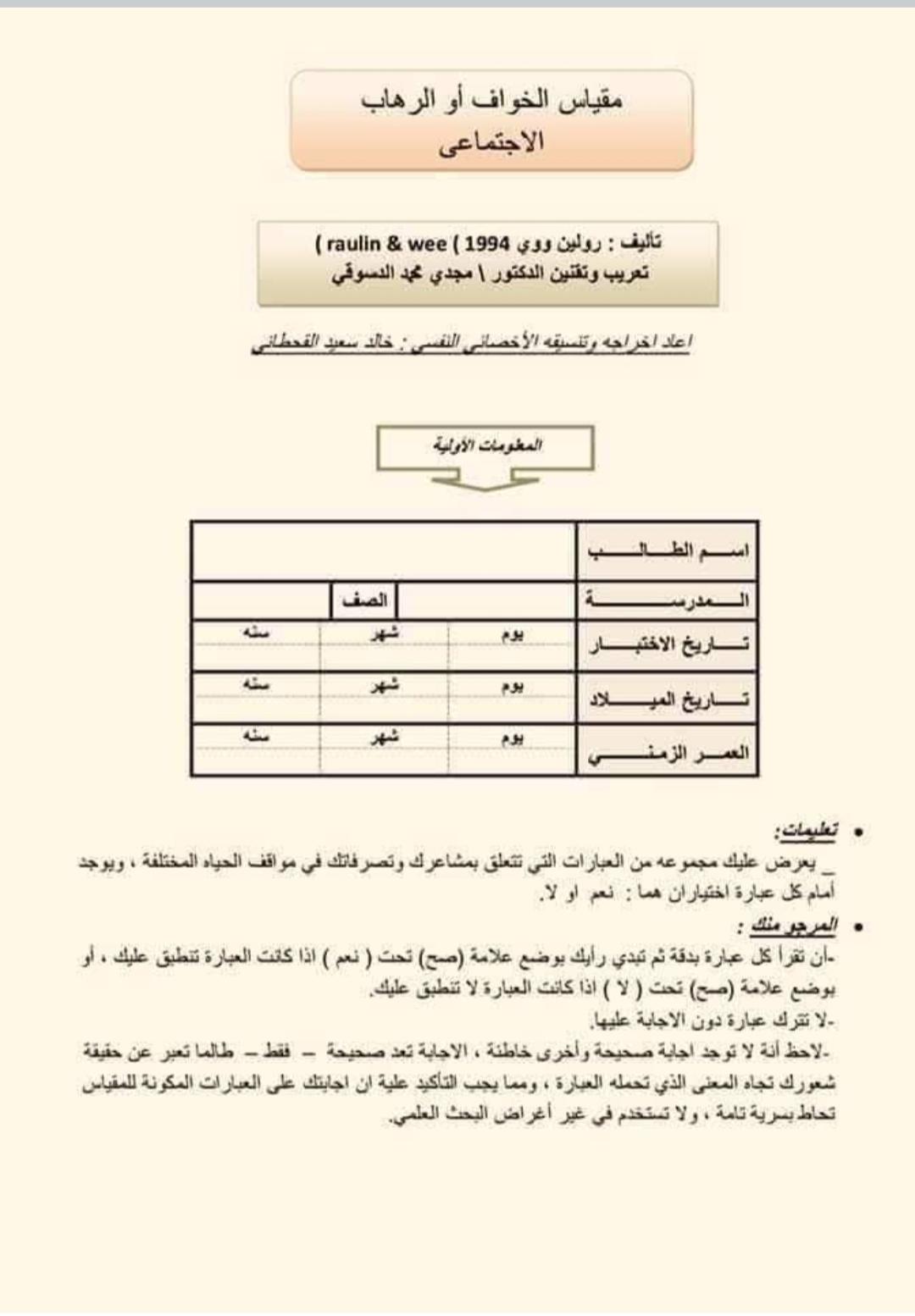
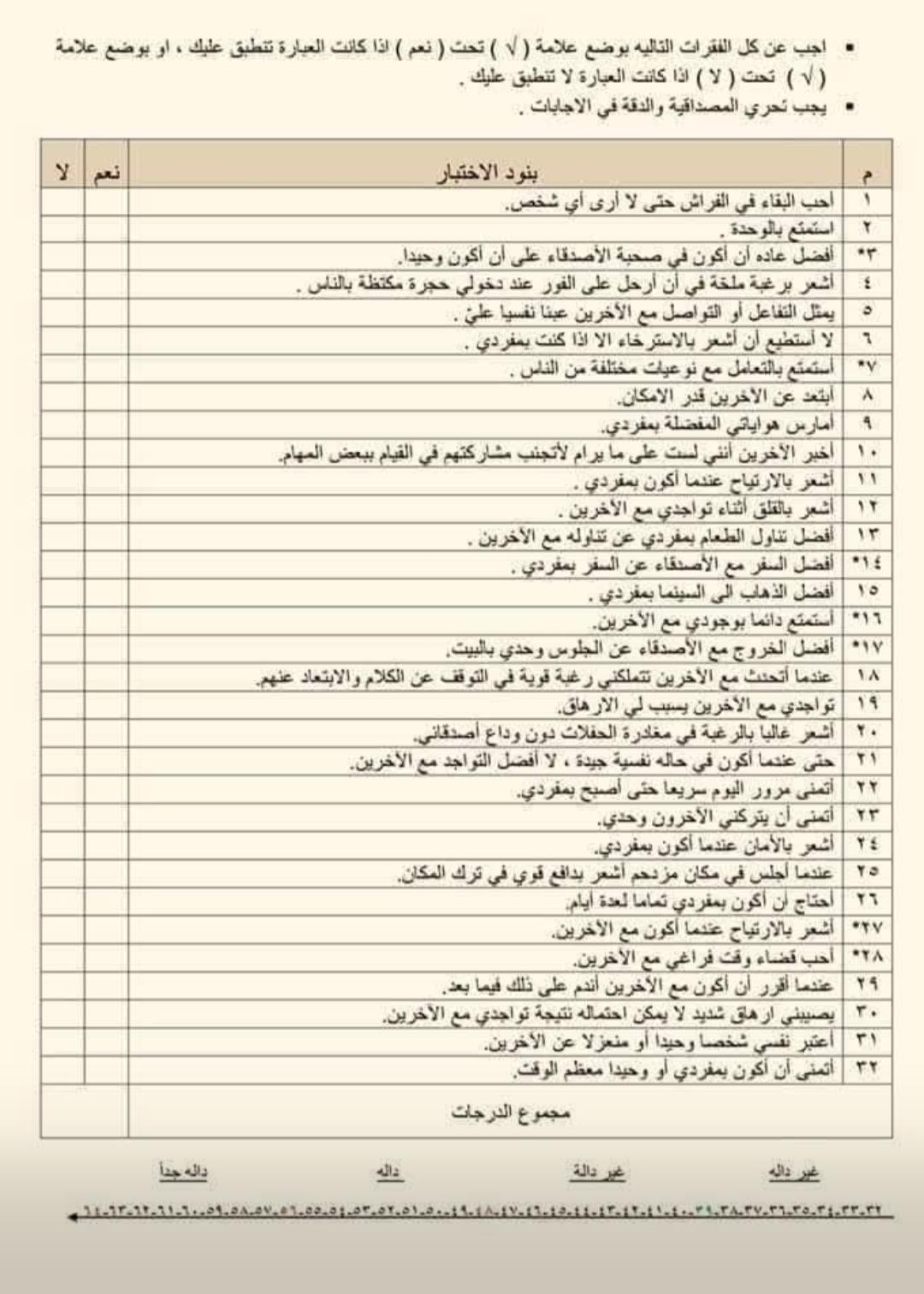
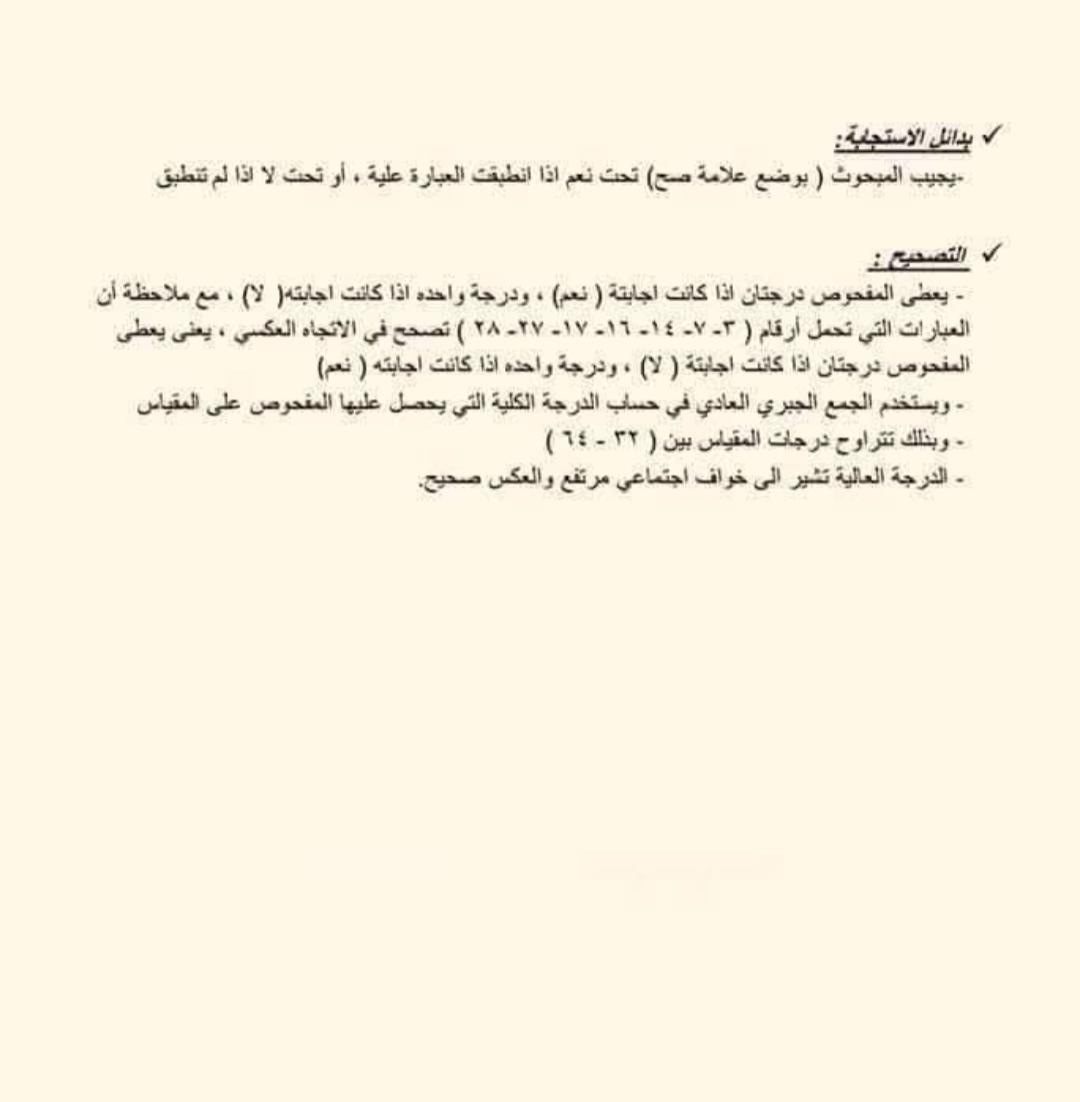
مقياس الخواف او الرهاب الاجتماعي من تأليف رولين ووي وتعريب وتقنين الدكتور مجدي محمد الدسوقي والذي اعاد اخراجه وتنسيقه الاخصائي النفسي خالد سعيد القحطاني يقوم المقياس على 32 عنصرا يعرض مجموعة من العبارات التي تتعلق بمشاعر الفرد وتصرفاته في مواقف الحياة المختلفة يجيب الفرد عليهما بنعم او لا حيث نعم معناها انها تعبر عنه ولا معناها انها لا تنطبق عليه للتصحيح عند الاجابة بنعم يعطى المفحوص درجتان ويعطى درجة اذا كانت اجابته لا ولكن العبارات التي تحمل ارقام (3-7-14-16- 17- 27-28) تصحح عكسيا اي علامة لنعم وعلامتين ل لا، وتتراوح درجات المقياس بين 32- 64 الدرجة العابية تشير الى الخواف الاجتماعي والعكس صحيح. (راولين، ووي 1994)
جدول 1: العبارات في المقياس
|
العبارة |
العبارة |
||
|
1 |
أحب البقاء في الفراش حتى لا ارى اي شخص. |
17* |
أفضل الخروج مع الاصدقاء على الجلوس وحدي بالبيت. |
|
2 |
استمتع بالوحدة. |
18 |
عندما اتحدث مع الاخرين تتملكني رغبة قوية في التوقف عن الكلام والابتعاد عنهم. |
|
3* |
أفضل عادة ان اكون في صحبة الاصدقاء على ان اكون وحيدا. |
19 |
تواجدي مع الاخرين يسبب لي الارهاق. |
|
4 |
اشعر برغبة ملحة في ان ارحل على الفور عند دخولي حجرة مكتظة بالناس. |
20 |
اشعر غالبا بالرغبة في مغادرة الحفلات دون وداع اصدقائي. |
|
5 |
يمثل التفاعل او التواصل من الاخرين عبئا نفسيا علي. |
21 |
حتى عندما اكون في حالة نفسية جيدة، لا أفضل التواجد مع الاخرين. |
|
6 |
لا أستطيع ان اشعر بالاسترخاء الا إذا كنت بمفردي. |
22 |
اتمنى مرور اليوم سريعا حتى أصبح بمفردي. |
|
7* |
استمتع بالتعامل مع نوعيات مختلفة من الناس. |
23 |
اتمنى ان يتركني الاخرون وحدي. |
|
8 |
ابتعد عن الاخرين قدر الامكان. |
24 |
اشعر بالأمان عندما اكون بمفردي. |
|
9 |
امارس هواياتي المفضلة بمفردي. |
25 |
عندما اجلس في مكان مزدحم اشعر بدافع قوي في ترك المكان. |
|
10 |
أخبر الاخرين انني لست على ما يرام لأتجنب مشاركتهم في القيام ببعض المهام. |
26 |
احتاج ان اكون بمفردي تماما لعدة ايام. |
|
11 |
اشعر بالارتياح عندما اكون بمفردي. |
27* |
اشعر بالارتياح عندما اكون مع الاخرين. |
|
12 |
اشعر بالقلق اثناء تواجدي مع الاخرين. |
28* |
أحب قضاء وقت فراغي مع الاخرين. |
|
13 |
أفضل تناول الطعام بمفردي على تناوله مع الاخرين. |
29 |
عندما اقرر ان اكون مع الاخرين اندم على ذلك فيما بعد. |
|
14* |
أفضل السفر مع الاصدقاء على السفر بمفردي. |
30 |
يصيبني ارهاق شديد لا يمكن احتماله نتيجة تواجدي مع الاخرين. |
|
15 |
أفضل الذهاب الى السينما بمفردي. |
31 |
اعتبر نفسي شخصا وحيدا او منعزلا عن الاخرين. |
|
16* |
استمتع دائما بوجودي مع الاخرين. |
32 |
اتمنى ان اكون بمفردي او وحيدا معظم الوقت. |
خطوات اجراءات البحث
تم اعتماد مقياس الخواف او الرهاب الاجتماعي من تأليف رولين ووي وتعريب وتقنين الدكتور مجدي محمد الدسوقي والذي اعاد اخراجه وتنسيقه الاخصائي النفسي خالد سعيد القحطاني لكي نقوم لتقنينه. الخواف والرهاب الاجتماعي له أثر كبير عل حياة الافراد وعلى قدرتهم على التطور والتقدم في الحياة. مقياس الرهاب الاجتماعي مقنن على عين من الطلبة المتفوقين في المرحلة الاعدادية ان ممكن ان يكون اداة في بحوث عديدة مستقبلا.
تم الاطلاع على المؤلفات والنظريات الدراسية السابقة الملاءمة للبحث وقراءة المقالات التي قد تساعد على فهم الرهاب الاجتماعي بشكل علمي مناسب قبل التعمق فيها بشكل أكبر. تم تحكيم المقياس من قبل خمسة من طلبة الدكتوراة لفحص مدى ملائمته وتم تحكيمه من قبل خمسة منهم. لم يتم تغيير أي عبارة من عبارات المقياس. وزع المقياس بصيغته الاصلية على الطلاب كما. قسمتا الباحثتين المقياس لمحاور فكان التقسيم كالتالي:
المحور الأول: الخوف من التقييم الاجتماعي (الخوف من نظرات الآخرين، أحكامهم، تقييمهم) وشمل البنود:
3 – 4 – 5 – 6 – 10 – 13 – 15 – 19 – 21 – 25 – 26
المحور الثاني: القلق التفاعلي الاجتماعي (القلق أثناء الحوار، بدء الحديث، التفاعل المباشر) وشمل البنود:
7 – 8 – 9 – 11 – 12 – 14 – 20 – 22 – 27 – 28 – 29
المحور الثالث: التجنب والانسحاب الاجتماعي (تفضيل العزلة، تجنب اللقاءات، الانسحاب من المواقف) وشمل البنود:
1 – 2 – 16 – 17 – 18 – 23 – 24 – 30 – 31 – 32
لم تظهر المحاور في المقياس ولكن سجلناها لاعتمدتاه الباحثتين في برنامجSPSS عند قياس الصدق والثبات.
بعد التأكد من ان المقياس ليس بحاجة لتغيير ولا ملاءمة إضافية توجهتا الباحثتين لمدير المدرسة الإعدادية، لأخذ موافقة منه على تمرير المقياس على عينة من الطلاب المتفوقين في المدرسة.
بعد اخذ الموافقة الممضية والمشروطة بعدم تمرير المقياس سوى خلال حصة التربية لكيلا يتم التأثير على مجرى الحصص اتفقتا الباحثتين من مربي صفوف المتفوقين في اي ايام ممكن ان نتواجد لتمرير المقياس.
تم تمرير المقياس بوجود المربين حيث وزع في كل مرة على عدد من الطلاب وشرحت كل فقرة وقرأت لهم بصوت واضح. شرح للطلاب الهدف البحث من المقياس وشرحت لهم المبادئ الاخلاقية للبحث المتعلقة بسرية معلوماتهم.
في النهاية تم فحص عوامل الصدق، الثبات والارتباط للمقياس وتم فحص العلاقة بين فقراته مع المجالات ومع الدرجة الكلية عبر برنامج SPSSـ.
التحليل الإحصائي
جدول 2:
يجيب على السؤال الاول: ما دلالات صدق مقياس الرهاب الاجتماعي على عينة من الطلاب المتفوقين في المدرسة الاعدادية.
|
الفقرة |
الارتباط مع مجال الخوف من التقييم الاجتماعي |
الارتباط مع الدرجة الكلية |
الفقرة |
الارتباط مع القلق التفاعلي الاجتماعي |
الارتباط مع الدرجة الكلية |
الفقرة |
الارتباط مع التجنب والانسحاب الاجتماعي |
الارتباط مع الدرجة الكلية |
|
Q3 |
0.193- |
0.275- |
Q7 |
**0.353 |
0.183 |
Q1 |
**0.607 |
**0.710 |
|
Q4 |
**0.693 |
**0.607 |
Q8 |
**0.776 |
**0.814 |
Q2 |
**0.738 |
**0.623 |
|
Q5 |
**0.670 |
**0.579 |
Q9 |
**0.609 |
**0.486 |
Q16 |
**0.627 |
**0.573 |
|
Q6 |
**0.601 |
**0.547 |
Q11 |
**0.630 |
**0.560 |
Q17 |
**0.633 |
**0.540 |
|
Q10 |
**0.466 |
**0.340 |
Q12 |
**0.619 |
**0.587 |
Q18 |
**0.701 |
**0.781 |
|
Q13 |
**0.655 |
**0.537 |
Q14 |
*0.384 |
*0.398 |
Q23 |
**0.735 |
**0.657 |
|
Q15 |
**0.432 |
**0.477 |
Q20 |
**0.595 |
**0.522 |
Q24 |
**0.631 |
**0.549 |
|
Q19 |
**0.531 |
**0.634 |
Q22 |
**0.716 |
**0.708 |
Q30 |
**0.622 |
**0.631 |
|
Q21 |
**0.615 |
**0.657 |
Q27 |
**0.677 |
**0.723 |
Q31 |
**0.613 |
**0.461 |
|
Q25 |
**0.790 |
**0.634 |
Q28 |
**0.602 |
**0.591 |
Q32 |
**0.669 |
**0.514 |
|
Q26 |
**0.517 |
**0.533 |
Q29 |
**0.697 |
**0.621 |
– |
– |
– |
الارتباط ذو علاقة عند 0.05 (2-tailed)
الارتباط ذو علاقة عند 0.01 (2-tailed)
يلاحظ من البيانات الواردة في الجدول 2 ان قيم معامل الارتباط تراوحت ما بين ((0.275-) و0.814)، ويلاحظ من خلال البيانات قيم معاملات الارتباط بين كل عبارة من عبارات الرهاب الاجتماعي والدرجة لمجالها كذلك معامل الارتباط بين كل فقرة والدرجة الكلية للمقياس. ونلاحظ ان جميع الفقرات لديها ارتباط بين الدرجة الكلية لكل مجال والدرجة الكلية ككل ما عدا في الفقرتين Q3 حيث لا يوجد ارتباط بين الفقرة والمجال ولا بين الفقرة والدرجة الكلية. كذلك في الفقرة Q7 لا يوجد ارتباط للفقرة مع المجال الخاص بها مع انها مرتبطة بالدرجة الكلية للمقياس ككل لذا سوف يتم حذف هاتين الفقرتين قبل تمرير الاستطلاع على العينة الفعلية.
جدول 3: يجيب على السؤال الثاني ما دلالات ثبات
|
المجال |
عدد الفقرات |
كرون باخ الفا |
أوميجا |
التجزئة النصفية |
سبيرمان براون |
|
الخوف من التقييم الاجتماعي |
11 |
0.758 |
0.962 |
0.801 |
0.890 |
|
القلق التفاعلي الاجتماعي |
11 |
0.828 |
0.822 |
0.538 |
0.699 |
|
التجنب والانسحاب الاجتماعي |
10 |
0.851 |
0.837 |
0.695 |
0.820 |
|
الدرجة الكلية |
32 |
0.924 |
0.987 |
0.654 |
0.791 |
نلاحظ من خلال البيانات الواردة في الجدول السابق معاملات الثبات على مجالات الدراسة والدرجة الكلية وذلك باستخدام معادل كرون باخ الفا، أوميجا، التجزئة النصفية، وسبيرمان براون، فقد تراوحت معاملات الثبات حسب معادلة كرونباخ الفا ما بين (0.758-0.942). في حين تراوحت معاملات الثبات حسب أوميجا ما بين (0.822-0.987). وتراوحت قيم معاملات الثبات حسب طريقة التجزئة النصفية ما بين (0.538- 0.801)، بينما تراوحت قيم معاملات الثبات باستخدام معاملة سبيرمان براون ما بين (0.699- 0.890) تشير القيم المعروضة الى ان الاداة تتمتع بمعاملات ثبات مناسبة وتفي لأهداف الدراسة.
الخاتمة
خلصت الدراسة إلى أهمية تقنين أدوات القياس النفسي والتربوي الخاصة بالرهاب الاجتماعي لدى الطلبة المتفوقين في المرحلة الإعدادية، لما لهذه المرحلة من خصوصية نمائية وتعليمية، ولما قد يواجهه الطلبة المتفوقون من ضغوط نفسية مرتبطة بالتوقعات المرتفعة، والخوف من التقييم، وصعوبة المشاركة الصفية رغم امتلاكهم قدرات معرفية وتحصيلية عالية. وقد جاءت هذه الدراسة استجابة للحاجة إلى أداة قياس تتسم بالصدق والثبات، وتساعد المرشدين والمعلمين والباحثين على الكشف المبكر عن مظاهر الرهاب الاجتماعي لدى هذه الفئة.
وقد أظهرت نتائج التحليل الإحصائي أن مقياس الرهاب الاجتماعي يتمتع بدرجات مناسبة من الصدق والثبات بعد تطبيقه على عينة استطلاعية من الطلبة المتفوقين في المرحلة الإعدادية، حيث بينت معاملات الارتباط وجود اتساق داخلي مقبول بين معظم فقرات المقياس ومجالاته والدرجة الكلية. كما أظهرت معاملات الثبات، باستخدام كرونباخ ألفا وأوميغا والتجزئة النصفية وسبيرمان براون، أن الأداة تتمتع بدرجة ملائمة من الاعتمادية تجعلها صالحة للاستخدام في البيئة التربوية بعد حذف الفقرات غير الملائمة إحصائياً.
وبذلك تؤكد الدراسة أن مقياس الرهاب الاجتماعي، في صورته المعدلة، يمكن أن يمثل أداة مفيدة في تشخيص مستويات الرهاب الاجتماعي لدى الطلبة المتفوقين، بما يسهم في تقديم تدخلات إرشادية وتربوية مبكرة تساعدهم على التكيف النفسي والاجتماعي، وتعزز مشاركتهم الفاعلة داخل البيئة الصفية.
النتائج
- أظهرت نتائج الدراسة أن غالبية فقرات مقياس الرهاب الاجتماعي ارتبطت ارتباطاً دالاً إحصائياً بمجالاتها وبالدرجة الكلية للمقياس، مما يدل على توفر مؤشرات مقبولة للصدق البنائي والاتساق الداخلي للأداة.
- كشفت نتائج تحليل الارتباط أن الفقرة Q3 لم تحقق ارتباطاً مناسباً لا مع المجال الذي تنتمي إليه ولا مع الدرجة الكلية للمقياس، مما يشير إلى ضعف ملاءمتها لعينة الدراسة.
- بينت النتائج أن الفقرة Q7 لم ترتبط بصورة كافية بالمجال الذي تنتمي إليه، رغم ارتباطها بالدرجة الكلية، الأمر الذي استدعى حذفها من الصورة النهائية للمقياس.
- توصلت الدراسة إلى حذف فقرتين من المقياس، ليصبح المقياس في صورته المعدلة مكوناً من 30 فقرة بدلاً من 32 فقرة.
- أظهرت معاملات الثبات باستخدام كرونباخ ألفا أن المقياس يتمتع بدرجة جيدة من الثبات، حيث بلغت قيمة الثبات للدرجة الكلية مستوى مرتفعاً يدل على اتساق فقرات المقياس.
- أظهرت معاملات أوميغا مستويات مرتفعة من الثبات في مجالات المقياس والدرجة الكلية، مما يعزز صلاحية الأداة للاستخدام البحثي والتربوي.
- بينت نتائج التجزئة النصفية وسبيرمان براون أن المقياس يتمتع بدرجات ثبات مقبولة إلى جيدة، مع وجود تفاوت نسبي بين مجالات المقياس.
- تبين أن مجال التجنب والانسحاب الاجتماعي حقق ارتباطات قوية مع الدرجة الكلية، مما يدل على أهمية هذا البعد في قياس الرهاب الاجتماعي لدى الطلبة المتفوقين.
- أظهرت النتائج أن مجال القلق التفاعلي الاجتماعي يمثل بعداً مهماً في فهم مظاهر الرهاب الاجتماعي، خاصة في المواقف الصفية التي تتطلب الحوار والمشاركة والتفاعل المباشر.
- أكدت الدراسة أن المقياس، بعد تعديله، يصلح بوصفه أداة أولية للكشف عن الرهاب الاجتماعي لدى الطلبة المتفوقين في المرحلة الإعدادية، ويمكن الاستفادة منه في الإرشاد النفسي والتربوي وفي الدراسات المستقبلية.
التوصيات
- اعتماد الصورة المعدلة من مقياس الرهاب الاجتماعي، المكونة من 30 فقرة، في الكشف الأولي عن مستويات الرهاب الاجتماعي لدى الطلبة المتفوقين في المرحلة الإعدادية.
- توظيف المقياس من قبل المرشدين النفسيين والتربويين داخل المدارس بهدف الكشف المبكر عن الطلبة الذين يعانون من مظاهر القلق أو الرهاب الاجتماعي.
- تصميم برامج إرشادية وتربوية تستهدف خفض الرهاب الاجتماعي لدى الطلبة المتفوقين، مع التركيز على مهارات المشاركة الصفية، والتواصل، والثقة بالنفس، وخفض الخوف من التقييم السلبي.
- تدريب المعلمين على ملاحظة مؤشرات الرهاب الاجتماعي لدى الطلبة المتفوقين، وعدم تفسير قلة المشاركة الصفية دائماً على أنها ضعف في التحصيل أو قلة اهتمام.
- مراعاة الفروق النفسية الفردية عند تطبيق أساليب التعلم التفاعلي، بحيث يتم تشجيع الطلبة على المشاركة تدريجياً دون وضعهم في مواقف ضاغطة أو محرجة.
- إجراء دراسات لاحقة على عينات أكبر وأكثر تنوعاً من حيث الجنس، والبيئة الجغرافية، والمستوى الدراسي، للتحقق من ثبات وصدق المقياس بدرجة أوسع.
- مقارنة مستويات الرهاب الاجتماعي بين الطلبة المتفوقين وغير المتفوقين، لمعرفة ما إذا كان التفوق الأكاديمي يرتبط بارتفاع الحساسية تجاه التقييم الاجتماعي.
- دراسة العلاقة بين الرهاب الاجتماعي ومتغيرات نفسية أخرى مثل تقدير الذات، والطموح الأكاديمي، والمرونة النفسية، والدافعية للتعلم، والدعم الأسري.
- إعداد معايير تفسيرية واضحة لدرجات المقياس، بحيث يمكن تصنيف مستويات الرهاب الاجتماعي إلى منخفضة، ومتوسطة، ومرتفعة.
- الاهتمام بالصحة النفسية المدرسية بوصفها جزءاً أساسياً من جودة التعليم، خاصة في ظل اعتماد المدارس الحديثة على التعلم التفاعلي والعمل الجماعي والمشاركة الصفية.
المصادر العربية
آل فرحان، علي بن عبد الله. (2025). معدلات انتشار القلق الاجتماعي لدى عينة من شباب الجامعات: دراسة وصفية في ضوء بعض المتغيرات الديموغرافية. مجلة الإرشاد النفسي، 82(3)، 589=621. doi:10.21608/cpc.2025.433891
Al-Farhan, A. A. (2025). Prevalence rates of social anxiety among a sample of university youth: A descriptive study in light of some demographic variables. Journal of Psychological Counseling, 82(3), 589–621. doi:10.21608/cpc.2025.433891
بوكريطة، كوثر، ولونيس، سعيدة. (2024). مستوى الرهاب الاجتماعي لدى المراهقين المتمدرسين. مجلة العلوم النفسية والتربوية، 16(1)، 45-62.
Bokreta, K., & Lounis, S. (2024). The level of social phobia among schooled adolescents. Journal of Psychological and Educational Sciences, 16(1), 45–62.
الشهري، عبد الرحمن بن محمد بن عبد الرحمن. (2019). الذكاء الوجداني وعلاقته بالرهاب الاجتماعي لدى طلاب المرحلة المتوسطة. مجلة كلية التربية، جامعة أسيوط، 35(7، ج. 2)، 291–311.
Al-Shehri, A. M. A. (2019). Emotional intelligence and its relationship with social phobia among intermediate school students. Journal of the Faculty of Education, Assiut University, 35(7, Part 2), 291–311.
عبد القادر، ناضر. (2024). مطبوعة بيداغوجية في مادة القياس التربوي وبناء الاختبارات المدرسية: السداسي الثالث والرابع. جامعة أحمد زبانة غليزان، كلية العلوم الإنسانية والاجتماعية، قسم علم النفس وعلوم التربية.
Abdelkader, N. (2024). A pedagogical handout in educational measurement and the construction of school tests: Third and fourth semesters. Ahmed Zabana University of Relizane, Faculty of Humanities and Social Sciences, Department of Psychology and Educational Sciences.
الغامدي، رفعة سعيد محمد. (2019). فاعلية برنامج إرشادي سلوكي في خفض الرهاب الاجتماعي لدى طالبات المرحلة المتوسطة بمنطقة الباحة. مجلة كلية التربية، جامعة أسيوط، 35(12)، 503-531.
Al-Ghamdi, R. S. M. (2019). The effectiveness of a behavioral counseling program in reducing social phobia among intermediate school female students in Al-Baha region. Journal of the Faculty of Education, Assiut University, 35(12), 503–531.
المغربي، يارا جمال عبد الناصر موسى عبد الفتاح. (2023). اضطراب القلق الاجتماعي وعلاقته بتقدير الذات وصورة الجسم لدى المراهقات. مجلة كلية التربية، جامعة بورسعيد، 37(4)، 211-238.
Al-Maghribi, Y. J. A. M. A. (2023). Social anxiety disorder and its relationship with self-esteem and body image among adolescent girls. Journal of the Faculty of Education, Port Said University, 37(4), 211–238.
الهريمي، غدير خالد جمال، والحلبية، فدوى. (2022). المرونة النفسية والقلق الاجتماعي لدى طلبة الثانوية العامة في ضواحي شرقي القدس. مجلة العلوم الإنسانية والطبيعة، 3(5)، 354-375. doi:10.53796/hnsj3520
Al-Hreimi, G. K. J., & Al-Halabiya, F. (2022). Psychological resilience and social anxiety among secondary school students in the eastern suburbs of Jerusalem. Humanitarian and Natural Sciences Journal, 3(5), 354–375. doi:10.53796/hnsj3520
راولين، م. ل.، ووي، س. (1994). مقياس الخوف أو الرهاب الاجتماعي. تعريب وتقنين: مجدي محمد الدسوقي. مقياس غير منشور.
Rowlin, M. L., & Wee, S. (1994). Fear or Social Phobia Scale. Arabization and standardization by Magdy Mohamed El-Desouky. Unpublished scale.
المصادر الاجنبية
Archbell, K. A., & Coplan, R. J. (2022). Too anxious to talk: Social anxiety, academic Communication, and Students’ Experiences in Higher Journal of Emotional and Behavioral Disorders.
https://journals.sagepub.com/doi/full/10.1177/10634266211060079
Ejaz, B., Muazzam, A., Anjum, A., Pollock, G., & Nawaz, R. (2020). Measuring the scale and scope of social anxiety among students in Pakistani Higher Education Institutions: An Alternative Social Anxiety Scale 12(6), 2164. https://doi.org/10.3390/su12062164
Guo, S. Yang, J., Zhang, S,. Xue, D,. & Liu, M. (2025). Impact of self-identity on social anxiety among college students: a moderated mediation model. Volume 16. https://doi.org/10.3389/fpsyg.2025.1622431
Vilaplana-Pérez, A., Pérez-Vigil, A., Sidorchuk, A., Brander, G., Isomura, K., Hesselmark, E., Kuja-Halkola, R., Larsson, H., Mataix-Cols, D., & Fernández de la Cruz, L. (2020). Much more than just shyness: The impact of social anxiety disorder on educational performance across the lifespan. https://www.cambridge.org/core/journals/psychological-medicine/article/much-more-than-just-shyness-the-impact-of-social-anxiety-disorder-on-educational-performance-across-the-lifespan/1E0D728FDAF1049CDD77721EB84A8724
ملحق
المقياس الجديد:
|
# |
العبارة |
نعم |
لا |
|
1 |
أحب البقاء في الفراش حتى لا ارى اي شخص. |
||
|
2 |
استمتع بالوحدة. |
||
|
3 |
اشعر برغبة ملحة في ان ارحل على الفور عند دخولي حجرة مكتظة بالناس. |
||
|
4 |
يمثل التفاعل او التواصل من الاخرين عبئا نفسيا علي. |
||
|
5 |
لا أستطيع ان اشعر بالاسترخاء الا إذا كنت بمفردي. |
||
|
6 |
ابتعد عن الاخرين قدر الامكان. |
||
|
7 |
امارس هواياتي المفضلة بمفردي. |
||
|
8 |
أخبر الاخرين انني لست على ما يرام لأتجنب مشاركتهم في القيام ببعض المهام. |
||
|
9 |
اشعر بالارتياح عندما اكون بمفردي. |
||
|
10 |
اشعر بالقلق اثناء تواجدي مع الاخرين. |
||
|
11 |
أفضل تناول الطعام بمفردي على تناوله مع الاخرين. |
||
|
12 |
أفضل السفر مع الاصدقاء على السفر بمفردي. |
||
|
13 |
أفضل الذهاب الى السينما بمفردي. |
||
|
14 |
استمتع دائما بوجودي مع الاخرين. |
||
|
15 |
أفضل الخروج مع الاصدقاء على الجلوس وحدي بالبيت. |
||
|
16 |
عندما اتحدث مع الاخرين تتملكني رغبة قوية في التوقف عن الكلام والابتعاد عنهم. |
||
|
17 |
تواجدي مع الاخرين يسبب لي الارهاق. |
||
|
18 |
اشعر غالبا بالرغبة في مغادرة الحفلات دون وداع اصدقائي. |
||
|
19 |
حتى عندما اكون في حالة نفسية جيدة، لا أفضل التواجد مع الاخرين. |
||
|
20 |
اتمنى مرور اليوم سريعا حتى أصبح بمفردي. |
||
|
21 |
اتمنى ان يتركني الاخرون وحدي. |
||
|
22 |
اشعر بالأمان عندما اكون بمفردي. |
||
|
23 |
عندما اجلس في مكان مزدحم اشعر بدافع قوي في ترك المكان. |
||
|
24 |
احتاج ان اكون بمفردي تماما لعدة ايام. |
||
|
25 |
اشعر بالارتياح عندما اكون مع الاخرين. |
||
|
26 |
أحب قضاء وقت فراغي مع الاخرين. |
||
|
27 |
عندما اقرر ان اكون مع الاخرين اندم على ذلك فيما بعد. |
||
|
28 |
يصيبني ارهاق شديد لا يمكن احتماله نتيجة تواجدي مع الاخرين. |
||
|
29 |
اعتبر نفسي شخصا وحيدا او منعزلا عن الاخرين. |
||
|
30 |
اتمنى ان اكون بمفردي او وحيدا معظم الوقت. |
 Arabic
  English