

Roles Of Artificial Intelligence in Education
أدوار الذكاء الاصطناعي في التعليم
Dr. Ahmed Alshatir1, Mabrouka Elshebany2
1 Software Engineering department, Sirte University, Libya.
Email: a_amoha@su.edu.ly
2 Computer Science department, Sirte University, Libya.
Email: mabrouka.alshebany@su.edu.ly
DOI: https://doi.org/10.53796/hnsj67/33
Arabic Scientific Research Identifier: https://arsri.org/10000/67/33
Volume (6) Issue (7). Pages: 496 - 503
Received at: 2025-06-07 | Accepted at: 2025-06-15 | Published at: 2025-07-01
Abstract: This study explores the transformative roles of Artificial Intelligence (AI) in the education sector, highlighting its potential to personalize learning, automate administrative tasks, and enhance educational inclusivity. AI technologies support adaptive learning systems, intelligent tutoring, and the creation of smart content, thereby improving student engagement and instructional efficiency. Furthermore, AI facilitates real-time feedback, predictive analytics for at-risk students, and support for multilingual and differently-abled learners. The integration of blockchain and AI ensures secure and decentralized management of educational data. The study emphasizes that for AI to positively shape the future of education, its implementation must be ethically grounded, inclusive, and guided by human oversight.
Keywords: Artificial Intelligence, Education Systems, E-learning, Personalized Learning, Smart Content.
المستخلص: تستعرض هذه الدراسة الأدوار التحويلية التي يؤديها الذكاء الاصطناعي في قطاع التعليم، مسلطةً الضوء على إمكانياته في تخصيص التعلم، وأتمتة المهام الإدارية، وتعزيز الشمولية التعليمية. تدعم تقنيات الذكاء الاصطناعي أنظمة التعلم التكيفية، والتدريس الذكي، وإنتاج المحتوى الذكي، مما يُسهم في زيادة تفاعل الطلاب ورفع كفاءة العملية التعليمية. كما يُسهم الذكاء الاصطناعي في تقديم تغذية راجعة فورية، وتحليلات تنبؤية للطلاب المعرضين للتعثر، ودعم المتعلمين متعددي اللغات وذوي الاحتياجات الخاصة. وتؤكد الدراسة على أهمية دمج تقنيات البلوك تشين والذكاء الاصطناعي لضمان إدارة آمنة ولا مركزية للبيانات التعليمية. وتشدد على أن نجاح الذكاء الاصطناعي في تشكيل مستقبل التعليم يتطلب تطبيقًا قائمًا على الأخلاقيات، ومراعٍ للشمول، وتحت إشراف بشري واعٍ.
الكلمات المفتاحية: الذكاء الاصطناعي، نظم التعليم، التعلم الإلكتروني، التعلم المخصص، المحتوى الذكي.
I. Introduction
The scientific field of artificial intelligence creates and studies devices that are intended to enhance human intelligence. AI’s primary goal is to speed up and increase the efficiency of normal processes—that is, if it has been properly installed and supported. As a result, more businesses throughout the world are implementing AI.
The role of artificial intelligence (AI) is growing in importance in today’s fast-paced world, and among these sectors, education is one of the most important areas where AI can have a significant impact. By integrating AI into education, we can close the quality and access gap and guarantee that students receive a personalized, effective, and engaging learning experience. In this article, we will examine the ways AI is changing the education sector and how it can help us overcome the current obstacles.
Type of technologies
The artificial intelligence market in the US education sector is expected to develop at a compound annual growth rate (CAGR) of 47.77% between 2018 and 2022, according to Research and Markets. AI technologies primarily adhere to three fundamental principles [1]:
1. Learning: Getting the new experience, analyzing it, and developing new behavioral models
2. Self-correction: Improving algorithms to guarantee the most precise outcomes
3. Justification: Selecting particular algorithms to accomplish a particular goal and are offered in four fundamental formats.
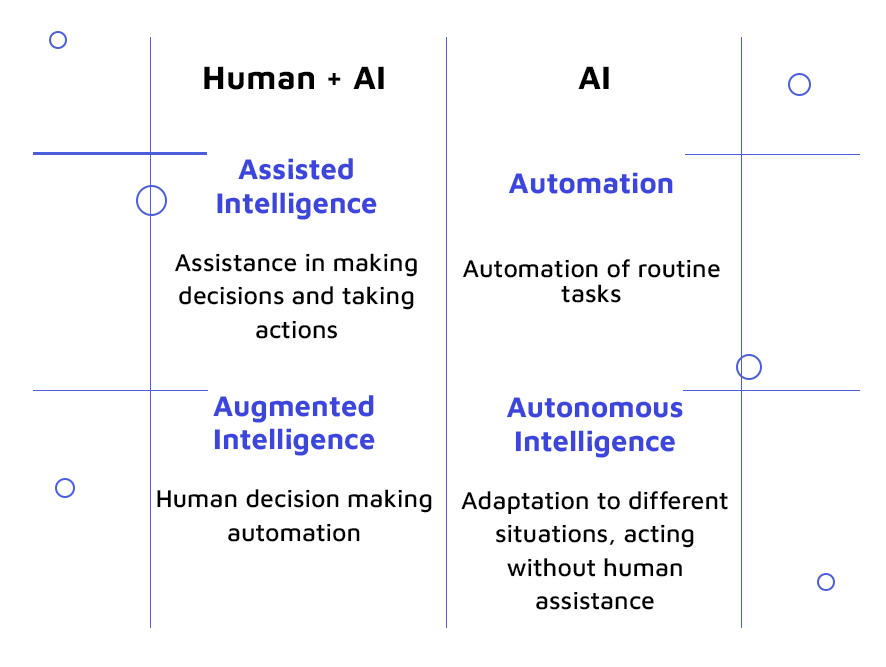
Figure 1. Basic forms of AI
Objectives of AI
Role of AI in education
The way we teach and learn is changing as a result of the widespread use of technology in education. One of the innovative ways to tailor the experiences of various learning groups, instructors, and tutors is artificial intelligence. Artificial intelligence tools can be used in the following ways to enhance study procedures [2]:
1. Personalize Education
By determining a student’s strengths and weaknesses, artificial intelligence creates a customized study plan for each student that takes their knowledge gaps into account. AI increases students’ efficiency by customizing their lessons to meet their unique demands. Using the Knowledge Space Theory as a guide, many businesses train their AIs to identify and depict knowledge gaps while accounting for the intricacy of scientific concepts and their relationships (one can serve as a foundation for bridging the gap or promote the learning of another) [3].
Produce Smart Content
Digital lessons
AI may be used to create customizable digital learning interfaces, study aids, digital textbooks, bite-sized lectures, and much more.
Information visualization
AI has the potential to enable new information perception techniques including simulation, visualization, and online learning environments.
Learning content updates
Additionally, AI assists in creating and updating the lesson content, keeping it current and adapting it to various learning styles.
Contribute To Task Automation
- Simplifying administrative activities: Teachers might use AI to streamline time-consuming operations like grading, assessing, and responding to students.
- Do you recall the tips that Gmail gives you when you compose messages based on the summary of your previous and present messages as well as the fundamentals of business vocabulary? Having this feature on any learning platform or learning management system that anticipates feedback would be fantastic [4].
AI-Powered Personalized Learning
AI’s capacity to customize each student’s learning experience is among its most important educational benefits. Conventional classroom environments frequently fall short in meeting each student’s particular demands and learning preferences. The learning process can be made more efficient and pleasurable by using AI to customize instructional software to each student’s learning preferences and speed [5].
Adaptive Learning Systems
Machine learning algorithms are used by AI-powered adaptive learning systems to evaluate student performance and modify the curriculum and delivery style as necessary. This guarantees that students get individualized instruction based on their unique requirements and interests. [6].
AI-Embedded Games and Activities
Furthermore, AI in education facilitates the development of interactive games and activities that are tailored to specific learning methods. By immersing students in an enjoyable and engaging learning environment, these AI-integrated games may improve their learning. Efficiency and Task Automation [6].
Task Automation and Efficiency
By automating several administrative and repetitive duties, such as grading assignments, arranging research papers, maintaining reports, and producing presentations, AI can help teachers and administrators save time and energy. AI can foster a more effective and productive learning environment by freeing up time for more value-added activities.
AI-Assisted Grading
Employing artificial intelligence techniques, exams and assignments can be graded faster and more accurately than human markers. This enables teachers to save time and guarantees uniform and impartial grading.
AI-Driven Research and Data Analysis
Furthermore, artificial intelligence can help teachers and researchers to analyze data more efficiently and conduct studies. Thanks to AI’s automated data collecting and analysis, educators can focus on assessing the results and applying it to improve teaching techniques [7].
Smart Content Creation and Curation
Teachers can generate and curate engaging and imaginative content for their students using artificial intelligence. This includes data visualization, digital lesson creation, and normal content updates.
Information Visualization
Software for producing AIdriven content lets teachers create appealing, visually interesting instructional materials like 2D and 3D images. This enables students to interact more successfully with the material, therefore enhancing their understanding of difficult concepts [8].
Digital Lesson Generation
Furthermore, artificial intelligence can assist in the development of digital learning materials that are tiny, easily accessible, and work with many devices. This ensures that course materials may be accessed at any time, from any location via any device.
Frequent Content Updates
Instructors can use artificial intelligence to more efficiently produce and change content, therefore guaranteeing that the learning materials are current and relevant. It prepares kids for future problems [9] and helps them to stay abreast of the newest developments in their chosen discipline.
Adaptable Access and Inclusivity
- For a global audience, artificial intelligence can help to make education more inclusive and available. Offering multilingual assistance, AI-driven educational tools can satisfy students from several backgrounds and with different learning needs.
- Multilingual Support
Educational materials may be made available in a variety of languages with the aid of AI-powered language translation technologies, which will enable students to learn in their mother tongue and break down language barriers [9].
- Accessibility for Students with Disabilities
Furthermore necessary for making education more available to students with visual or hearing impairments is artificial intelligence. An AI-powered converter program like presentation translator, for example, provides real-time captions for online lectures so that all students may profit from the content regardless of their disabilities [10].
Identifying Classroom Vulnerabilities and Enhancing the Learning Environment
- AI can be a useful tool by helping teachers to identify areas of need in the classroom and so improve the general learning environment. By looking at student performance data and teacher comments, artificial intelligence may pinpoint particular areas where pupils struggle and provide focused treatments to enable their success [10].
- Predictive Analytics
- To find children who might fail in their schoolwork or drop out of school, educators could use AI-driven predictive analytics. Offering early interventions, educators can help these children stay on course and achieve their full potential [11].
- Teacher Support and Collaboration
AI can also help instructors since it may provide them with data-based insights and advice about pupil performance. This could enable educators to improve their teaching methods and collaborate more effectively with colleagues [12].
Closing Skill Gaps and Upskilling Students
- Artificial intelligence could be very helpful in closing skill gaps in the present workforce. Giving pupils access to excellent, artificial intelligence-powered educational resources helps them build the abilities they need to succeed in the rapidly changing job market [13].
- AI-Powered Skill Development Platforms
- Students may access a broad selection of courses and resources that may aid them in acquiring the skills they need to thrive in today’s workforce via AI-powered skill development platforms. Additionally, these platforms may offer tailored learning experiences, making sure that students get the assistance they need to acquire new abilities.
- AI-Driven Learning and Development (L&D)
By analyzing how employees learn new skills and modifying the learning process accordingly, AI can also assist companies in enhancing their L&D initiatives. Businesses may use AI to design training programs that are more productive and successful in helping workers maintain their competitiveness in the labor market [14].
Data-Driven Feedback and Assessment
By examining performance data and pinpointing areas in need of development, AI can assist teachers in giving students more precise and thorough feedback.
- Customized Feedback
- Students can receive tailored feedback based on their specific performance using AI-enabled feedback systems. Students can better understand their strengths and weaknesses, as well as areas for development, by doing this [15].
- Objective and Unbiased Assessment
By removing human mistake and bias, AI can also help guarantee that feedback and assessment are fair and objective. As a result, assessments might be more precise and the learning environment may be more equitable for all pupils [16].
Assistance with Conversational AI
- Students can receive 24/7 help and support from AI-powered chatbots, which can help them cope with obstacles and maintain focus on the learning process.
- Instant Support and Guidance
- Students may have immediate access to knowledge and resources through chatbots, which can help them locate answers to their queries in a timely and effective manner. This may encourage students to maintain their focus and enthusiasm for their studies.
- Intelligent Tutoring
By analyzing each student’s learning patterns and offering individualized support and guidance, AI-powered chatbots may also deliver intelligent tutoring. This may help students overcome obstacles and gain a better grasp of challenging subjects [16].
Secure and Decentralized Learning Systems
- Ensuring the security and legitimacy of educational data and content is growing more crucial as online education expands at a quick pace. By offering safe, decentralized learning platforms, AI may assist in solving these problems.
- Blockchain-Based Learning Management Systems
- Blockchain-based, AI-powered learning management systems can aid teachers and students in securely storing and sharing educational information and materials. Using blockchain technology, these systems may guarantee that educational records are accurate, up-to-date, and tamperproof [17].
- Data Protection and Privacy
By utilizing cutting-edge cybersecurity and encryption methods, AI may also help safeguard the privacy and data of students. This can help guarantee the safety and security of students’ educational records and personal information against unauthorized access.
AI in Examinations and Assessments
- Additionally, AI has the potential to significantly enhance the evaluation and testing process. Instructors can develop assessment methods that are more secure, effective, and precise by making use of sophisticated AI algorithms [18].
- Online Proctoring
- AI-powered online proctoring systems can help identify dubious conduct during exams, making sure the testing environment is equitable and safe. These systems can notify instructors of any possible cheating attempts by monitoring student behavior via web cameras, microphones, and web browsers.
Automated Essay Scoring
In order to guarantee fair, accurate, and impartial grading, AI algorithms may also be used to automatically grade essays and other written tasks. This may free up teachers’ time and enable them to concentrate on offering their pupils more individualized feedback and assistance [19].
CONCLUSION
Offering interactive, effective, individualized learning possibilities, artificial intelligence is changing the educational terrain. Intelligent tutoring, adaptive learning systems, AI-driven evaluations, and fascinating educational games demonstrate how artificial intelligence can satisfy the range of demands of pupils while reducing the administrative load for teachers. The introduction of artificial intelligence into education has to be guided by ethical considerations, inclusion, and human monitoring as it grows in order to ensure that all students profit. The future of education is clever, not just digital.
References
[1] Technavio. (2018, August 23). Artificial intelligence market in the US education sector 2018–2022: Key vendors, market trends, drivers, challenges. Business Wire.
[2] UNESCO. (2021). Artificial Intelligence in Education: Challenges and Opportunities for Sustainable Development. United Nations Educational, Scientific and Cultural Organization.
[3] Liu, R., Huang, Y., Liu, Y., & Chen, E. (2021). Intelligent tutoring systems based on Knowledge Space Theory: A review and future directions. Artificial Intelligence Review, 54(4), 2689–2724.
[4] Zewei, T., Liu, A., Esbenshade, L., Sarkar, S., Zhang, Z., He, K., Sun, M., & et al. (2025, June 9). Implementation Considerations for Automated AI Grading of Student Work. arXiv preprint.
[5] Ayeni, O. O., Al Hamad, N. M., Chisom, O. N., Osawaru, B., & Adewusi, O. E. (2024). AI in education: A review of personalized learning and educational technology. GSC Advanced Research and Reviews, 18(02), 261–271.
[6] Sampanis, N. (2025, May 31). Innovative Tangible Interactive Games for Enhancing Artificial Intelligence Knowledge and Literacy in Elementary Education: A Pedagogical Framework. arXiv preprint
[7] Saeidnia, H. R., Hosseini, E., Abdoli, S., & Ausloos, M. (2024). Unleashing the power of AI: A systematic review of cutting-edge techniques in AI-enhanced scientometrics, webometrics, and bibliometrics. arXiv preprint arXiv:2403.18838.
[8] Wang, C., Thompson, J., & Lee, B. (2023). Data Formulator: AI-powered concept-driven visualization authoring. arXiv preprint arXiv:2309.10094.
[9] Jauhiainen, J. S., & Garagorry Guerra, A. (2024). Generative AI and education: Dynamic personalization of pupils’ school learning material with ChatGPT. Frontiers in Education, 9, Article 1288723.
[10] Karpouzis, K., Pantazatos, D., Taouki, J., & Meli, K. (2024). Tailoring education with GenAI: A new horizon in lesson planning. arXiv [Preprint]. arXiv:2403.12071.
[11] Elbouknify, I., Berrada, I., Mekouar, L., Iraqi, Y., Bergou, E. H., Belhabib, H., Nail, Y., & Wardi, S. (2025, April 9). AI-based identification and support of at-risk students: A case study of the Moroccan education system. arXiv preprint arXiv:2504.07160.
[12] Webber, K. L. (2024). Artificial intelligence and advanced data analytics: Implications for higher education. In New Directions for Higher Education. Wiley.
[13] Khan, A., Sethi, S., Mustafa, S. N., & Bibi, M. (2025). Bridging the skills in the age of AI gap: Strategies for upskilling and reskilling in higher education. Dialogue Social Science Review, 3(2), 894–909.
[14] Babashahi, L., Barbosa, C. E., Lima, Y., Lyra, A., Salazar, H., Argôlo, M., Almeida, M. A. d., & Souza, J. M. d. (2024). AI in the Workplace: A Systematic Review of Skill Transformation in the Industry. Administrative Sciences, 14(6), 127.
[15] Kochmar, E., Vu, D. D., Belfer, R., Gupta, V., Serban, I. V., & Pineau, J. (2020). Automated personalized feedback improves learning gains in an intelligent tutoring system. arXiv preprint arXiv:2005.02431.
[16] Rouabhia, R. (2025). Ethical Implications of AI: Examining Bias and Fairness in AI‑Powered Education. In Using AI Tools in Text Analysis, Simplification, Classification, and Synthesis (pp. 411–438). IGI Global.
[17] Liu, Y., Li, K., Huang, Z., Li, B., Wang, G., & Cai, W. (2023). EduChain: A blockchain-based education data management system. arXiv preprint arXiv:2306.00553.
[18] Choudhary, R. (2024, July 26). How Blockchain Is Transforming The Education Industry: Applications And Benefits. eLearning Industry.
[19] Maske, P. (2025, February 13). Blockchain‑Based LMS: Secure, Transparent, and Decentralized Learning. eLearningTrendz.com.
 Arabic
  English