
Molecular genetic of Sudanese Goats Review
الوراثة الجزيئة لسلالات الماعز السودانية: دراسة مراجعة أدبية
Safa Abusara Mohammed Ali1, Faisal Omer Ahmed2, Nawal Omar Nour-eldaim3, Saria Almarzook4, Ali Ahmed Hssabo1, Hasseeb Adam Ahmed Elbukhary5
1 Department of Animal Production, Faculty of Agricultural Technology and Fish Science, Alneelain University, Sudan
2 Department of Reproduction and Obstetrics, Faculty of Veterinary Medicine, University of Khartoum, Sudan
3 Ministry of Animal Resources Fishery and Rangeland.
4 Department of Health and Care Management, Arden University, campus Berlin, Germany
5 West Kordufan University, Faculty of Animal Production, Sudan
*Corresponding Author: safaabusara@yahoo.com
DOI: https://doi.org/10.53796/hnsj77/23
Arabic Scientific Research Identifier: https://arsri.org/10000/77/23
Volume (7) Issue (7). Pages: 431 - 444
Received at: 2026-06-15 | Accepted at: 2026-06-20 | Published at: 2026-07-01
Abstract: In Sudan Goats provide an important source of products, mainly, meat and milk. Genomic studies of goats have provided insight into their domestication and genetic basis of economically important traits as well as adaptation of harsh environment survive under high temperature, low nutrient cost and adapted of some diseases. This review aims to summarize genetic diversity information available in Sudanese goats. Indigenous goats could be divided into three main ecotypes: the Nubian goats, Desert goats, and Taggar goats based on their differences in physical characteristics and genetic make-up and geographical distribution as well. In this critical review, we discussed genetic characterization and diversity of indigenous goat breeds of Sudan. Molecular genetics tools and analytical approaches for the characterization of Sudanese indigenous goat breeds genetic diversity should be projected. There is limited information due to lack of genetic studies in Sudanese goats. Overall, livestock genetic resource conservation is attractive under question for identifying main genes that effect the production.
Keywords: Goat, genetic, livestock, diversity.
المستخلص: تُعدّ الماعز في السودان مصدرًا هامًا للمنتجات، وخاصة اللحوم والحليب. وقد ساهمت الدراسات الجينومية للماعز في فهم تدجينها والأساس الجيني لصفاتها ذات الأهمية الاقتصادية ، فضلًا عن تكيفها مع البيئة القاسية ، وقدرتها على البقاء في درجات حرارة عالية، وانخفاض تكلفة التغذيه، ومقاومتها لبعض الأمراض. تهدف هذه الدراسه الي تلخيص المعلومات المتاحة حول التنوع الجيني في الماعز السوداني. يمكن تقسيم الماعز المحلي إلى ثلاثة أنماط بيئية رئيسية: الماعز النوبي، والماعز الصحراوي ، وماعز التقار، وذلك بناءً على اختلافات خصائصها الفيزيائية وتركيبها الجيني وتوزيعها الجغرافي . في هذه الدراسه النقدية ، ناقشنا الخصائص الجينية وتنوع سلالات الماعز المحلية في السودان. ينبغي تسليط الضوء على أدوات علم الوراثة الجزيئية والأساليب التحليلية المستخدمة في توصيف التنوع الجيني لسلالات الماعز المحلية السودانية. تُعدّ المعلومات المتوفرة محدودة نظرًا لقلة الدراسات الجينية في الماعز السوداني. وبشكل عام ، يُعدّ الحفاظ على الموارد الوراثية للثروة الحيوانية أمرًا بالغ الأهمية لتحديد الجينات الرئيسية التي تؤثر على الإنتاج.
الكلمات المفتاحية: الماعز، التنوع الجيني، الوراثة.
1. Introduction
Livestock are a strategic element in livelihoods, income generation, food security, and agricultural development. They contribute to the national economy and to human welfare and livelihoods through four principal pillars: poverty alleviation, food security, environmental conservation, and gender equality [1]. The large population of goats in Sudan and the increasing demand for milk and meat necessitate the implementation of policies designed to conserve and raise the productivity of indigenous goat breeds. Unfortunate the information about the allelic and genotypic profile at important functional or positional loci in Sudanese native goat breeds is hardly available. Furthermore, there is an urgent need to conserve the pure breeds and to study the genetic structure of Sudanese goat breeds. In this paper we make overview of studies that did in Sudanese goat genetics.
One of these principles plays a crucial role in global security via provides meat, milk, and meat and their byproducts [2]. The involvement of animal production in the international economic value of agriculture and food has been found to be 33% to the gross domestic product (GDP)[3].
In 2022, the population of goats in Sudan was approximately 31.0 million. This figure reflects the significant role of goats in the Sudanese economy, providing essential resources for local livelihoods [4]. Sudanese goats consider three main indigenous breeds; Nubian goat, Desert goat, and the Dwarf Taggar goat, distributed all over the country [5].
1.1. Importance of Sudanese goats:
Goat production is important in Sudan because goats have been raised successfully with very limited feed resources. The consideration of meat production from goats in Sudan has been encouraged because of the prospective meat shortage, especially in other developing countries. According to the Goats contribute to the human food supply as dairy animals and are often named the (poor man’s cow). They are utilized for their milk supply potential, especially for those who live in remote arid and semi-arid areas of the Sudan. Although goats , compared to sheep, are lean animals which deposit their fat around their viscera, it is reported that the estimated percentage (72%), of edible meat from the desert goat carcass [6] is higher than that reported for desert sheep (70%). still much more detailed and extensive investigation are needed to evaluate the efficiency and the economy of meat production from the desert goat under different system management .
2. The characterization of Sudanese goat:
1.2. Nubian Goat:
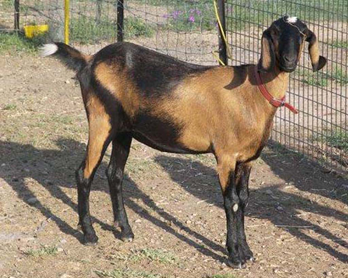
Nubian goat is the most important dairy goat breed in Sudan comprises approximately 50% of goat population. This breed was developed alongside the river valley in northern Sudan (Kush) and southern Egypt (wawat). The synonym is derived from the Nubian tribe. The goat is characterized by moderately balanced body size with medium head size, convex facial shape and outsized drooping ears generally turned out of the inferior tips. Both sexes are commonly carry medium sized lateral with toward the back and are simple in females but a little twisted in males, sometimes the horns are polled especially females in goats. The neck is with moderate length, the chest is a little deep and the withers are well prominent. The back is straight and long. The legs are obviously long, stronger as well as proportioned. The udder is large and well-shaped. The coat is fairly large. Rudimentary mane has a beard and wattles are existed only in the male. The color is commonly black but pure white, pure brown and different darkness between them are also found. In addition, multi- colorations of white and black are also found.
2.2. Nubian Goat
2.3. Desert Goat:
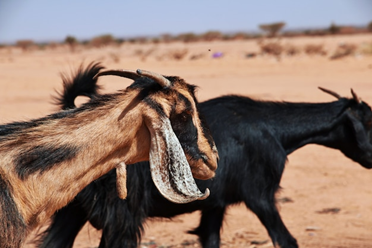
Desert Goat is the strongest type of goat compared to other ecotypes, well adapted to the dry areas, semi-dry, and savannah areas of western Sudan. The breed is characterized by large variability in their physical characters and variable size range from medium to large size [7]. Ears are generally shorter sexes carry warped horns usually projected outwards. The Male has a well-developed beard. The breed is short, with different colors; however, the main color is grays and often splashed with black or brown. Both sexes are carrying diffused shaggy locks that expand on the frontal part of the neck.
2.4. Desert Goat
2.5. Taggar goat
Taggar goat is a breed of dwarf fount in mountain region in Sudan mainly in Nuba Mountain area close to the border to South Sudan. The goat is also known as Tiegri goat and mountain goat which is a meat-type goat that has adapted to survive under harsh environmental conditions [8, 9]. Taggar is a dwarf goat with disproportionally short legs, plump body and short head. The short stature is thought to result from achondroplastic dwarfism with lack of ossification at the cartilage joints [10]. It is assumed that natural selection for the recessive dwarfism gene was favorable in response to the humid and hot climate conditions [11] . The most common coat colors for Taggar goats are dark or grey brown [12, 13].
2.6. Nilotic goat
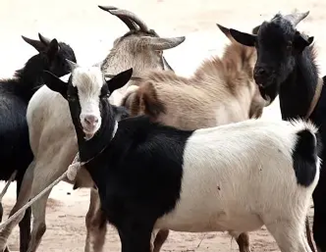
This breeds is another meat-type goat that produces high muscle mass under good feeding conditions [14]. Nilotic goats have a high reproductive potential since they reach sexual maturity at an early age. They live in the border region between Sudan and South Sudan. They distinguish from other breeds through their resistance against Trypanosomiasis [15].These goats are small in size; the body is compact, but has normal proportions [12, 16] . All colors occur, but the predominant color is a mixture of black and white.
2.7. Phenotypic characterization of goat milk
Goat milk is said to be “functional and nutraceutical drink” as composed of bioactive molecules, superior medicinal properties and lower allergenic. Freshly milked goat milk is whitish, opaque, a slightly sweet in taste and alkaline in nature. Smaller fat globules with short and medium chain fatty acids make it almost naturally homogenized. As compared cow milk it has slightly less lactose content. Moreover, it has loaded with mineral like Iron, Potassium, Calcium, Phosphorous and Magnesium. Iron and copper can help in improving metabolism rate [17].
Goat milk is of particular economic interest in many countries of the world and is desirable for many reasons, including its richness in various nutrients and its health benefits [18, 19]. It is highly digestible, absorbable, and tolerated by people with allergies to cow’s milk [20]. Goat’s milk is used for drinking and making cheese and yoghurt. Among non-genetic factors, feeding is the main factor influencing milk composition and transformation properties [21]. Bovine milk allergy caused by protein genetic variants has been regarded as a common milk digestive and allergic disease [22] with various levels of prevalence from 2.5% in children during the first 3 years of life [23] to 12–30% in infants less than 3 months old . However, it can go up to even as high as 20% in some countries. The hypoallergenicity of goat milk compared to bovine milk relates to the absence or low levels of as1-casein (as1-cn) in goat milk, and this fraction has been regarded as having allergenic potential, as determined by specific haplotypes [24]. The genetic polymorphism of milk proteins can be a useful guide for selection and an informative marker in breeding research [25]. Studies based on molecular techniques suggested that goat alleles present in different breeds result in significant differences in milk casein fraction, and these alleles can exhibit regional trends for these characteristics [26, 27]. Other studies [28] examined the effects of milk protein genetic variants on milk production traits. Associations between milk protein genotypes and milk production traits were estimated from 6803 first lactation records. The results of the two models indicated that some effects ascribed to certain milk protein genes in the single-gene analysis are not effects of the milk protein gene itself but of linked genes [29]. Goat milk that is characterized by favorable alleles results in a higher content of protein, casein and fat, and improved coagulation properties [30].
2.8. Genotypic diversity of Sudanese goats
According to Hill [31] genetic development strategy is an essential part of livestock development programs in the world , adequate genetic diversity and variation in livestock populations are essential for better understanding of livestock utilization [32] conservation , improvement, environmental adaptation [33], future changes in population demand, as well as for economically important traits [34]. Various methods have been used for genetic characterization of livestock breeds, including restricted fragment length polymorphism (RFLP), amplified fragment length polymorphism (AFLP), microsatellites [35], random amplified polymorphic DNA (RAPD) [36], single nucleotide polymorphism (SNP) genome-wide association studies [37], and whole-genome sequencing [7].
The genotypic characterization of Sudanese goat breeds has been reported. El Gaali and Satti [36] used a randomly amplified polymorphic DNA (RAPD) technique to study the genetic variations among 14 individuals of Nilotic and Nubian goats. The technique showed 59 entirely repeatable RAPD fragment bands and the statistical analysis revealed 55 polymorphic bands among the 14 goat individuals. The genetic distances in the population were found to range from 8 to 72% [7]. The main dissimilarity coefficient found between individuals within the Nilotic goat breeds, whereas there was a relatively low degree of dissimilarity among the Nubian goat population. In addition, as in many goat breeds [38], mitochondrial DNA diversity among Sudanese goat breeds was also reported.
Three Sudanese goat breeds, including Nubian goat, desert goat, and Taggar goat were used for complete mitochondrial DNA analysis using PCR-RFLP technique to detect the mitochondrial DNA diversity of two mit-DNA haplogroups, lineage A and lineage D. The study revealed that most individuals of the three breeds were belonged to lineage A with frequencies 0.2 of Desert goats, 0.6 of Nubian goats and 0.6 of Tagar goats. However, some individuals were found to belong to modified lineage A with frequencies 0.2 of Nubian goats, 0.2 of Desert goats, and 0.2 of Tagar goats. None of the individual was found to belong to lineage D. Moreover, whole- genome population genetics analysis of Sudanese goats identifies regions harboring genes associated with major traits based on SNP [7]. The study determined the genetic diversity and the relationship within and between the main Sudanese goat breeds included Desert, Nubian, Taggar, and Nilotic goats. The study concluded that the Taggar goat was genetically different from the other Sudanese goat breeds.
The SNPs identified by the first principal components revealed high F values in Taggar goat and allowed to determine candidate genes that can be used in the improvement of breed selection programs to develop Sudanese local breeds and find genetic factors that may contribute to the adaptation to harsh environments. Rahmatalla, Arends [7] found that percentage of polymorphic SNPs within each breed of Sudanese goats among all 48,505 SNPs that passed the quality control was very high, ranging from 96.9% (Taggar goat) to 98.2% (Desert goat) (Table 1). After removing SNPs with MAF below 0.05, the average minor allele frequency, was about the same for Nubian (0.31 ± 0.12), Desert (0.31 ± 0.12), Nilotic (0.31 ± 0.13), and Taggar (0.30 ± 0.13) goats. The distribution of minor allele frequencies across the Sudanese goat populations are represented in Fig. 1a. Rare variant MAFs were observed in about 3.1%, 2.2%, 2% and 1.8% in Taggar, Nilotic, Nubian, and Desert goat breeds respectively [7].
Table (1) Diversity indices comparing Sudanese goat breeds
| Breed name | Breed acronym | N | HE | Ho | FIS | PIC (%) |
|---|---|---|---|---|---|---|
| Nubian | NU | 23 | 0.39 | 0.39 | 0.0010 | 98.0 |
| Desert | D | 24 | 0.39 | 0.39 | 0.0041 | 98.2 |
| Taggar | T | 24 | 0.39 | 0.39 | −0.0129 | 96.9 |
| Nilotic | NI | 24 | 0.40 | 0.39 | 0.0094 | 97.8 |
| Total | 95 | 0.40 | 0.39 | N.A. | N.A. |
N: number of animals; HE: expected heterozygosity based on the observed genotype frequencies; HO: observed heterozygosity; FIS: Wright’s inbreeding coefficient, significance was determined using the diversity package, after 1000 bootstraps the 95% bias corrected confidence interval was used to determine if the estimated FIS is significantly different from 0; PIC: polymorphic information content; N. A.: Not appliziere
Figure (1) Genetic diversity between Taggar (T), Desert (D), Nubian (NU), and Nilotic (NI) goats and minor allele frequency distribution in Sudanese goat breeds.
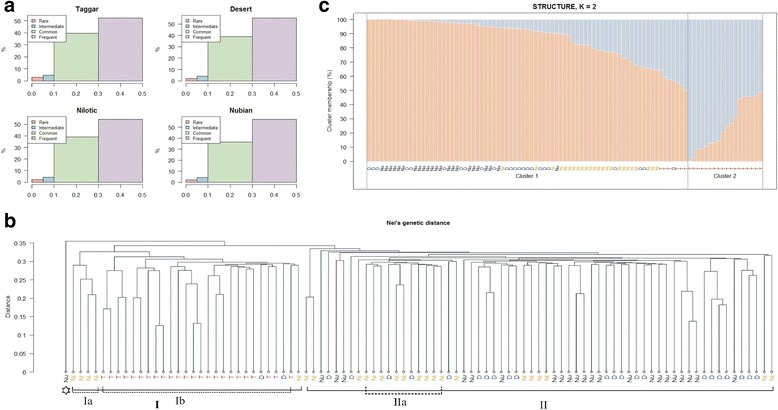
a Minor allele frequency distribution of 50 K BeadChip SNP in Sudanese goat breeds. The rare (≥0.0 and ≤0.05), intermediate (≥0.05 and ≤0.1), common variant (≥0.10 and ≤0.3), and the frequent (≥0.3 and ≤0.5) variant MAFs are in green, purple, orange and yellow color, respectively. b Hierarchical clustering dendrogram based on Nei’s genetic distance. The Y axis of the dendrogram represents the distance between individuals or clusters of individuals. The X axis represents every individual of the four breeds and shows clusters. One outlier from Nubian goat (*) is placed at much higher distance. STRUCTURE analysis with two clusters (K = 2), each individual is represented by a vertical bar [7].
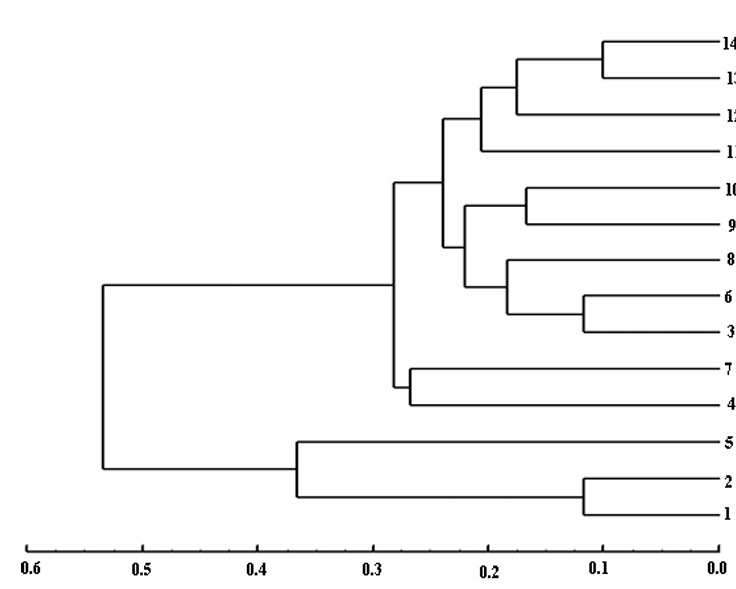
On the other hand the studied of Genetic characterization of two Sudanese goat breeds ((Nilotic and Nubian) using RAPD molecular markers by [36]. Seven primers of randomly amplified polymorphic DNA (RAPD) were selected to study the genetic variations among 14 individuals table 1. The test generated 59 entirely repeatable RAPD fragment bands and the statistical analysis showed 55 polymorphic bands among the 14 individuals. The genetic distances among the population range from 8 to 72%. The highest dissimilarity coefficient was between individuals within the Nilotic breeds while there was a comparatively low degree of differentiation among the Nubian population fig 2. The constructed UPGMA dendrogram of the coefficient of similarity showed that the Nubian clustered together while the individuals from the Nilotic form 4 groups. It was clearly seen that the link between the individual of the Nilotic is quite weak and some of them linked to the Nubian. The results of the study offer useful information about some Sudanese goat breeds fig 3.
Figure 2 DNA polymorphisms detected among Sudanese goat breeds using different universal primers. M: Standard marker; lanes 1-7 are Nilotic; lanes 8 -14 are Nubian.
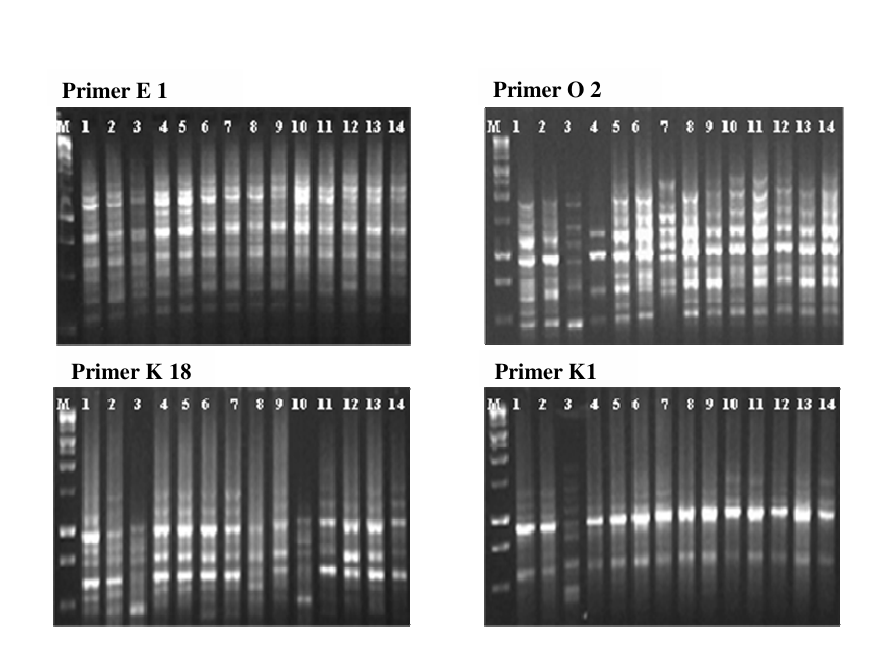
Table (2) The sequence of primers used and their polymorphic bands.
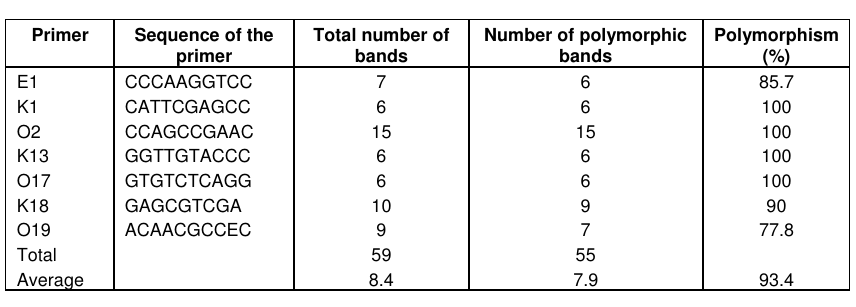
Figure 3. Dendrogram showing relationship among 14 individuals of Sudanese goat breeds generated by UPGMA method based on RAPD analysis (Individuals designated with numbers 1 to 7 are Nilotics while individuals designated with 8 to 14 are Nubian breeds).
Mahmoud [39] identified genotype frequencies of single nucleotide polymorphisms in different alleles of CSN1S2 and DGAT1 genes used blood samples for Nubian and exotic goat breeds (Damascus, Mazain and Alpine) kept in Khartoum State and Mahmoud [39] used PCR products digested separately with NcoI and NlaIII for CSN1S2 and DGAT1 genes, (figures 4, 5 and 6) respectively. That studies detected a (CSN1S2N/N, CSN1S2N/O and CSN1S2O/O),so the results provided that evidence goat breeds in Khartoum State carry the A, B, C, E or F and 0 alleles, while the D allele was not present. That mean three genotypes were identified respectively normal (CSN1S2NN), heterozygote for the null allele (CSN1S2NO) and homozygote for the null allele (CSN1S2OO) (Table 3). In for the 145 Nubian, Damascus, Mazain and Alpine goat breeds reread in Khartoum State, the CSN1S2O allele showed a frequency of 0.014, 0.028, 0.00 and 0.00 for Nubian, Damascus, Mazain and Alpine goat breeds, respectively.
Figure (4) The electrophoresis pattern obtained after digestion of PCR amplified goat CSN1S2 products with NcoI for Damascus goats
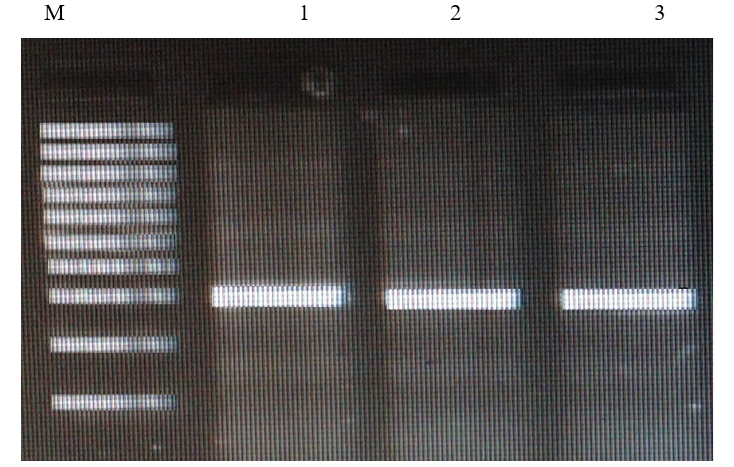
M: 100 bp ladder marker. Lanes 1- 3: 301 bp undigested fragment, 0/0 genotype, where 0 allele
Figure (5) The electrophoretic pattern obtained after digestion of PCR amplified goat CSN1S2 products with NcoI for Nubian goats.
M 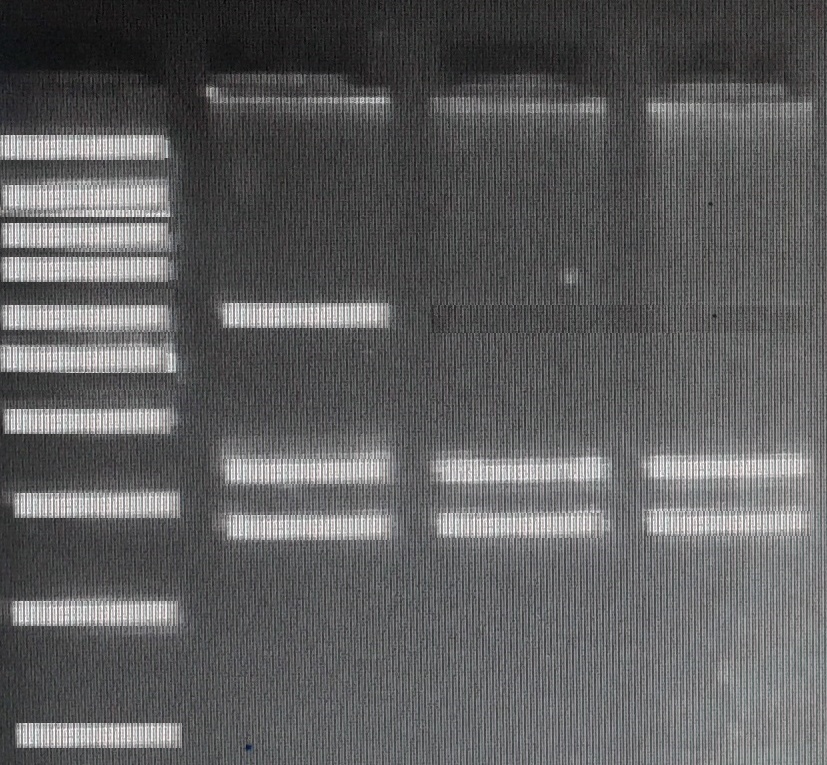
M: 50 bp ladder marker
Lane 1: 0/N genotype (301 bp, 168 bp and 133 bp), where N= A, B, C, E or F allele
Lanes 2-3: N /N genoty
pes (168 bp and 133 bp), where N= A, B, C, E or F allele
Figure (6) The electrophoretic pattern obtained after digestion of PCR amplified goat CSN1S2 products with NcoI for Abine goats
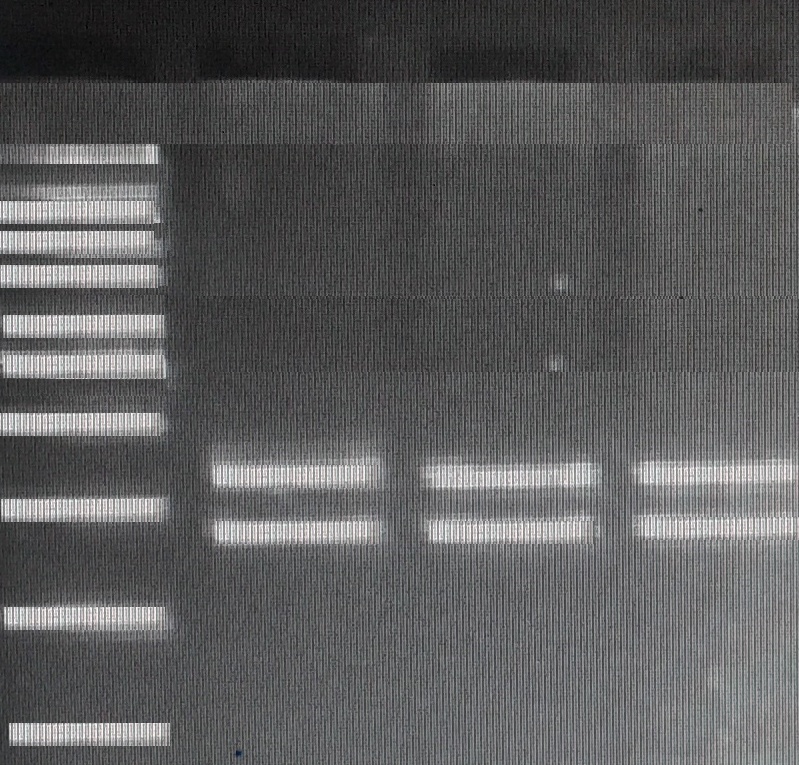
M: 50 bp ladder marker
Lane 1-3: N /N genotype (168 bp and 133 bp), where N= A, B, C, E or F allele
The genotyping analysis in Nubian and exotic goat breeds (Damascus, Mazain and Alpine) kept in Khartoum State .the result show that three genotypes were detected: TT, TC and CC (Table 3) [39]. However, genotype TT and TC were not shown in Alpine and Mazain goat breeds. This polymorphism was not found for Mazain and Alpine goat breeds (samples showed undigested fragment of 401 bp. On the other hand, polymorphism was found in the samples of other goat breeds (Nubian and Damascus). Allele T contained the restriction site for NlaIII and resulted in 100 and 78 bp fragments, whereas the absence of the restriction site in the C allele resulted in a single 178 bp fragment. Allele T restriction site resulted in 106 bp, 100 bp, 78 bp and 67 bp fragments, whereas C allele occurred in three fragments; 178 bp, 106 bp and 67 . Therefore, genotype TT; TC and CC demonstrated four; three and one bands, respectively. Genotype frequencies for Nubian and Damascus breeds were 0.93 and 0.92 respectively, for genotype TT; 0.07 and 0.08 respectively for genotype CC (Table 3).
For the determination of relationships between genotype TT and TC and milk traits in goat populations, statistical analyses used showed no significant (P>0.05) differences were found in milk constituents (fat, protein and fatty acids) values with TT and TC genotypes (Table 4).
Table 3: Genotype frequencies of the DGAT1 gene in Nubian, Damascus, Mazain and Alpine goat kept in Khartoum State
| Genotypes | Nubian | Damascus | Mazain | Alpine |
| TT | 0.93 | 0.92 | 0 | 0 |
| TC | 0.07 | 0.08 | 0 | 0 |
| CC | 0 | 0 | 1 | 1 |
| TT/ TC | 0.93/ 0.0 | 0.92 / 0.08 | 0 | 0 |
Table (4) Associations of DGAT1 gene intron 16 genotypes with milk traits in samples of goat breeds in Khartoum State
| Breed | Genotypes | Milk traits | ||||
| Protein | Fat | LCFA | MCFA | SCFA | ||
| TT | 3.50ª | 4.95ª | 49.14 ª | 39.18ª | 11.69ª | |
| Nubian | TC | 3.57 ª | 5.12ª | 49.26ª | 38.98 ª | 11.77 ª |
| Sig. | NS | NS | NS | NS | NS | |
| TT | 4.43ª | 3.47ª | 13.62 b | 40.09 ª | 46.29ª | |
| Damascus | TC | 4.48ª | 3.51ª | 13.68 b | 40.13 ª | 46.19ª |
| Sig. | NS | NS | NS | NS | NS | |
The values in the same column with different superscript letter are significantly (0.05 > P) different.
NS: not significant.
3. Discussion
Genetic diversity within Sudanese goat populations is of high level. 96% of SNPs that passed the quality check were polymorphic in each breed albeit SNPs on the chip were selected from breeds such as Saanen, Alpine, Creole, Boer, Kacang, and Savanna and did not consider indigenous East African breeds [40]. Rahmatalla, Arends [7] expected and observed heterozygosity in the Sudanese goat breeds were similar (0.39), not find heterozygote deficiency. Using the same SNP chip, heterozygosity in Sudanese goat breeds was similar to Bakri goats in Egypt (0.40) [41]. Ethiopian goats breeds (0.38) [42] and Angora goats from South Africa (0.37) [43]. Consistent with low heterozygote deficiency and high allelic diversity, [7] inbreeding within Sudanese goat breeds was also close to zero. The inbreeding coefficient estimated for Sudanese Nubian goats (FIS = 0.001) was consistent with previous findings for Nubian goats in Ethiopia (FIS = 0.073) [42]. This outcome indicates the highly diverse genetic reservoir of Sudanese goats. The low Fst values among Sudanese breeds indicate low genetic differentiation among these populations, which indicates that the population history has a likely common origin and the recent husbandry system in connection with nomadic traditions. AMOVA further supported this finding by providing evidence that most variation was distributed within individuals, and to a lesser extent, genetic variation (6.96%) was explained by differences among the Sudanese goat populations. By applying different genetic distance clustering methods, STRUCTURE and PCA, we observed a clear separation of Taggar goats from the other goat breeds. Taggar, which is a dwarf goat, was identified as the most genetically distinct group in respect to other goat populations of Sudanese goats.
The output of the STRUCTURE analysis at K = 2 . It clearly distinguished Taggar from the other Sudanese goat breeds. This result could be explained by the fact that Taggar goats are geographically isolated in the mountain regions of Sudan. Mountain regions could have caused natural selection of small animals which are more nimble and feed efficient, so many generations could have led to the dwarfism phenotype we observe currently in Taggar goats [7]. This natural selection might have caused genetic signatures in Taggar not observed in the other three breeds. and since Taggar goats are geographic ally separated this effect a limiting role in their ability to mate with the other goat breeds in Sudan, this explain the reason of a clear separation from the other goat breeds. It is observed that Desert goats are most scattered amongst the other two goats (Nilotic and Nubian). This could be due to Desert goat husbandry: [44] forced by changing market conditions, they began to shift from dual purpose to dairy goats by crossing their Desert goats with Nubian goats [45, 46].
Desert goats are owned by nomadic tribes who use communal grazing lands and watering points, where different herds meet and randomly mate which leads to gene flow. Based on Nei’s genetic distance we find a closer relationship between Taggar and a sub-group of Nilotic goats, which could be attributed to the low geographical distance between the two populations in the mountain area of the Southern part of Sudan. Principal component analysis showed that the first two principal components could be used to differentiate between Sudanese goat breeds and to assign individuals to a particular breed. PC1 shows separation of Taggar goats, Nilotic goats, and a mixed of Desert and Nubian goats. PC2 seems to be able to differentiate between Nubian and Desert goats, though some misclassifications still remain [7].
SNPs contributing highly to PC1 allowed us to define regions of the genome at which the Taggar goats are significantly different from the other three breeds. Among the genes in the vicinity of the SNPs contributing to PC1.
Abusam, Shuiep [47] identified the genetic polymorphism of kappa casein gene among Sudanese desert goat in South Darfur State; they found that the genotypic frequencies for AA and AB were 66.20 and 33.80%, respectively. On the other hand, the allelic frequencies were 83.10 and 16.90% for A and B respectively. The chi-square test (χ2 = 2.81, P > 0.05) confirmed the validity of the Hardy–Weinberg equilibrium for the population.
Conclusions
In conclusion, molecular genetics has crucial role in to comprehension the genetic diversity of Sudanese goats, some studied showed that Taggar goat is genetically distinct from other breeds, thus, we need more genetics studies about Taggar goat. There for the use of genomic tools and methodologies is essential for characterizing the genetic diversity of these breeds and should be add in breeding programs aim to improve genetic traits of local Sudanese goats. Overall, the genetic resources of Sudanese goats are under threat and there are important need for conservation strategies to ensure their survival and potential for sustainable production.
Conflicts of Interest
The authors declare that there are no conflicts of interest.
4. Reference List
1. FAO, FAO’s work on livestock and proposal for a sub-committee on livestock, in https://openknowledge.fao.org/handle/20.500.14283/mx458en. 2018, FAO, Meeting document: Rome, Italy.
2. Nabarro, D. and C. Wannous, The potential contribution of livestock to food and nutrition security: the application of the One Health approach in livestock policy and practice. Rev. sci. tech, 2014. 33(2): p. 475-485.
3. Thornton, P.K., Livestock production: recent trends, future prospects. Philosophical Transactions of the Royal Society B: Biological Sciences, 2010. 365(1554): p. 2853-2867.
4. Meza-Herrera, C.A., et al., Dairy goat production systems: a comprehensive analysis to reframe their global diversity. Animals, 14(24), 3717., 2024.
5. Wilson, R.T., Small ruminant production and the small ruminant genetic resource in tropical Africa. Vol. 88. 1991: Food & Agriculture Org.
6. Yagoub, Y.M. and S.A. Babiker, A study on goat meat production in Sudan. Int J Life Sci Eng, 2(3), 21-26. 2016.
7. Rahmatalla, S.A., et al., Whole genome population genetics analysis of Sudanese goats identifies regions harboring genes associated with major traits. BMC genetics, 2017. 18(1): p. 92.
8. Bushara, I. and M.M.A.A. Abu Nikhaila, Productivity performance of Taggar female kids under grazing condition. J. Anim. Prod. Adv, 2(1), 74-79., 2012.
9. Porter, V., et al., Mason’s world encyclopedia of livestock breeds and breeding, 2 Volume Pack. Vol. 1. 2016: Cabi.
10. Mason, I.L. and I.L. Mason, Evolution of domesticated animals. 1984.
11. AOAD, Arab organization for agricultural development. Goats resources in Arab states. II-Sudan (Arabic). AOAD printing press. 1990.
12. El-Naim, Y.A., Some reproductive and productive traits of Sudan nubian goats. 1979.
13. Muffarah, M., Goat breeds and varieties in Sudan. Proceeding of Training Course, Sheep and Goat Production, Arab Centre for Studies of arid and dryland (ACSAD), Khartoum, 1995: p. 17-27.
14. Zeinelabdeen, W., et al., Effect of two different diets on growth from birth to sexual maturity of Nilotic does. Research opinions in animal & Veterinary Sciences, 2011. 1: p. 562-6.
15. Osman, N.M., et al., Susceptibility of Sudanese Nubian goats, Nilotic dwarf goats and Garag ewes to experimental infection with a mechanically transmitted Trypanosoma vivax stock. Pakistan journal of biological sciences: PJBS, 2008. 11(3): p. 472-475.
16. Mason, I.L., The classification of West African livestock. 1951.
17. Bhattarai, R.R., Importance of goat milk. Journal of Food Science and Technology Nepal, 2012. 7: p. 107-111.
18. Selvaggi, M. and V. Tufarelli, Caseins of goat and sheep milk: analytical and technological aspects, in Casein: Production, uses and health effects. 2012. p. 1-25.
19. Chen, D., et al., Proteomics and microstructure profiling of goat milk protein after homogenization. Journal of Dairy Science, 2019. 102(5): p. 3839-3850.
20. Clark, S. and M.B.M. García, A 100-year review: Advances in goat milk research. Journal of dairy science, 2017. 100(12): p. 10026-10044.
21. Pulina, G., et al., Nutrition and quality of goat’s milk, in Dairy goats feeding and nutrition. 2008, CAB International Wallingford UK. p. 1-30.
22. Amalfitano, N., et al., Quantitative and qualitative detailed milk protein profiles of 6 cattle breeds: Sources of variation and contribution of protein genetic variants. Journal of dairy science, 2020. 103(12): p. 11190-11208.
23. Businco, L. and J. Belltinti, Food allergy in childhood. Hypersensitivity to cows’ milk allergens. Clinical & Experimental Allergy, 1993. 23(6): p. 481-483.
24. Olalla, M., et al., Nitrogen fractions of Andalusian goat milk compared to similar types of commercial milk. Food Chemistry, 2009. 113(3): p. 835-838.
25. Awad, A., et al., Association of polymorphisms in kappa casein gene with milk traits in Holstein Friesian cattle. Japanese Journal of Veterinary Research, 2016. 64(Supplement 2): p. S39-S43.
26. Marletta, D., et al., Casein polymorphism in goat’s milk. Le Lait, 2007. 87(6): p. 491-504.
27. Prinzenberg, E.-M., et al., Caprine κ-casein (CSN3) polymorphism: new developments in molecular knowledge. Journal of Dairy Science, 2005. 88(4): p. 1490-1498.
28. Aleandri, R., et al., The effects of milk protein polymorphisms on milk components and cheese-producing ability. Journal of dairy science, 1990. 73(2): p. 241-255.
29. Bovenhuis, H., J.A. Van Arendonk, and S. Korver, Associations between milk protein polymorphisms and milk production traits. Journal of dairy science, 1992. 75(9): p. 2549-2559.
30. Zullo, A., et al., Protein polymorphisms and coagulation properties of Cilentana goat milk. Small Ruminant Research, 2005. 58(3): p. 223-230.
31. Hill, W.G., Is continued genetic improvement of livestock sustainable? Genetics, 2016. 202(3): p. 877-881.
32. Kantanen, J., et al., Utilization of farm animal genetic resources in a changing agro-ecological environment in the Nordic countries. Frontiers in Genetics, 2015. 6: p. 52.
33. Hoffmann, I., Climate change and the characterization, breeding and conservation of animal genetic resources. Animal genetics, 2010. 41: p. 32-46.
34. Laible, G., J. Wei, and S. Wagner, Improving livestock for agriculture–technological progress from random transgenesis to precision genome editing heralds a new era. Biotechnology journal, 2015. 10(1): p. 109-120.
35. Yadav, A.S., et al., Microsatellite DNA typing for assessment of genetic variability in Marwari breed of Indian goat. Veterinary World, 2015. 8(7): p. 848.
36. El Gaali, E. and M. Satti, El Gaali, E., & Satti, M. (2009). Genetic characterization of two Sudanese goat breeds (Capra hircus) using RAPD molecular markers. . African Journal of Biotechnology, 2009. 8(10).
37. Zhan, S., et al., Genome-wide identification and characterization of long non-coding RNAs in developmental skeletal muscle of fetal goat. BMC genomics, 2016. 17(1): p. 666.
38. Kim, J.-H., et al., mtDNA diversity and phylogenetic analysis of Korean native goats. 2011. 21(9): p. 1329-1335.
39. Mahmoud, N.M.A., Production performance and association of milk production and fatty acids profile with CSNIS2 and DGAT1 genes in local and exotic Goat breeds raised in Khartoum state ,Sudan.
Phd. . Thesis in Animal Production department ,University of Khartoum June 2022, 2022.
40. Tosser-Klopp, G., et al., Design and characterization of a 52K SNP chip for goats. . PloS one, 9(1), e86227., 2014.
41. Kim, E.S., et al., Multiple genomic signatures of selection in goats and sheep indigenous to a hot arid environment. . Heredity, 116(3), 255-264., 2016.
42. Mekuriaw, G., et al., High Density SNP Chips Array Uncovers Genetic Diversity and Population Structure of 16 Ethiopian and Chinese Goat Populations. . Plant and Animal Genome Conference XXIV., 2016.
43. Visser, C., et al., Genetic diversity and population structure in South African, French and Argentinian Angora goats from genome-wide SNP data. PloS one, 11(5), e0154353, 2016.
44. FAOSTAT, Food and Agriculture Organization of the United Nations: http://www.fao.org/faostat/en/. 2015.
45. Mohamed Ali, M. and A. Eldaw, Study of flock structure and some morphological, productive and reproductive characters of Sudanese Desert goats in north Kordofan state-Sudan. Journal of Novel Applied Sciences, 2015. 4: p. 1155-8.
46. Silanikove, N., The physiological basis of adaptation in goats to harsh environments. Small ruminant research, 2000. 35(3): p. 181-193.
47. Abusam, L.M., E.S. Shuiep, and I.A. Ishag, Molecular Characterization of Genetic Polymorphisms in Kappa Casein Gene (Exon 4) Among Sudanese Desert Goat. International Journal of Genetic Engineering and Recombination, 4(2), 14-19., 2018.
 Arabic
  English