

Study the modulus elasticity of the prestressed concrete prism compared with ACI 318 Code
دراسة معامل المرونة لمنشور الخرسانة مسبقة الإجهاد ومقارنته بكود ACI 318
ABDULAZIZ AHMED MOHAMMED1, MOHAMED.M.MUSTAFA2, AHMED KHALIL MOHAMMED3, ABDALSALAM ALHUSEIN AHMOUDA OTHMAN4
1 Lecturer at the Higher Institute of Science and Technology Sirte (HIST-S), libya, E-mail: zezoabojdeda@gmail.com
2 Lecturer at the Higher Institute for Engineering Technology Alqwarsha, email: m.m.alabar@hietg.edu.ly
3 Lecturer at the Higher Institute of Science and Technology Sirte (HIST-S), libya, khalilahmed532@yahoo.com
4 Researcher at the Libyan Authority for Scientific Research, Email: abdasalamothan8893@gmail.com
DOI: https://doi.org/10.53796/hnsj72/25
Arabic Scientific Research Identifier: https://arsri.org/10000/72/25
Volume (7) Issue (2). Pages: 434 - 444
Received at: 2026-01-10 | Accepted at: 2026-01-20 | Published at: 2026-02-01
Abstract: Prestressed concrete offers significant structural and economic advantages, particularly in controlling deflection and cracking under flexural loading. This study investigates an experimental method for determining the modulus of elasticity of prestressed concrete prisms and evaluates its consistency with the ACI 318 Code provisions. Four self-compacting concrete (SCC) prestressed prisms with dimensions of 100 × 100 × 1000 mm were cast using Grade 60 concrete and pre-tensioned steel wires of 1.5 mm diameter. After 28 days of moist curing, flexural tests were conducted, and the modulus of elasticity was calculated from the linear elastic portion of the load–deflection response. The experimentally obtained modulus values ranged from 22 to 36 GPa, showing good agreement with the values predicted by the ACI 318 empirical equation. The results demonstrate that the proposed deflection-based method provides a reliable alternative approach for estimating the modulus of elasticity of prestressed concrete members. This method shows promising potential for further refinement and application in prestressed concrete analysis and design.
Keywords: Prestressed concrete; Modulus of elasticity; Load–deflection behavior; Self-compacting concrete; ACI 318 Code.
المستخلص: عدّ الخرسانة مسبقة الإجهاد من المواد الإنشائية التي توفر مزايا فنية واقتصادية مهمة، لا سيما في التحكم في الهبوط والتشققات الناتجة عن الأحمال الانحنائية. تهدف هذه الدراسة إلى فحص طريقة تجريبية جديدة لتحديد معامل المرونة لمنشورات الخرسانة مسبقة الإجهاد، مع تقييم مدى توافق نتائجها مع القيم الواردة في كود ACI 318. تم صب أربعة منشورات خرسانية مسبقة الإجهاد من الخرسانة ذاتية الدمك بأبعاد (100 × 100 × 1000) مم وبدرجة مقاومة 60، مع استخدام أسلاك شد مسبقة بقطر 1.5 مم. بعد المعالجة الرطبة لمدة 28 يومًا، أُجريت اختبارات الانحناء، وتم حساب معامل المرونة اعتمادًا على الجزء الخطي المرن من منحنى الحمل–الهبوط. أظهرت النتائج أن قيم معامل المرونة المستخرجة تجريبيًا تراوحت بين (22–36) جيجاباسكال، وكانت متقاربة إلى حدٍّ كبير مع القيم المحسوبة وفق معادلات كودACI 318 . وتشير هذه النتائج إلى أن الطريقة المقترحة، المعتمدة على سلوك الحمل–الهبوط، تمثل أسلوبًا موثوقًا لتقدير معامل المرونة لعناصر الخرسانة مسبقة الإجهاد، مع إمكانية تطويرها وتطبيقها في التحليل والتصميم الإنشائي مستقبلاً.
الكلمات المفتاحية: الخرسانة مسبقة الإجهاد؛ معامل المرونة؛ سلوك الحمل–الهبوط؛ الخرسانة ذاتية الدمك؛ كود ACI 318.
Introduction
Prestressing of concrete is defined as the application of compressive stresses to concrete members. Those zones of the member ultimately required to carry tensile stresses under working load conditions are given an initial compressive stress before the application of working loads so that the tensile stresses developed by these working loads are balanced by induced compressive strength. Prestressed can be applied in two ways Pre-tensioning or Post-tensioning. Due to the development of prestressing technology and material of prestressed concrete, prestressed concrete has been widely used in various type of construction such as bridges, water tank, flyover and buildings. There are various advantages of prestressed concrete which encourage the utilization of prestressed concrete in the construction projects. The high quality of prestressed concrete is one of the advantages of prestressed concrete. Usually, the concrete used to produce the prestressed concrete products is high strength concrete. The high quality control of prestressed concrete in factory minimizes the defects in the products. The high quality of prestressed concrete allowed the concrete to have longer life span. (Hurst, 2002).
Background
The present state of development in the field of prestressed concrete is due to the continuous research done by engineers and scientists in this field during the last 90 years.
In 1886, Jackson of San Francisco applied for a patent for construction of artificial stone and concrete pavements, in which prestresed was introduced by tensioning the reinforcing rods set in sleeves. During of Germany manufactured slabs and small beams in 1888. Using embedded tensioned wires in concrete to avoid cracks.
The idea of prestressing to counteract the stresses due to loads was first put forward by the Austrian engineer Mandl in 1896. M. Koenen, of Germany, further developed the subject by reporting, in 1907, on the losses of prestress due to elastic shortening of concrete. The importance of losses in prestressing due to shrinkage of concrete was first recognized by Steiner in the United States around 1908. In 1923, Emperger of Vienna developed a method for making wire-bound reinforced concrete pipes by binding high-tensile steel wires on pipes at stresses ranging from 160 to 800 N/mm2.The use of unbounded tendons was first demonstrated by Discharger, in 1928, in the construction of a major bridge of the deep-girder type, in which prestressing wires were placed inside the girder without any bond. Losses of prestress were compensated by the subsequent pre-tensioning of the wires. Based on the exhaustive studies of prop ties of concrete and steel, Freyssinet demonstrated, in 1928, the advantages of using high-strength steel and concrete to account for the various losses of prestress due to creep and shrinkage of concrete. The development of vibration techniques for the production of high-strength concrete and the invention of the double-acting jack for stressing high-tensile steel wiresare considered to be the most significant contributions made by Freyssinet between1928 and 1933.
The use of prestressed Concrete spread rapidly from 1935 onwards and many longspan bridges were constructed between 1945 and 1950 in Europe and the United States.During the last 25 years, prestressed concrete has been widely used for the construction of long-span bridges, industrial shell roofs, marine structures, nuclear pressurevessels, water-retaining structures, transmission poles, railway sleepers and a host ofother structures. In the words of Guyon There are probably no structural problem to which prestressed concrete cannot provide a solution, and often a revolutionary one. Prestressed concrete is more than á technique; it is a general principle. (Nilson 1987).
Problem statement
Concrete, by nature, is strong in compression but weak in tension, which often leads to cracking and serviceability issues under flexural loading. To overcome this limitation, prestressing techniques are introduced, whereby internal stresses are deliberately applied to counteract external loads. A prestressed concrete prism represents a fundamental structural element used in research and laboratory testing to study the effects of prestressing on behavior, strength, and deflection.
However, before analyzing or testing such members, it is essential to establish a clear definition and understanding of what a prestressed concrete prism is, its geometry, characteristics, and its role in simulating prestressed concrete elements. This provides the conceptual foundation for experimental and analytical work related to prestressed structures.
Objective
To determine the modulus elasticity of prestressed concrete prism with deflection method and compared with ACI 318 Code.
Scope of Study
The aim of this study the determination of the modulus elasticity and the load deflection behavior of particle prestressed concrete prism. This discusses several tests that were conducted in achieving the objectives of the study this research shall prepare the 4 samples from prism each of 4 samples of one group have the same pre-tension wire and In this research shall work with the test after 28 days, at the same duration will apply for another test as compressive stress test on cup sample Based on the results can determine the modulus elasticity from deflection behavior in the prestressed concert prism, But before that have to test for the tensile strength of the wire strand first.
Review of prestressed concrete
Reinforced concrete is the most widely used structural material of the 20-century. Because the tensile strength of concrete is low, steel bars are embedded in the concrete to carry all internal tensile forces. Tensile forces may be caused by imposed loads or deformations, or by load-independent effects such as temperature changes or shrinkage.
Consider the simple reinforced concrete beam shown in Figure 2.l. The external loads cause tension in the bottom fibers which may lead to cracking, as shown. Practical reinforced concrete beams are usually cracked under the day-to-day service loads. On a cracked cross section, the applied moment is resisted compression in the concrete above the crack and tension in the bonded reinforces steel. Although the steel reinforcement provides the cracked concrete beam with flexural strength, it does not prevent cracking and does not prevent the loss of stiffness caused by cracking. Crack widths are approximately proportional to the strain, and hence stress in the reinforcement. Steel stresses must therefore be limited to some appropriately low value in order to avoid excessively wide cracks similarly large steel strain is the result of large curvature, which in turn associated with large deflection. There is little benefit to be gained therefore by using higher strength steel or concrete, since in order to satisfy serviceability requirements, the increased strain capacity afforded by higher strength steel cannot be utilized.
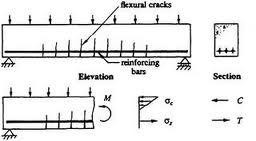
Figure 2.1: reinforced concrete beam.
Composition of concrete
Concrete is a mixture of cement, water, and aggregates. It may also contain one or more chemical admixtures. Within hours of mixing and placing concrete sets and begins to develop strength and stiffness as a result of chemical reactions between the cement and water. These reactions are known as hydration. Calcium silicates in the cement react with water to produce calcium silicate hydrate and calcium hydroxide. The resultant alkalinity of the concrete helps to provide corrosion protection for the reinforcement.
The relative proportions of cement, water, and aggregates may vary hay vary considerably depending on the chemical properties of each component the desired properties of the Concrete. A typical mix used for stressed concrete by Weight might be coarse aggregate 44% fine aggregate 31%, cement 18%, and water 7% In order to alter and improve the properties of concrete, other cement materials may be used to replace part of the Portland cement, e.g.
Fly ash, natural, blast furnace slag, and condensed silica fume. The use of chemical admixtures to improve one or more properties of the concrete is now commonplace. In recent years high-strength concretes with low water-to-cement ratios have been made more workable by the inclusion of super plasticizers in the mix. These polymers greatly improve the flow of the wet concrete and allow very high-strength low-permeability concrete to be used with conventional construction techniques.
Strength of Concrete
In structural design, the quality of concrete is usually controlled by the specification of minimum characteristic compressive strength at 28 days. The characteristic strength is the stress which is exceeded by 95% of the uniaxial compressive strength measurements taken from standard compression tests. Such tests are most often performed 150 mm concrete cubes (in Europe and the UK) on and on 150 mm diameter by long concrete cylinders (in North America and Australia). Because the restraining effect at the loading surfaces is greater for the
cube than for the longer cylinder, strength measurements taken from cubes are higher than those taken from cylinders.
The forces imposed on a prestressed concrete section are relatively large and the use of high-strength concrete keeps section dimensions to a minimum. High strength concrete also has obvious advantages in the anchorage zone of post tensioned members where bearing stresses are large and in pre-tensioned members where a higher bond strength better facilitates the transfer of pre-stress. As the compressive strength of concrete increases, so too does the tensile strength. The use of higher strength concrete may therefore delay (or even prevent) the onset of cracking in a member. (Gilbert & Mickleborough 1990)
High-strength concrete is considerably stiffer than low-strength concrete.
The elastic modulus is higher and elastic deformations due to both the priestess and the external loads lower. In addition, high-strength concrete generally creeps less are than low-strength concrete. This results in smaller losses of pre-stress and smaller long-term deformations.
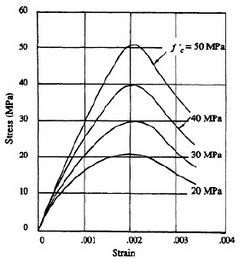 Figure 2.4: Effect of strength on the compressive stress-strain curve.
Modulus of Elasticity of Concrete
The modulus of elasticity of concrete is important, not only in estimating deflections of pre-stressed concrete members but also because some of the losses of priestess force are influenced by it. From the stress-strain curve of concrete shown in Figure 2.5. The initial slope of the tangent to the curve is defined as the initial tangent modulus, and it is also possible to construct a tangent modulus at point of the any curve. The slope of the straight line that connects the origin to a given stress at about 0.4(fc) determines the secant modules of elasticity of concrete. This value, termed in design calculation the modulus of elasticity satisfies the practice assumption that strains occurring during loading can be considered basically elastic or completely recoverable on unloading, and that any subsequent strain due to the load is regarded as creep. (Hurst, 1998).
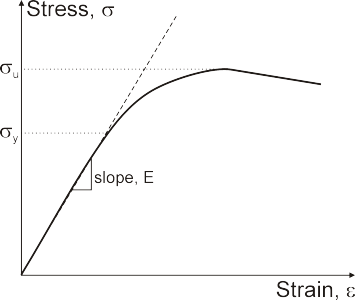
Figure 2.5: Tangent and secant modulus of concrete
Previous studies
Elastic Modulus of Concrete
The elastic modulus of concrete is dependent upon several factors, such as the Compressive strength of the concrete, age of the concrete, and the properties of the aggregate and cement in the concrete mixture. The definition of elastic modulus, whether tangential or secant modulus, also affects the determination of elastic modulus. For design and analysis in Prestressed and reinforced concrete, the initial slope of the approximately straight, or elastic, portion of the stress-strain curve is used as the modulus of elasticity of the concrete. This is known as the secant modulus .Several studies have been conducted to investigate the modulus of elasticity of high strength concrete.
The ACI Committee 363 report on high strength concrete summarizes the results of some of these studies and offers a recommendation for the prediction of modulus of elasticity for high strength concrete. The recommended prediction for modulus of elasticity is based on the work of “Carrasquillo, Nilson,” and Slate. They found that for concretes with compressive strengths greater than 41 MPa, the ACI 318-77 and AASHTO expression for modulus of elasticity, shown in (Eq. 2.2), tended to overestimate the measured values for modulus of elasticity. (Eq. 2.2) is also used in the latest editions of the AASHTO Specifications and ACI 318 Codes. They also found that the modulus of elasticity measurements were quite dependent on the type of aggregate used in the concrete. The recommended expression for modulus of elasticity for concrete with compressive strengths greater than 41 MPa is shown in (Eq. 2.3.) This equation was based on test data obtained from gravel and crushed limestone concrete specimens and on a dry unit weight of 2320 kg/m3. (Byle, 1997)
𝐸𝑐 = 4730√𝑓′𝑐 (𝑀𝑃𝑎) (2.2)
𝐸𝑐 = 3320√𝑓′𝑐 + 6900 (𝑀𝑃𝑎) (2.3) For 21 MPa≤ 𝑓𝑐 ≤ 83 MPa
Elastic modulus versus compressive strengths for HPC U-beam mix
The average elastic moduli of the beam concrete for all of the pours corresponding to instrumented beams are summarized a minimum elastic modulus of
41.4 GPa was specified in the beam design to limit deflections under superimposed dead load and live load. Data are shown for match cured specimens at release and member cured specimens at later ages, since these regimens were the most representative of the instrumented beams.
The measured elastic modulus data corresponding to the compressive strength of the cylinders cast with the high performance concrete (HPC) used for the instrumented beams are shown in (Figure 2.7) There was enough scatter in the data for cylinders cured under similar conditions to conclude that curing conditions had little or no effect on the elastic modulus versus compressive strength data.
The AASHTO Specifications equation for calculating modulus of elasticity based on compressive strength is also shown in this figure. This curve was calculated using the unit weight of the high performance concrete, which was 2481kg/m3. Based upon the data shown, the AASHTO equation clearly overestimated the elastic modulus of HPC cylinders with compressive strengths greater than 60 MPa.
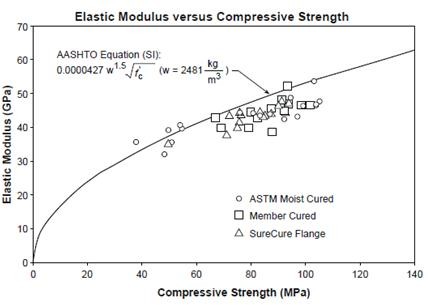
Figure 2.7: Elastic modulus versus compressive strength for HPC U-beam mix.
A better formula for calculating the elastic modulus of concrete with high compressive strengths was required for making predictions of long-term deformation behavior. Figure 2.7 shows the ACI Committee 363 recommended equation for concrete with compressive strength greater than 41.4 MPa plotted along with the measured data Carrasquillo.
Developed this formula based on tests of concrete mixes having gravel and crushed limestone aggregates and having compressive strengths between 20.7 and
82.7 MPa. Carrasquillo found that for cylinders with equivalent compressive strengths, the ones with crushed limestone aggregate had elastic moduli that were consistently higher that those with gravel aggregate. Since most of the data used to develop the ACI Committee 363 equation was based on cylinders moduli for the beams in this study, which were cast from a concrete mix having crushed Limestone aggregate with gravel aggregates; it tended to underestimate the elastic
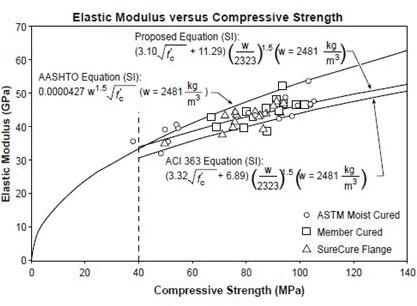
Figure2.8: Proposed equations for elastic modulus for HPC U-beams.
A more accurate equation for calculating the elastic modulus (GPa) for the high performance concrete used to cast the beams in this study was developed by adopting the form of the ACI Committee 363 equation and fitting a new curve to the measured data. The proposed equation for elastic modulus is as follows:


RESEARCH METHODOLOGY
Desing of Prestressed concrete prism
Desing of Prestressed concrete prism 100 x 100 x 1000 mm, weight 52.4 show in figure (3.2 ) .Can be carried easily , prism feature remov partitions Because does not affect the Tension after decoding the sample. it has wire strands with the length of 1.5 m, 1.5 mm nominal diameter of strand, the area steel content of 4 wires for each specimen and tested under tensional stress.
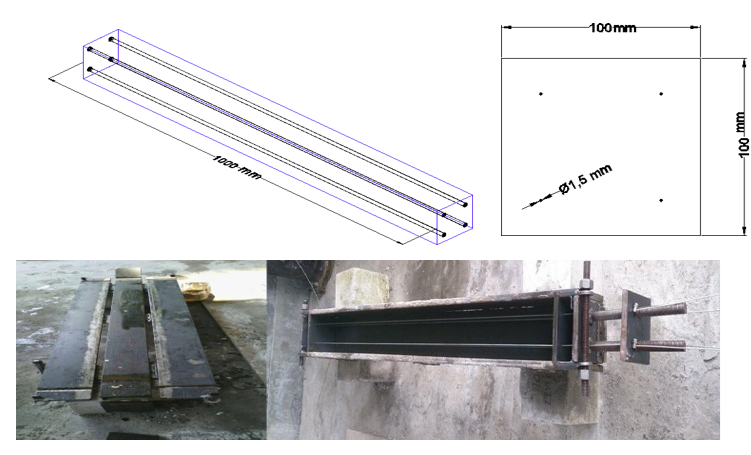
Figure 3.2Desing of prestressed concrete prism.
Casting and Curing
Prior to casting concrete and after all prestressed and non-prestressed reinforcement were installed; the other side of formwork was installed. Then, the formwork was cleaned and applied with mound oil to ease the removal of the formwork as show in the figure 3:6. the order to prevent the formwork from being deformed and damaged during casting concrete process, and also in order to avoid any movement during casting concrete, Compaction of concrete was carried out using to consolidate the concrete in order to prevent the formation of honeycomb for prism pouring numbers of’ cubes (150 x 150 x 150 mm) for numbers of prism (100 x 100 X 1000) were prepared to perform quality contro
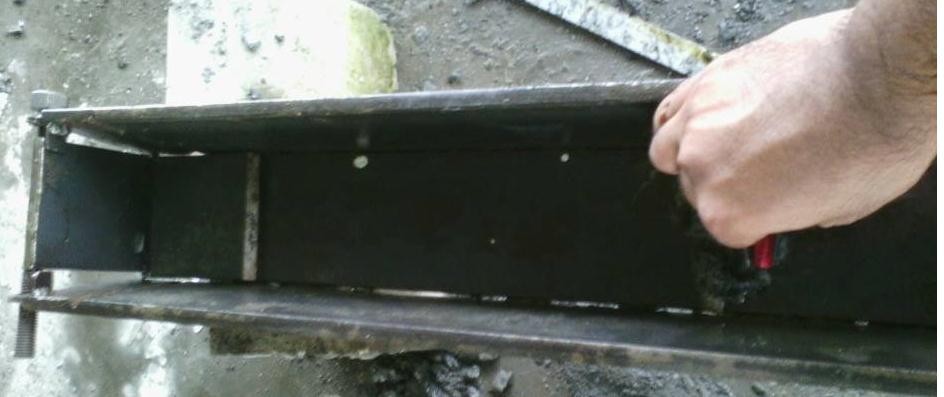 Figure 3.6: Grease was applied to the prism
Mix proportion
All the materials, which were cement, aggregate, water, fly ash and Super plasticizer were mixing in the mixing machine with the proportion designed. Before mixing, the materials were stored properly so that the stability of surface moisture content of aggregate is maintained, The specimens were cast in cubes 150×150×150 mm model one prisms cast in 100×100×1000 mm model show in figure( 3.7 ). All mixing were impacted using the vibrator table to ensure the specimen was compacted properly. For the best result, the concrete had to go for vibration so that the results become more accurate.
Formwork Removal
The formwork removed on the morning of April 8 2014 in normal practice as show in the figure 3:8, it is suggested that the detention work should be carried out at the age of 28 days. Therefore, at 7 days four cubes were tested and the mean value obtained was taken as transfer strength .fc of the prism .From results it was found that the 28 days cube strength within the designing strength for the prestressedprismthe dimensioning work was carried out individually the stress at each wire was slowly released.
Transfer of stress should take place slowly to minimize shock, which would adversely affect the transmission length. Which may cause failure in prismThe anchorage grip was slowly knocked-out from it is place by using Manual key. After all the strands were released, the remaining lengths of strands were cut off using a cutter.
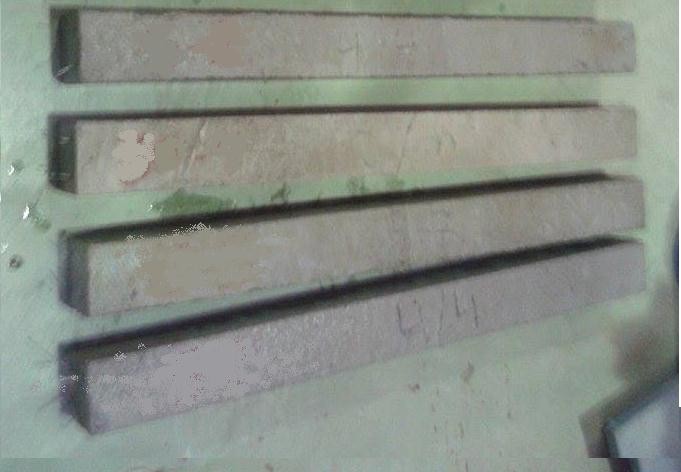
Figure 3:8Formwork Removals.
RESULT AND ANALYSIS
Experimental Results
This section provides results from the flexural test performed on the prestressed prism of the concrete composite section specimen. This section discusses experimental measurements the modulus elasticity of the equation. That resulted of the modulus elasticity. It was compared with modulus elasticity the ACI 318-equation 𝐸 = 4730√𝑓′𝑐
modulus elasticity
The values of mid-span deflection of the testing specimen were obtained directly by the LVDT transducer under the mid-span of the prestressed pretension concrete composite section specimen, throughout the loading process. After that calculated of the modulus elasticity the predicted load deflection curve was in sections. The section was calculated assuming an un-cracked elastic section.
It accounted for the modulus elasticity and using (Antoine E. Newman’s) “Prestressed Concrete Analysis and Design Fundamentals’ (1982) book. Equation
4.1 shows the equation used to determine the modulus elasticity. That result compared with the ACI 318 Equation


Discussion and comparison
Prism 1
Figure shows the load against deflection. The elastic range of the graph is chosen for the determinate modulus of elasticity. Modulus of elasticity values was 25.032GPa, 27.31GPa, 29.16GPa31, 620GPa, 32.31GPa, 32.631GPa, 32.61461GPa,
32.614GPa, 34.39GPa and 33.018GPa, respectively. Based on the formula given in (Antoine E. Newman’s).
Meanwhile, modulus of elasticity value in ACI318 obtained are within the range as predicted by E=4730√𝐹𝐶, and the value of modulus elasticity in ACI318 was 33.49GPa, at compressive strength 50.15MPa after 28 days of curing. This indicates that prestressed prism method has a good potential to be an alternative way to determine modulus elasticity.
Prism 2
Figure 4.2 shows load and deflection curve of prism with two point-loaded. The selection modulus of elasticity values in the elastic range of the curve, and computed by the deflection equation, modulus of elasticity values were 23.0612Gpa, 24.733Gpa , 28.373Gpa , 31.787Gpa , 33.296Gpa, 35.447Gpa , 34.762Gpa ,
34.709Gpa, respectively .While, modulus of elasticity estimate form ACI 318 code by the equation E=4730√𝐹𝐶. Modulus of elasticity was 33.49 GPa, when the compressive strength 50.15MPa, after 28 days of curing. The obtained E value form ACI 318 code was within the range, compared with E values from the deflection equation in the experiment. The prestressed prism method used to estimate the modulus of elasticity has good potential.
Prism 3
Deflection and load are proportion in direct relation, each time the load increases the deflection do the same. In this experiment the compressive strength was 50.15Mpa after 28 days, and the E value was 33.14GPa by using the modulus of elasticity from code ACI 318 . Meantime, the prism load and deflection as shown in figure 4.3 used to determine the E values, by deflection equation the E values were
21.077 Gpa, 25.321 Gpa, 27.624 Gpa, 32.139 Gpa, 32.552 Gpa,33.0355 Gpa, 33.634
Gpa, 35.0463 Gpa, 36.006 Gpa, 35.256 Gpa, 35.367 Gpa,35.7810 Gpa
The comparison shows that modulus of elasticity from code ACI 318 within the range of modulus of elasticity calculated by deflection equation. Ones again, this shows the prestressed prism method has good potential to estimate the modulus of elasticity value.
Prism 4
In the elastic range as shown in figure 4.4 , E values were 25.722 GPa,35.301GPa,36.502 GPa ,36.313 GPa ,34.2 40GPa,23.500 GPa ,20.630 GPa ,respectively. Through experiments conducted on the samples were obtained on the results were mentioned above by using equation (Antoine E. Newman’s). The comparison between these results and the value obtained by using the equation of ACI318 code was acceptable values. The E value of 33.14 GPa compressive strength was50.15, and it was within the limit range.
CONCLUSION AND RECOMMENDATION
Conclusions
1-The partial priestess prism specimen was successfully achieved.
2-The new method can be improved for their investigation to verify its accuracy and reliability.
3-The steel moulds fabricated for the development of prestress prism with small wires.
Recommendation
-
-
- Prestressed wire can replaced with the Glass Fiber Reinforcement Polymer GFRP. Previous studied shows the GFRP can reach to more than 1200MPa which the size is smaller than the wire strand.
- An ultra high strength binder to be experimented on the prestressed concrete prism with small wires as reinforcement.
- Develop a new model of tensile wires performance.
-
References
- Nawy.E.G. (2006) Prestressed Concrete a Fundamental Approach 5th Edition Prentice-Hall.
- Ray Saiedi, December (2007) Load-Deflection Response of a Prestressed Concrete T-Beam.
- Roylance. D August (2001) stress-strain curves.
- Shady H. Salem, Khalid M. Hilal, July (2013) Experimental Behavior of Partially Prestressed High Strength Concrete Beams.
- Sunkurwar, R. R. (2011) Flexural Strength Behaviour of High Strength Prestressed
- Lee.K.H, July (1984) Deformation of partially prestressed concrete.
 Arabic
  English