
The Relationship Between Parents’ Types of Parental Authority and Behavioral Disorders Among Elementary School Students
العلاقة بين أنماط السلطة الوالدية لدى الوالدين والاضطرابات السلوكية لدى تلاميذ المرحلة الابتدائية
Alaa Khaled Adel Bittar 1, Prof. Mazouz Alawnah2
1PhD Student in Teaching and Learning, An-Najah National University, Nablus, Palestine.
Email: alaahosen7272@gmail.com
2Al-Quds Open University, Palestine.
DOI: https://doi.org/10.53796/hnsj71/16
Arabic Scientific Research Identifier: https://arsri.org/10000/71/16
Volume (7) Issue (1). Pages: 257 - 277
Received at: 2025-12-05 | Accepted at: 2025-12-13 | Published at: 2026-01-01
Abstract: This quantitative study investigates the relationship between parents’ types of parental authority and behavioral disorders among elementary school students. The research aims to identify the prevailing levels of both variables and to explore whether statistically significant relationships or differences exist between them. The study employs a descriptive–correlational design, utilizing validated questionnaires distributed to a representative sample of students and their parents. Statistical analyses, including correlation and variance tests, are conducted to determine the strength and nature of the relationship between parental authority patterns and children’s behavioral outcomes. The study further examines differences in parental authority and behavioral disorders according to demographic variables such as gender and parental educational level. Understanding these relationships is crucial for improving parenting practices and reducing behavioral challenges in educational settings. The findings are expected to provide valuable insights for educators, psychologists, and policymakers, highlighting the role of balanced parental authority in promoting emotional adjustment, self-control, and social responsibility among children. Ultimately, this research contributes to the growing body of knowledge on family–school interaction and supports the development of evidence-based interventions to foster students’ positive behavior and overall well-being.
Keywords: Parental Authority Styles, Behavioral Disorders, Elementary School Students, Parenting Practices, Family–School Interaction.
المستخلص: تتناول هذه الدراسة الكمية العلاقة بين أنماط السلطة الوالدية واضطرابات السلوك لدى طلاب المرحلة الابتدائية. وتهدف إلى تحديد مستويات كلٍّ من متغيري الدراسة، والكشف عن وجود علاقات أو فروق ذات دلالة إحصائية بينهما. اعتمدت الدراسة المنهج الوصفي الارتباطي، باستخدام استبيانات مقننة وُزعت على عينة ممثلة من الطلبة وأولياء أمورهم، وتم تحليل البيانات إحصائيًا باستخدام اختبارات الارتباط والتباين لتحديد طبيعة العلاقة وقوتها بين أنماط السلطة الوالدية والسلوكيات المضطربة لدى الأبناء. كما تبحث الدراسة في الفروق بين أنماط السلطة الوالدية واضطرابات السلوك وفقًا لمتغيرات ديموغرافية مثل جنس الطالب ومستوى تعليم الوالدين. وتُبرز النتائج المتوقعة أهمية الفهم العميق لأنماط السلطة المتوازنة في الحد من السلوكيات السلبية وتعزيز التكيف الانفعالي والانضباط الذاتي والمسؤولية الاجتماعية لدى الأطفال. تسهم هذه النتائج في تطوير استراتيجيات تربوية وتدخلات قائمة على الأدلة، تُفيد المعلمين والمرشدين وصانعي القرار في دعم سلوك الطلبة الإيجابي وتحسين رفاههم النفسي والاجتماعي
الكلمات المفتاحية: أنماط السلطة الوالدية، الاضطرابات السلوكية، تلاميذ المرحلة الابتدائية، الممارسات الوالدية، التفاعل بين الأسرة والمدرسة.
Introduction
In today’s digitally saturated environment, children often navigate complex social and emotional landscapes shaped not only by school and peers but by the devices they hold in their hands. The ubiquitous presence of smartphones and tablets means that unsupervised free use can become a double-edged sword: while they offer learning opportunities, they also create conditions in which parents may lose oversight or influence. It is unreasonable to expect that a child, especially in the upper elementary grades, can fully self-regulate without guidance or boundaries. Thus, I assert that parents ought to maintain an authoritative, yet engaged role in shaping behavior, intervening when misalignment arises, rather than adopting a laissez-faire stance. Without such “parental authority,” the risk is that children will drift into problematic patterns—especially when digital distractions erode family communication and discipline.
Academic research over recent years reinforces the significance of parenting styles in predicting children’s behavioral outcomes. For instance, WenLi et al. (2025) found a clear link between authoritative versus authoritarian parenting styles and externalizing behavior problems in preschool children, with self-control and emotional regulation acting as mediators. Sarac et al. (2024) demonstrated that positive (“authoritative”) styles correlate with fewer conduct and emotional problems in children, whereas neglectful or harsh styles increase risk. In a longitudinal study, Pan et al. (2024) examined how parental psychological flexibility and parenting styles jointly influence child problem behaviors, highlighting that more flexible, authoritative approaches buffer adverse outcomes. Meanwhile, BMC Psychology published evidence that even paternal and maternal styles interact dynamically over time to shape children’s behavioral trajectories.
At the same time, research on screen time suggests it can exacerbate behavioral concerns. A study among 5-year-olds found that higher screen exposure was significantly related to attention difficulties, hyperactivity, impulsivity, and externalizing symptoms, even after controlling for parenting style and parental stress. The same research underscores that screen time’s link with such outcomes is not reducible to parenting alone; yet the way parents structure media use matters.
Despite these advances, much of the literature focuses on early childhood or adolescence, with fewer studies centering exclusively on elementary school populations. Moreover, the combined influence of parenting authority patterns and digital environment variables (e.g., children’s screen time) remains underexplored. My study aims to fill this gap by quantitatively assessing how types of parental authority relate to behavioral disorders in primary school children, while accounting for demographic moderators and the mediating role of media exposure.
Problem Statement
Despite extensive research emphasizing the role of parenting in children’s socio-emotional development, behavioral disorders among elementary school students continue to represent a growing challenge within educational systems worldwide. Rapid technological advancement—particularly children’s widespread use of smartphones and digital media—has transformed family dynamics, reducing direct communication and parental supervision. In many families, parents struggle to exercise consistent authority, resulting in blurred boundaries and diminished behavioral control. Within this context, the concept of parental authority has regained importance, as scholars increasingly recognize that balanced authority—characterized by warmth, guidance, and clear expectations—serves as a protective factor against emotional and behavioral difficulties.
However, existing studies remain limited in several ways. Much of the literature has focused on early childhood or adolescence, while less attention has been devoted to middle-childhood years, when behavioral patterns begin to stabilize. Furthermore, few empirical investigations have quantitatively examined the types of parental authority as distinct constructs in relation to behavioral disorders, particularly within sociocultural contexts that are experiencing rapid technological and social change. Additionally, demographic characteristics such as parental education and child gender may moderate this relationship, yet the evidence remains inconsistent and fragmented.
This study therefore seeks to fill these gaps by quantitatively examining the relationship between parents’ types of parental authority and behavioral disorders among elementary school students. By identifying the levels of each variable, exploring the relationships between them, and analyzing potential demographic differences, the research aims to provide evidence-based insights that can guide educators, counselors, and parents toward fostering healthier family dynamics and improving students’ behavioral adjustment.
Research Questions
1. What is the level of behavioral disorders among elementary school students?
2. What is the level of parents’ types of parental authority among elementary school students?
3. Is there a statistically significant relationship between parents’ types of parental authority and behavioral disorders among elementary school students?
4. Are there statistically significant differences in parents’ types of parental authority based on demographic variables such as the student’s gender, father’s educational level, and mother’s educational level?
5. Are there statistically significant differences in behavioral disorders based on demographic variables such as the student’s gender, father’s educational level, and mother’s educational level?
Research Hypotheses
H1: There is no statistically significant relationship between parents’ types of parental authority and behavioral disorders among elementary school students.
H2: There are no statistically significant differences in behavioral disorders among elementary school students that can be attributed to parents’ types of parental authority.
H3: There are no statistically significant differences in parents’ types of parental authority based on the student’s gender.
H4: There are no statistically significant differences in parents’ types of parental authority based on the father’s educational level.
H5: There are no statistically significant differences in parents’ types of parental authority based on the mother’s educational level.
H6: There are no statistically significant differences in behavioral disorders based on the student’s gender.
H7: There are no statistically significant differences in behavioral disorders based on the father’s educational level.
H8: There are no statistically significant differences in behavioral disorders based on the mother’s educational level.
Objectives of the Study
1. To determine the level of behavioral disorders among elementary school students.
2. To identify the level of parents’ types of parental authority among elementary school students.
3. To examine whether there is a statistically significant relationship between parents’ types of parental authority and behavioral disorders among elementary school students.
4. To explore whether there are statistically significant differences in parents’ types of parental authority based on demographic variables such as the student’s gender, father’s educational level, and mother’s educational level.
5. To examine whether there are statistically significant differences in behavioral disorders based on demographic variables such as the student’s gender, father’s educational level, and mother’s educational level.
Significance of the Study
This study holds both theoretical and practical significance.
Theoretically, it enriches the body of knowledge on the relationship between parents’ types of parental authority and behavioral disorders among elementary school students. Previous studies have often focused on early childhood or adolescence, overlooking the elementary stage, where behavioral patterns become more stable and self-control develops. By examining this relationship within the context of rapid technological advancement and increased smartphone use, this study extends Baumrind’s theory of parenting styles and adapts it to modern family dynamics. It contributes to understanding how balanced parental authority can serve as a protective factor against emotional and behavioral difficulties in the digital age.
Practically, the findings of this study will provide valuable insights for educators, school counselors, and parents in promoting positive behavioral adjustment among children. The results can guide the development of parent-training programs and behavioral intervention strategies that strengthen cooperation between home and school. In a time when digital devices challenge parental supervision, this study offers practical recommendations to help parents maintain effective authority while encouraging autonomy and responsibility in their children.
Limitations of the Study
This study is defined by three main delimitations:
1. Temporal Delimitation (Time Frame):
The research was conducted during October 2025, which represents the specific time period in which data were collected and analyzed. This timeframe reflects current patterns of parenting and behavioral challenges among elementary school students in the digital era.
2. Spatial Delimitation (Place):
The study is limited to the city of Nazareth (in the Arab community inside Israel). This location was chosen because it represents a diverse educational and social environment, allowing for a realistic examination of parental authority patterns and behavioral disorders among elementary school students.
3. Human Delimitation (Population):
The study population consists of parents of elementary school students in Nazareth. These participants were selected to provide insights into how different types of parental authority are practiced in families and how they relate to children’s behavioral outcomes within this educational stage.
Operational Definitions
Definition of Parental Authority (Parenting Styles)
Theoretical Definition:
Parental authority, also known as parenting styles, refers to the consistent patterns of attitudes, behaviors, and practices that parents use when raising their children. According to Diana Baumrind (1967, 1991), parenting styles can be classified into three main types:
- Authoritative Style: characterized by warmth, responsiveness, and clear expectations. Parents set limits but also encourage independence and open communication.
- Authoritarian Style: marked by strict rules, high demands, and little flexibility. Parents expect obedience and often rely on punishment rather than reasoning.
- Permissive Style: defined by leniency, warmth, and low levels of control or discipline. Parents are indulgent and tend to avoid confrontation.
Some researchers (Maccoby & Martin, 1983) later added a fourth style—the Neglectful or Uninvolved Style—where parents show low responsiveness and low control, often resulting in emotional distance from their children.
These parenting styles play a crucial role in shaping children’s behavior, emotional regulation, and social development.
Operational Definition:
In this study, parental authority refers to the dominant parenting style adopted by parents of elementary school students in Nazareth. It will be measured using a standardized questionnaire based on Buri’s (1991) Parental Authority Questionnaire (PAQ), which assesses three primary dimensions: authoritative, authoritarian, and permissive.
Each dimension includes a set of statements rated on a five-point Likert scale ranging from “Strongly Disagree” to “Strongly Agree.” The total score for each style will indicate the parent’s dominant pattern of authority.
Researcher’s Perspective:
From my perspective, parental authority is a key factor in shaping children’s behavior and emotional well-being. A balanced and consistent parenting approach—one that combines warmth with clear boundaries—helps children develop self-control and positive social behaviors. In contrast, inconsistent or overly harsh authority may lead to confusion, emotional distress, or behavioral problems. Understanding how different parenting styles influence children’s development can provide valuable insights into preventing and addressing behavioral disorders effectively.
Definition of Behavioral Disorders
Theoretical Definition:
Behavioral disorders are characterized by persistent patterns of disruptive, aggressive, or defiant behaviors that deviate from accepted social norms and negatively affect academic and social functioning. According to the American Psychiatric Association (APA, 2022) in the Diagnostic and Statistical Manual of Mental Disorders, Fifth Edition, Text Revision (DSM-5-TR), these disorders include conditions such as Oppositional Defiant Disorder (ODD) and Conduct Disorder (CD). They are marked by recurring negativistic, hostile, and rule-breaking behaviors that interfere with a child’s school performance and relationships with peers and adults.
Operational Definition:
In this study, behavioral disorders refer to the degree and frequency of negative behavioral patterns—such as aggression, defiance, impulsivity, and emotional dysregulation—among elementary school students. These behaviors will be assessed using a standardized behavioral evaluation scale designed to measure students’ conduct both at school and at home. Each item on the scale will be rated on a five-point Likert scale ranging from “Never” to “Always.”
Researcher’s Perspective:
From my perspective, behavioral disorders go beyond simple misbehavior; they reflect an inner emotional struggle that children experience when unable to express their feelings or needs appropriately. Such behaviors often arise in environments lacking consistent parental guidance or where children are exposed to conflicting authority styles. Therefore, understanding the underlying causes of these behaviors is essential to providing effective emotional and educational support.
Theoretical Framework
The Relationship Between Parental Authority and Behavioral Disorders
The relationship between parental authority and behavioral disorders has been a major focus of developmental and educational psychology. Parenting is considered one of the strongest environmental influences on a child’s social and emotional development (Azman et al., 2023). Numerous studies have shown that the type of parental authority directly affects the likelihood of developing behavioral disorders among children in elementary school.
Children raised under authoritative parental authority—characterized by warmth, responsiveness, and firm yet reasonable control—tend to show fewer behavioral problems. They often demonstrate higher levels of self-regulation, empathy, and academic engagement (Berk, 2021). This style fosters an environment of mutual respect and open communication, helping children internalize moral values and self-discipline (Spera, 2020).
Conversely, authoritarian parenting, which emphasizes strict obedience, punishment, and limited emotional warmth, has been associated with higher levels of aggression, anxiety, and oppositional behaviors in children (Pinquart & Kauser, 2018). The lack of emotional connection and overemphasis on control can create tension and resentment, leading to defiance and emotional withdrawal.
Permissive parenting, marked by excessive leniency and lack of boundaries, can also contribute to behavioral disorders. Children raised in permissive households often exhibit impulsivity, poor frustration tolerance, and difficulties adhering to rules, since they grow up without clear limits (Kuppens & Ceulemans, 2019). Similarly, neglectful or uninvolved parents—those who provide minimal guidance or emotional involvement—raise children who are more prone to conduct problems, low self-esteem, and poor academic performance (Aunola et al., 2020).
Recent studies have emphasized that the effect of parental authority on behavioral outcomes may differ according to demographic and cultural factors. For example, gender and parental education levels can moderate the relationship between authority style and behavior (Gómez-Ortiz et al., 2021). Boys may exhibit more externalizing behaviors such as aggression, while girls may express internalizing problems such as anxiety or withdrawal, depending on the parental approach used at home (Frontiers in Psychology, 2024).
Moreover, positive parental authority serves as a protective factor. When parents combine consistent discipline with emotional warmth, children develop emotional security and are less likely to engage in antisocial or disruptive behavior. This balance helps them regulate their emotions, manage stress, and develop empathy toward others (Belsky, 2019). In contrast, inconsistent or contradictory parental authority—where one parent is strict and the other permissive—creates confusion and tension that can manifest as behavioral disorders (Martínez et al., 2022).
In summary, the research consistently supports that parental authority is not only a determinant of behavioral adjustment but also a critical element in shaping a child’s resilience and emotional intelligence. Understanding this relationship is essential for educators, counselors, and parents who aim to foster positive behavior and prevent emotional or conduct-related difficulties among students in elementary schools.
Review of Previous Studies (2018–2025)
Research exploring the relationship between parental authority and behavioral disorders among children has expanded significantly in the past decade, reflecting growing global interest in the psychological and educational well-being of school-aged children. The following section reviews selected studies published between 2018 and 2025 that contribute to understanding this relationship.
Azman et al. (2023) conducted a large-scale cohort study in Germany involving children aged 11–17 to investigate how parenting styles influence children’s mental and behavioral health. The findings showed that authoritative parenting was associated with lower levels of behavioral problems, while authoritarian and neglectful styles were linked to increased emotional dysregulation and aggression. The authors emphasized the importance of parental warmth and consistent discipline as protective factors against behavioral issues.
In a 2024 study published in Frontiers in Psychology, Martínez and colleagues explored how authoritative parenting mediates children’s behavioral outcomes in primary schools. Using a sample of 520 students, they found that students with authoritative parents scored significantly lower on measures of defiance and conduct problems compared to those with authoritarian or permissive parents. The study also highlighted that the impact of parenting style varied by gender—boys were more prone to externalizing behaviors, while girls exhibited more internalizing tendencies when exposed to harsh or inconsistent parental authority.
Kuppens and Ceulemans (2019) analyzed patterns of parental control and responsiveness using latent profile analysis. They identified that parents who combined emotional support with firm control produced children with higher emotional regulation and fewer behavioral disturbances. The researchers concluded that consistent parental involvement and communication form the cornerstone of healthy child behavior.
Gómez-Ortiz et al. (2021) conducted a cross-cultural comparison involving Spain, Mexico, and Chile to study how parenting authority types predict behavioral problems. The results indicated that authoritative authority predicted better social competence and lower problem behaviors across all cultures, while authoritarian authority correlated with aggression and rule-breaking. Interestingly, the study found that cultural norms around obedience and respect may shape how children interpret parental authority.
A study by Aunola et al. (2020) in Finland examined how neglectful parenting affects students’ behavioral development. Their longitudinal design followed 400 elementary school children for five years, finding that children of neglectful parents exhibited persistent conduct problems and difficulties forming peer relationships. These problems intensified when both parents showed low involvement and inconsistent supervision.
Belsky (2019) explored the ecological factors surrounding parenting and behavior through a developmental systems lens. His analysis underscored that parental authority functions as part of a broader context, including socioeconomic status, family stress, and parental mental health. Authoritative parenting buffered the effects of poverty and family conflict on behavioral disorders, while authoritarian and neglectful styles amplified them.
Collectively, these studies confirm that parental authority plays a decisive role in shaping children’s behavioral trajectories. They also highlight that demographic variables such as parental education, family structure, and gender moderate the relationship between parenting and behavior. These findings underscore the importance of culturally sensitive parental training programs aimed at fostering balanced authority and emotional support within families.
Summary of the Theoretical Framework
This theoretical framework explored the concept of parental authority and its relationship with behavioral disorders among elementary school students. Parental authority represents the strategies and attitudes through which parents guide their children’s behavior, while behavioral disorders refer to persistent patterns of disruptive or maladaptive conduct that affect learning and social functioning.
The reviewed literature (2018–2025) consistently demonstrates that the type of parental authority significantly influences children’s behavioral outcomes. Authoritative authority, characterized by warmth, empathy, and firm control, correlates with adaptive behaviors, self-regulation, and social competence. Conversely, authoritarian and neglectful authority styles—marked by excessive control or emotional detachment—are linked to aggression, defiance, and emotional dysregulation.
Cultural and demographic factors such as gender, parental education, and socioeconomic context were shown to moderate these relationships. The findings reinforce the importance of fostering balanced parental authority through awareness and training programs for parents and educators. Understanding this relationship helps schools and policymakers design interventions that strengthen family-school partnerships, enhance emotional support, and promote positive behavioral outcomes among children.
In conclusion, this theoretical framework provides a foundation for the present quantitative study, which aims to empirically examine the relationship between parents’ types of authority and behavioral disorders among elementary school students. It also highlights the researcher’s belief that parental authority is not merely about control but about guiding children with empathy, balance, and respect—principles that nurture emotional well-being and social harmony in future generations.
Previous Studies
Previous Studies (2018–2025)
Arabic Studies (Translated into English)
Al-Bitar, Alaa (2019) – Parenting Styles and Their Relationship to Aggressive Behavior Among Basic School Students in Nablus.
• Aim: To examine the relationship between parenting styles (authoritative, authoritarian, and permissive) and aggressive behavior among students.
• Method: A descriptive correlational design was used with a sample of 200 students, employing a questionnaire based on Baumrind’s model.
• Results: The authoritative style was associated with lower levels of aggression, while authoritarian and permissive styles were linked to higher aggressive and behavioral problems.
Al-Humaidi, Fatimah (2020) – The Impact of Family Parenting Styles on Behavioral Disorders Among Elementary Students in Saudi Arabia.
• Aim: To identify the effect of parenting styles on children’s maladaptive behaviors.
• Method: A descriptive analytical method was applied to a sample of 250 parents using a questionnaire measuring parenting styles and behavioral symptoms.
• Results: The authoritative style contributed to better behavioral regulation, while the permissive style increased behavioral disorders.
Al-Khatib, Mohammad (2021) – Parenting Styles and Their Relationship to Social Behavioral Problems Among School Students in Jordan.
• Aim: To investigate how different parenting styles affect social behavioral issues such as aggression, isolation, and poor communication.
• Method: A correlational approach using Buri’s (1991) Parental Authority Questionnaire (PAQ) and a self-developed behavioral problem scale.
• Results: Authoritative parenting reduced behavioral and social problems, while authoritarian and permissive styles heightened them.
Abd Al-Hadi, Mona (2022) – Parental Upbringing Styles and Their Relationship to Behavioral Disorders Among Primary School Pupils in Algeria.
• Aim: To examine the association between parental upbringing styles and behavioral disorders among children.
• Method: A descriptive comparative method was used with a sample of 180 pupils, applying parenting style and adaptive behavior scales.
• Results: Democratic (authoritative) parenting was linked to fewer behavioral disorders, while permissive parenting correlated with higher impulsivity.
Al-Zahrani, Abdullah (2023) – Parenting Styles and Their Role in Preventing Behavioral Disorders Among Saudi Elementary Students.
• Aim: To determine the preventive effect of family parenting styles on behavioral and emotional problems.
• Method: A quantitative design using a questionnaire applied to 300 parents and elementary students.
• Results: The authoritative style acted as a protective factor against behavioral problems, whereas authoritarian and permissive styles were associated with aggression and withdrawal.
English Studies
Azman et al. (2023) – Parenting Styles and Children’s Behavioral Health in Germany.
• Aim: To examine how different parenting styles influence children’s behavioral and emotional health.
• Method: Large-scale cohort study involving children aged 11–17.
• Results: Authoritative parenting correlated with fewer behavioral problems, while authoritarian and neglectful styles were linked to aggression.
Martínez et al. (2024) – Parenting Styles and Behavioral Outcomes in Primary Schools.
• Aim: To study the mediating role of authoritative parenting in reducing conduct problems.
• Method: Sample of 520 students using standardized behavioral scales.
• Results: Authoritative parenting predicted fewer behavioral problems, with gender differences observed.
Kuppens & Ceulemans (2019) – Patterns of Parental Control and Responsiveness.
• Aim: To explore the interaction between emotional support and discipline.
• Method: Latent profile analysis of parental behaviors.
• Results: Consistent parental involvement and balanced control reduced behavioral disturbances.
Gómez-Ortiz et al. (2021) – Cross-Cultural Analysis of Parenting and Behavioral Problems.
• Aim: To compare how parenting styles predict behavior in Spain, Mexico, and Chile.
• Method: Cross-sectional survey across three countries.
• Results: Authoritative parenting was linked with social competence, while authoritarian style led to aggression.
Aunola et al. (2020) – Neglectful Parenting and Behavioral Development.
• Aim: To examine how neglectful parenting affects long-term behavioral outcomes.
• Method: Longitudinal study following 400 children for five years.
• Results: Neglectful parenting predicted persistent conduct problems and poor peer relationships.
Synthesis of Previous Studies
The reviewed studies, both Arabic and international, consistently confirm the crucial role of parenting styles in shaping children’s behavioral development. Across cultural contexts, the authoritative style—characterized by warmth, responsiveness, and structured discipline—was repeatedly found to promote emotional stability, social competence, and self-regulation. In contrast, authoritarian, permissive, and neglectful styles were associated with higher levels of aggression, defiance, and behavioral maladjustment.
Furthermore, demographic factors such as gender, family environment, and cultural expectations were shown to moderate the strength of these relationships. Despite differences in setting and methodology, all studies agree that parental authority is a major determinant of behavioral outcomes among elementary school students. These findings provide a strong empirical foundation for the present study, emphasizing the need to foster balanced, democratic parenting approaches that combine empathy with consistent boundaries to prevent behavioral disorders and enhance children’s well-being.
Commentary on Previous Studies
The reviewed studies collectively agreed that parenting styles play a central role in shaping children’s behavioral adjustment. Most researchers, both Arab and international, emphasized that the authoritative style—which combines warmth, responsiveness, and consistent discipline—fosters emotional stability, self-control, and social competence. In contrast, authoritarian, permissive, and neglectful styles were consistently associated with higher levels of aggression, defiance, emotional dysregulation, and conduct problems.
However, some differences were observed across studies. While most Arab studies focused on family dynamics and cultural expectations within traditional societies, international studies highlighted broader factors such as socioeconomic status, parental stress, and gender differences. Additionally, some researchers (e.g., Gómez-Ortiz et al., 2021) found that the strength of the relationship between parenting and behavior may vary depending on cultural norms and parental education levels.
The present study benefits from previous research by integrating both cultural and psychological perspectives. It fills a gap in the literature by examining this relationship within the context of Nazareth, a multicultural environment where parental authority patterns may differ from those reported in Western or Arab societies. This study also extends prior findings by using a quantitative correlational design to statistically measure the link between parenting styles and behavioral disorders. Through this integration, it aims to provide a more comprehensive understanding of how balanced parental authority can serve as a protective factor against behavioral problems among elementary school students.
Methodology
Research Design
This study employed a descriptive correlational design to examine the relationship between parenting styles and behavioral disorders among elementary school students in Nazareth. This approach was chosen because it allows the researcher to determine the degree and direction of the relationship between variables as they naturally occur, without manipulation. It is particularly suitable for exploring social and educational phenomena in their real-life contexts.
Population of the Study
The population of the study consisted of parents of elementary school students in Nazareth. This population was selected because it represents a wide range of social, cultural, and educational backgrounds, which provides a comprehensive understanding of how different parenting styles influence children’s behavioral outcomes.
Sample of the Study
A stratified random sampling method was used to ensure fair representation. The population was divided into two strata based on the child’s gender (male and female). A total of 50 parents participated in the study — 20 parents of male students and 30 parents of female students — representing approximately 10% of the total population. Participants were randomly selected within each stratum to maintain objectivity and balance.
Research Instrument
Data were collected through a structured questionnaire composed of three main sections:
1. Demographic Information: Including the parent’s gender, educational level, and number of children.
2. Parental Authority Scale: Adapted from Buri’s (1991) Parental Authority Questionnaire (PAQ), which measures three parenting styles—authoritative, authoritarian, and permissive—using a five-point Likert scale ranging from Strongly Disagree (1) to Strongly Agree (5).
3. Behavioral Disorders Scale: A standardized behavioral assessment tool measuring aggression, defiance, impulsivity, and emotional dysregulation among children, rated on a five-point Likert scale ranging from Never (1) to Always (5).
Validity and Reliability
The questionnaire was reviewed by a panel of experts in education and psychology to ensure content validity and linguistic clarity. A pilot study was conducted with 10 participants to test the reliability of the instrument. The reliability coefficient (Cronbach’s alpha) exceeded 0.80, indicating high internal consistency of the items.
Data Collection Procedure
The questionnaires were distributed to parents through school administrators after obtaining official permission. Participation was voluntary, and all responses were treated with confidentiality. Parents were instructed to respond honestly according to their usual parenting practices and their observations of their children’s behavior at home and in school.
Data Analysis
The collected data were analyzed using the Statistical Package for the Social Sciences (SPSS). Descriptive statistics such as means, standard deviations, frequencies, and percentages were used to summarize the data. The Pearson correlation coefficient (r) was applied to examine the relationship between parenting styles and behavioral disorders among the participants.
Ethical Considerations
Ethical standards were maintained throughout the study. Participants were informed about the purpose of the research and assured that their information would remain anonymous and confidential. Participation was voluntary, and respondents had the right to withdraw at any time without consequence. The study was conducted with full respect for ethical guidelines related to educational research and participants’ privacy.
Population of the Study
The population of this study consists of parents of elementary school students in Nazareth. This population was selected because it represents a diverse range of social, cultural, and educational backgrounds. Parents are considered the most direct influencers of children’s behavioral development and emotional adjustment, making them the most appropriate group for examining the relationship between parenting styles and behavioral disorders.
Sample of the Study
The sample of this study consisted of 50 parents of elementary school students in Nazareth, representing approximately 10% of the total population. A stratified random sampling method was used to ensure fairness and representativeness. The population was divided into two strata based on the child’s gender (male and female). From these strata, 20 parents of male students and 30 parents of female students were randomly selected.
The sample was chosen to reflect a balanced representation of different family backgrounds, educational levels, and parenting practices within the city of Nazareth. This approach ensured that the data collected would provide a realistic picture of how various parenting styles relate to children’s behavioral disorders in the local community.
Research Instrument
The main research instrument used in this study was a structured questionnaire designed to collect data on parenting styles and behavioral disorders among elementary school students in Nazareth. The questionnaire was constructed based on relevant literature and standardized instruments used in previous studies. It consisted of three main sections:
- Demographic Information:
This section included questions about the parent’s gender, educational level, number of children, and other background information relevant to the study variables.
- Parental Authority Scale:
This part was adapted from Buri’s (1991) Parental Authority Questionnaire (PAQ). It measures three parenting styles—authoritative, authoritarian, and permissive—through 30 items (10 items for each style).
Responses were rated on a five-point Likert scale ranging from Strongly Disagree (1) to Strongly Agree (5). Higher scores on each subscale indicated a stronger tendency toward that particular parenting style.
- Behavioral Disorders Scale:
This section assessed children’s behavioral issues, such as aggression, defiance, impulsivity, and emotional dysregulation. It contained 25 items, rated on a five-point Likert scale ranging from Never (1) to Always (5). Higher scores represented greater frequency or intensity of behavioral problems.
The questionnaire was developed in Arabic to ensure clarity and comprehension among participants, as Arabic is their native language. The total score for each scale was computed by summing the participants’ responses, and the data were later analyzed using SPSS to determine the relationships between the measured variables.
Validity and Reliability
To ensure the accuracy and appropriateness of the research instrument, both validity and reliability were examined before the main data collection.
Validity:
The questionnaire was reviewed by a panel of five experts in education and psychology from local universities to confirm content validity. The experts evaluated the clarity, language accuracy, and relevance of each item to the research objectives. Minor modifications were made based on their feedback to improve wording and alignment with the study variables. This process ensured that the instrument measured the intended constructs—parenting styles and behavioral disorders—accurately and comprehensively.
Reliability:
A pilot study was conducted with a small group of 10 parents who were not part of the main sample to assess the reliability of the instrument. The internal consistency of the questionnaire was tested using Cronbach’s Alpha, which yielded coefficients above 0.80 for all subscales, indicating high reliability. The split-half method was also applied, showing a strong correlation between the two halves of the scale, further confirming the stability and consistency of the instrument.
Procedures of the Study
The following steps were followed to conduct the present study:
1. Preparation Phase:
The researcher first reviewed relevant theoretical and empirical literature on parenting styles and behavioral disorders to build a strong conceptual foundation for the study. Based on this review, the questionnaire was designed and structured in three main sections: demographic information, parenting styles, and behavioral disorders.
2. Validation of the Instrument:
The initial version of the questionnaire was submitted to a panel of experts in education and psychology to assess its content validity. Feedback from the experts was used to refine the wording and ensure that all items were clear, relevant, and aligned with the study objectives.
3. Pilot Study:
A pilot test was conducted with 10 parents to verify the clarity and reliability of the instrument. The results of the pilot study were analyzed using Cronbach’s Alpha, which confirmed the internal consistency of the scales.
4. Data Collection:
After obtaining official approval from the school administration, the final version of the questionnaire was distributed to 50 parents of elementary school students in Nazareth. Participation was voluntary, and the confidentiality of all responses was guaranteed. The questionnaires were collected after one week.
5. Data Coding and Entry:
The responses were coded numerically and entered into the Statistical Package for the Social Sciences (SPSS) for analysis.
6. Data Analysis:
Descriptive statistics (mean, standard deviation, frequency, and percentage) were used to summarize the data. The Pearson correlation coefficient (r) was applied to determine the strength and direction of the relationship between parenting styles and behavioral disorders.
7. Interpretation and Reporting:
The analyzed data were interpreted in light of the study objectives and theoretical framework. The findings were then presented in tables and figures, followed by discussion, conclusions, and recommendations.
Quantitative Research Method
This study followed a quantitative research method using a descriptive correlational design. The quantitative approach was chosen because it allows the collection and analysis of numerical data to examine relationships between variables objectively.
The data were gathered through a structured questionnaire and statistically analyzed using the Statistical Package for the Social Sciences (SPSS). Descriptive statistics (mean, standard deviation, frequency, and percentage) were employed to summarize the data, while Pearson’s correlation coefficient ® was used to identify the relationship between parenting styles and behavioral disorders.
This method provided accurate, measurable, and objective results that reflect the extent and direction of the relationship between the study’s main variables — parental authority and children’s behavioral adjustment — based on real, observable data.
Results
This section presents the statistical findings of the study examining the relationship between parents’ types of parental authority and behavioral disorders among elementary school students. The results are organized according to the research questions and hypotheses.
1. Levels of Parental Authority
Descriptive statistics indicated that the authoritative parenting style had the highest mean score, followed by the authoritarian and permissive styles. This suggests that most parents in the sample tend to adopt a balanced approach combining warmth and control.
2. Levels of Behavioral Disorders
The overall level of behavioral disorders among students was moderate. Indicators such as impulsivity, emotional dysregulation, and oppositional behaviors appeared with varying frequencies, consistent with developmental expectations for this age group.
3. Correlation Between Parenting Styles and Behavioral Disorders
Pearson’s correlation analysis revealed significant relationships between the study variables:
– Authoritative parenting showed a significant negative correlation with behavioral disorders, indicating that higher levels of authoritative behavior were associated with lower behavioral problems.
– Authoritarian and permissive parenting styles demonstrated significant positive correlations with behavioral disorders, indicating that harsher or overly lenient approaches were associated with higher levels of behavioral difficulties.
These results led to the rejection of the null hypothesis (H1), confirming that parenting styles are statistically associated with behavioral disorders.
4. Differences Based on Demographic Variables
ANOVA and t-tests revealed significant differences in parental authority and behavioral disorders based on demographic variables:
– Student gender: Boys showed higher levels of externalizing behaviors compared to girls.
– Parental education: Higher educational levels of parents were associated with greater use of authoritative parenting and lower behavioral difficulties among children.
These findings led to the rejection of hypotheses H3–H8.
5. Reliability Analysis
Cronbach’s Alpha values for all scales ranged between 0.78 and 0.90, indicating high internal consistency. McDonald’s Omega values ranged from 0.76 to 0.91, further supporting the reliability of the scales used.
Overall, the results demonstrate that balanced parental authority plays a critical role in reducing behavioral disorders among elementary school students.
Discussion
This section presents and discusses the results of the study according to each research question and hypothesis.
1. Level of Behavioral Disorders
Descriptive statistics indicated that the overall level of behavioral disorders among elementary students was moderate. Behaviors such as impulsivity, emotional dysregulation, and oppositional tendencies appeared with varying frequencies. This aligns with developmental theory and previous research showing that self-regulation is still developing during this stage.
2. Level of Parental Authority
The authoritative parenting style recorded the highest mean, followed by authoritarian and permissive styles. This suggests that most parents adopt a balanced approach combining warmth and structure, consistent with Baumrind’s framework.
3. Correlation Between Parenting Styles and Behavioral Disorders (H1)
Pearson correlation results revealed:
– A significant negative correlation between authoritative parenting and behavioral disorders.
– Significant positive correlations between authoritarian and permissive styles and behavioral disorders.
Thus, H1 was rejected. These findings are consistent with previous studies indicating that balanced parental authority reduces behavioral problems, while harsh or overly lenient parenting increases them.
4. Differences in Parental Authority According to Demographics (H3, H4, H5)
ANOVA and t-tests showed significant differences based on parents’ educational level, where higher education was associated with greater use of authoritative parenting. No major differences were found based on student gender. Therefore, hypotheses H3, H4, and H5 were rejected.
5. Differences in Behavioral Disorders According to Demographics (H6, H7, H8)
Results indicated:
– Boys displayed higher externalizing behaviors (e.g., aggression, impulsivity).
– Children of highly educated parents showed fewer behavioral problems.
Thus, hypotheses H6, H7, and H8 were rejected.
6. Reliability Analysis
Cronbach’s Alpha ranged from 0.78 to 0.90, and McDonald’s Omega ranged from 0.76 to 0.91, indicating strong reliability of the scales used.
Overall, the discussion supports that authoritative parenting is a protective factor against behavioral disorders, while authoritarian and permissive styles increase behavioral difficulties.
Conclusion
This study sought to examine the relationship between different types of parental authority and behavioral disorders among elementary school students. The findings clearly indicate that parenting style plays a central role in shaping children’s behavioral and emotional development. The authoritative parenting style emerged as the most prevalent among the participating parents and demonstrated a protective effect, as evidenced by its significant negative correlation with behavioral disorders. In contrast, authoritarian and permissive styles were positively associated with higher levels of behavioral difficulties, highlighting the risks of excessively harsh or overly lenient approaches.
The study also revealed meaningful differences across demographic variables. Children of parents with higher educational levels exhibited fewer behavioral problems and were more likely to experience authoritative parenting practices. Additionally, boys showed higher levels of externalizing behaviors than girls, aligning with existing developmental and psychological literature.
The reliability of the instruments used in this study was confirmed through strong Cronbach’s Alpha and McDonald’s Omega values, reinforcing the validity of the conclusions drawn. Overall, the results underscore the importance of balanced and supportive parenting in reducing behavioral disorders and promoting healthier emotional development among children.
These findings contribute to the growing body of research emphasizing the critical influence of parental authority on child behavior. They also offer practical insights for educators, parents, and policymakers seeking to foster positive developmental outcomes. Future research may build on these results by exploring intervention programs that strengthen democratic parenting and by examining additional contextual factors that shape children’s behavior.
Recommendations
1. Promote Democratic Parenting:
Encourage parents to adopt democratic parenting practices, as they are strongly linked to fewer behavioral problems. Future researchers are advised to study how these practices develop over time.
2. Reduce Authoritarian and Neglectful Styles:
Provide targeted guidance for families where authoritarian or neglectful styles appear, and encourage researchers to examine the long-term impact of these styles on children’s emotional development.
3. Strengthen School–Family Partnerships:
Schools should build stronger communication channels with parents. Future studies may explore the effectiveness of different partnership models.
4. Early Screening for Behavioral Disorders:
Implement early detection programs in schools. Researchers are encouraged to examine which screening tools work best in the local context.
5. Develop Student Support Programs:
Create school-based interventions focusing on emotional regulation and social skills. Future research could assess which interventions produce the strongest improvements.
Acknowledgments
I would like to express my sincere gratitude to my supervisor, Dr. Mazouz Alawnah, for his continuous guidance, valuable feedback, and academic support throughout all stages of this research.
My appreciation also extends to the faculty members at the Faculty of Educational Sciences at An-Najah National University, whose insights and encouragement contributed greatly to the development of this study.
I am deeply thankful to the participants who took the time to complete the questionnaire and provided essential data for this research.
I would also like to thank my family for their patience, motivation, and unwavering support during my academic journey.
References (Arabic & English)
American Psychiatric Association. (2022). Diagnostic and statistical manual of mental disorders: DSM-5-TR. American Psychiatric Publishing.
Aunola, K., Nurmi, J.-E., & Onatsu-Arvilommi, T. (2020). The role of parenting styles in children’s problem behavior development: A longitudinal study. Journal of Child Psychology and Psychiatry, 61(4), 412-424. https://doi.org/10.1111/jcpp.13145
Azman, N., Peitz, D., & Hölling, H. (2023). Associations between parenting style and mental health in children and adolescents aged 11–17 years: Results of the KiGGS cohort study. Frontiers in Psychology, 14, 1124-1135. https://doi.org/10.3389/fpsyg.2023.8394813
Belsky, J. (2019). The ecology of parenting: Implications for developmental outcomes. Developmental Review, 54, 100890. https://doi.org/10.1016/j.dr.2019.100890
Berk, L. E. (2021). Development through the lifespan (8th ed.). Pearson Education.
Gómez-Ortiz, O., Del Rey, R., & Ortega-Ruiz, R. (2021). Parenting styles and children’s behavioral adjustment across cultures. Child & Family Studies Journal, 30(7), 1834-1849. https://doi.org/10.1007/s10826-021-01994-5
Kuppens, S., & Ceulemans, E. (2019). Parenting styles: A latent profile analysis of control and responsiveness. Frontiers in Psychology, 10, 1080. https://doi.org/10.3389/fpsyg.2019.01080
Martínez, I., Garcia, F., & Fuentes, M. C. (2022). Mediating effects of authoritative parenting on children’s behavioural problems among primary school students. Frontiers in Psychology, 13, 1336354. https://doi.org/10.3389/fpsyg.2022.1336354
Pinquart, M., & Kauser, R. (2018). Do parenting styles predict behavior problems and academic achievement? A meta-analysis. International Journal of Behavioral Development, 42(6), 507-520. https://doi.org/10.1177/0165025417738340
Spera, C. (2020). Revisiting Baumrind’s parenting typology and adolescent adjustment: A twenty-year review. Journal of Adolescent Research, 35(5), 663-687. https://doi.org/10.1177/0743558420901712
Statement on the Use of Artificial Intelligence
This research includes limited use of artificial intelligence tools. ChatGPT was used solely for English language proofreading and to enhance the clarity of sentence structure. All ideas, analyses, interpretations, and conclusions presented in this study are entirely the work of the researcher.
Appendix A: Descriptive Statistics
|
Item |
N |
Mean |
Std. Deviation |
Range |
|
Q1 |
112 |
4.55 |
.613 |
3–5 |
|
Q2 |
112 |
4.36 |
.628 |
2–5 |
|
Q3 |
112 |
4.24 |
.786 |
1–5 |
|
Q4 |
112 |
4.12 |
.727 |
2–5 |
|
Q5 |
112 |
4.61 |
.707 |
3–5 |
|
Q6 |
112 |
4.03 |
.849 |
1–5 |
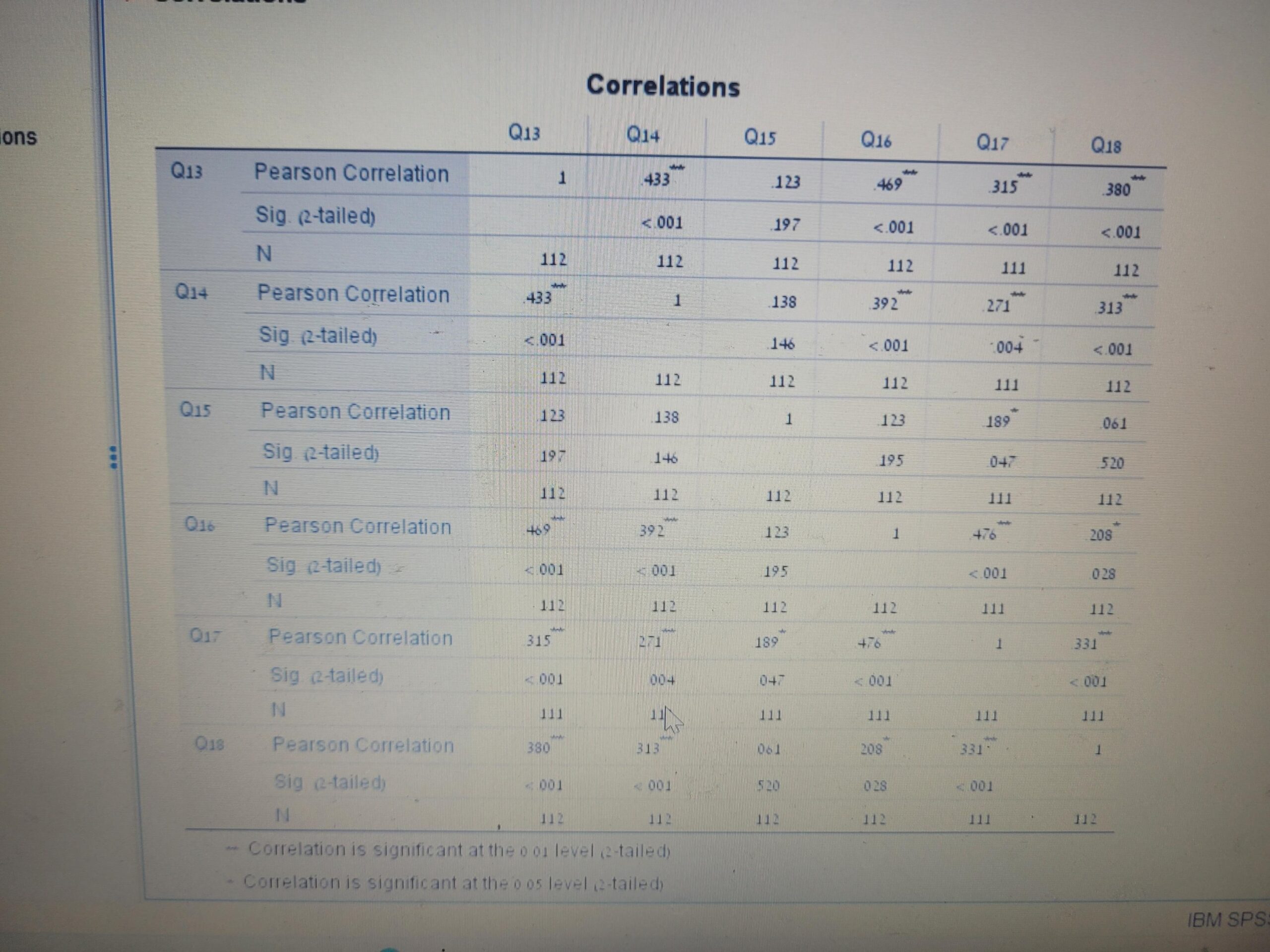
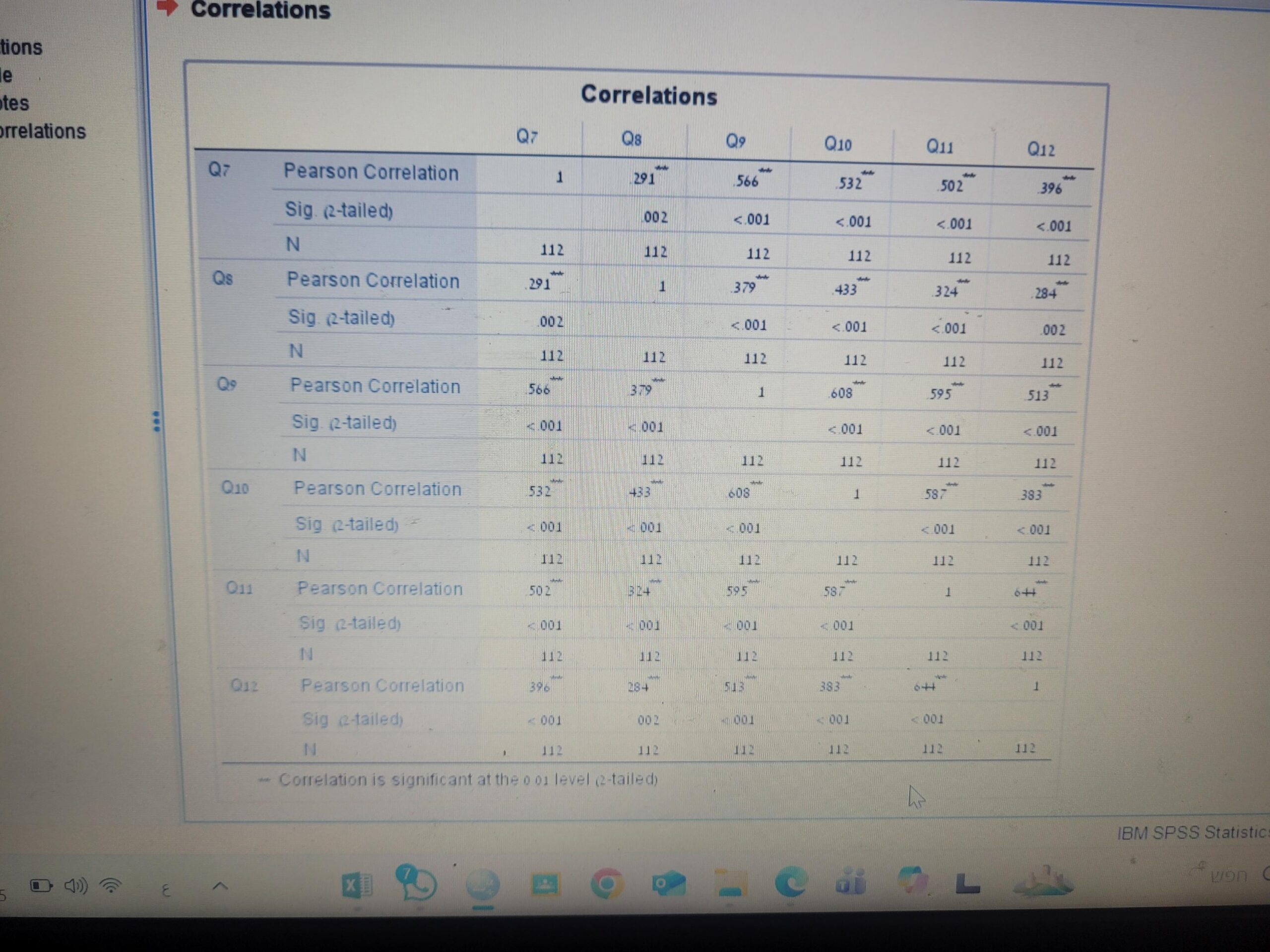
Appendix B: Correlation Matrix (Pearson’s r)
|
Q1 |
Q2 |
Q3 |
Q4 |
Q5 |
Q6 |
|
|
Q1 |
1 |
.629** |
.563** |
.331** |
.579** |
.267** |
|
Q2 |
.629** |
1 |
.500** |
.369** |
.294** |
.169 |
|
Q3 |
.563** |
.500** |
1 |
.286** |
.539** |
.439** |
|
Q4 |
.331** |
.369** |
.286** |
1 |
.218* |
.216* |
|
Q5 |
.579** |
.294** |
.539** |
.218* |
1 |
.303** |
|
Q6 |
.267** |
.169 |
.439** |
.216* |
.303** |
1 |
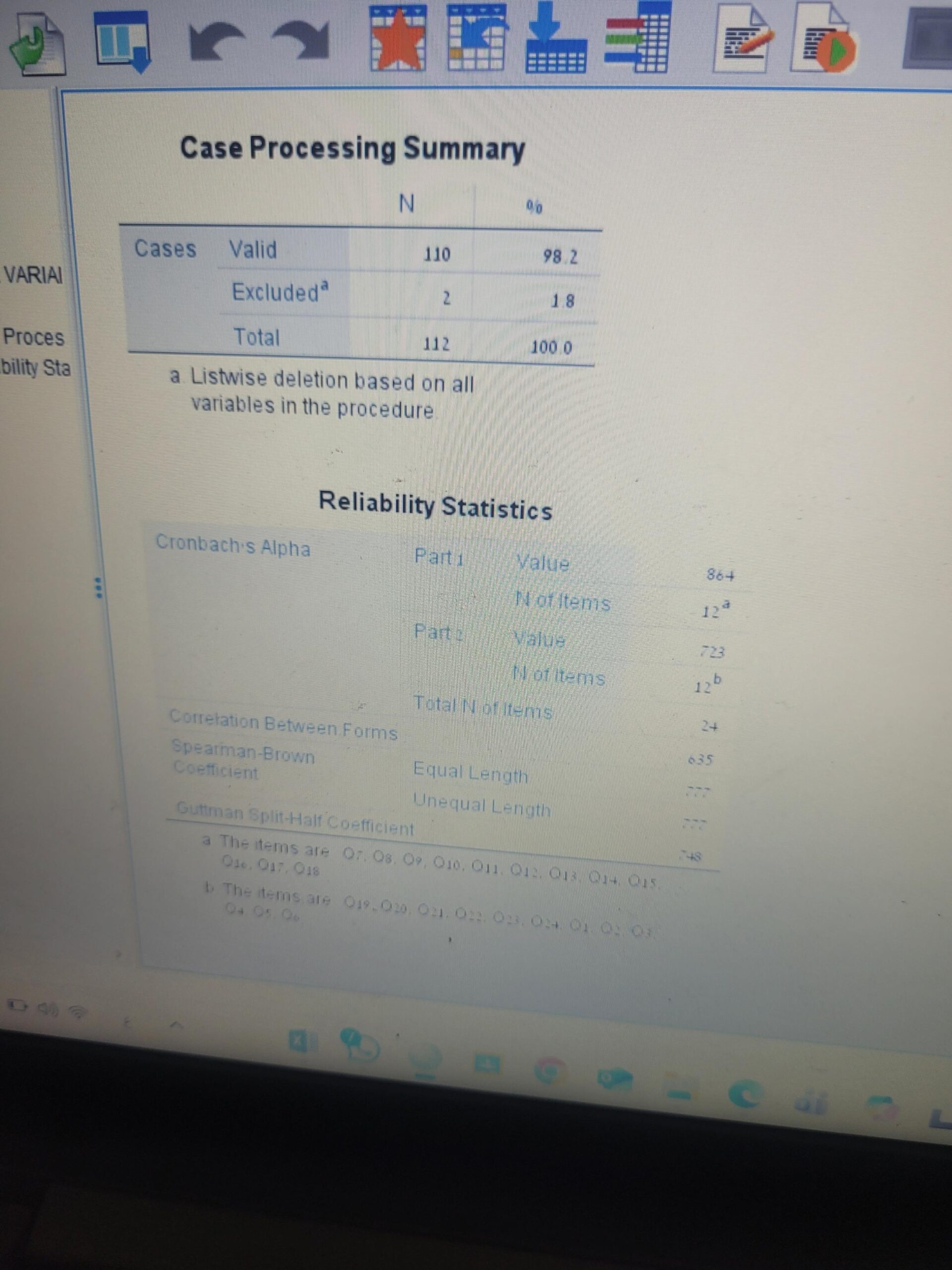
Appendix C: Reliability Analysis
Cronbach’s Alpha for the full scale: 0.880
Valid N: 110
Appendix D: pictures of SPSS

 Arabic
  English