

Classification of Human Activities Based on Mobile Phone Data Using Feature Selection Method with Genetic Algorithm and Probabilistic Neural Network
تصنيف الأنشطة البشرية باستخدام بيانات الهاتف المحمول باستخدام طريقة اختيار الميزات مع الخوارزمية الجينية والشبكة العصبية الاحتمالية
Master Ahmed Kuwait Mohammed1
1 Ministry of Higher Education and Scientific Research / University of Sawah / Faculty of Education / Department of Computers, Iraq.
DOI: https://doi.org/10.53796/hnsj68/35
Arabic Scientific Research Identifier: https://arsri.org/10000/68/35
Volume (6) Issue (8). Pages: 535 - 559
Received at: 2025-07-07 | Accepted at: 2025-07-15 | Published at: 2025-08-01
Abstract: Human activity recognition (HAR) has become a significant application within the field of artificial intelligence, gaining attention in recent years. The goal of activity recognition systems is to identify human activities using data derived from various sensors, such as accelerometers, gyroscopes, and other environmental sensors. This study aims to develop a system that detects human activities using smartphone sensor data, utilizing machine learning techniques such as genetic algorithms for feature selection and probabilistic neural networks (PNN) for classification. The system processes smartphone data by first performing pre-processing steps, including missing data removal and normalization. In the feature selection phase, 15 essential features were chosen from 20 available features, leading to improved classification accuracy. The classification was carried out using PNN, achieving an impressive 98.8% accuracy, a 2% improvement over previous methods. This research contributes to the development of efficient and accurate activity recognition systems, particularly for healthcare applications involving elderly or disabled patients who require continuous monitoring. The study utilized the Human Activity Recognition (HAR) dataset from the UCI repository for evaluation.
Keywords: Human activity recognition, genetic algorithm, probabilistic neural network, smartphone sensors, feature selection.
المستخلص: يعد التعرف على الأنشطة البشرية (HAR) أحد التطبيقات الهامة في مجال الذكاء الاصطناعي، وقد حظي باهتمام متزايد في السنوات الأخيرة. الهدف من أنظمة التعرف على الأنشطة هو التعرف على الأنشطة البشرية باستخدام البيانات المستخلصة من أجهزة استشعار مختلفة، مثل مقياس التسارع، وجيروسكوب، وأجهزة استشعار بيئية أخرى. تهدف هذه الدراسة إلى تطوير نظام لاكتشاف الأنشطة البشرية باستخدام بيانات مستشعرات الهواتف الذكية، باستخدام تقنيات التعلم الآلي مثل الخوارزميات الجينية لاختيار الميزات والشبكات العصبية الاحتمالية (PNN) للتصنيف. يتم معالجة بيانات الهاتف المحمول عن طريق تنفيذ خطوات ما قبل المعالجة أولاً، بما في ذلك إزالة البيانات المفقودة وتطبيع البيانات. في مرحلة اختيار الميزات، تم اختيار 15 ميزة أساسية من بين 20 ميزة متاحة، مما أدى إلى تحسين دقة التصنيف. تم تنفيذ التصنيف باستخدام PNN، مما حقق دقة مذهلة بلغت 98.8%، وهي تحسين بنسبة 2% مقارنة بالطرق السابقة. تساهم هذه الدراسة في تطوير أنظمة للتعرف على الأنشطة البشرية بكفاءة ودقة، لا سيما لتطبيقات الرعاية الصحية التي تشمل المرضى كبار السن أو ذوي الإعاقة الذين يحتاجون إلى مراقبة مستمرة. استخدمت الدراسة مجموعة بيانات التعرف على الأنشطة البشرية (HAR) من مستودع UCI للتقييم.
الكلمات المفتاحية: التعرف على الأنشطة البشرية، الخوارزمية الجينية، الشبكة العصبية الاحتمالية، مستشعرات الهواتف الذكية، اختيار الميزات.
Introduction
1-1-Overview
human activity recognition is one of the applied fields in artificial intelligence, which has attracted much attention in various areas in recent years. The purpose of an activity recognition system is to recognize human activities based on a set of observations. The recognition process can be based on the data recorded by video, images or other sensors [1]. An example of the sensors used for this purpose is environmental or wearable sensors that are installed on different points of the body to record information about the person’s condition. Different studies show that the data is obtained from the gyroscope, accelerometer and magnetometer of the smartphone. When a smartphone-based recognition system becomes universally valuable, it has the ability to work on any tablet platform or different models of smartphones. This is despite the fact that the signals recorded by the gyroscope and accelerometer sensors in smart phones are accompanied by noise and the quality of the signals can vary from one phone model to another or even phones of the same model [2,3].
1-2-Problem Statement
Smartphones and other mobile devices are becoming an ideal platform to continuously measure the user’s activities with the help of many sensors included in it. Identifying individual activities on smartphones still seems to be a problem considering resource limitations such as battery life, computational workloads. By considering the activities of users and its management, it is possible to consider low energy consumption in smart phone devices and other mobile devices, which requires an accurate planning in order to recognize the activities and adjust the energy consumption of the device considering the application in different times and places. The application of activity recognition in a wide range in active and preventive healthcare applications in learning environments, security systems and various types of human-computer relations is increasing rapidly [4].
Physical activities are described as follows: any body movement made by skeletal muscles, which results in energy consumption is considered as activity. Some of these activities include walking, going up and down stairs, exercising, etc. Human physical activities have different dimensions that can be defined and determined, such as different types of postures (such as sitting, standing, walking, and lying down), duration and level of intensity (step speed, strength of movement), repetition (such as the number of posture changes). And normally, people do different activities during the day. Many of these activities are repeated on a daily basis, such as eating at around 12 o’clock, sleeping at around 11 o’clock, etc. The model of daily activities is in the form of a sequence of activities during a day and night. Considering the signal of people’s activities, human activities are identified and this information is obtained by using smart phones and their sensors. After that, with the help of neural networks, we can perform classification on this type of activities [5,6].
1-3-The Importance of Research
Smart phones are very popular and their usage rate is much higher among other communication devices. Currently, it is possible to identify the user’s activities in mobile devices by the sensors, which can be used to manage the energy of mobile devices by predicting the user’s activity.
1-4-Research Objectives
developing a system for human activities recognition using smart phones through genetic algorithm and probabilistic neural network.
Analyzing and investigating the characteristics of human activities.
1-5-Research Questions
What components are effective in human activities recognition using smart phones?
Do data mining algorithms have the ability to accurately identify human activities?
What are the effective components?
1-6-Innovative Aspects of Research
The innovative aspect in this study, is selecting efficient features using genetic algorithm and then classification of six types of human activities using probabilistic classification.
1-7-Research Structure
This research consists of six chapters. In the first chapter, we discussed the problem, the importance and the goals of this area, and in the second chapter, we will discuss the theoretical concepts related, then in the third chapter, we will have an overview of the articles conducted in this field. The proposed method is explained in chapter four, then in chapter five we present the results and evaluation of the proposed method, and finally in chapter six we present conclusions and recommendations in order to improve future works.
2. Basic Concepts
2-1-Mobile phone sensors and smartphones
2-1-1-Sensors
It can be stated that sensors convert physical quantities such as pressure, heat, humidity, etc. into continuous or discontinuous digital electronic quantities. Sensors, like the sensory organs of human body, react to their surroundings in such a way that they sense the changes in an environment and send them to the processor of the mobile. Smart phones are turning into personal assistants of users and have the ability to predict users’ needs by considering daily activities [7]. A very large part of this evolution is related to sensors. The information obtained from these sensors and processed by smart phones, can be used to advance specific goals. Smartphones now include a wide range of sensors that create a large set of features and capabilities. Cell phone sensors are one of the most interesting recent technological innovations. Currently, smartphones offer programs with more information about the environment by using sensors in order to give users the best possible experience. By using the cooperation of several sensors in smart phones, users have the ability to display an almost complete picture of daily activities [8]. Sensors have the ability to collect data that is used to recognize human activities. There are challenges using sensors, including: type, location and number of sensors. In most motion-aware systems, motion sensors, especially accelerometers, are used to evaluate the angle of the body from the vertical line and to determine the direction and movement of the user. Accelerometers are used to measure linear acceleration.
2-1-1-1- Gyroscope sensor
The gyroscope sensor has the same function as the accelerometer sensors since they both detects the rotation and movement of the phone, with the difference that the gyroscope has a much higher accuracy. This sensor detects more directions of the movement of the device, and on the contrary, the accelerometer sensor can understand the position and direction of the phone in 360 degrees and therefore provides more details to the processor [9].
2-1-1-2-Accelerometer sensor
As the name implies, the accelerometer sensor is responsible for evaluating the acceleration. This sensor evaluates the acceleration of the phone in the movements. In fact, the accelerometer provides information related to the movement of the smartphone. This sensor measures the movement in the direction of the three-dimensional axis and also has the ability to help in counting the steps of a user [10].
2-1-1-3-Gravity Sensor
The gravity sensor measures the gravity force on 3 vectors. Likewise, this sensor detects any kind of shaking or tilting of the phone by checking the changes of these values and converts it into signals. The current values of the gravity sensor are shown on the X, Y and Z graphs in the Sensor Kinetics program. Gravity Screen is one of the application that uses the gravity sensor to display the phone screen when the phone is placed in a pocket or on a table [11].
2-1-1-4-Environmental sensors
Components related to the surrounding environment such as temperature, air pressure, light and humidity are measured by environmental sensors. Thermometer sensors, Barometer, and light sensor are examples of environmental sensors [12].
2-1-1-5-Pedometer sensor
Pedometer detects the movement of the phone and counts the user steps. In fact, its operation is similar to the accelerometer sensor, but it provides more accurate information. This sensor is used in the analysis of sports activities [13].
2-1-1-6-Heart rate meter
This sensor is called Heart Rate Meter and it is used in new smart phones. In fact, it counts the people’s heart rate through the finger and evaluates it. This sensor is used for people who exercise professionally and need to calculate their heart rate [14].
2-1-2-Smart phones
Smart phones are considered as an important personal tool. These devices contain enough potential to collect motion data, which can be used to build prediction systems for human activities. Among the most important applications of human activity prediction systems is health care, especially for the elderly. However, people who are older may not have the same skills in working with smartphones compared to younger people. It is important to use this system for the elderly and learn how to interact with this technology. Smart phones have a wide range of built-in sensors such as accelerometer and gyroscope, which have the ability to be used on the daily activities of humans [15,16].
2-2- Human activity recognition approaches
The first step in order to recognize human activities is a recognition system that is sensitive to sensory abilities. Three methods are used to identify daily activities [17,18].
- Video based approach
- Environment sensor based approach
- Wearable sensor based approach
2-2-1-Video based approach
This system it is used to track and identify the physical activities based on the video camera. This method is mostly used in laboratories, but due to the different variety of activities that occur in real environments, it has been difficult to obtain the same accuracy in the real situation. Also, sensors such as microphones and cameras are very expensive. As a result, since these systems are used for recording devices, some people may face privacy security problems.
2-2-2-Environment sensor based approach
This approach is developed in order to monitor interactions between users and home environments, which is achieved by distributing a number of environmental sensors, especially binary sensors throughout the person’s living environment. The data collected using these sensors can be used for intelligent adaptation of the environment in homes for the residents. Systems based on environmental sensors actively monitor the user activities every day. In these systems, many parameters have the ability to be monitored using different sensors and limitations from other types of sensors. So it makes system modeling much easier. However, these systems depend on the infrastructure and cannot monitor people who are outside the home. They have problems differentiating between the monitored person and other people in the home. Smart homes are an example of these systems.
2-2-3-Wearable sensor based approach
These systems are developed in such a way that they can measure the biomechanical and physiological data of the body during daily activities, taking into account the location of the person. So, it is an alternative to identify daily activities, especially physical activities of the body. On the other hand, they connect with people to monitor their activities. Wearable sensors consist of independent infrastructures and have the ability to measure physiological components that cannot be measured using video sensors or environmental sensors. Also, these sensors are cheap and, unlike their video sensors, they do not have the problem of people’s privacy. A range of sensors attached to the body including electromechanical switches, accelerometers, gyroscopes, pedometers are used to capture and analyze human movements during daily life. Technological progress in microelectromechanical systems has led to the miniaturization and cost reduction of accelerometers and has been accepted as a useful tool to calculate human movements in clinical and life environments.
2-3-Activity recognition algorithm
Activity recognition algorithms classify various activities and operations according to user inputs. These algorithms are usually run either on users’ workstations or smartphones. The selection of classification algorithms is based on the processing ability of the platform to execute the algorithm. Supervised classification algorithms are equipped with labeled samples in order to create a classification pattern. After that, the model is used according to the classification of the input data. These algorithms include Decision, SVM, KNN, Naïve-Bayes, etc. [19] Semi-supervised algorithms include self-learning and Co-learning. Self-learning uses a classifier to classify unlabeled data. Co-learning uses multiple classifiers for unlabeled data. In these algorithms, part of the unlabeled data is used [20].
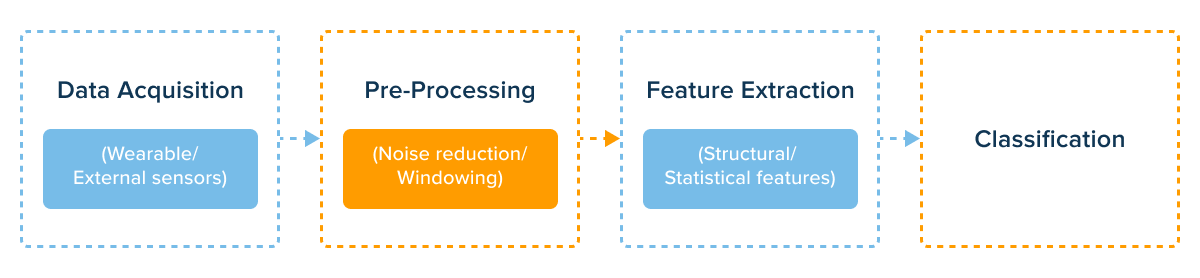
Figure 2-1 activity recognition models [20]
2-4-An example of human activities recognition
In this section, we discuss an example of the initial work of identifying human activities by using the sensors embedded in a mobile smart device in the indoor environment to obtain basic information in recognizing activities using sensors [21]. Each HAR system works based on the detection of the main activities of humans, and these activities include walking, going upstairs or down, running, moving and not moving, which is done by using statistical features obtained from the orientation of motion sensors and is performed by supporting the hierarchy of a support vector machine. A system presented in [21] is based on motion sensors of a smart phone. Smartphones are equipped with three-axis accelerometer, gyroscope and magnetometer in order to obtain acceleration and orientation information and Android API. The described system has three parts. The described sections consist of the extracted features of the model, the human activities identification model and the energy consumption model. In the first model, the characteristics of human activities are extracted from the accelerometer and direction finder. In the second model of human activities, using a hierarchical structure identified in and in the third model, the energy consumption of each physical activity is evaluated from the activities that have been identified.
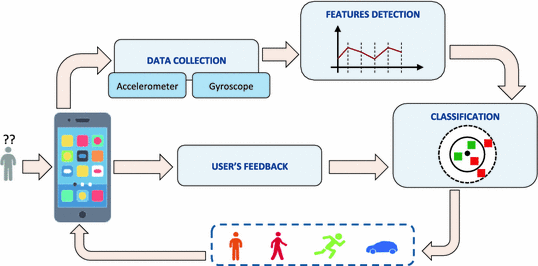
Figure 2-2 Human activity recognition model and mobile energy consumption [21]
2-5- Probabilistic Neural Network (PNN)
Probabilistic Neural Networks (PNNs) are a scalable alternative to classic back-propagation neural networks in classification and pattern recognition applications. They do not require the large forward and backward calculations that are required by standard neural networks. They can also work with different types of training data. PNN is often used in classification problems. When an input is present, the first layer computes the distance from the input vector to the training input vectors. This produces a vector where its elements indicate how close the input is to the training input. The second layer sums the contribution for each class of inputs and produces its net output as a vector of probabilities. Finally, a compete transfer function on the output of the second layer picks the maximum of these probabilities, and produces a 1 (positive identification) for that class and a 0 (negative identification) for non-targeted classes [22].
2-6-Genetic Algorithm
This algorithm is a numerical search algorithm modeled on Darwin’s theory. The relationship between the science of genetics and the algorithm can be considered in this way that genes are the quantity and variable of the problem in the form of a string inside the chromosomes, which are the main variables of the problem. An index called population is one of the most important concepts of genetic algorithm. When an optimization problem is solved, the aim is to find the best answer among all possible answers. In fact, searching for an answer means searching for the minimum in a general problem space. This algorithm randomly creates a population of answers, and then these answers are converted into binary chains of 0 and 1, which are called chromosomes. Chromosomes with higher fitness are selected as parents using a random process and participate in reproduction and produce offspring. Offspring that are more worthy than their own parents take the place of their parents in the new population. In this way, the evolution process will continue until reaching the global optimum with the most qualified chromosome in the most evolved population. Of course, a criterion should be considered in order to stop the algorithm and the population from eventually evolving. Chromosomes in each generation enter the algorithm as the input of the objective function, and this is the main function that seeks the absolute minimum. The existing chromosomes in each generation are the population of the algorithm. In fact, these chromosomes are the main answers to the problem that changes in each generation considering the changes in its genes.
After that, a population of competent chromosomes is selected for reproduction and the combination operator with a specific combination rate is performed on the reproduction with the aim of producing better binary strands. After that, in the process of mutation, with the occurrence of random changes in the genes, it causes the chromosomes to suffer genetic differences and dispersion, and a wider range of the search space is examined for a population to find chromosomes with higher fitness. In fact, the use of a wider numerical search space in this method is the obvious difference between this method and the methods obtained from the least squares iteration. After a period of time has passed from the execution of the genetic algorithm, the chromosomes converge towards an optimal solution, at which point the execution of the genetic algorithm is stopped and that chromosome is selected as the optimal solution of the problem. Of course, it should be pointed out that the accuracy and precision of convergence depends on the optimal selection of algorithm components [23].
3. Research Background
3-1-Review On Previous Research
Smartphones are now nearly ubiquitous; their numerous built-in sensors enable continuous measurement of activities of daily living, making them especially well-suited for health research. Researchers have proposed various human activity recognition (HAR) systems aimed at translating measurements from smartphones into various types of physical activity. In this review, the existing approaches are summarized to smartphone-based HAR. For this purpose, systematically searched Scopus, PubMed, and Web of Science for peer-reviewed articles published up to December 2020 on the use of smartphones for HAR. The information extracted on smartphone body location, sensors, and physical activity types studied and the data transformation techniques and classification schemes used for activity recognition. Consequently, 108 articles identified and described the various approaches used for data acquisition, data preprocessing, feature extraction, and activity classification, identifying the most common practices, and their alternatives. It concluded that smartphones are well-suited for HAR research in the health sciences. For population-level impact, future studies should focus on improving the quality of collected data, address missing data, incorporate more diverse participants and activities, relax requirements about phone placement, provide more complete documentation on study participants, and share the source code of the implemented methods and algorithms [24].
The vast amounts of mobile communication data collected by mobile operators can provide important insights regarding epidemic transmission or traffic patterns. By analyzing historical data and extracting user location information, various methods can be used to predict the mobility of mobile users. However, existing prediction algorithms are mainly based on the historical data of all users at an aggregated level and ignore the heterogeneity of individual behavior patterns. To improve prediction accuracy, this paper proposes a weighted Markov prediction model based on mobile user classification. The trajectory information of a user is extracted first by analyzing real mobile communication data, where the complexity of a user’s trajectory is measured using the mobile trajectory entropy. Second, classification criteria are proposed based on different user behavior patterns, and all users are classified with machine learning algorithms. Finally, according to the characteristics of each user classification, the step threshold and the weighting coefficients of the weighted Markov prediction model are optimized, and mobility prediction is performed for each user classification. Our results show that the optimized weighting coefficients can improve the performance of the weighted Markov prediction model [25].
Human activity recognition (HAR) has played an indispensable role in ubiquitous computing scenario, from smart homes to game console designing, elderly care, and fitness tracking. It is very hard to manually extract most suitable activity features from raw sensor time series. Due to an obvious advantage, convolutional neural networks (CNNs) that can extract features automatically have been widely utilized for activity recognition. Despite exceptional performance, CNNs are computation-intensive and memory-demanding algorithms because of a large number of internal parameters. As a result, the research attention in HAR implementations over resource-limited embedded platforms has turned to computationally lightweight convolution architectures. In this paper, we offer a contribution in the direction. Simple linear transformations with low cost are combined with a convolution-based HAR classifier to decrease overall computational/memory overhead and, simultaneously, which establishes an efficient classification method with satisfactory performance. The new method is evaluated against standard convolution-based and residual counterparts, over several popular HAR datasets for algorithm benchmarking. Experimental results verify that, the cheap linear operations can significantly reduce computational and memory cost, and meanwhile producing satisfactory recognition performance, which is able to ensure faster inference on mobile devices. Our new method could be a strong candidate for real HAR implementations on embedded platforms with limited computing resources [26].
Recently, deep learning has represented an important research trend in human activity recognition (HAR). In particular, deep convolutional neural networks (CNNs) have achieved state-of-the-art performance on various HAR datasets. For deep learning, improvements in performance have to heavily rely on increasing model size or capacity to scale to larger and larger datasets, which inevitably leads to the increase of operations. A high number of operations in deep leaning increases computational cost and is not suitable for real-time HAR using mobile and wearable sensors. Though shallow learning techniques often are lightweight, they could not achieve good performance. Therefore, deep learning methods that can balance the trade-off between accuracy and computation cost is highly needed, which to our knowledge has seldom been researched. In this paper, a computation efficient CNN using conditionally parametrized convolution proposed for real-time HAR on mobile and wearable devices. The proposed method evaluated on four public benchmark HAR datasets consisting of WISDM dataset, PAMAP2 dataset, UNIMIB-SHAR dataset, and OPPORTUNITY dataset, achieving state-of-the-art accuracy without compromising computation cost. Various ablation experiments are performed to show how such a network with large capacity is clearly preferable to baseline while requiring a similar amount of operations. The method can be used as a drop-in replacement for the existing deep HAR architectures and easily deployed onto mobile and wearable devices for real-time HAR applications [27].
As a significant role in healthcare and sports applications, human activity recognition (HAR) techniques are capable of monitoring humans’ daily behavior. It has spurred the demand for intelligent sensors and has been giving rise to the explosive growth of wearable and mobile devices. They provide the most availability of human activity data (big data). Powerful algorithms are required to analyze these heterogeneous and high-dimension streaming data efficiently. This paper proposes a novel fast and robust deep convolutional neural network structure (FR-DCNN) for human activity recognition (HAR) using a smartphone. It enhances the effectiveness and extends the information of the collected raw data from the inertial measurement unit (IMU) sensors by integrating a series of signal processing algorithms and a signal selection module. It enables a fast computational method for building the DCNN classifier by adding a data compression module. Experimental results on the sampled 12 complex activities dataset show that the proposed FR-DCNN model is the best method for fast computation and high accuracy recognition. The FR-DCNN model only needs 0.0029 s to predict activity in an online way with 95.27% accuracy. Meanwhile, it only takes 88 s (average) to establish the DCNN classifier on the compressed dataset with less precision loss 94.18% [28].
The healthcare benefits associated with regular physical activity monitoring and recognition has been considered in several research studies. Solid evidence shows that regular monitoring and recognition of physical activity can potentially assist to manage and reduce the risk of many diseases such as obesity, cardiovascular and diabetes. A few studies have been carried out in order to develop effective human activity recognition system using smartphone. However, understanding the role of each sensor embedded in the smartphone for activity recognition is essential and need to be investigated. Due to the recent outstanding performance of artificial neural networks in human activity recognition, this work aims to investigate the role of gyroscope and accelerometer sensors and its combination for automatic human activity detection, analysis and recognition using artificial neural networks. The experimental result on the publicly available dataset indicates that each of the sensors can be used for human activity recognition separately. However, accelerometer sensor data performed better than gyroscope sensor data with classification accuracy of 92%. Combining accelerometer and gyroscope performed better than when used individually with an accuracy of 95% [29].
Recently, deep learning, which are able to extract automatically features from data, has achieved state-of-the-art performance across a variety of sensor based human activity recognition (HAR) tasks. However, the existing deep neural networks are usually trained with a global loss, and all hidden layer weights have to be always kept in memory before the forward and backward pass has completed. The backward locking phenomenon prevents the reuse of memory, which is a crucial limitation for wearable activity recognition. In the paper, a layer-wise convolutional neural networks (CNN) with local loss proposed for the use of HAR task. To our knowledge, this paper is the first that uses local loss based CNN for HAR in ubiquitous and wearable computing arena. We performed experiments on five public HAR datasets including UCI HAR dataset, OPPOTUNITY dataset, UniMib-SHAR dataset, PAMAP dataset, and WISDM dataset. The results show that local loss works better than global loss for tested baseline architectures. At no extra cost, the local loss can approach the state-of-the-arts on a variety of HAR datasets, even though the number of parameters was smaller. We believe that the layer-wise CNN with local loss can be used to update the existing deep HAR methods [30].
Recently, modern smartphones equipped with a variety of embedded-sensors, such as accelerometers and gyroscopes, have been used as an alternative platform for human activity recognition (HAR), since they are cost-effective, unobtrusive and they facilitate real-time applications. However, the majority of the related works have proposed a position-dependent HAR, i.e., the target subject has to fix the smartphone in a pre-defined position. Few studies have tackled the problem of position-independent HAR. They have tackled the problem either using handcrafted features that are less influenced by the position of the smartphone or by building a position-aware HAR. The performance of these studies still needs more improvement to produce a reliable smartphone-based HAR. Thus, in this paper, we propose a deep convolution neural network model that provides a robust position-independent HAR system. We build and evaluate the performance of the proposed model using the RealWorld HAR public dataset. We find that our deep learning proposed model increases the overall performance compared to the state-of-the-art traditional machine learning method from 84% to 88% for position-independent HAR. In addition, the position detection performance of our model improves superiorly from 89% to 98%. Finally, the recognition time of the proposed model is evaluated in order to validate the applicability of the model for real-time applications [31].
Human activity recognition (HAR) techniques are playing a significant role in monitoring the daily activities of human life such as elderly care, investigation activities, healthcare, sports, and smart homes. Smartphones incorporated with varieties of motion sensors like accelerometers and gyroscopes are widely used inertial sensors that can identify different physical conditions of human. In recent research, many works have been done regarding human activity recognition. Sensor data of smartphone produces high dimensional feature vectors for identifying human activities. However, all the vectors are not contributing equally for identification process. Including all feature vectors create a phenomenon known as ‘curse of dimensionality’. This research has proposed a hybrid method feature selection process, which includes a filter and wrapper method. The process uses a sequential floating forward search (SFFS) to extract desired features for better activity recognition. Features are then fed to a multiclass support vector machine (SVM) to create nonlinear classifiers by adopting the kernel trick for training and testing purpose. We validated our model with a benchmark dataset. Our proposed system works efficiently with limited hardware resource and provides satisfactory activity identification [32].
Human Activity Recognition(HAR) is classifying activity of a person using responsive sensors that are affected from human movement. Both users and capabilities(sensors) of smartphones increase and users usually carry their smartphone with them. These facts makes HAR more important and popular. This work focuses on recognition of human activity using smartphone sensors using different machine learning classification approaches. Data retrieved from smart phones’ accelerometer and gyroscope sensors are classified in order to recognize human activity. Results of the approaches used are compared in terms of efficiency and precision [33].
In today’s healthcare applications, the use of mobile technologies brings together physicians and patients for intelligent and automatic monitoring of daily clinical activities, remote life assistants, and preventive care, especially for the elderly and those under medical control. As smartphones become an important part of our everyday life, they are ever more employed in human activities recognition (HAR) including the monitoring of personal health care and wellbeing. However, HAR is complex and it is important to use the best technology and learn about human activity using machine learning. The purpose of this paper is to develop a HAR system based on the smartphone sensors’ data using Bagging and Adaboost ensemble classifiers. The experimental results for the HAR data have been evaluated after performing different data mining techniques. For each subject, the total classification accuracy, the F-measure, and the ROC area were calculated. Adaboost ensemble classifiers algorithm improved significantly the performance of smartphone-based HAR, combined with SVM, it reached 97.44% accuracy compared to the rest of the classifiers. The proposed algorithm of Adaboost SVM can lead to an accurate HAR for elderly and disabled patients who need continuous care as well as it is a tool that supports the decisions of all medical practitioners [34].
Smart user devices are becoming increasingly ubiquitous and useful for detecting the user’s context and his/her current activity. This work analyzes and proposes several techniques to improve the robustness of a Human Activity Recognition (HAR) system that uses accelerometer signals from different smartwatches and smartphones. This analysis reveals some of the challenges associated with both device heterogeneity and the different use of smartwatches compared to smartphones. When using smartwatches to recognize whole body activities, the arm movements introduce additional variability giving rise to a significant degradation in HAR. In this analysis, we describe and evaluate several techniques which successfully address these challenges when using smartwatches and when training and testing with different devices and/or users [35].
3-2-Reference Paper [36]
The purpose of this paper is to develop a HAR system based on the smartphone sensors’ data using Bagging and Adaboost ensemble classifiers. The experimental results for the HAR data have been evaluated after performing different data mining techniques. For each subject, the total classification accuracy, the F-measure, and the ROC area were calculated. Adaboost ensemble classifiers algorithm improved significantly the performance of smartphone-based HAR, combined with SVM, it reached 97.44% accuracy compared to the rest of the classifiers. The proposed algorithm of Adaboost SVM can lead to an accurate HAR for elderly and disabled patients who need continuous care as well as it is a tool that supports the decisions of all medical practitioners.
Table 3-1 research background
|
Year |
Method |
Reference |
|
2021 |
It proposes a weighted Markov prediction model based on classification of mobile phone users. |
[25] |
|
2022 |
Simple low-cost linear transformations are combined with a complexity-based HAR classifier to reduce the overall computational/memory overhead and, simultaneously, create an efficient classification method with satisfactory performance. |
[26] |
|
2022 |
It proposes a computationally efficient CNN using parametric convolution for real-time HAR in mobile and wearable devices |
[27] |
|
2019 |
It Proposes a novel deep convolutional neural network structure FR-DCNN for human activity recognition (HAR) using smart phone |
[28] |
|
2018 |
Automatic analysis and identification of human activities using artificial neural networks |
[29] |
|
2020 |
Using convolutional neural networks (CNN) |
[30] |
|
2018 |
Using a deep convolutional neural network model |
[31] |
|
2018 |
Using different machine learning classification approaches |
[33] |
|
2019 |
Bagging and Adaboost ensemble classifiers |
[36] |
4. The Proposed Method
4-1-Introduction
In this chapter, we will examine the proposed method for recognizing six human activities, including: standing, sitting, lying down, walking, climbing stairs and going down stairs using smartphone data. The innovative aspect of this research is the use of genetic algorithm in order to select the optimal features of the data set and also the use of probabilistic neural network to classify and recognize the type of activity. In the next part of this chapter, the structure of the proposed method will be explained.
4-2- Structure of the proposed method
In this research, we intend to classify different activities based on the mobile phone data, after performing pre-processing on the data, including normalization and removing the non-existent data, to classify the data, the genetic algorithm is used to select the effective features. This algorithm can optimize various problems such as discrete functions, multi-objective problems and continuous functions. The genetic algorithm does not need derivative information. After selecting the optimal features, in the next step, the probabilistic neural network is employed for data classification. Unlike other neural networks, this neural network has faster training speed. Also, this network is not sensitive to outliers, so it is more accurate in classification compared to other traditional networks. The diagram of the proposed method is presented in the following.
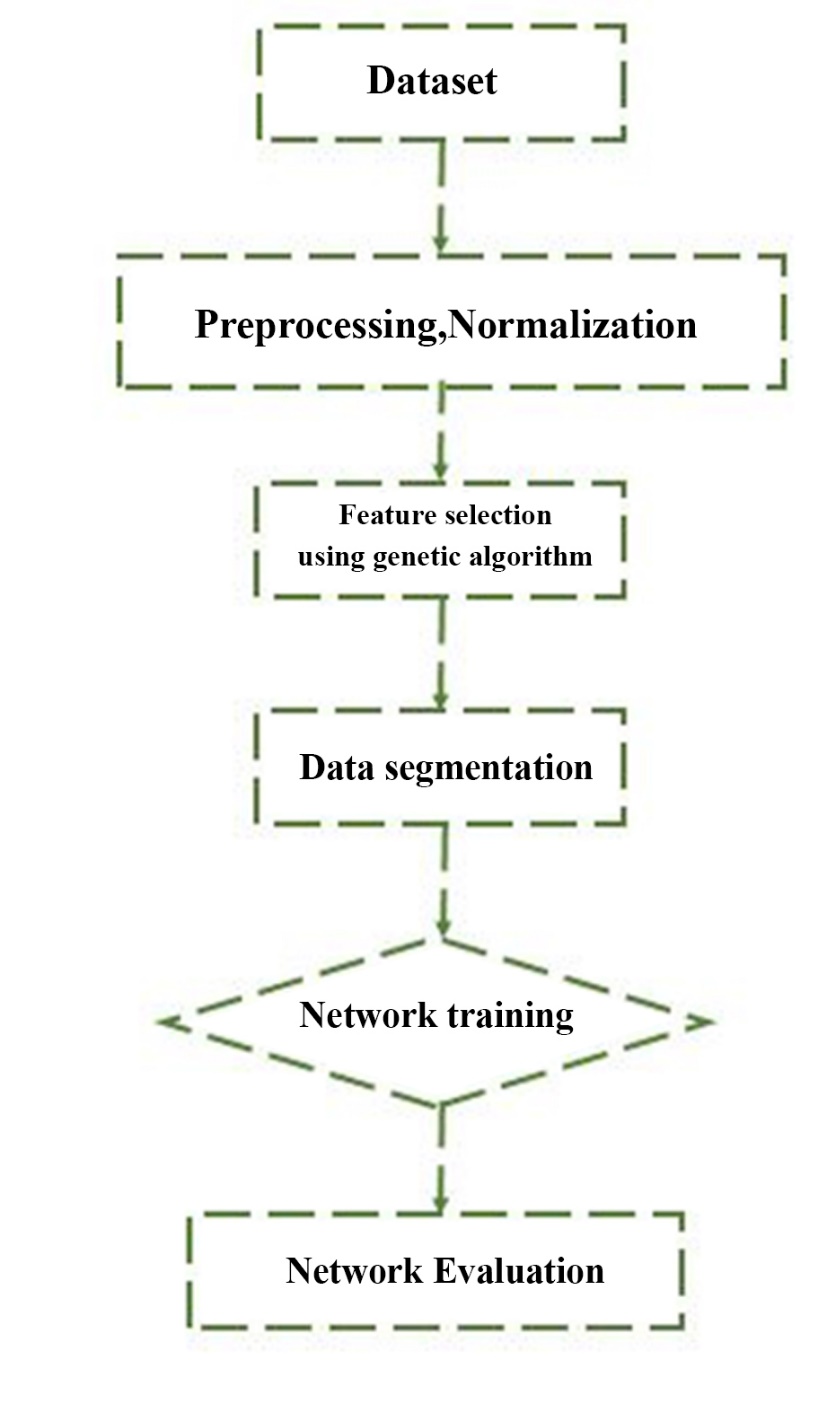
Figure 4-1 the proposed method diagram
4-2-1-Data preprocessing
Data pre-processing is one of the most important steps in the field of data mining, if the data is not processed properly, the accuracy of classification and detection will decrease drastically. In this work, as data pre-processing, in the first step, the missing data will be removed. In the next step, we will separate the features in the data set from the labels and store each one in separate variables, and then in the next step, we will normalize the data. In the following, we will describe the methods considered for each of the pre-processing steps.
• Missing Data removal
In some cases, it is possible that some features associated with one or more samples do not have valid values. This issue may have various reasons, such as the noise. These data are called missing data or non-existent data. In order to deal with this problem, a method should be considered. In this research, to remove the missing data, we will first find the 4 nearest neighbors of the missing data, then by calculating the average value of the 4 neighbors, we will consider the obtained value as the missing data value.
• Data normalization
Data normalization is one of the most important preprocessing steps in data mining. If we want to explain the importance of normalization, suppose that the interval related to the values of two features are very different from each other, for example, the interval related to one of the features is in the range of [1, 0] and the interval related to another feature of this data set is [1, 500], in this situation, when using criteria based on distance, the features that have a smaller interval do not have a great impact on the calculations. Therefore, in order to achieve more accurate results, the interval related to various features should be close to each other. To achieve this goal, normalization methods can be employed. There are various methods for normalization that have been used in different researches. In this study, in order to normalize the data, we use the min/max normalization method. In this method, the minimum and maximum of the data are mapped to an arbitrary interval, where the minimum and maximum values are predetermined. Assume that feature A, from the dataset that is in the interval between min_A and max_A, is mapped to the new interval new_Min to new_Max. For this purpose, any initial value such as v in the initial interval is converted to a new value according to the following equation:

4-2-2- Feature selection using genetic algorithm
In some cases, all the features in the dataset may not be efficient and may even mislead the network in classification process and reduce the accuracy of the network. Therefore, feature selection methods in order to select efficient features is very effective and will increase the accuracy of the classifier. In this work, in order to select efficient features, we intend to use genetic algorithm. To select the optimal features using this algorithm, the parameters in the algorithm should be adjusted according to the feature selection problem. Figure 4-2 shows the genetic algorithm diagram for selecting efficient features.
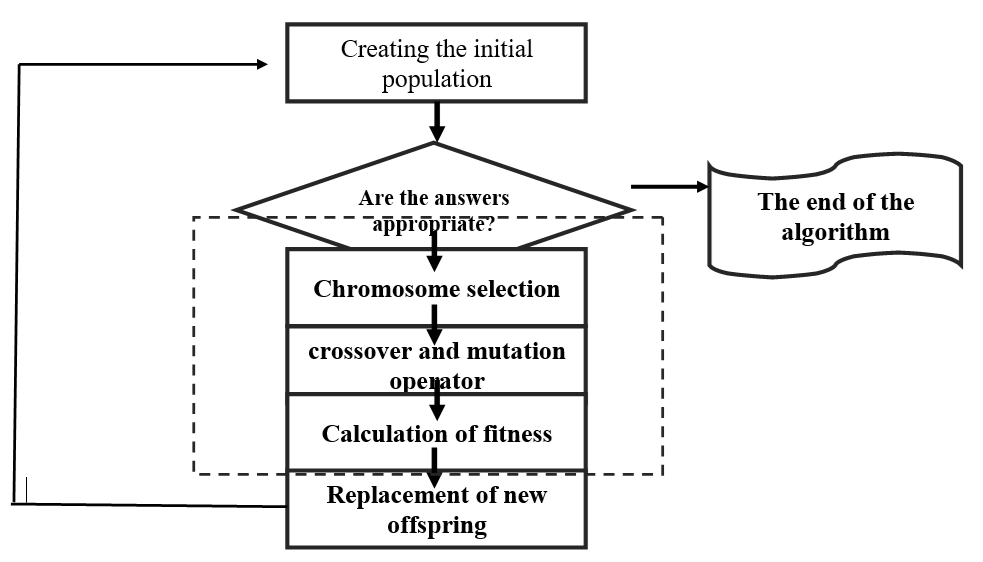
Figure 4-2 the genetic algorithm diagram
As presented in the diagram, the first step in the genetic algorithm is to create the initial population. In this algorithm, the initial population is formed by a group of chromosomes, and the chromosomal structure of this algorithm will be coded based on the optimization problem. In this research, we intend to use this algorithm in order to select the optimal feature, so the structure of chromosomes will be coded based on a subset of features. That is, each chromosome will represent a number of features.
• Evaluation functions
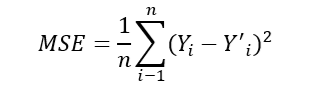
In the GA algorithm, at each stage, the fitness value of all the members of the population must be evaluated in order to select the next generation. Specifying appropriate evaluation functions to solve problems is one of the most important stages of GA algorithm. The algorithm aims to maximize the accuracy criterion or minimize the amount of error for the neural network using a subset of optimized features. For this purpose, the evaluation functions presented in this research evaluate the mean squared error for each of the chromosomes.

• Parent Selection
The value of parents’ fitness is a criterion for their selection. Parents are selected based on probability. Chromosomes that obtain the best values in terms of objective functions are more likely to be selected. Roulette wheel selection is used in GA algorithm to select chromosomes. In the roulette wheel method, first, by considering a circle, and dividing it into smaller sections, each section is related to a corresponding chromosome fitness value. In this algorithm, a random number is used to select chromosomes. The generated random number determines which sector of the circle is selected.
Figure 4-3 shows an example of a roulette wheel for a population consisting of 5 chromosomes.
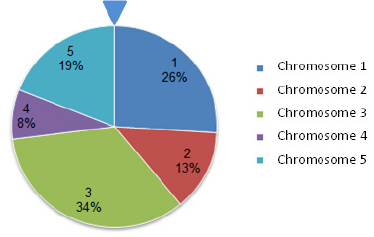
Figure 4-3 roulette wheel selection method
• Crossover operator
Two selected members of the population called parent create two new members called offspring through the crossover operator.
• Mutation operator
The purpose of using the mutation operator in GA algorithms is to maintain the required genetic diversity in the population.
• Convergence condition
Limiting the number of iterations causes the GA algorithm to end and reach the best answer. So the algorithm stops after a certain number of iterations. In this research, the criterion of reaching the maximum number of generations. In this way, the algorithm stops after reaching the maximum number of allowed repetitions.
4-2-3- Data segmentation
After the optimal features are selected, in this step, we will divide the remaining data into two groups, training and test datasets. In this work, we will consider 70% of the data for training and 30% for evaluating the network. Both datasets are randomly selected in each implementation. The training data along with the labels are given to the neural network so that the network adjusts its parameters based on the features and label of the features, but the test data is given to the neural network and it is expected to determine the output network.
4-2-4- Data classification using probabilistic neural network
In this step, the probabilistic neural network is employed to classify and detect the type of activities. Probabilistic neural network is one of the types of radial basis networks. Probabilistic networks are faster than other neural networks, probabilistic neural networks are more accurate compared to other networks, these networks are not very sensitive to outlier data. The structure of probabilistic neural networks generally consists of four layers: 1 input layer, 3 processing layers, which include the summation layer, pattern and output layer.
The function of the neurons of the input layer is to transfer the input values to all the neurons of the second layer and no processing is performed on the data in this layer. Each of the neurons of this layer calculates the product of the input in a weight vector and after performing a nonlinear operation, provides the result to the third layer. The nonlinear function of this layer is calculated based on equation 4-3.

In this network, in the first layer, the inputs are multiplied by all the weights of the pattern layer and a value is obtained for each input. These values represent the similarity (Euclidean distance) of the input with each pattern. In this study, for this layer, we have six patterns, each pattern represents a human activity. In the summation layer, all the obtained values for all 6 patterns are added together and after maximizing the result is transferred to the output layer. The output displays the maximum similarity of the input data to the existing data in the pattern layer, which is displayed as the output of the network.
4-3-The Chapter Summary
In this chapter, we presented our proposed method for recognizing six human activities from mobile phone data. As mentioned earlier, in this work, after performing pre-processing on the data using the genetic algorithm, as an innovative aspect of the research, we will select the optimal features of the data set, and then we will classify these features using the probabilistic neural network. In the next chapter, the results of the method will be presented.
5. The Simulation Results
5-1-Introduction
In the previous chapter, the proposed method for recognizing 6 human activities from mobile phone data was examined. As mentioned, the innovative aspect of this research is in selecting the optimal features using genetic algorithm and classifying the selected features using probabilistic neural network. The data set used in this research is the HAR data set, which was received from the UCI repository. In the following, this data set will be introduced. MATLAB software is used to simulate the model proposed in this study.
5-2-Dataset
The dataset used in this research is based on the UCI repository. Volunteers between the ages of 19 and 48, wearing a Samsung Galaxy S II smartphone on their waist, performed six basic activities: standing, sitting, lying down, walking, climbing stairs, and descending stairs. The analysis also includes state transitions between three static states and three dynamic states. Features in this dataset were recorded based on acceleration data at 50 Hz while the data were manually labeled using a video recording process. The data set was randomly divided into 70% and 30% training and testing data, respectively. Noise filters have been applied to this data set and then sampling has been done in sliding windows with a fixed width of 2.56 seconds and 50% overlap.
5-3- Evaluation Criteria
In this research, the criteria of accuracy, sensitivity and specificity are used to check the results obtained from the proposed model. The equations are presented in the following.

In the above equations, TP and TN represent true positive detection and true negative detection, and FP and FN represent false positive detection and false negative detection. Equation 5-1 is the overall accuracy equation that shows the ratio of true identifications to the total number of available identifications. In equation 5-2, which is the sensitivity equation, it represents positive accuracy. Equation 5-3 represents the negative accuracy. It shows the ratio of correctly detected negatives to all existing negatives.
In order to evaluate the criteria of TP, TN, FP, FN, the confusion matrix has been presented. Next, this matrix and its different parts are proposed in Figure 5-1.
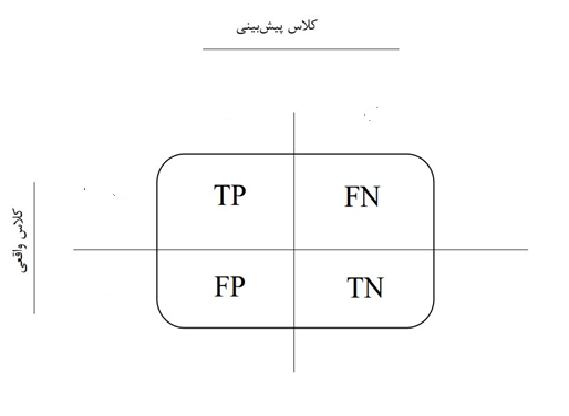
figure 5-1 the confusion matrix
5-4- The Simulation Results
5-4-1-the pre-processing step
As we mentioned in the proposed method chapter, in the first step, we processed the non-existent data using the averaging method on 4 nearest neighbors, and then in the next step, the feature data were separated from the labels and each one was stored in its own variable, and then normalized. The result of the preprocessing step is presented in Figure 5-2.
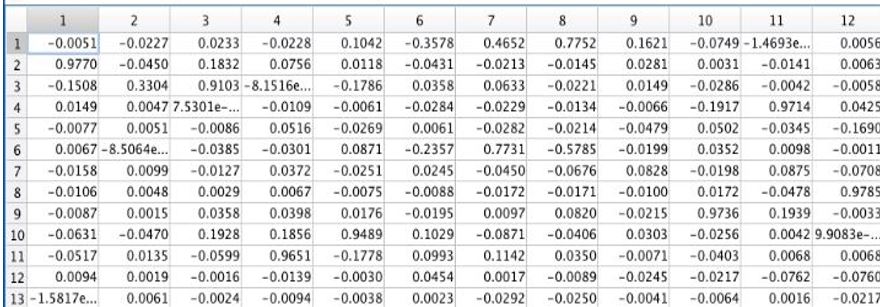
Figure 5-2 the preprocessing step
It can be seen that all the data are in a certain range and there is no non-existent data. All these pre-processing have been performed on the matrix of variables.
5-4-2-Feature selection results
In this step, the genetic algorithm specifications given in Table 5-1 was used to select the optimal features.
Table 5-1 the genetic algorithm specifications
|
Feature selection |
the genetic algorithm |
|
15 |
Chromosome length |
|
15 |
Number of selected features |
|
40 |
The number of iterations |
|
Based on the features in the dataset |
The structure of chromosomes |
|
|
cost function |
|
8% |
Mutation rate |
In the following, the indices selected as optimal features are presented in Table 5-2.
Table 5-2 optimal features indices
|
20 |
11 |
10 |
9 |
8 |
19 |
5 |
4 |
3 |
1 |
|
6 |
2 |
17 |
14 |
13 |
After separating the selected features, the dimensions of the feature matrix were reduced from 20 dimensions to 15 dimensions.
5-4-3-Results and structure of the classifier
Figure 5-3 presents the structure of the probabilistic neural network used in this research for data classification. In the first layer, there are 15 neurons as the number of selected features, and in the pattern layer, 300 neurons are considered as the number of input vectors for training data, and for the summation and output layers, 6 neurons are considered as the number of available classes. It should be noted that the activation function of the pattern layer was Gaussian. The pattern layer has a parameter called smoothing that specifies the distance between the input vector and the vectors in the pattern layer. In this research, we determined the value of this parameter as 0.0001 by trial and error.
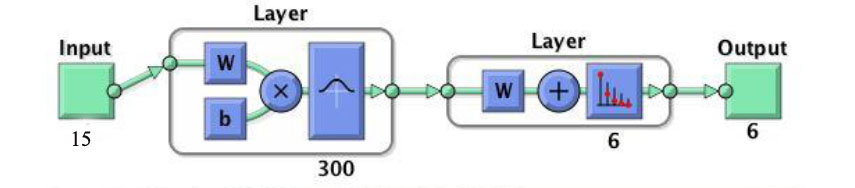
Figure 5-3 the structure of the probabilistic neural network
Next, we will examine the results of the classifier for the test and training data.
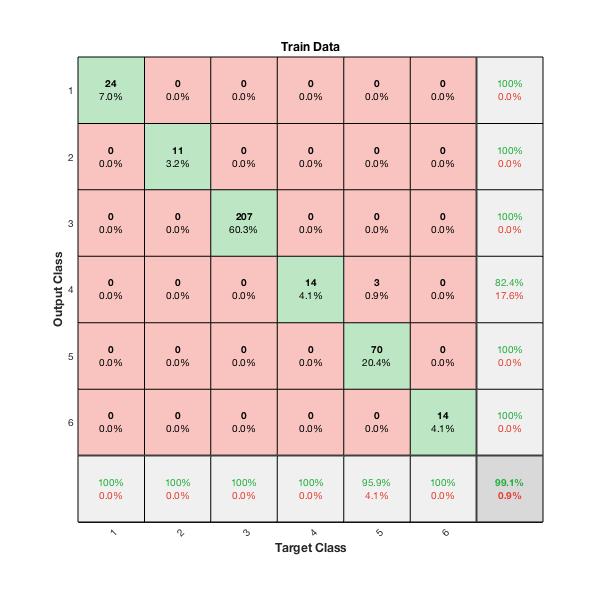
Figure 5-4 confusion matrix for training data
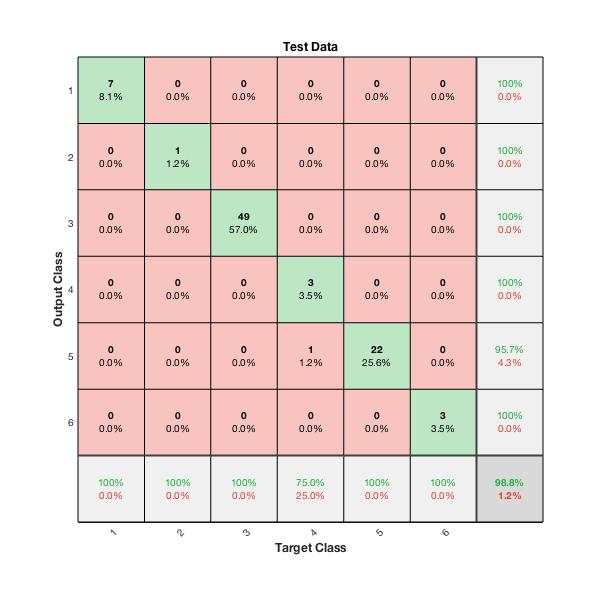
Figure 5-5 confusion matrix for test data
Table 5-3 Analyzing the results of the confusion matrix
|
Training |
Test |
Accuracy for each activity |
|
100% |
100% |
Standing class accuracy |
|
100% |
100% |
Sitting class accuracy |
|
100% |
100% |
Lying down class accuracy |
|
100% |
75% |
Walking class accuracy |
|
95.9% |
100% |
The accuracy of climbing the stairs |
|
100% |
100% |
The accuracy of going down the stairs |
|
99.1% |
98.8% |
Overall accuracy obtained |
Next, in Figure 5-6, the regression value obtained for both test and training datasets is displayed. Regression is a value between zero and one, the closer it is to one, it indicates the fact that the output of the classifier is closer to the actual values, and the closer it is to zero, it indicates a mismatch between the output of the network and the actual value, and as a result, the network’s low accuracy in classification.
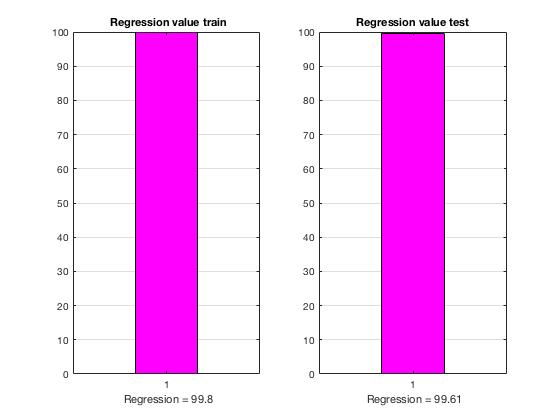
Figure 5-6 Regression value of test and training data
It can be seen that for both data groups, the regression value is close to 100 and this shows that the classifier has been successful in the training and evaluation step.
In the following, we presented the evaluation criteria obtained for the test and training data in Figures 5-7 and 5-8 so that we can evaluate the classification results from different aspects.
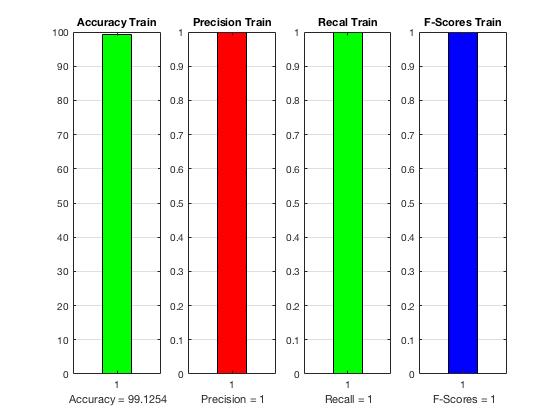
Figure 5-7 The results of evaluation criteria for classifier training data
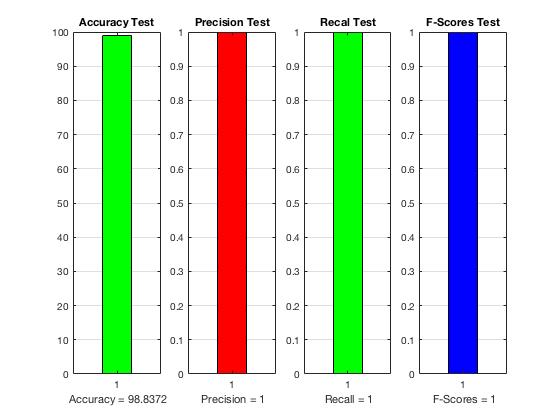
Figure 5-8 The results of evaluation criteria for classifier test data
5-5-The Results Comparison
In this section, we will compare the results obtained for the classifier test data with other methods performed in this field. The results comparison is presented in Table 5-4.
Table 5-4 results comparison
|
F-score |
Accuracy |
Method |
|
94% |
91.7% |
C.45[36] |
|
95.4% |
95.35% |
KNN[36] |
|
97.4% |
97.31% |
SVM[36] |
|
100% |
98.8% |
PNN-GA |
As can be seen, on average, the proposed method is 2% more accurate compared to other methods and 3% more than other methods in terms of F score. The reason for this improvement is the use of genetic algorithm to select optimal features and classification using probabilistic neural network.
6. Conclusions and Recommendations
6-1-Conclusions
In Medical Monitoring, as smartphones become an important part of daily lives, they are increasingly being used to detect human activities, including monitoring health care and personal well-being. However, the human activity recognition system is complex and it is important to use the best technology and learn about human activities using machine learning. This study aims to develop a human activity recognition system based on smartphone sensor data using a probabilistic classifier. This study investigated the detection of human activities using data mining techniques with the help of smartphones. By using the best technology and benefiting from the development of machine learning, it is possible to provide detailed information about human activities, especially in the case of elderly and disabled patients who need continuous care. In this work, to increase the accuracy of detection in the first step, after performing pre-processing such as: removing missing data and normalizing data in the feature selection stage, 15 important features were selected from the 20 features in the used data set. The features in this study are based on the value of accelerometers and angles for each person. After selecting the important features, these features were classified using a probabilistic classifier and we were able to achieve 98.8% accuracy, which was 2% better than the methods in the reference paper. In this study, the HAR dataset in the UCI repository was used.
6-2-Recommendations
• Using the genetic algorithm or other meta-heuristic algorithms to determine the optimal value of the smoothing parameter of the probabilistic classifier to increase the accuracy of diagnoses.
• Using classification methods based on deep networks.
• Evaluation of the proposed method on other datasets available in this field.
References
[1] Fazli, M., Kowsari, K., Gharavi, E., Barnes, L., & Doryab, A. (2020, November). HHAR-net: Hierarchical Human Activity Recognition using Neural Networks. In International Conference on Intelligent Human Computer Interaction (pp. 48-58). Springer, Cham
[2] Ronao, C. A., & Cho, S. B. (2015, November). Deep convolutional neural networks for human activity recognition with smartphone sensors. In International Conference on Neural Information Processing (pp. 46-53). Springer, Cham
[3] Ronao, C. A., & Cho, S. B. (2016). Human activity recognition with smartphone sensors using deep learning neural networks. Expert systems with applications, 59, 235-244.
[4] Saeed, A., Ozcelebi, T., & Lukkien, J. (2019). Multi-task self-supervised learning for human activity detection. Proceedings of the ACM on Interactive, Mobile, Wearable and Ubiquitous Technologies, 3(2), 1-30.
[5] Milenkoski, M., Trivodaliev, K., Kalajdziski, S., Jovanov, M., & Stojkoska, B. R. (2018, May). Real time human activity recognition on smartphones using LSTM networks. In 2018 41st International Convention on Information and Communication Technology, Electronics and Microelectronics (MIPRO) (pp. 1126-1131). IEEE.
[6] Micucci, D., Mobilio, M., & Napoletano, P. (2017). Unimib shar: A dataset for human activity recognition using acceleration data from smartphones. Applied Sciences, 7(10), 1101.
[7] Mehrnezhad, M., Toreini, E., Shahandashti, S. F., & Hao, F. (2018). Stealing PINs via mobile sensors: actual risk versus user perception. International Journal of Information Security, 17(3), 291-313.
[8] Baxter, C., Carroll, J. A., Keogh, B., & Vandelanotte, C. (2020). Assessment of mobile health apps using built-in smartphone sensors for diagnosis and treatment: Systematic survey of apps listed in international curated health app libraries. JMIR mHealth and uHealth, 8(2), e16741.
[9] Bourke, A. K., & Lyons, G. M. (2008). A threshold-based fall-detection algorithm using a bi-axial gyroscope sensor. Medical engineering & physics, 30(1), 84-90.
[10] Gafurov, D., Helkala, K., & Søndrol, T. (2006). Biometric Gait Authentication Using Accelerometer Sensor. J. comput., 1(7), 51-59.
[11] Frommknecht, B., & Schlicht, A. (2010). The GRACE gravity sensor system. In System Earth via Geodetic-Geophysical Space Techniques (pp. 105-118). Springer, Berlin, Heidelberg.
[12] Sanders, D. (2008). Environmental sensors and networks of sensors. Sensor Review.
[13] Wu, S. S., & Wu, H. Y. (2011, December). The design of an intelligent pedometer using Android. In 2011 Second International Conference on Innovations in Bio-inspired Computing and Applications (pp. 313-315). IEEE.
[14] Strath, S. J., Bassett, D. R., Swartz, A. M., & Thompson, D. L. (2001). Simultaneous heart rate-motion sensor technique to estimate energy expenditure. Medicine and science in sports and exercise, 33(12), 2118-2123.
[15] Wilde, A. G. (2010). An overview of human activity detection technologies for pervasive systems. Department of Informatics University of Fribourg, Switzerland, 212, 72-112.
[16] Yurur, O., & Moreno, W. (2011). Energy efficient sensor management strategies in mobile sensing. Proc. ISTEC Gener. Assem, 66-72.
[17] Florentino-Liaño, B., O’Mahony, N., & Artés-Rodríguez, A. (2012, May). Human activity recognition using inertial sensors with invariance to sensor orientation. In 2012 3rd International Workshop on Cognitive Information Processing (CIP) (pp. 1-6). IEEE.
[18] Khan, A. M., Lee, Y. K., Lee, S. Y., & Kim, T. S. (2010). A triaxial accelerometer-based physical-activity recognition via augmented-signal features and a hierarchical recognizer. IEEE transactions on information technology in biomedicine, 14(5), 1166-1172.
[19] He, W., Guo, Y., Gao, C., & Li, X. (2012). Recognition of human activities with wearable sensors. EURASIP Journal on Advances in Signal Processing, 2012(1), 1-13.
[20] Maguire, D., & Frisby, R. (2009, October). Comparison of feature classification algorithm for activity recognition based on accelerometer and heart rate data. In 9th. IT & T Conference (p. 11).
[21] Wang, Y., Lin, J., Annavaram, M., Jacobson, Q. A., Hong, J., Krishnamachari, B., & Sadeh, N. (2009, June). A framework of energy efficient mobile sensing for automatic user state recognition. In Proceedings of the 7th international conference on Mobile systems, applications, and services (pp. 179-192).
[22] Equitz, W. H. (1989). A new vector quantization clustering algorithm. IEEE transactions on acoustics, speech, and signal processing, 37(10), 1568-1575.
[23] Davis, D.J.M.a.L., Training Feedforward Neural Networks Using Genetic Algorithms.
2005
[24] Straczkiewicz, M., James, P., & Onnela, J. P. (2021). A systematic review of smartphone-based human activity recognition methods for health research. NPJ Digital Medicine, 4(1), 1-15.
[25] Yan, M., Li, S., Chan, C. A., Shen, Y., & Yu, Y. (2021). Mobility prediction using a weighted Markov model based on mobile user classification. Sensors, 21(5), 1740.
[26] Liu, T., Wang, S., Liu, Y., Quan, W., & Zhang, L. (2022). A lightweight neural network framework using linear grouped convolution for human activity recognition on mobile devices. The Journal of Supercomputing, 78(5), 6696-6716.
[27] Cheng, X., Zhang, L., Tang, Y., Liu, Y., Wu, H., & He, J. (2022). Real-time human activity recognition using conditionally parametrized convolutions on mobile and wearable devices. IEEE Sensors Journal, 22(6), 5889-5901.
[28] Qi, W., Su, H., Yang, C., Ferrigno, G., De Momi, E., & Aliverti, A. (2019). A fast and robust deep convolutional neural networks for complex human activity recognition using smartphone. Sensors, 19(17), 3731.
[29] Ogbuabor, G., & La, R. (2018, February). Human activity recognition for healthcare using smartphones. In Proceedings of the 2018 10th international conference on machine learning and computing (pp. 41-46).
[30] Teng, Q., Wang, K., Zhang, L., & He, J. (2020). The layer-wise training convolutional neural networks using local loss for sensor-based human activity recognition. IEEE Sensors Journal, 20(13), 7265-7274.
[31] Almaslukh, B., Artoli, A. M., & Al-Muhtadi, J. (2018). A robust deep learning approach for position-independent smartphone-based human activity recognition. Sensors, 18(11), 3726.
[32] Ahmed, N., Rafiq, J. I., & Islam, M. R. (2020). Enhanced human activity recognition based on smartphone sensor data using hybrid feature selection model. Sensors, 20(1), 317
[33] Bulbul, E., Cetin, A., & Dogru, I. A. (2018, October). Human activity recognition using smartphones. In 2018 2nd international symposium on multidisciplinary studies and innovative technologies (ismsit) (pp. 1-6). IEEE.
[34] Subasi, A., Fllatah, A., Alzobidi, K., Brahimi, T., & Sarirete, A. (2019). Smartphone-based human activity recognition using bagging and boosting. Procedia Computer Science, 163, 54-61.
[35] San-Segundo, R., Blunck, H., Moreno-Pimentel, J., Stisen, A., & Gil-Martín, M. (2018). Robust Human Activity Recognition using smartwatches and smartphones. Engineering Applications of Artificial Intelligence, 72, 190-202.
[36] Subasi, A., Fllatah, A., Alzobidi, K., Brahimi, T., & Sarirete, A. (2019). Smartphone-based human activity recognition using bagging and boosting. Procedia Computer Science, 163, 54-61
 Arabic
  English