

Navigating Value Engineering in Emerging Markets: An Empirical Analysis of Barriers and Strategic Enablers in the Sudanese Construction Sector
توجيه هندسة القيمة في الأسواق الناشئة: تحليل تجريبي للمعوقات والممكّنات الاستراتيجية في قطاع البناء السوداني
Moneira Mohammed Ali Mohammed Ali Ahmed1, Abdallah Eissa Abdel Karim2, Khaled Abdelrazik Ahmed2
1 Postgraduate Student, master’s degree in construction engineering and management, Red Sea University, Sudan.
2 College of Engineering, Department of Civil Engineering, Red Sea University, Sudan.
DOI: https://doi.org/10.53796/hnsj75/51
Arabic Scientific Research Identifier: https://arsri.org/10000/75/51
Volume (7) Issue (5). Pages: 908 - 912
Received at: 2026-04-15 | Accepted at: 2026-04-22 | Published at: 2026-05-01
Abstract: Value Engineering (VE) is a systematic, function-oriented methodology recognized globally for optimizing project performance. However, in the Sudanese construction industry, the methodology faces significant implementation hurdles despite the country’s acute need for cost-effective infrastructure. This study investigates the critical barriers and enablers influencing VE implementation from a multi-stakeholder perspective. A structured questionnaire was administered to 100 construction professionals (engineers, consultants, and owners) in Sudan. Data were analyzed using descriptive statistics, Cronbach’s alpha for reliability, and one-sample t-tests. The results indicate a high consensus (p < 0.001) regarding implementation obstacles. Managerial and Institutional Factors (RII = 0.840) and Cost-Increase Drivers (RII = 0.807) emerged as the primary barriers. The study highlights that the Sudanese sector is hindered by a lack of specialized training and a "lowest-initial-cost" mindset. This paper contributes an empirical framework for institutionalizing VE as a hedge against the region's high economic volatility and material scarcity.
Keywords: Value Engineering, Construction Management, Sudan, MENA Region, Stakeholder Analysis, Lifecycle Costing, Institutional Barriers, Economic Inflation.
المستخلص: تُعد هندسة القيمة (VE) منهجيةً منهجيةً موجّهة نحو الوظائف، ومعترفًا بها عالميًا في تحسين أداء المشروعات. ومع ذلك، تواجه هذه المنهجية في صناعة البناء السودانية عقبات كبيرة في التطبيق، رغم الحاجة الملحّة في البلاد إلى بنية تحتية فعّالة من حيث التكلفة. تهدف هذه الدراسة إلى تقصّي المعوقات والممكّنات الحاسمة المؤثرة في تطبيق هندسة القيمة من منظور متعدد الأطراف ذات الصلة. وقد وُزّعت استبانة منظمة على 100 من المهنيين العاملين في قطاع البناء في السودان، شملت المهندسين والاستشاريين والمُلّاك. وتم تحليل البيانات باستخدام الإحصاءات الوصفية، ومعامل ألفا كرونباخ لقياس الثبات، واختبار (t) لعينة واحدة. وتشير النتائج إلى وجود توافق عالٍ بين المشاركين حول معوقات التطبيق (p < 0.001). وقد برزت العوامل الإدارية والمؤسسية (RII = 0.840) ومحركات زيادة التكلفة (RII = 0.807) بوصفها المعوقات الرئيسة. وتُبرز الدراسة أن قطاع البناء السوداني يعاني من نقص التدريب المتخصص وسيادة عقلية «أدنى تكلفة ابتدائية». وتسهم هذه الورقة في تقديم إطار تجريبي لمأسسة هندسة القيمة باعتبارها وسيلة للتحوّط في مواجهة التقلبات الاقتصادية الحادة وندرة المواد في المنطقة.
الكلمات المفتاحية: هندسة القيمة، إدارة التشييد، السودان، منطقة الشرق الأوسط وشمال أفريقيا، تحليل أصحاب المصلحة، تكلفة دورة الحياة، المعوقات المؤسسية، التضخم الاقتصادي.
1. Introduction
The global construction industry is increasingly pivoting toward value-driven project delivery. In the Middle East and North Africa (MENA) region, and specifically in Sudan, the industry faces a unique “triple threat”: hyper-inflation, fragmented supply chains, and a reliance on imported materials. As demonstrated by the drastic fluctuations in construction cost indices in Sudan (varying by over 1,000% in some fiscal cycles), traditional cost-control methods are no longer sufficient.
Value Engineering (VE) provides a disciplined job plan—consisting of information, function analysis, creativity, evaluation, and development phases—to maximize the function-to-cost ratio. While mature markets have institutionalized VE through professional bodies like SAVE International, the Sudanese construction sector continues to view VE as an “extra” design step or a synonym for simple cost-cutting. This research seeks to bridge the gap between theoretical VE benefits and the operational reality of Sudanese project delivery.
2. Literature Review
2.1 The Regional Context: VE in the MENA Region
Research into VE within the MENA region shows a high degree of variability. In Saudi Arabia and the UAE, VE is increasingly mandated for mega-projects to align with national visions (e.g., Saudi Vision 2030). In contrast, studies in Jordan and Egypt by scholars like El-Mashaleh (2009) suggest that the lack of owner awareness remains the primary bottleneck. For Sudan, the literature is even scarcer. Abualrejal et al. (2017) noted that Sudanese project management often suffers from poor risk allocation, which VE could theoretically mitigate.
2.2 Sudanese Construction Industry Dynamics
The Sudanese construction sector is characterized by a high percentage of public sector infrastructure. This dominance means that implementation is heavily tied to government procurement laws. Historically, Sudanese procurement prioritizes the “lowest bidder,” a practice that Ofori (2012) argues is detrimental to developing economies. This creates a systemic barrier where the “Value” (Function/Cost) is ignored in favor of the lowest upfront expenditure, leading to massive maintenance burdens later in the building’s lifecycle.
2.3 Barriers and Theoretical Lenses
Two theories explain the resistance to VE in Sudan:
- Institutional Theory: Organizations mimic the “standard” way of doing things. In Sudan, because the Ministry of Infrastructure does not mandate VE, private firms have no mimetic pressure to adopt it.
- Prospect Theory: Stakeholders in volatile economies like Sudan are often “loss averse.” They view the cost of a VE workshop as a certain loss, while the potential lifecycle savings are viewed as uncertain gains.
3. Research Methodology
This study employed a cross-sectional survey design. The target population was defined as professionals registered with the Sudanese Engineering Council and those active in major infrastructure projects.
3.1 Sampling and Axis Structure
A purposive sample of 100 professionals was achieved (100% response rate). The instrument analyzed 29 statements across four axes:
- Axis 1: Managerial and Institutional Factors (Leadership, regulations, and organizational culture).
- Axis 2: Work Team Competencies (Technical skill, VE certification, and multidisciplinary coordination).
- Axis 3: Client/Owner Perceptions (Awareness of lifecycle costing and risk tolerance).
- Axis 4: Cost-Increase Drivers (Reliance on outdated methods and poor information sharing).
3.2 Statistical Formulae
The Relative Importance Index (RII) was utilized to rank the variables:
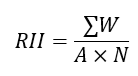
Where
is the weight given to each factor by respondents,
is the highest weight, and
is the total number of respondents. Reliability was confirmed via Cronbach’s Alpha, yielding scores between 0.72 and 0.88, exceeding the standard 0.70 threshold.
4. Results and Analysis
4.1 Quantitative Ranking
The data analysis reveals that institutional and managerial hurdles are the most significant impediments to VE in Sudan.
|
Rank |
Barrier Category |
RII |
Mean Score |
Agreement |
|
1 |
Managerial & Institutional |
0.840 |
2.52 |
High |
|
2 |
Cost-Increase Drivers |
0.807 |
2.42 |
High |
|
3 |
Work Team Competencies |
0.793 |
2.38 |
Moderate/High |
|
4 |
Client/Owner Perceptions |
0.787 |
2.36 |
Moderate |
4.2 Axis 1: The Leadership Gap (Managerial)
With a mean of 2.52, this axis highlights that Sudanese construction boards are generally resistant to change. 67% of respondents agreed that there are no regulatory incentives provided by the Sudanese government to encourage VE.
4.3 Axis 2 & 3: Competency and Client Awareness
A striking 80% of respondents identified the lack of specialized VE training as a major hurdle. In Sudan, Civil Engineering curricula focus heavily on structural design and traditional quantity surveying, with little to no exposure to VE job plans or function analysis. Furthermore, owners often confuse VE with “De-scoping” or “Cheapening” the project.
5. Discussion: Value Engineering as Economic Strategy
5.1 VE as a Hedge Against Inflation in Sudan
In a market where the cost of cement and steel can fluctuate by 50% within a quarter, VE offers a unique advantage. By performing Function Analysis, Sudanese engineers can identify alternative local materials (e.g., stabilized soil blocks or local aggregates) that fulfill the same function at a fraction of the cost of imported equivalents.
5.2 Transitioning to Lifecycle Costing (LCC)
The study found that the “Lowest Bidder” syndrome is the most damaging client-side perception. In the Sudanese climate (extreme heat and dust), the maintenance costs of HVAC and facade systems often exceed the initial construction cost within 10 years. VE enablers would involve educating owners on Lifecycle Costing (LCC), shifting the focus from “Cost at Handover” to “Cost over 30 Years.”
6. Strategic Enablers and Recommendations
To overcome the identified barriers in Sudan and the wider region, the following enablers must be activated:
- Legislative Reform: The Sudanese Engineering Council should work with the Ministry of Finance to amend procurement laws, making a “Value Study” a prerequisite for any project exceeding a specific budget.
- Educational Integration: Universities such as the University of Khartoum and Sudan University of Science and Technology should integrate SAVE International-approved modules into their post-graduate programs.
- Digital Transformation: Leveraging BIM (Building Information Modeling) as an enabler for VE. BIM allows for rapid “What-If” scenarios, allowing the VE team to see the cost impact of material changes instantly.
- Creation of “Value Champions”: Large Sudanese firms should appoint a “Certified Value Specialist” (CVS) to lead internal VE workshops, demonstrating a clear Return on Investment (ROI) to skeptical boards.
7. Conclusion
The construction sector in Sudan is at a crossroads. The traditional methods of cost management are failing in the face of hyper-inflation. This study has empirically proven that while technical skills are a factor, the primary barriers to VE are Managerial and Institutional. By establishing regulatory mandates and fostering a culture of lifecycle value, Sudan can optimize its limited resources. The enablers identified—education, policy reform, and digital integration—provide a roadmap for a more resilient and value-driven construction industry in the region.
References
- Abualrejal, H. M., et al. (2017). “Common Causes of Delay in Sudanese Construction Projects.” International Journal of Civil Engineering. (Crucial for local context).
- Al-Yousefi, A. S. (2012). Value Management Concept and Techniques. Kuwait: Society of Engineers. (A MENA regional standard).
- El-Mashaleh, M. S. (2009). “The Utilization of Value Engineering in Jordan: An Empirical Study.” Jordan Journal of Civil Engineering, 3(2).
- Hamza, A., et al. (2022). “Barriers to Implementing Value Management in the Egyptian Construction Industry.” Ain Shams Engineering Journal.
- Khalil, N. (2018). “Economic Challenges and Their Impact on the Construction Sector in Sudan.” Sudanese Journal of Engineering Sciences.
- SAVE International. (2023). Value Methodology Standard: Body of Knowledge.
- Male, S., Kelly, J., & Gronqvist, M. (2007). “The Value Management Benchmark: A Comparison of International Practice.” Journal of Construction Engineering and Management.
- Ofori, G. (2012). Developing the Construction Industry in Developing Countries: Strategic Issues and Challenges. NUS Press.
- Rachwan, R., Abotaleb, I., & Hosny, O. (2016). “Value Engineering Application throughout the Project Lifecycle: A MENA Region Perspective.” Journal of Management in Engineering.
- Sudanese Ministry of Infrastructure and Physical Planning. (2024). Annual Report on Construction Cost Indices and Economic Impact.
- Mubarak, S. (2015). Construction Project Scheduling and Control. (Regional focus on planning/value).
- Assaf, S. A., & Al-Hejji, S. (2006). “Causes of Delay in Large Construction Projects [Regional MENA Analysis].” International Journal of Project Management.
- Chong, H. Y., & Low, S. P. (2020). “Stakeholder Alignment in Value Engineering Implementation.” Journal of Project Management.
- Perera, S., et al. (2011). “A Methodology for Establishing Value Engineering within Organizations.” International Journal of Strategic Property Management.
 Arabic
  English