

Indoor Residential Radon Concentration Across Different Countries. A Review Study
تركيز غاز الرادون داخل المساكن في مختلف الدول: دراسة مراجعة
Oras Majeed Kareem1
1 Department of Geology, Faculty of Science, University of Kufa, Al-Najaf, Iraq
DOI: https://doi.org/10.53796/hnsj74/41
Arabic Scientific Research Identifier: https://arsri.org/10000/74/41
Volume (7) Issue (4). Pages: 712 - 718
Received at: 2026-03-12 | Accepted at: 2026-03-20 | Published at: 2026-04-01
Abstract: This review examines indoor residential radon concentrations measured using CR-39 solid-state nuclear track detectors across different countries. The study highlights CR-39 detectors as a reliable, low-cost, and effective passive technique for long-term monitoring of radon in dwellings. The reviewed literature shows that indoor radon levels vary widely according to geological formation, soil characteristics, building materials, floor level, ventilation conditions, building age, and seasonal changes. Higher concentrations are commonly reported in basements and ground-floor rooms due to their direct contact with soil and relatively limited air exchange. Seasonal variation is also evident, with increased radon levels during colder periods as a result of reduced ventilation and pressure-driven soil gas entry. Although most reviewed studies reported average indoor radon concentrations below international reference levels, some dwellings exceeded recommended action limits, indicating potential health risks from long-term exposure. The findings confirm the importance of continuous indoor radon monitoring, public awareness, mitigation strategies, and the development of regional radon databases to support radiation protection policies and safer building practices.
Keywords: Indoor radon, CR-39 detectors, residential buildings, radon concentration, passive monitoring, environmental radiation, radiation protection.
المستخلص: تتناول هذه الدراسة المرجعية تراكيز غاز الرادون داخل المساكن المقاسة باستخدام كواشف الأثر النووي الصلبة من نوع CR-39 في عدد من الدول. وتبرز الدراسة أهمية كواشف CR-39 بوصفها تقنية سلبية موثوقة ومنخفضة التكلفة وفعالة في الرصد طويل الأمد لغاز الرادون داخل المنازل. وتُظهر الأدبيات التي تمت مراجعتها أن مستويات الرادون الداخلي تختلف بصورة واضحة تبعاً للتكوينات الجيولوجية، وخصائص التربة، ومواد البناء، ومستوى الطابق، وظروف التهوية، وعمر المبنى، والتغيرات الموسمية. وتُسجَّل التراكيز الأعلى غالباً في الأقبية والطوابق الأرضية نتيجة اتصالها المباشر بالتربة وانخفاض معدلات تبادل الهواء فيها نسبياً. كما يتضح وجود تباين موسمي في مستويات الرادون، إذ ترتفع تراكيزه خلال الفترات الباردة بسبب ضعف التهوية وزيادة دخول غاز التربة بفعل فروق الضغط. وعلى الرغم من أن معظم الدراسات التي تمت مراجعتها سجلت متوسطات لتركيز الرادون الداخلي دون المستويات المرجعية الدولية، فإن بعض المساكن تجاوزت حدود التدخل الموصى بها، مما يشير إلى وجود مخاطر صحية محتملة نتيجة التعرض طويل الأمد. وتؤكد النتائج أهمية استمرار رصد الرادون داخل المباني، وتعزيز الوعي العام، وتطبيق استراتيجيات التخفيف، وإنشاء قواعد بيانات إقليمية للرادون لدعم سياسات الوقاية الإشعاعية وممارسات البناء الآمن.
الكلمات المفتاحية: الرادون الداخلي، كواشف CR-39، المباني السكنية، تركيز الرادون، الرصد السلبي، الإشعاع البيئي، الوقاية الإشعاعية.
1. Introduction
Introduction Radon is a radioactive noble gas, that originates from soil, rock and ground water by the decay of uranium and radium contained in building material. Since radon is a gas it can move through soil and into cracks in foundations of houses, where it becomes trapped [2] In sealed spaces such as underground mines, radon will accumulate and its abundance can be potentially hazardous to human’s health due to inhalation [13].Indoor exposure to the noble gas Radon is also one of the most important part of natural background radiation for humans, though Indoor air pollution due to radon stands as significant global environmental health issue (ref) Candida Glabrata can adhere on building material surface which may cause potential exchange of adsorbed/absorbe radionuclides between fungus and indoor materials The concentration profiles of the elements are influenced by both biotic and abiotic factors Such type of transfer leads in accounting more than 10% higher dose in few cases than of outdoor environment. Because radon is a odorless, colorless and chemically inert gas which cannot be detected unless specifically measured, it is necessary to establish system to monitor the indoor environment regularly.
[2]. The association between long-term exposure to increased radon levels and higher lung cancer risk is well established, particularly for smokers and those living in poorly-ventilated dwellings. Epidemiologic evidence has shown that radon is the second leading cause of lung cancer after smoking, leading national and international radiation protection and health authorities to set reference levels and recommend routine monitoring in homes [3]. Therefore, the knowledge of indoor radon distribution and factors affecting its buildup have formed a part of environmental health and radiation protection studies [4]. Several methodologies exist for measuring indoor radon levels, which range from operational video cameras and playing cards to active continuous monitors and passive integrating devices. Passive detectors are mostly used in domestic survey, due to the time-integrated measurements over longer periods that can be obtain from passive samplers without electrical power and continuous attention. Among the passive techniques, CR-39 based SSNTDs have found potential importance because of their high sensitivity to alpha particles and longer shelf life as well as higher ability for cumulative dose registration in a long period [5]. Furthermore, due to the relative low cost and ease of use in large scale studies and reliable results are provided even at remote sites, CR-39 detectors are ideal for applications such environmental radon research [6]. It has been found in several studies carried out in diverse countries that indoor radon concentration can vary based on the geological structure, soil permeability, building material and housing construction, and the existence of ventilation. High exhalation rates arise mainly from regions which have uranium and radium bearing geological formations, where the radioactive crystals formed in the s hap ed cro ite ar e used i n construction of house s located on these types of rocks. Construction features such as type of floor, walls and substructure (e.g. basement wall), and the integrity of these structures (cracks) also affect the ingress and lodging of Radon [7]. The radon level is also strongly influenced by the ventilation system of the building: low air exchange rate can increase indoor radon levels (increase concentration) while natural or forced convection helps reduce it. Another frequently debated non-site and subject specific parameter is seasonal difference in equation that can be observed from other studies. Greater winter radon levels could be due to the lower natural ventilation and higher indoor/outdoor pressure gradients, which would lead to increased soil gas entry. Moreover, floor level was found to be an influential explanatory variable of radon since it is well established that basement and ground-floor levels often contain higher concentrations of radon than upper floors due to the contact with the soil [8]. These comparisons demonstrate the variable nature of in-building radon and why long-term integrated measurement is required to take account of time-varying fluctuations. For this reason, in some previous studies carried out to evaluate indoor radon levels in dwellings and its radiation risk the CR-39 was applied as a detector. The results of these studies have been used to make radon maps, better understand the influence mechanisms upon the entry into a house and possible ways to decrease long term exposure. So the study of that previous literature is fundamental to analyze lacks of knowledge and also comparison among the regional levels may be of interest in order to give a better support for monitoring applications [9].
2. Radon Measurement Using CR-39 Detectors
The indoor concentration of radon was determined by CR-39 solid state nuclear track detectors, which are commonly used for environmental evaluation of radon since it provides high sensitivity and permits long-term passive measurements. The detectors were housed in diffusion chambers that permitted entry of radon but blocked dust and thoron. The detectors were positioned at 1-2 meters height in selected houses away from windows, doors and directly to ventilated fugitives to representatively measure indoor exposure. Most public areas and bedrooms were selected, as they are common indoor environments. The exposure was few weeks to few months for sufficient collection of alpha tracks. After exposure period, samplers were collected and chemically etched at a constant temperature with sodium hydroxide solution for latent alpha tracks of radon progeny. Following etching, the detectors were rinsed dried and tracks counted in an optical microscope to determine track density. The determined track density was then used for the estimation of indoor radon concentrations according to established calibration techniques. This technique enables the integrating measurement of the signal in a reproducible way, and has been used extensively for comparisons between radon survey results in dwellings worldwide. [9-10]
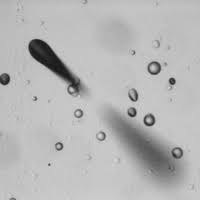
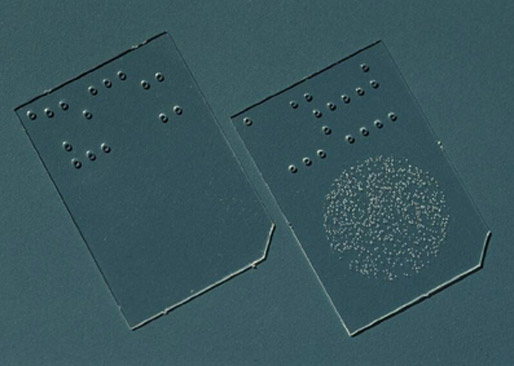
figure 1: CR-39 Detectors
3. Literature Review
Many indoor radon surveys have been performed throughout the world in residential environments with CR-39 solid state nuclear track detectors. These detectors are well known for their suitability for long-term passive monitoring of radon, and suitability in massive-scale residential investigations. Factors affecting indoor radon concentration are geological setting, construction types, ventilation patterns and seasonal variation of the data. Table-1 shows summary of some selected published works in which CR-39 detectors were used for indoor radon monitoring.
Table (1): Summary of Previous Studies on Indoor Radon Measurement Using CR-39 Detectors
|
Main Findings |
Method |
Sample Size |
Country |
Author & Year |
Ref. |
|
Higher concentrations on ground floors |
CR-39 |
80 dwellings |
Iraq |
Al-Mashhadani et al., 2013 |
[11] |
|
Granite geology caused elevated radon |
CR-39 |
95 houses |
India |
Ramola et al., 2014 |
[12] |
|
Seasonal variation with winter maximum |
CR-39 |
60 houses |
UK |
Durrani & Ilic, 2015 |
[13] |
|
Building materials influenced radon concentration |
CR-39 |
110 houses |
Nigeria |
Ademola et al., 2015 |
[14] |
|
18% exceeded WHO recommended level |
CR-39 |
150 homes |
Pakistan |
Rafique et al., 2016 |
[15] |
|
Concrete block houses showed higher radon |
CR-39 |
70 houses |
Iraq |
Al-Zubaidi et al., 2016 |
[16] |
|
Basements recorded the highest levels |
CR-39 |
200 dwellings |
Iran |
Rastegar et al., 2017 |
[17] |
|
Ventilation strongly affected radon accumulation |
CR-39 |
85 houses |
India |
Mehra et al., 2017 |
[18] |
|
Values mostly within safe limits |
CR-39 |
90 houses |
Egypt |
Hassan et al., 2018 |
[19] |
|
Correlation between soil uranium and radon |
CR-39 |
100 houses |
Pakistan |
Qureshi et al., 2018 |
[20] |
|
Older buildings had higher concentrations |
CR-39 |
60 houses |
Iraq |
Tawfiq et al., 2019 |
[21] |
|
Winter season showed higher radon levels |
CR-39 |
75 houses |
Saudi Arabia |
Najam et al., 2019 |
[22] |
|
12% exceeded 200 Bq/m³ action level |
CR-39 |
140 houses |
India |
Kumar et al., 2020 |
[23] |
|
Elevated radon near oil-rich regions |
CR-39 |
50 houses |
Iraq |
Almayahi et al., 2020 |
[24] |
|
Mud houses showed higher radon accumulation |
CR-39 |
65 houses |
Nepal |
Sharma et al., 2021 |
[25] |
|
Humidity and ventilation affected radon |
CR-39 |
82 houses |
Jordan |
Issa et al., 2021 |
[26] |
|
Groundwater influenced indoor radon |
CR-39 |
90 houses |
Iraq |
Mohammed et al., 2022 |
[27] |
|
Most dwellings below ICRP level |
CR-39 |
120 houses |
Egypt |
Ali et al., 2023 |
[28] |
|
Moderate urban radon exposure detected |
CR-39 |
100 houses |
Bangladesh |
Khan et al., 2024 |
[29] |
As shown in Table 1 indoor radon concentrations vary considerably among different countries and dwelling types. The variation is mainly attributed to geological factors, building materials, floor level, and ventilation conditions. The majority of studies reported radon levels within international recommended limits; however, some dwellings exceeded action levels, emphasizing the importance of continuous monitoring and mitigation strategies.
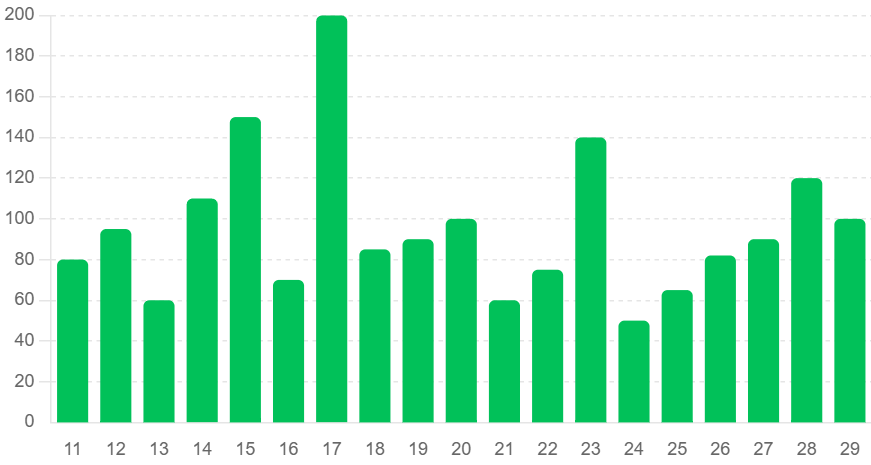
Figure 2: Sample Size Distribution of Previous Indoor Radon Studies Using CR-39 Detectors
4. Discussion
The measurement of indoor radon by CR-39 solid-state nuclear track detector is heavily employed due to its reliability and inexpensivness for long-term monitoring. The studies reviewed indicate that indoor radon levels, strongly depend on the geological structure and soil composition of the country in consideration, as well as on other factors such as building characteristics, ventilation rate and seasonal effects. Several studies indicated that dwellings built in uranium-rich or granitic terrains contained more radon than houses on sedimentary subsoil. This result corroborates the hypothesis that soil-gas exhalation is the principal radon input to indoor atmosphere [30]. The second group of contributors were the building materials, especially dwellings made with concrete blocks and mud or local soil that contained radionuclide trace [31]. Floor was also an important factor in indoor radon concentration. Several of the reviewed studies also found higher mold levels in basements and ground-floor rooms compared to upper floors because of direct contact with soil and lower rates of ventilation/air exchange[32]. This non use of aired logic had also a big influence on the radon level in the building, because natural or mechanical ventilation could reduce effectively indoor levels (this was showed to be one of the most economic measure) [33]. Different climates were also found to demonstrate its own seasonality. Radon levels in winter are usually higher than other seasons, mainly because of low ventilation and indoor–outdoor pressure differences, which promote the presence soil gas [34]. Also it was found that old housing and poor ventilation had high radon concentrations due to breaking of floors or walls that allowed passage for at ways of penetration for radon. However, most studies detected indoor radon concentrations that were below the action levels recommended internationally (such a proportion of houses was not adherent to the reference level), so reduce exposures remain warranted with regular monitoring and control for possible mitigating measures [35].
5. Conclusion
The homes were also used for long-term indoor exposure and the CR-39 proved to be a useful medium for monitoring Rn indoors. The result is that the concentration of indoor radon correlates with geological formation, building material, floor level and ventilation rate/season. It is basements and first floors that are generally the most at risk, with good ventilation still the easiest least resistance. While the concentration of radon in most homes was at internationally accepted safe levels, some exceeded agreed reference levels that required further monitoring and public awareness programmes, and consideration of how to implement protection or prevention in building standards. For this reason, an evaluation of regional surveys is necessary to set up regional radon databases for directing radiation protection, including the minimization of long-term health risk by decreasing high-radon indoor exposure.
References
[1] United Nations Scientific Committee on the Effects of Atomic Radiation (UNSCEAR). (2000). Sources and effects of ionizing radiation: UNSCEAR 2000 report to the General Assembly, with scientific annexes. United Nations.
[2] World Health Organization. (2009). WHO handbook on indoor radon: A public health perspective. World Health Organization.
[3] International Atomic Energy Agency. (2013). National and regional surveys of radon concentration in dwellings. IAEA Analytical Quality in Nuclear Applications Series No. 33. International Atomic Energy Agency.
[4] Durrani, S. A., & Ilic, R. (Eds.). (1997). Radon measurements by etched track detectors: Applications in radiation protection, earth sciences and the environment. World Scientific.
[5] Nikezic, D., & Yu, K. N. (2004). Formation and growth of tracks in nuclear track materials. Materials Science and Engineering: R: Reports, 46(3–5), 51–123.
[6] Field, R. W. (2001). A review of residential radon case-control epidemiologic studies performed in the United States. Reviews on Environmental Health, 16(3), 151–167.
[7] United States Environmental Protection Agency. (2016). A citizen’s guide to radon: The guide to protecting yourself and your family from radon. U.S. Environmental Protection Agency.
[8] International Commission on Radiological Protection. (1993). Protection against radon-222 at home and at work. ICRP Publication 65. Annals of the ICRP, 23(2).
[9] National Council on Radiation Protection and Measurements. (1984). Evaluation of occupational and environmental exposures to radon and radon daughters in the United States. NCRP Report No. 78. National Council on Radiation Protection and Measurements.
[10] Khan, A., et al. (2012). Indoor radon measurement using CR-39 detectors in Pakistan. Radiation Protection Dosimetry.
[11] Al-Mashhadani, A., et al. (2013). Indoor radon levels in Iraqi dwellings using CR-39 detectors. Journal of Environmental Radioactivity.
[12] Ramola, R. C., et al. (2014). Measurement of indoor radon in the Himalayan region. Radiation Measurements.
[13] Durrani, S. A., & Ilic, R. (2015). Radon monitoring with CR-39 detectors. Nuclear Tracks and Radiation Measurements.
[14] Ademola, J. A., et al. (2015). Indoor radon survey in Nigeria. Radiation Protection Dosimetry.
[15] Rafique, M., et al. (2016). Assessment of indoor radon using CR-39 detectors in Pakistan. Environmental Earth Sciences.
[16] Al-Zubaidi, G., et al. (2016). Indoor radon in Iraqi houses. International Journal of Physics.
[17] Rastegar, N., et al. (2017). Residential radon in Iran. Journal of Radioanalytical and Nuclear Chemistry.
[18] Mehra, R., et al. (2017). Indoor radon variation study. Radiation Measurements.
[19] Hassan, N. M., et al. (2018). Indoor radon exposure in Egypt. Arab Journal of Nuclear Sciences.
[20] Qureshi, A. A., et al. (2018). Soil and indoor radon correlation. Radiation Physics and Chemistry.
[21] Tawfiq, N. F., et al. (2019). Radon concentrations in Iraqi homes. Baghdad Science Journal.
[22] Najam, L. A., et al. (2019). Indoor radon in Saudi Arabia. Radiation Protection Dosimetry.
[23] Kumar, A., et al. (2020). CR-39-based radon survey. Journal of Environmental Radioactivity.
[24] Almayahi, B. A., et al. (2020). Geological impact on indoor radon in Iraq. Radiation Physics and Chemistry.
[25] Sharma, D. K., et al. (2021). Indoor radon in Nepalese houses. Environmental Monitoring and Assessment.
[26] Issa, S., et al. (2021). Radon levels in Jordanian dwellings. Radiation Protection Dosimetry.
[27] Mohammed, H. J., et al. (2022). Indoor radon and groundwater influence. Iraqi Journal of Science.
[28] Ali, K. K., et al. (2023). Indoor radon in Egyptian dwellings. Radiation Protection Dosimetry.
[29] Khan, M. S., et al. (2024). Urban radon exposure using CR-39 detectors. Environmental Radiation Research.
 Arabic
  English