

Flexible Interior Design in Residential Architecture: Functional Efficiency, Economic Value and Long-Term Housing Performance
التصميم الداخلي المرن في العمارة السكنية: الكفاءة الوظيفية، والقيمة الاقتصادية، والأداء السكني طويل الأمد
Muftah G. E. Muftah¹*, Bilal Rafia Abd Ati², and Fadlalla Rafh Abdelati¹
¹ Department of Architectural Engineering, Faculty of Engineering, Omar Al-Mukhtar University, Al-Bayda, Libya
² Department of Architectural Engineering, Faculty of Arts and Architecture, University of Derna, Libya
* Corresponding author: muftah.gemhe@omu
DOI: https://doi.org/10.53796/hnsj71/65
Arabic Scientific Research Identifier: https://arsri.org/10000/71/65
Volume (7) Issue (1). Pages: 1115 - 1127
Received at: 2025-12-10 | Accepted at: 2025-12-17 | Published at: 2026-01-01
Abstract: Flexible interior design is now widely recognized as a key approach to enhancing the functional efficiency and long-term economic performance of residential buildings It refers to the ability of interior spaces to adapt structurally and functionally to changing user needs over the building lifecycle. Such adaptability can reduce obsolescence, improve spatial usability and support more sustainable living conditions. Contemporary literature shows that strategies such as adaptable layouts, movable partitions and multifunctional furniture enable residential units particularly compact dwellings to accommodate multiple living scenarios without increasing built-up area. These strategies also contribute to lifecycle cost reduction and improved resource efficiency. This study adopts a qualitative descriptive–analytical approach, in the form of a narrative literature review, to synthesize global knowledge on flexible interior design and to examine its implications for functional performance, economic value and long-term housing quality. The analysis indicates that flexibility operates not only as a spatial and design feature but also as an economic and sustainability strategy that extends building lifespan, reduces renovation burdens and enhances user satisfaction. The paper concludes that flexibility should be recognized as a core performance criterion in contemporary and future residential architecture rather than a supplementary design option. It also calls for future empirical research to quantitatively evaluate the economic and environmental impacts of flexible interior strategies in real residential settings.
Keywords: Flexible Interior Design; Housing Adaptability; Residential Performance; Lifecycle Cost Efficiency; Multifunctional Spaces; Sustainable Housing.
المستخلص: يُعَدّ التصميم الداخلي المرن اليوم أحد المداخل الأساسية لتعزيز الكفاءة الوظيفية والأداء الاقتصادي طويل الأمد للمباني السكنية، إذ يشير إلى قدرة الفضاءات الداخلية على التكيّف البنيوي والوظيفي مع احتياجات المستخدمين المتغيّرة على امتداد دورة حياة المبنى. ويسهم هذا النوع من التكيّف في الحدّ من تقادم الفضاءات، وتحسين قابلية الاستخدام المكاني، ودعم أنماط معيشة أكثر استدامة. وتُظهر الأدبيات المعاصرة أن استراتيجيات مثل المخططات القابلة للتكيّف، والفواصل المتحركة، والأثاث متعدد الوظائف تمكّن الوحدات السكنية، ولا سيما المساكن المدمجة، من استيعاب سيناريوهات معيشية متعددة دون زيادة المساحة المبنية. كما تسهم هذه الاستراتيجيات في خفض تكاليف دورة الحياة وتحسين كفاءة استخدام الموارد. تعتمد هذه الدراسة المنهج الوصفي التحليلي النوعي من خلال مراجعة سردية للأدبيات، بهدف تجميع المعرفة العالمية المتعلقة بالتصميم الداخلي المرن، ودراسة انعكاساته على الأداء الوظيفي والقيمة الاقتصادية وجودة السكن على المدى الطويل. وتشير نتائج التحليل إلى أن المرونة لا تعمل فقط كخاصية تصميمية ومكانية، بل تمثل أيضًا استراتيجية اقتصادية واستدامية تسهم في إطالة عمر المباني، وتقليل أعباء التجديد والصيانة، وتعزيز رضا المستخدمين. وتخلص الدراسة إلى ضرورة اعتبار المرونة معيارًا أساسيًا للأداء في العمارة السكنية المعاصرة والمستقبلية، لا مجرد خيار تصميمي ثانوي، كما تدعو إلى إجراء دراسات تجريبية مستقبلية لتقييم الأثرين الاقتصادي والبيئي لاستراتيجيات التصميم الداخلي المرن بشكل كمي في بيئات سكنية واقعية.
الكلمات المفتاحية: التصميم الداخلي المرن؛ قابلية التكيّف السكني؛ الأداء السكني؛ كفاءة تكاليف دورة الحياة؛ الفضاءات متعددة الوظائف؛ السكن المستدام.
1. Introduction
Residential buildings across the world are undergoing significant transformation due to rapid socio-economic change, technological advancement, shifts in family structures and evolving lifestyle needs. Traditional static residential design models often fail to accommodate these dynamic conditions, resulting in spatial inefficiency and increased modification costs (Abdulqader et al., 2014; Estaji, 2017). Over time, this can lead to premature functional obsolescence and reduced long-term building value. Parallel to these developments, the notion of flexible housing has emerged as a broader framework that links interior adaptability with long-term social and economic viability. Flexible housing is commonly defined as dwellings “designed for choice at the design stage… or designed for change over their lifetime”, integrating both social use and physical rearrangement over time (Schneider & Till, 2007; Aakriti & Himashri, 2018). This perspective stresses that residential environments should remain open to changing household compositions, lifestyles and technologies rather than being fixed to a single, short-term occupancy pattern.
As a result, contemporary architectural discourse increasingly emphasises flexibility as a fundamental design principle that enhances the long-term performance of residential environments. Flexible design is also seen as a way to ensure that housing remains responsive to both present and future demands. Flexible interior design enables residential units to adapt spatially and functionally over time (Abdulqader et al., 2014), supporting multiple uses within the same configuration while minimising structural disruption and financial burden for occupants and developers. Recent reviews on housing adaptability further emphasise that such flexibility reduces the need for invasive alterations, helps to delay functional obsolescence and can support better alignment between dwelling layouts, household composition and evolving patterns of use (Estaji, 2017; Cellucci & Di Sivo, 2015).
Within the broader framework of sustainable architecture, flexibility is increasingly recognized as a key economic and environmental strategy (Jagannath, 2024), (Sokhangoo et al., 2023). By allowing spaces to evolve without extensive reconstruction or demolition, flexible interior design contributes to reducing waste, extending building life cycles, and improving resource efficiency. Recent work on adaptive reuse and building conversion further shows that interior flexibility through multifunctional, reconfigurable systems—can extend the viability of existing housing stock and converted buildings, aligning spatial adaptability with reduced material consumption and construction waste (Vuscan & Muntean, 2025).
Many recent global studies highlight that flexible layouts, adaptable partitions, and multifunctional interior solutions enable residential spaces to accommodate demographic changes, aging users, technological integration, and changing cultural patterns in a cost-effective manner. Therefore, flexibility is better understood as an essential criterion for resilient, sustainable and economically efficient housing, rather than as a secondary design preference.
2. Theoretical Background
The concept of interior design flexibility generally refers to the ability of a residential space to undergo physical, functional or organisational transformation without losing its structural integrity or everyday usability. Within the broader discourse on flexible housing, this capacity is framed as both a social and a physical property of residential space, linking patterns of everyday living with the physical organisation of the dwelling. On the one hand, flexibility is understood as enabling different social uses and patterns of inhabitation over time; on the other hand, it refers to enabling different physical arrangements of walls, openings and interior elements without major structural intervention (Schneider & Till, 2007; Aakriti & Himashri, 2018). This dual perspective is important for linking interior design decisions with long-term housing performance. The literature commonly categorizes flexibility into two principal domains:
1- Internal flexibility, which relates to the modification or reconfiguration of interior spaces, functions, and partitions in response to changing user needs (see Figure 1). Recent empirical studies on minimal housing and small apartments confirm that such internal flexibility is most effective when supported by integrated storage walls, sliding or folding partitions and transformable furniture. However, the effectiveness of these strategies is highly dependent on careful planning and context-specific design decisions.
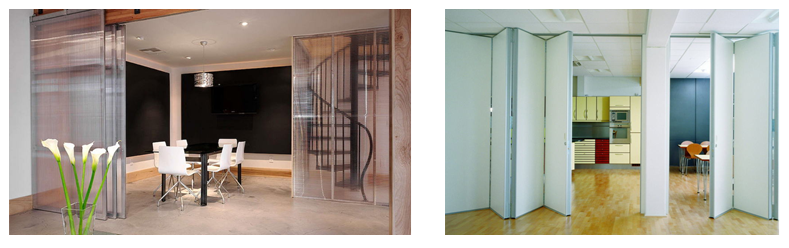
Figure 1. Vertical movable partitions illustrating adaptable interior layout reconfiguration. Source: Scandicwall (n.d.).
2- External flexibility, which encompasses building expansion, vertical or horizontal extensions, and structural adaptability to accommodate new spatial requirements over time (Estaji, 2017). In this context, horizontal flexibility refers to the ability of interior layouts to be reorganised, combined or separated to support evolving functional needs without major structural intervention (see Figure 2).
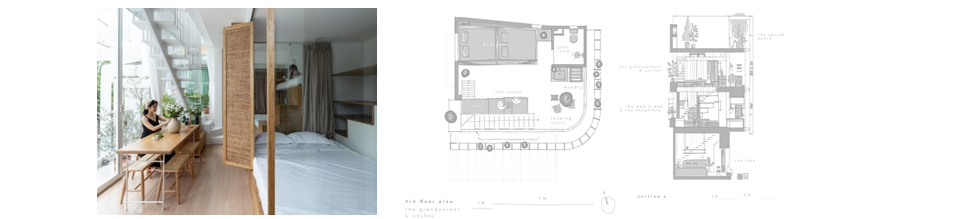
Figure 2. Horizontal flexibility in residential design illustrated through adaptable spatial organization and reconfigurable living environments in Tiam Coffee Shop & Home. Source: ( ArchDaily).
Scholars in architectural theory have further elaborated flexibility into various forms, including spatial flexibility, functional adaptability, multi-use planning, and long-term adaptability of interior environments. Among these, multifunctional and transformable furniture represents a key mechanism for achieving interior flexibility, as it allows the same residential space to perform different functions without structural modification (see Figure 3). Recent analytical studies of limited-area residential units emphasise that multifunctional furniture can compensate for spatial constraints by allowing the same cubic volume to host sequential activities across the day, thus improving functional density without compromising comfort or privacy (Moumani et al., 2025).
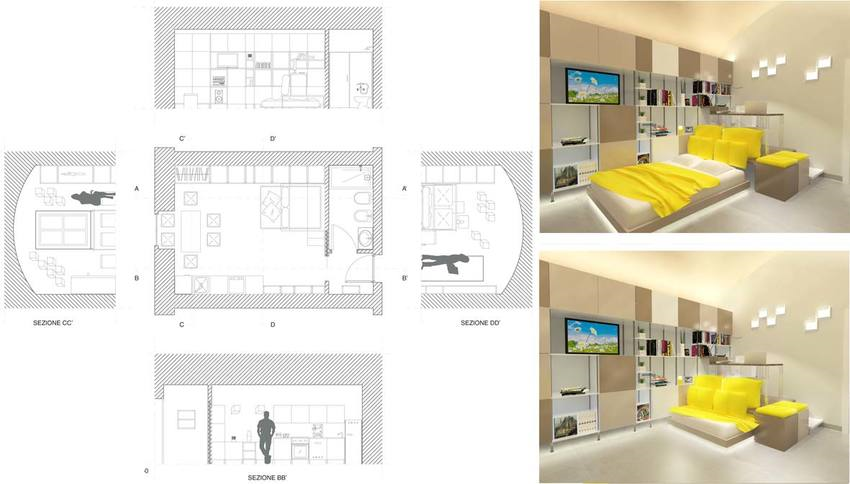 These forms emphasize the ability of housing units to support changing household sizes, new patterns of domestic activities, and evolving technological or social needs. The literature also strongly links flexibility to economic performance, arguing that adaptable residential interiors reduce renovation costs, limit the need for relocation and increase property value by maintaining functional relevance over extended periods.
Figure 3. Multifunctional and transformable furniture demonstrating flexible interior use in compact residential environments. Source: Canepa, S. (2017).
Moreover, flexibility is closely associated with sustainability principles. By reducing demolition and extensive reconstruction processes, adaptable interior designs help minimize material waste and environmental impact while improving economic resilience. Globally, flexible housing approaches have been promoted within sustainable development discussions as a strategic response to uncertainty in future housing demands, fluctuating market pressures, and long-term utilization efficiency (Jagannath, 2024), (Sokhangoo et al., 2023).
3. Methodology
This article adopts a qualitative descriptive–analytical research design and is positioned as a narrative literature review. The aim is not to provide a statistically representative meta-analysis, but rather to synthesise and critically interpret dispersed theoretical and empirical knowledge on flexible interior design in residential architecture.
The review focuses primarily on peer-reviewed journal articles, academic books and documented case-based studies published between 2000 and 2025. This time frame was selected to capture both foundational theoretical contributions and more recent discussions responding to contemporary residential challenges. Seminal theoretical works predating this period (e.g. Habraken, 1998; Schneider & Till, 2007) are retained because of their continuing conceptual relevance. Additional practice-oriented and professional sources (e.g. project documentation, design guides and manufacturers’ catalogues) are consulted selectively to illustrate contemporary applications, but are not treated as primary empirical evidence.
Conceptually, the analysis proceeds in three main stages. First, the literature is screened to identify definitions and conceptualisations of flexibility in housing and interior design. Second, the selected sources are thematically coded according to the main domains of residential flexibility. Finally, cross-cutting patterns and recurring design strategies are synthesised to derive analytical findings on how flexible interior design contributes to functional efficiency, economic value and long-term residential performance.
3.1 Scope of the Study
The scope of this study is intentionally global and cross-contextual. It draws on residential housing typologies from both developed and developing countries in order to capture a broad spectrum of climatic, cultural and economic conditions. The focus is limited to interior residential environments—room layouts, partitions, furniture systems and service cores—rather than urban-scale or territorial flexibility. This allows for a more precise examination of how interior design decisions mediate between long-term adaptability and everyday functional use, while situating these issues within wider debates on sustainable and resilient housing.
3.2 Research Limitations
As a conceptually oriented, literature-based study, this research is subject to several limitations. The analysis relies on published works that vary in methodological rigour and geographic coverage, and no primary fieldwork, post-occupancy evaluation or life-cycle cost modelling is conducted. As a result, the economic implications of flexibility are discussed in qualitative rather than quantitative terms. These limitations do not undermine the conceptual contribution of the article; instead, they highlight the need for future empirical studies.
4. Results / Analytical Findings
Building on the thematic coding of the reviewed literature, four interrelated clusters of findings emerged. These relate to: (i) the economic efficiency of flexible interiors over the building life cycle, (ii) spatial adaptability and functional performance in compact dwellings, (iii) the contribution of flexibility to environmental sustainability and (iv) the role of user participation and incremental adaptation. Together, these findings help clarify how interior flexibility operates across economic, functional, environmental and social dimensions of residential architecture. Although primarily theoretical, the analytical synthesis of global literature reveals several core findings:
4.1 Flexibility Enhances Long-Term Economic Efficiency
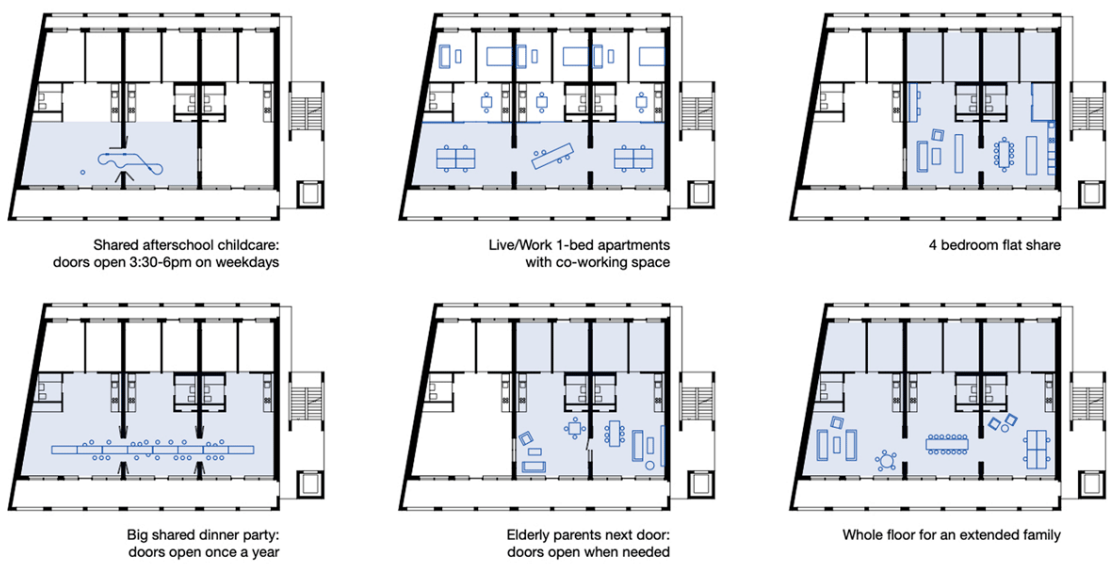 Flexible interior strategies help reduce costly structural alterations, minimise relocation pressures and extend the functional lifespan of housing units by enabling spaces to respond more effectively to evolving user needs. Although the literature rarely quantifies these benefits numerically, there is a consistent agreement that adaptable interiors lower cumulative life-cycle costs and support long-term asset value. One of the most effective architectural strategies for achieving interior flexibility is organizing the dwelling around a fixed service core, where kitchens, bathrooms, and utilities are concentrated, while the surrounding living spaces remain free and adaptable for future reconfiguration. Functional adaptability is further demonstrated through layouts that can accommodate different living scenarios and shared domestic activities across time, allowing residential units to shift between family, communal, and work-related functions without structural alteration (see Figure 4).
Figure 4. Functional adaptability and multi-scenario use in residential layouts, illustrated through the House for Artists project, where the same floor can support different household arrangements and shared activities over time. Source: Apparata Architects. (2022).
4.2 Spatial Adaptability Improves Functional Performance
Movable partitions, modular layouts, open-plan concepts and multifunctional interior elements enable more efficient use of available floor area. In compact residential environments, these strategies allow layouts to be reshaped in response to daily routines, family growth and changing work–home relationships, without increasing built-up area. This reinforces the idea that interior flexibility is not only a design solution but a functional performance strategy.(Canepa, 2017; Moumani et al., 2025).
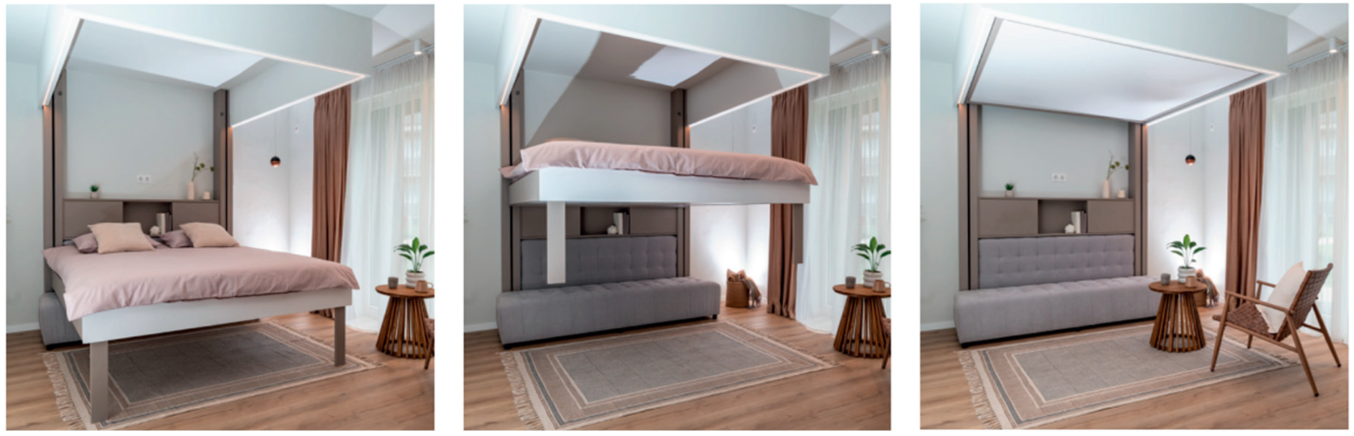 Another manifestation of interior flexibility is the ability of residential spaces to undergo functional substitution through transformable interior elements, where a single room can alternate between sleeping and living functions without structural modification (see Figure 5). Similar ceiling-integrated or wall-mounted bed systems have been discussed in the context of convertible micro-apartments and building conversion projects, where automated or semi-automated movable elements enable rooms to alternate between high-quality work, living and sleeping modes without sacrificing ergonomic standards (Vuscan & Muntean, 2025; Rogers, n.d.).
Figure 5. Functional substitution through transformable interior elements, demonstrating how a sleeping area can be converted into a living space using a retractable ceiling bed system, enabling the same room to support different functions within limited residential space. Source: Vuscan, S., & Muntean, R. (2025).
4.3 Flexibility Supports Sustainable Development Goals
By reducing demolition, reconstruction waste and material consumption, flexible interior environments contribute directly to environmental sustainability while at the same time supporting economic resilience. In adaptive reuse scenarios, multifunctional interior systems reduce the frequency of repeated fit-outs when buildings change use, thereby extending the life cycle of both structures and interior components (Vuscan & Muntean, 2025)
4.4 User Participation Strengthens Flexibility Outcomes
Several international studies emphasise that involving residents in design decision-making leads to more context-responsive and economically sustainable interior environments. Post-occupancy evidence shows that when residents are able to progressively adapt their dwellings, flexibility becomes a lived and evolving process rather than a fixed design intention (Turner & Fichter, 1972; O’Brien & Carrasco, 2021).
5. Discussion
The findings of this study highlight the critical role of interior design flexibility as a strategic approach to enhancing the economic and functional performance of residential buildings. Rather than treating flexibility as a secondary design preference, the reviewed literature consistently frames it as a key determinant of long-term housing value, adaptability and sustainability. Existing research on the explicit economic valuation of flexible interiors remains methodologically diverse and fragmented, often embedded within broader sustainability or housing debates. In this context, the present review helps consolidate dispersed insights by clarifying the main economic mechanisms through which flexibility supports value retention, reduces renovation burdens and mitigates long-term financial risks.
From a functional perspective, the literature strongly supports the notion that interior adaptability enables more efficient spatial utilization, particularly in the context of limited residential footprints and increasing housing density worldwide. Concepts such as modular layouts, open-plan design, movable partitions, and multifunctional furniture allow interior spaces to transition smoothly between various uses across different periods of occupancy, enhancing both living comfort and performance efficiency (Abdulqader et al., 2014). A further dimension of housing flexibility is long-term adaptability and incremental growth, where residential units are intentionally designed to expand horizontally or vertically over time according to changing household needs and economic capacity (see Figure 6).
Longitudinal studies of incremental social housing projects demonstrate both the opportunities and risks of long-term adaptability. While incremental frameworks enable residents to expand and customise their units over time, unregulated or poorly guided alteration processes may compromise daylight, ventilation and shared open spaces. This highlights the importance of balancing flexibility with regulatory guidance and environmental quality standards (O’Brien & Carrasco, 2021).
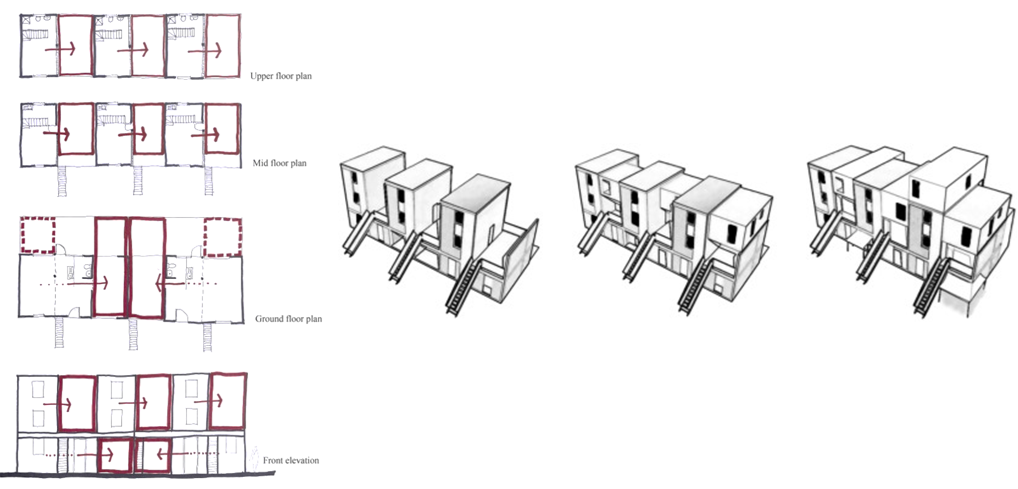
Figure 6. Incremental and long-term adaptability in housing design, illustrating the potential of residential units to progressively expand and transform over time to accommodate changing social and spatial needs. (a) Floor plan and elevation diagrams showing the stepwise growth process; (b) perspective transformation sequence demonstrating volumetric expansion over time).
Source: O’Brien, D., & Carrasco, S. (2021).
These strategies ensure that a single space can accommodate multiple activities such as living, working, dining, and leisure without requiring structural modification, which aligns closely with contemporary global living trends, including remote work and compact urban housing. Short-term residential flexibility can be achieved through sliding wall systems and movable interior modules, allowing the same living space to alternate between day and night functions while maintaining spatial continuity and minimizing the need for permanent structural change (see Figure 7).
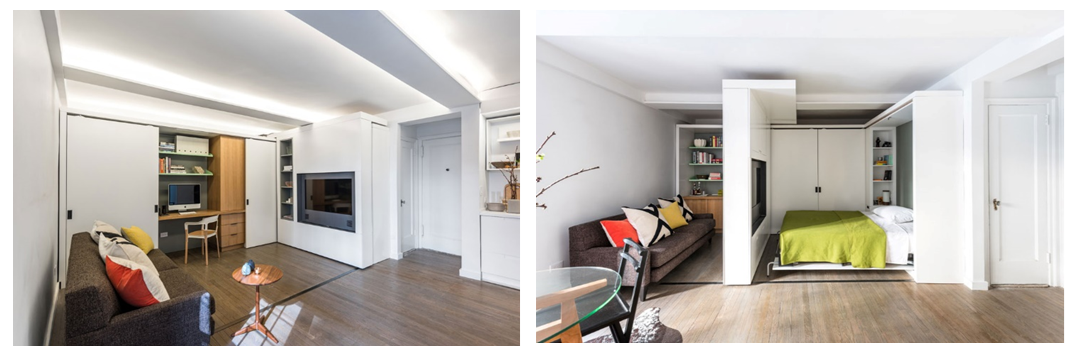
Figure 7. Short-term reconfigurable residential flexibility achieved through sliding wall systems, enabling compact apartments to alternate between living/work modes and sleeping modes without permanent structural alteration. (a) daytime configuration providing living and working space; (b) nighttime configuration transforming the same area into a bedroom through a movable interior module). Source: Rogers, S. (n.d.). Dornob. 2025
Economically, flexibility has been repeatedly linked to lifecycle cost efficiency. Studies demonstrate that adaptable residential environments reduce the frequency and scale of costly spatial alterations, minimize building obsolescence, and maintain higher long-term asset value (Tarek, 2024). Flexible housing also helps mitigate economic risk by enabling developers, governments, and households to respond to uncertain future conditions without substantial reinvestment. This aligns with broader economic sustainability frameworks that emphasize long-term value retention rather than short-term construction economy.
In addition, flexible residential design contributes significantly to environmental sustainability, reinforcing the integration between economic and ecological performance. By minimizing demolition, reconstruction, and waste generation, adaptable interiors support sustainable building life cycles, aligning with global environmental goals and green building principles (Abdulqader et al., 2014). This convergence between flexibility, economics, and sustainability positions adaptable interior design as a critical component within the global discourse on resilient and future-proof housing.
In global residential contexts, spatial flexibility is not limited to horizontal reconfiguration; it also involves utilizing vertical space to introduce additional functional capacity, improve interior performance, and support long-term adaptability without substantial structural intervention. At the same time, recent façade-oriented research highlights that environmental adaptability should also include strategies for improving indoor air quality through bio-filtration systems, absorbent materials and water-based curtain façades, which can be integrated with flexible interior layouts to mitigate pollution in naturally ventilated housing (Jarrahi et al., 2024).
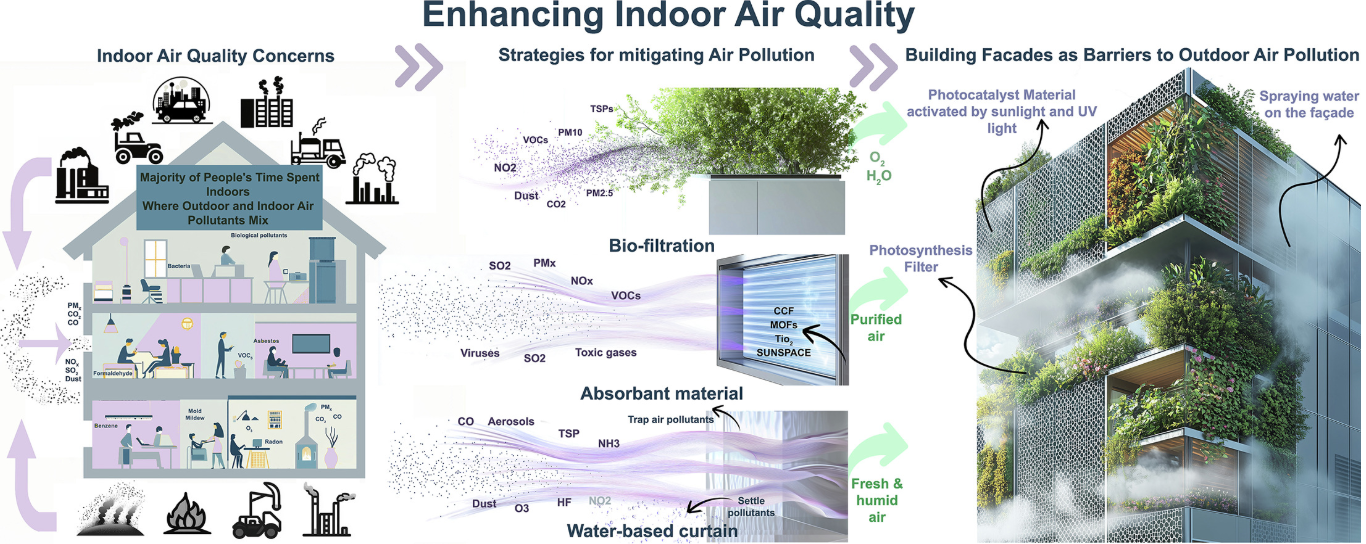 Environmental adaptability represents another essential dimension of interior flexibility, linking spatial reconfiguration with improvements in indoor environmental quality and user wellbeing. Architectural elements, bio-filtration systems and responsive façade strategies can complement flexible interior layouts, helping mitigate pollution and enhance living comfort, particularly in naturally ventilated housing contexts (see Figure 8).
Figure 8. Environmental adaptability and indoor air quality enhancement in residential environments, illustrating how architectural elements, bio-filtration systems, absorbent materials, and responsive façade design strategies contribute to reducing indoor pollution and improving overall indoor environmental quality. Source: Jarrahi, A., Aflaki, A., Khakpour, M., & Esfandiari, M. (2024).
Another key dimension revealed through literature relates to the role of user participation in supporting successful implementation of flexibility strategies. These findings align with broader debates on participatory and “open building” approaches, which argue that designers should deliberately separate long-life support structures from short-life infill so that residents can safely modify and upgrade their interiors without undermining overall building performance (Habraken, 1998; Schneider & Till, 2007).
Studies indicate that when residents are engaged in design decision-making, housing becomes more responsive to real-life needs, culturally grounded, and economically efficient, as user-informed designs reduce inappropriate or unnecessary modifications over time (Tarek, 2024). Therefore, flexibility is not solely a technical design solution; it is also a social and participatory process that recognizes users as active contributors to housing development.
Overall, the discussion reinforces that interior design flexibility is not merely an aesthetic or optional architectural attribute; rather, it is a fundamental principle that addresses functional adaptability, economic sustainability, environmental responsibility, and user well-being on a global scale. However, while theoretical and conceptual evidence is substantial, there remains a pressing need for more empirical and measurable research to quantify economic gains, evaluate long-term performance outcomes, and develop standardized frameworks for implementing flexibility in residential architecture worldwide.
Another significant dimension of residential flexibility lies in the ability of housing units to evolve gradually over time through incremental expansion and staged development. This approach allows dwellings to respond to changing household size, socio-economic conditions, and long term functional demands while maintaining economic feasibility and structural coherence.
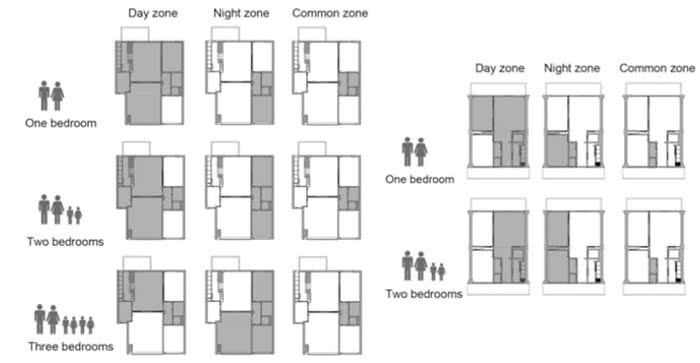 Finally, residential flexibility must also be understood as a lived, user-driven process rather than solely as a design intention. Post-occupancy evidence clearly shows that inhabitants continuously reinterpret and modify interior spaces over time in response to changing household structures, cultural practices, and everyday functional needs. Such user-centred adaptation demonstrates how flexible housing continues to evolve beyond its initial architectural configuration, reinforcing its long-term social, functional, and economic value (see Figure 9). This figure illustrates how residents modify and rearrange interior layouts after occupation, adapting spaces to evolving household needs and everyday living practices. Such user-driven transformations demonstrate that flexibility continues beyond the design phase and becomes an active process shaped by inhabitants over time.
Figure 9. Post-occupancy adaptation and user-centred flexibility in housing. Source: Femenias, P., & Geromel, F. (2020).
6. Conclusion
This study has demonstrated that flexibility in residential interior design is a fundamental strategy for enhancing both the economic and functional performance of housing. By enabling interior spaces to adapt to evolving user needs, demographic changes and technological developments, flexible environments reduce long-term modification costs, delay functional obsolescence and support the prolonged usability of residential buildings.
From an economic perspective, flexibility aligns closely with lifecycle cost considerations by supporting value retention and reducing the frequency of expensive renovations and relocations. Functionally, it allows residential spaces to accommodate multiple activities within limited footprints, which is increasingly relevant in contemporary global housing contexts. Moreover, evidence suggests that when users are actively involved in design and adaptation processes, flexibility becomes more context-responsive, socially grounded and economically efficient.
Overall, the review reinforces that interior design flexibility should be regarded as a core performance criterion, comparable to structural safety or energy efficiency, when assessing long-term housing quality. Nevertheless, it must be acknowledged that this research is conceptually oriented and relies primarily on secondary literature, which naturally imposes methodological boundaries. These limitations, however, open important opportunities for future empirical work, particularly in quantifying economic outcomes, evaluating long-term performance in real residential settings and developing measurable indicators and assessment frameworks for integrating flexibility into mainstream housing practice.
Recommendations
Based on the analytical synthesis of the reviewed literature, the following recommendations are proposed to enhance the integration and practical application of interior flexibility in residential design:
1. Flexibility should be integrated as a core design principle from the earliest conceptual stages rather than treated as an optional or secondary attribute, in order to ensure long-term adaptability, functional resilience and efficient spatial use.
2. Adopt Modular and Adaptable Interior Systems. Residential design practice should prioritise modular layouts, movable partitions, reconfigurable interior components and multifunctional furniture to enable spatial transformation while reducing renovation costs, disruption and material consumption.
3. Align Flexibility with Sustainability and Lifecycle Thinking. Flexible interior strategies should be explicitly framed as part of sustainable design agendas. Recognising adaptability as an economic and environmental strategy can help extend building lifespans, reduce waste generation and support resource efficiency.
4. Promote User Participation and Incremental Adaptation. Housing policies and design practice should support resident participation and allow safe, manageable user-driven modifications. Evidence indicates that user engagement leads to more context-responsive interiors and improves long-term economic and functional outcomes.
5. Strengthen Professional Knowledge and Practice. Educational institutions, professional bodies and regulatory authorities should emphasise flexibility in architectural curricula, training programmes and standards to better prepare designers to address evolving residential needs.
6. Incorporate Flexibility into Assessment and Policy Frameworks. Flexibility should be more systematically integrated into housing evaluation tools, building regulations and sustainability assessment frameworks as a measurable performance dimension. Developing clear guidelines and evidence-based design criteria from global case studies would support more consistent implementation.
7. Encourage Culturally and Contextually Responsive Approaches. Flexibility strategies should remain sensitive to cultural practices, social dynamics and local living patterns, ensuring that adaptable interior design remains relevant, practical and genuinely beneficial across diverse housing contexts.
Future Research Directions
Building on the insights of this study, future research should move beyond theoretical analysis toward more evidence-based evaluations of flexible interior design. Empirical investigations using life-cycle cost analysis, post-occupancy evaluation and longitudinal studies are particularly needed to quantify economic benefits, assess real-world performance and better understand user adaptation processes over time.
In addition, comparative case studies across different geographical, cultural and housing contexts are essential to examine how flexibility performs in real residential environments and under diverse socio-economic conditions. Further research should also focus on residents themselves, exploring user satisfaction, behavioural responses and everyday adaptation processes through post-occupancy evaluation, surveys and longitudinal studies.
Finally, there remains an urgent need to develop standardized assessment frameworks and measurable indicators that integrate flexibility into mainstream residential design practice and sustainability evaluation models globally. Establishing such frameworks would support designers, policymakers and housing providers in systematically embedding flexibility within future residential development.
References
-
- Aakriti, & Himashri, H. (2018). What is flexible housing: Overview, need & case studies. Urbanisation.
- Abdulqader, O. Q., Sabah, O. A., & Abdullah, H. S. (2014). Impact of flexibility principle on the efficiency of interior design. International Transaction Journal of Engineering, Management & Applied Sciences & Technologies, 5(3), 195–212.
- Apparata Architects. (2022). House for Artists – Adaptable co-housing design. In S. Pelsmakers & E. Warwick (Eds.), Housing adaptability: New research, emerging practices and challenges. Buildings & Cities, 3(1), 605–618.
- Canepa, S. (2017). Living in a flexible space. IOP Conference Series: Materials Science and Engineering, 245, 052006. https://doi.org/10.1088/1757-899X/245/5/052006
- Cellucci, C., & Di Sivo, M. (2015). The flexible housing: Criteria and strategies for implementation of the flexibility. Journal of Civil Engineering and Architecture, 9(7), 845–852. https://doi.org/10.17265/1934-7359/2015.07.011
- Designing flexible interior environments for functionality and adaptation. (2025). Biblus: Flexible interior design complete guide.
- Estaji, H. (2017). A review of flexibility and adaptability in housing design. International Journal of Contemporary Architecture “The New ARCH”, 4(2), 37–49.
- Femenias, P., & Geromel, F. (2020). Adaptable housing? A quantitative study of contemporary apartment layouts that have been rearranged by end-users. Journal of Housing and the Built Environment, 35, 481–505. https://doi.org/10.1007/s10901-019-09693-9
- Habraken, N. J. (1998). The structure of the ordinary: Form and control in the built environment. MIT Press.
- Jagannath, S., Gatersleben, B., & Ratcliffe, E. (2024). Flexibility of the home and residents’ psychological wellbeing. Journal of Environmental Psychology, 96, 102333. https://doi.org/10.1016/j.jenvp.2024.102333
- Jarrahi, A., Aflaki, A., Khakpour, M., & Esfandiari, M. (2024). Enhancing indoor air quality: Harnessing architectural elements, natural ventilation and passive design strategies for effective pollution reduction—A comprehensive review. Science of the Total Environment, 954, 176631. https://doi.org/10.1016/j.scitotenv.2024.176631
- Moumani, K. J., Mahasees, K. I., & Alkhatib, M. Z. (2025). Shaping limited residential spaces with multifunctional furniture design language: Solutions and ideas. Jordan Journal of Arts, 18(1), 107–126.
- Nguyen Khai Architects & Associates. (2022). Tiam Coffee Shop & Home. ArchDaily. https://www.archdaily.com/981358/tiam-coffee-shop-and-home-nguyen-khai-architects-and-associates
- O’Brien, D., & Carrasco, S. (2021). Contested incrementalism: Elemental’s Quinta Monroy settlement fifteen years on. Frontiers of Architectural Research, 10(2), 263–273. https://doi.org/10.1016/j.foar.2020.11.002
- Rogers, S. (n.d.). Sliding wall transforms small apartment. Dornob. https://dornob.com/adaptable-apartment-sliding-wall-transforms-small-space/
- Schneider, T., & Till, J. (2007). Flexible housing. Architectural Press.
- Scandicwall. (n.d.). Sliding walls and partitions for apartments and houses. https://scandicwall.com/blog/sliding-walls-and-partitions-for-apartments-and-houses/
- Sokhangoo, N. R., Ahmadi, V., Tabassi, M., & Seyedalhosseini, S. M. (2023). Requirements for flexible housing design in worn-out urban fabrics (Case study: Mashhad, Iran). Creative City Design, 6(4), 38–54.
- Tarek, J. (2024). Flexibility as a new approach for user satisfaction in low-income housing. Taylor & Francis Online.
- Vuscan, S., & Muntean, R. (2025). Building conversion: Enhancing sustainability through multifunctionality and movable interior systems. Sustainability, 17(7), 3182. https://doi.org/10.3390/su17073182
- Pelsmakers, S., & Warwick, E. (2022). Housing adaptability: New research, emerging practices and challenges. Buildings & Cities, 3(1), 597–636.
- Rashdan, W., & Ashour, T. (2024). Exploring sustainability in interior design: A comprehensive systematic review. Buildings, 14(8), 2303. https://doi.org/10.3390/buildings14082303
- Turner, J. F. C., & Fichter, R. (Eds.). (1972). Freedom to build: Dweller control of the housing process. Macmillan.
 Arabic
  English