

Performance and Maintenance of Reinforced Concrete Structures in a Marine Environment: A Case Study of the Port Sudan Seaport Corporation
أداء وصيانة الهياكل الخرسانية المسلحة في البيئة البحرية: دراسة حالة مؤسسة ميناء بورتسودان
Ali Mohamed Ali Badi1, Abdalla Eissa Abdelkarim2
1 Msc Student Red Sea university faculty of engineering, Sudan.
2 Assistant professor faculty of engineering civil engineering department. Sudan.
DOI: https://doi.org/10.53796/hnsj612/17
Arabic Scientific Research Identifier: https://arsri.org/10000/612/17
Volume (6) Issue (12). Pages: 223 - 228
Received at: 2025-11-10 | Accepted at: 2025-11-18 | Published at: 2025-12-01
Abstract: Marine environments are inherently aggressive towards reinforced concrete structures, primarily causing corrosion of steel reinforcement which compromises durability and long-term performance. This paper presents a case study on the performance, deterioration, and repair of five critical concrete structures within the Sea Port Corporation in Port Sudan, Sudan. The investigation diagnosed the state of deterioration through visual inspection of surfaces above the low water tide line and a review of maintenance records. The findings indicate that deterioration initiated significantly earlier than in benign environments, with elements like parapets and trench covers showing accelerated damage due to insufficient concrete cover (25 mm). However, a proactive maintenance policy involving early intervention resulted in repair costs remaining low, ranging from approximately 1% to 5% of the initial construction costs. The study highlights the critical importance of appropriate material selection, adequate concrete cover, and a structured maintenance strategy in extending the service life of marine infrastructure.
Keywords: Concrete Durability, Marine Structures, Chloride-Induced Corrosion, Repair Costs, Maintenance Strategy, Port Sudan.
المستخلص: تُعدّ البيئات البحرية بطبيعتها عدوانية تجاه الهياكل الخرسانية المسلحة، إذ تؤدي بشكل رئيسي إلى تآكل حديد التسليح مما يُضعف المتانة والأداء على المدى الطويل. يقدم هذا البحث دراسة حالة حول أداء وتدهور وإصلاح خمسة هياكل خرسانية حيوية ضمن مؤسسة موانئ البحر الأحمر في بورتسودان، السودان. وقد شخّصت الدراسة حالة التدهور من خلال الفحص البصري للأسطح الواقعة فوق خط المدّ المنخفض، بالإضافة إلى مراجعة سجلات الصيانة. وتشير النتائج إلى أن التدهور بدأ في وقت مبكر مقارنة بالبيئات غير العدوانية، حيث أظهرت العناصر مثل الحواجز وأغطية الخنادق تلفاً متسارعاً نتيجة قلة سُمك الغطاء الخرساني (25 مم). ومع ذلك، ساهمت سياسة الصيانة الاستباقية عبر التدخل المبكر في الحفاظ على انخفاض تكاليف الإصلاح، والتي تراوحت بين حوالي 1% إلى 5% من تكاليف الإنشاء الأولية. وتؤكد الدراسة على الأهمية البالغة للاختيار السليم للمواد، وتوفير غطاء خرساني كافٍ، واعتماد استراتيجية صيانة مُنظّمة لإطالة العمر الخدمي للبنية التحتية البحرية.
الكلمات المفتاحية: متانة الخرسانة، الهياكل البحرية، التآكل الناتج عن الكلوريدات، تكاليف الإصلاح، استراتيجية الصيانة، بورتسودان.
1. Introduction
The service life of reinforced concrete structures in marine areas is severely challenged by aggressive environmental loads. The primary mechanisms of deterioration include chloride-induced corrosion of reinforcement, carbonation, sulfate attack, and alkali-aggregate reactions. These processes lead to cracking, spalling, and a reduction in the structural capacity, necessitating costly repairs.
Consequently, early inspection and proactive maintenance are essential to ensure the serviceability and durability of these vital assets.
The Sea Port Corporation in Port Sudan manages heavy marine structures, originally constructed by international firms, which are constantly exposed to these harsh conditions. The port’s civil engineering department is responsible for their on going maintenance and repair. This paper investigates the performance of five specific structures, analyzing their history, observed defects, repair methodologies, and associated costs. A key consideration in repair works is the compatibility between the repair material and the existing concrete substrate to achieve a durable, monolithic repair. This study aims to provide practical insights into the deterioration patterns and effective maintenance strategies for concrete infrastructure in the Red Sea marine environment.
2. Case Study Description and Methodology
2.1 Description of Studied Structures
This investigation focuses on five operational structures within the Port Sudan seaport, representing a mix of ages, functions, and construction costs. The history of each structure is summarized in Table 1.
Table 1: History and Construction Details of the Studied Structures
|
Cost Of Construction (USD) |
Date Of Construction |
Description |
Case Name |
|
1000000 |
1998 |
Slipway |
Slipway No.1 In Dock Yard |
|
42000000 |
2000 |
Container Berths |
Extension Of Berths 17-18 In South Port |
|
35000000 |
2003 |
Bulk Berths |
Berths 21-22 In Green Port |
|
49000000 |
2007 |
Bulk Berths |
Berths 23-24 In Green Port |
|
79000000 |
2010 |
Container Berths |
Berths 13-14 In South Port |
2.2 Methodology
The assessment was conducted through a combination of:
- Visual Inspection: Detailed visual examination of all accessible surfaces of the structures, particularly focusing on areas in the splash zone and above the low water tide mark, to identify defects like cracking, spalling, staining, and reinforcement corrosion.
- Record Review: Analysis of maintenance and repair records from the Sea Port Corporation’s civil engineering department to gather data on the history of defects, repair materials used, and associated costs and timelines.
- Cost Analysis: Compilation and comparison of initial construction costs with the cumulative costs of all repair and maintenance works to date.
The primary limitation of this study is the reliance on visual inspection without quantitative data from non-destructive testing (NDT) or core sampling to determine chloride profiles or carbonation depths.
3. Results and Analysis
3.1 Observed Defects
The visual inspections revealed several common and location-specific defects:
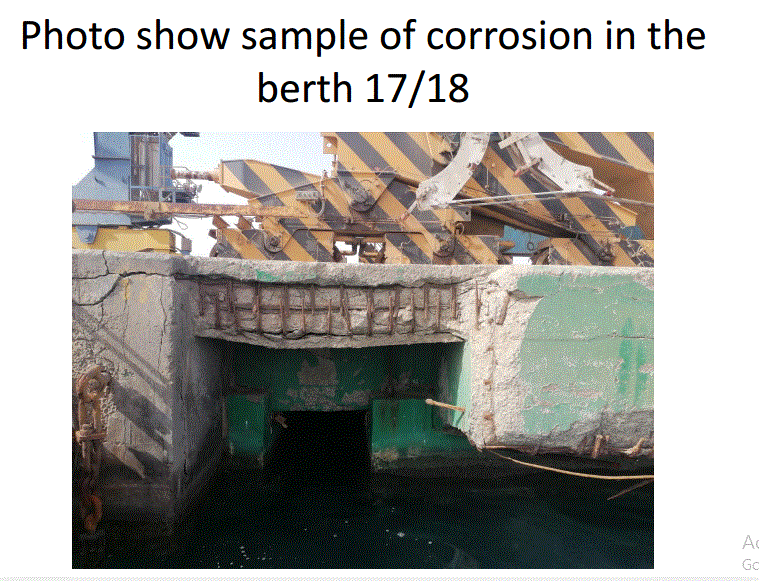
- Concrete Deterioration: Spalling and delamination were observed on the parapets of Berths 13-14 and 21-24, and on the service trench covers. This was particularly severe in areas with high exposure to wave splash and saltwater spray.
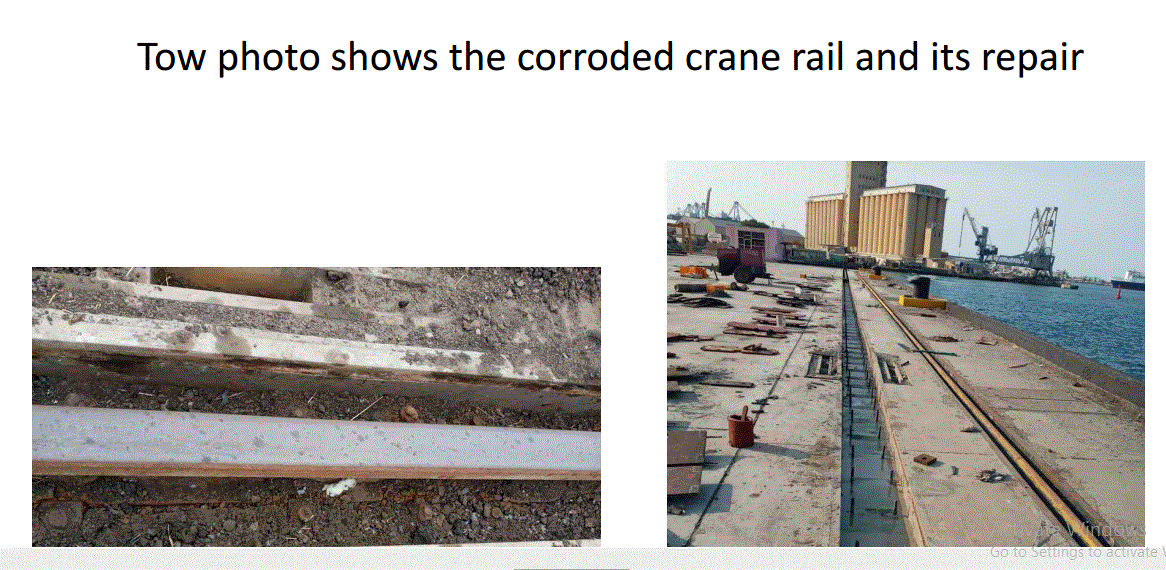
- Reinforcement Corrosion: Corrosion of steel was evident in the crane rails of Berths 13-14, the extension of Berths 17-18, and the four rails of Slipway No. 1.
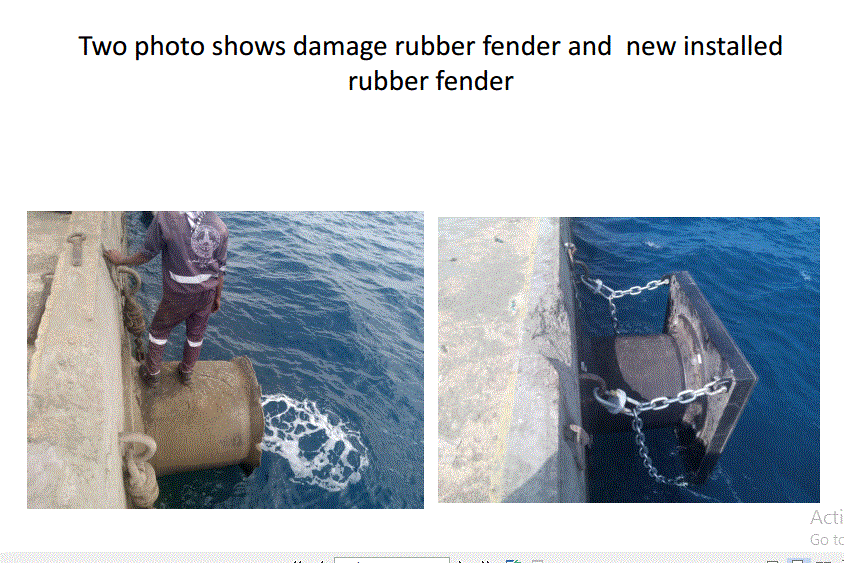
- Physical Damage: Damage to rubber fenders was a common issue across the berths.
- Abrasion: The retaining walls of Slipway No. 1 showed surface deterioration due to mechanical abrasion.
3.2 Repair Materials and Strategies
The port authority employed a range of specialized materials to address the defects:
- General Patch Repair: Ordinary Portland Cement was used for routine maintenance. For more critical repairs, Sika Rep®, a single-component cementitious mortar, was used for deteriorated concrete on both horizontal and vertical surfaces. X-Tile Construction Grout, a non-shrink cementitious grout, was used for patching thin horizontal layers.
- Structural Bonding and Anchoring: Sikadur®-31CF, a two-component epoxy-based adhesive mortar, was used for anchoring bolts and for bonding new concrete to old in the repair of crane rails.
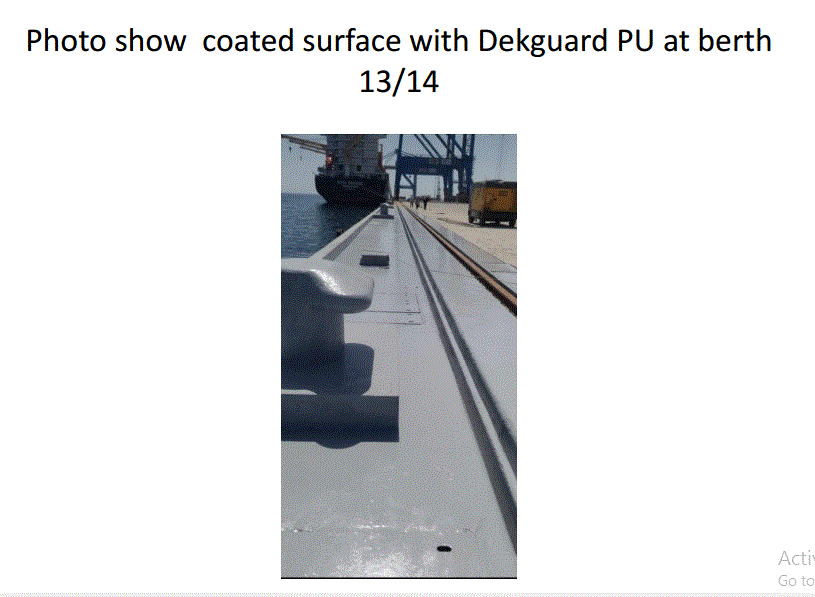
- Protective Coating: To prevent future chloride ingress, Fosroc Dekguard PU, a high-performance polyurethane coating, was applied to the top surface of Berths 13-14 over an area of 3905 m² (5m width from the apron edge).
3.3 Performance and Cost Analysis
A summary of the structure age, construction cost, and total repair costs is presented in Table 2.
Table 2: Summary of Construction Cost, Repair Cost, and Structure Age
|
Structure Age (Year) |
Cost Of Repair Work |
Cost Of Construction (USD) |
Case Name |
|
27 |
49600 |
1000000 |
Slipway No.1 In Dock Yard |
|
25 |
283200 |
42000000 |
Extension Of Berths 17-18 In South Port |
|
22 |
514520 |
35000000 |
Berths 21-22 In Green Port |
|
18 |
119250 |
49000000 |
Berths 23-24 In Green Port |
|
15 |
714740 |
79000000 |
Berths 13-14 In South Port |
The data reveals that significant deterioration requiring repair occurred relatively early in the structures’ service lives (13-25 years), compared to a typical design life of 50+ years for concrete structures in less aggressive environments.
Notably, the cumulative cost of repairs remains a small fraction of the initial construction cost, ranging from 0.2% to 5.0%. This suggests that the policy of early investigation and rapid intervention has been highly effective in preventing the propagation of damage, thereby controlling long-term costs. No failures of the repairs themselves were noted, indicating good material selection and skilled workmanship.
4. Discussion
The accelerated deterioration observed in the Port Sudan seaport is characteristic of structures in aggressive marine environments. The findings strongly suggest that the primary cause of damage, especially on parapets and trench covers, was chloride-induced corrosion of the steel reinforcement. The conclusion in the original paper that this was due to insufficient concrete cover (noted as 25 mm) is a critical finding. A 25 mm cover is wholly inadequate for the splash zone of a marine structure, where 50-75 mm would be more appropriate according to international standards (e.g., ACI 357, BS 8500).
The success of the port’s maintenance program can be attributed to two key factors:
- Early Intervention: By identifying and repairing defects before they became widespread, the engineering team was able to stop the advance of corrosion and limit the scope and cost of the repairs.
- Appropriate Material Selection: The use of specialized, high-performance repair mortars, non-shrink grouts, epoxy adhesives, and protective coatings demonstrates an understanding of the need for compatibility and enhanced durability in the repair system.
This case study provides a clear economic justification for implementing a proactive and well-resourced repair and maintenance policy for marine concrete infrastructure.
5. Conclusion and Recommendations
This study of five concrete structures at the Port Sudan seaport confirms the severe impact of the marine environment on concrete durability. The key conclusions are:
- Deterioration necessitating repairs occurred within 15-27 years, far short of the typical design life for structures in benign environments.
- Elements with high exposure and insufficient concrete cover (parapets, trench covers) deteriorated most rapidly.
- A proactive policy of early inspection and repair using high-performance materials successfully controlled the spread of damage and kept total repair costs low (below 5% of construction cost).
Based on these findings, the following recommendations are made for new and existing marine structures:
- For New Construction: A minimum concrete cover of 75 mm should be specified for all elements in the splash and tidal zones. The use of supplementary cementitious materials (like fly ash or silica fume) and corrosion inhibitors should be considered to enhance durability.
- For Existing Structures: A formal, scheduled inspection program should be implemented to detect deterioration at its earliest stages.
- For Repairs: Repair materials must be carefully selected for compatibility with the parent concrete and for high resistance to chloride and moisture ingress. The application of protective coatings Foundational Standards and Guides:
References
- ACI Committee 357. (2014). Guide for the Design and Construction of Fixed Offshore Concrete Structures (ACI 357R-14). American Concrete Institute, Farmington Hills, MI.
- BS 8500-1:2015+A2:2019. Concrete – Complementary British Standard to BS EN 206. BSI Standards Ltd.
- Mehta, P. K., & Monteiro, P. J. M. (2017). Concrete: Microstructure, Properties, and Materials (4th ed.). McGraw-Hill Education.
- Broomfield, J. P. (2007). Corrosion of Steel in Concrete: Understanding, Investigation and Repair (2nd ed.). Taylor & Francis.
- Angst, U., Elsener, B., Larsen, C. K., & Vennesland, Ø. (2009). Critical chloride content in reinforced concrete – A review. Cement and Concrete Research, 39(12), 1122-1138.
- Scott, A., & Alexander, M. G. (2016). A review of the effect of environmental and construction factors on the durability of marine concrete in southern Africa. Journal of the South African Institution of Civil Engineering, 58(1), 25-34.
- Yoon, I. S., & Schlangen, E. (2012). A quantitative study on the effect of the concrete cover thickness on the service life of RC structures in a chloride-laden marine environment. Journal of Advanced Concrete Technology, 10(11), 353-365.
- Al-Amoudi, O. S. B. (2002). Attack on plain and blended cements in aggressive sulfate environments. In: Performance of Concrete in Marine Environment, ACI SP-109, American Concrete Institute, pp. 217-239.
- Bassuoni, M. T., & Nehdi, M. L. (2007). Resistance of self-consolidating concrete to sulfuric acid attack with and without fiber reinforcement. Cement and Concrete Research, 37(7), 1070-1084.
- Fosroc International Ltd. (2023). Dekguard PU Technical Data Sheet. [Online]. Available at: [Manufacturer’s Website]
 Arabic
  English