

Resources and Sustainable Development Prospects in Doukala Coast: Seaweed in Moulay Abdellah Center and Oyster Farming in Oualidia Lagoon
آفاق الموارد والتنمية المستدامة في ساحل دكالة: الطحالب البحرية في مركز مولاي عبد الله وتربية المحار في بحيرة الوليدية
AMIRY Younes1
1 Research in geography, Laboratory for Spatial Recomposition and Sustainable Development, Faculty of Arts and Humanities, El Jadida, Morocco
Email: amiryyounes@gmail.com
DOI: https://doi.org/10.53796/hnsj74/20
Arabic Scientific Research Identifier: https://arsri.org/10000/74/20
Volume (7) Issue (4). Pages: 288 - 295
Received at: 2026-02-12 | Accepted at: 2026-02-19 | Published at: 2026-03-01
Abstract: This article tackles the issue of resources reality and sustainable development prospects in Doukala coast through studying the case of seaweed collection in Moulay Abdellah Center and oyster farming in Oualidia lagoon, where seaweed exploitation brings about a substantial local economic income. However, it undergoes numerous problems attributed to: seaweed harvesters not respecting seaweed biological rest, fierce seaweed harvesting cooperations’ competition by the exploitation of human beings and buying prices disparity due processing institutions proliferation. Besides, oyster farms in Oualidia lagoon have a socio-economic value manifested in availing a substantial number of job opportunities, reinvigorating some economic activities like tourism and trade. Yet, it suffers from many constraints like the inability of some companies to meet renewing their temporary exploitation licenses requirements and farms infrastructures poor maintenance. The status quo necessitates adopting a new development model based on optimum exploitation of these resources through designing a scheme for preparing oyster farms in Oualidia lagoon in addition to managing the collection of seaweed in Moulay Abdellah Center to avail fixed job opportunities and promote their products.
Keywords: Resources, Sustainable development, Oualidia lagoon, Seaweed, Oyster farming.
المستخلص: يعالج هذا المقال إشكالية واقع الموارد وآفاق التنمية المستدامة بساحل دكالة من خلال دراسة حالة جمع الطحالب البحرية بمركز مولاي عبد الله، وتربية المحار بهور الواليدية، حيث يمثل نشاط استغلال الطحالب موردا اقتصاديا محليا هاما. إلا أنه يعرف عدة مشاكل ناتجة عن عدم احترام المستخرجين للراحة البيولوجية، واستغلال واحتدام المنافسة بين التعاونيات من خلال استغلالها العنصر البشري لاقتلاع الطحالب، وتباين أثمنة الشراء نظرا لتعدد مؤسسات المعالجة. كما تكتسي ضيعات تربية المحار بهور الواليدية أهمية سوسيوقتصادية، تتمثل في توفير عدد مهم من فرص العمل، وتنشيط بعض الأنشطة الاقتصادية كالسياحة والتجارة. غير أنها تعاني من عدة إكراهات، كعدم قدرة بعض الشركات استيفاء شروط تجديد رخص الاستغلال المؤقتة، وضعف صيانة البنية التحتية للمزارع. تفرض الوضعية الحالية تبني نموذج جديد للتنمية يقوم على الاستغلال الأمثل لهذه الموارد، من خلال وضع مخطط تهيئة ضيعات تربية المحار بهور الواليدية، وتنظيم جمع الطحالب البحرية بمركز مولاي عبد الله، لتوفير مناصب شغل قارة بها وتثمين منتوجاتها.
الكلمات المفتاحية: الموارد، التنمية المستدامة، هور الواليدية، الطحالب البحرية، تربية المحار.
Introduction:
The social economy in Morocco is one of the main new development model levers within the framework of advanced regionalization, given the important potentials it provides for combating poverty and social exclusion by creating wealth, new job opportunities and organizing the informal sector. Social economy has remained far from the concerns of successive governments that have focused on macroeconomic policies. However, with the adoption of the 2011 Constitution, interest in the social economy increased. A national strategy for social economy was allocated for the period between 2010 and 2020. And then it was reviewed by a action program for the period between 2018 and 2028 in line with the requirements of sustainable development. Additionally, a ministry specialized in social and solidarity economy was created, which defines social economy as “the sum of economic and social activities organized in the form of structured bodies or gatherings of physical and legal persons for fulfilling societal and common good, which are independent activities subject to an independent, democratic and participatory measure in which participation is free” (Economic, Social and Environmental Council, 2015).
Doukkala Coast is characterized by natural, human and economic peculiarities which can form a foundation basis for moving territorial development wheel, provided that it is directed according to the strategy of integrated and sustainable development to achieve several bets related mainly to revitalizing and strengthening the field of study economic base. Doukkala Coastline is characterized by the concentration of economic activities mainly related to the touristic and industrial sectors, as well as activities related to the sea that includes a group of incomegenerating activities such as fishing and collecting shellfish, some types of algae, salt extraction and others, especially the collection of algae in the Moulay Abdallah center, the cultivation of mollusks, and in particular oyster breeding in Oualidia Lagoon. The latter plays an important economic and social role for the local population despite the constraints it faces.
What is sustainable development resources and prospects reality in Doukkala Coast through studying marine algae condition in Moulay Abdallah Center and oyster breeding in Oualidia Lagoon?
- Field of study
By Doukkala coast, we mean the strip between Azemmour in the north and Safi in the south, at a distance of 150 km and with a width of between 20 and 50 km inward. It is a product of the development of ever-changing natural, human and economic environments. Therefore, it constitutes a fragile territorial unit that depends to a large extent on the interaction of different elements. It also has a variable extension starting from the confluence of the maritime and continental modes, and is not necessarily subject to administrative boundaries, but to the boundaries of the overlapping relations between the two modes which in turn differ within the same territory (Hilal Abdelmajid, 2009). This framework includes the field of study that consists of (Map 1).
- Moulay Abdallah Center: It belongs to Moulay Abdallah territorial Commune in El Jadida province. It is characterized by a coastal road next to the regional road No. 301 linking El Jadida and Oualidia. It is 6 km away from the city of El Jadida, and about 29 km from the center of Oualidia. Its emergence and growth in general was associated with the settlement of industrial units in the Jorf Lasfar region and the administrative and technical supervision of the territorial commune Moulay Abdallah with the creation of a group of public administrations and sociocultural facilities in the center and the surrounding countrysides. Its population went from 4397 people in 1994 to 12456 people, according to the 2014 census.
- Oualidia Lagoon: It is located on the Atlantic Ocean coast of in Oualidia Territorial Commune, 75 km from El Jadida city and 66 km from Safi city on regional road No. 301. It extends over a distance of 7.5 km in the north direction, with a width of about 500 meters. Its total area is estimated at 3.5 km2. It is the result of the leakage of marine water through outlets and holes, either big that help the return of sea water, or small ones that do not allow its return. Adjacent to it, there is a regular tourist residence in the center of Oualidia. Oualidia Lagoon is of ecological value due to the biological diversity it includes and its economic value. It contains a range of economic activities such as fishing, collecting shellfish, extracting salt and others. And its most important unique activity is the cultivation of mollusks, especially oyster farming, which made it gain local, national and international influence.
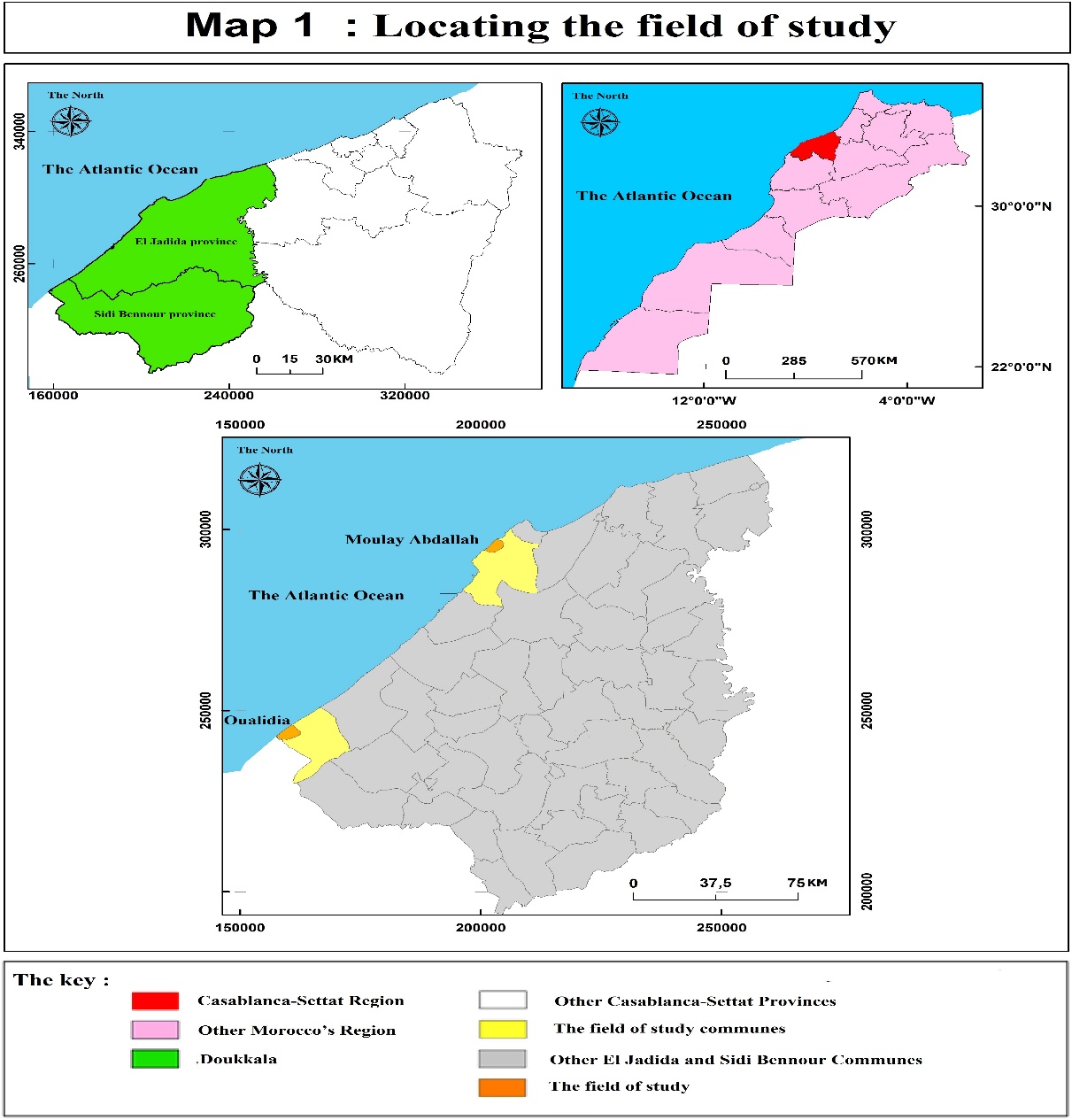
Source: Diagnostic Territorial de la Commune rurale de Moulay Abdellah (P :10), Oualidia (P :9), Direction Générale des Collectivités Locales & Agence de Développement Social & L’Initiative Nationale pour le Développement Humain, 2010, (modified).
- Study methodology and tools
In addressing the problem of this article, we relied on a statistical and field study based on the deductive analytical approach, which was founded on reading the various studies, references and documents that dealt with the problem. We also adopted several tools for field work, such as questionnaires and field inspection by relying on a sample of 297 heads of families in Moulay Abdallah Center and 180 in the Oualidia center, i.e. 10% of the total families of each center. Additionally, we relied on official statistical sources for analyzing socio-economic data based on some administrative departments’ data, such as: the Fisheries Delegate in El Jadida and El Oualidia. Moreover, field trips to the coast of Moulay Abdallah and oyster farms in Oualidia Lagoon provided other data. We adopted a systemic analytical approach with the aim of highlighting the reality of resources and sustainable development prospects in the coast of Doukkala by studying the condition of marine algae at the Moulay Abdallah Center and oyster farming in Oualidia Lagoon.
- Findings and discussions
3.1 The collection of algae is a seasonal resource for the inhabitants of the Moulay Abdallah Center
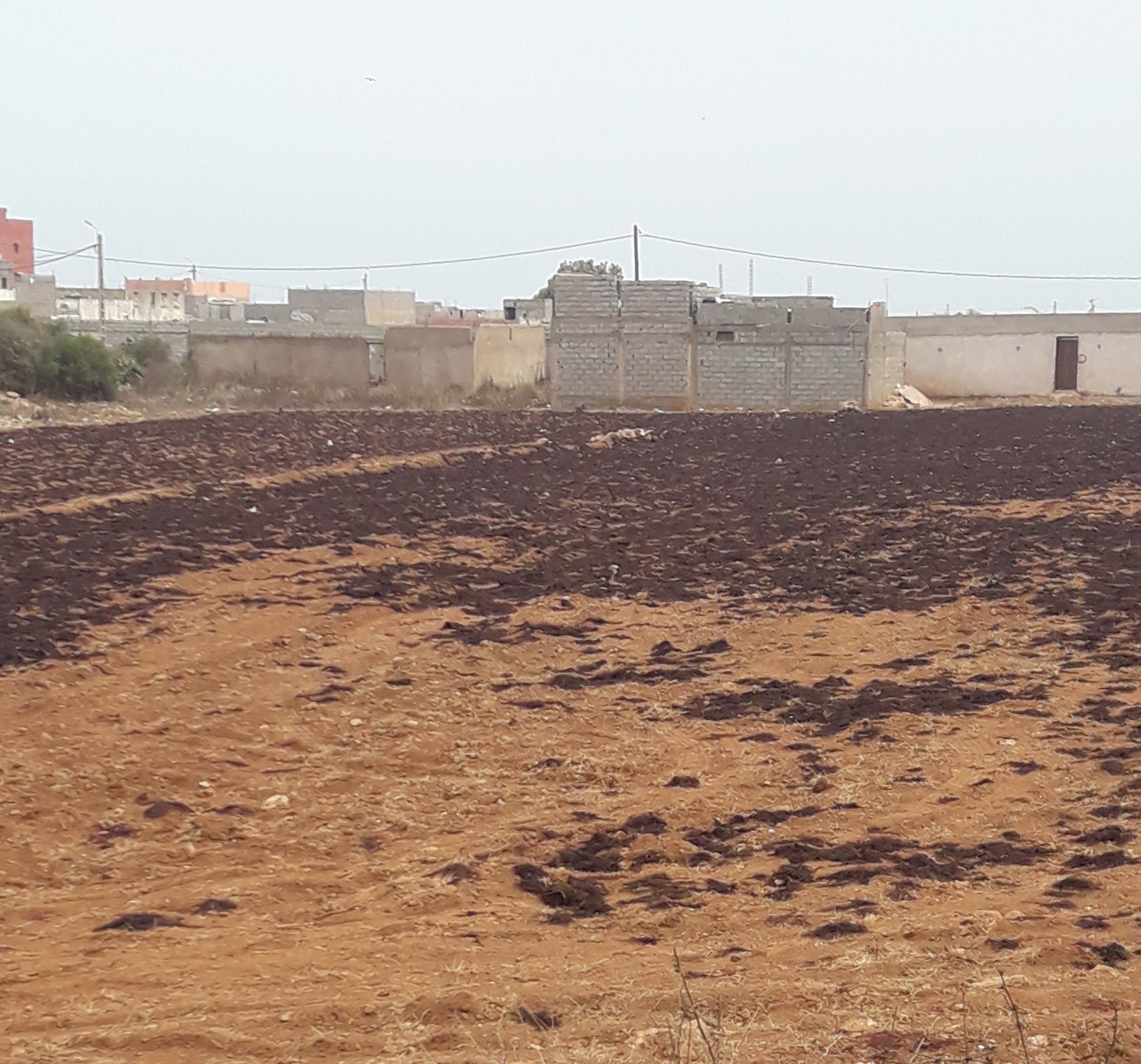
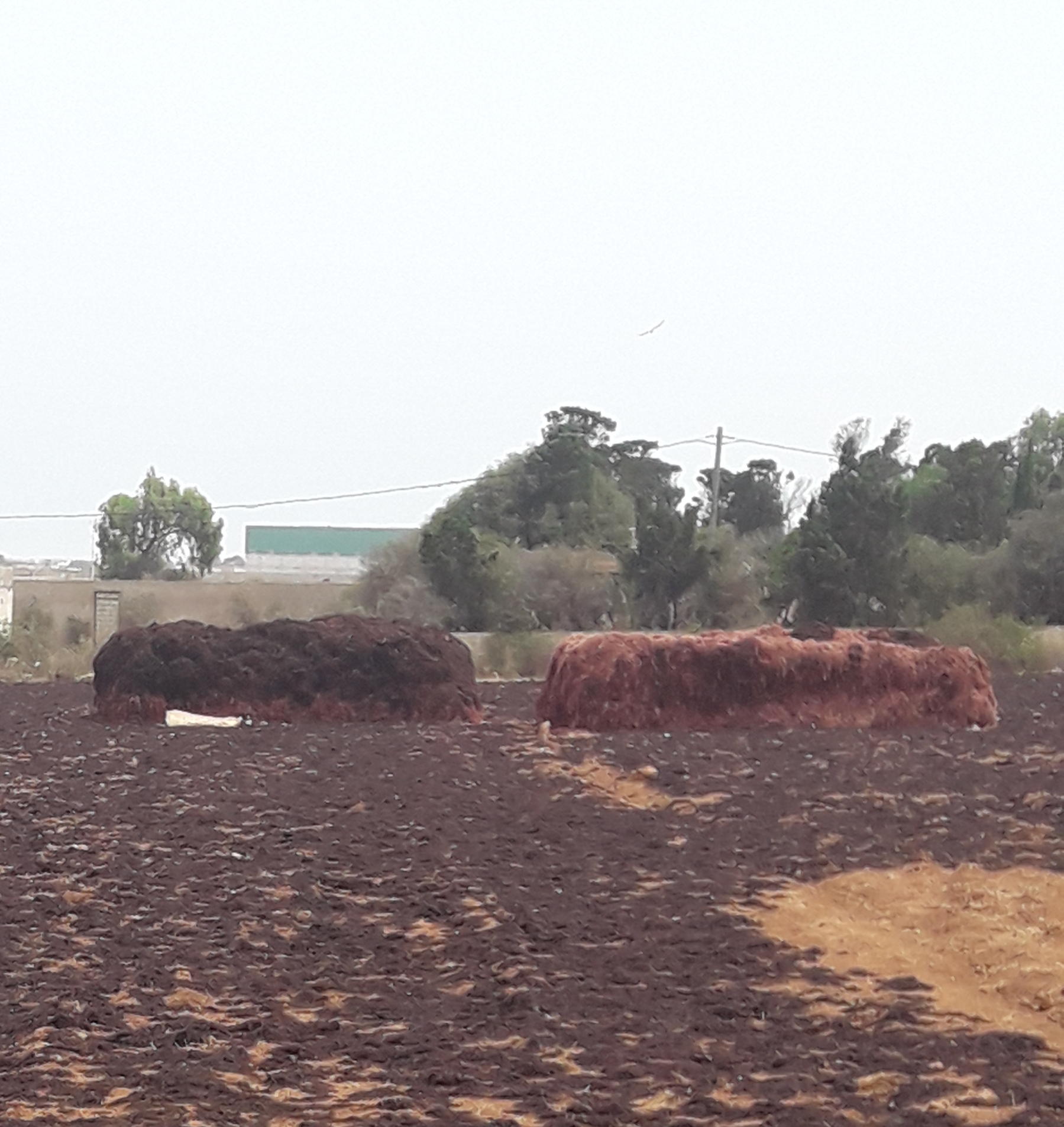
The process of extracting marine algae is an essential activity on the coast of Moulay Abdallah Center because of its significant financial income to the local population. It is practiced seasonally from July to September 1st according to Ministerial Resolution No. 2638 of May 24, 1993. While the rest of the year represents a period of biological rest imposed by The Ministry of Maritime Fisheries to ensure its growth and preserve living wealth, especially after the marine fields became known to be extensively exploited in recent years. Before marine algae become an economic resource extracted by traditional and modern methods, fragile social groups of both sexes have been participating in it, and we may sometimes find the whole family practicing this activity in various ways and methods from the process of diving, collecting, spreading and drying algae (Picture 1).
Picture 1: The process of collecting, spreading and drying marine algae in the agricultural lands in the margins of the Moulay Abdallah Center
Spreading and drying algae on agricultural lands in the margins of Moulay Abdellah
The process of collecting algae on agricultural lands in the margins Moulay Abdellah Center
Source: Fieldwork, 2018
Algae are sold either wet or dried. The price of the first is about 6 dirhams, and the second is 10 dirhams. The wholesalers pay it to the processing establishments locally. In addition to the direct and indirect employment opportunities provided by collecting algae, it provides important economic resources for companies that convert it into “L’agar-agar” and export it abroad. It is a gelatinous substance, the export of which provides twice as much hard currency as can be achieved from the export of raw algae.
3.2 Algae collecting sector in Moulay Abdallah Center faces several constraints
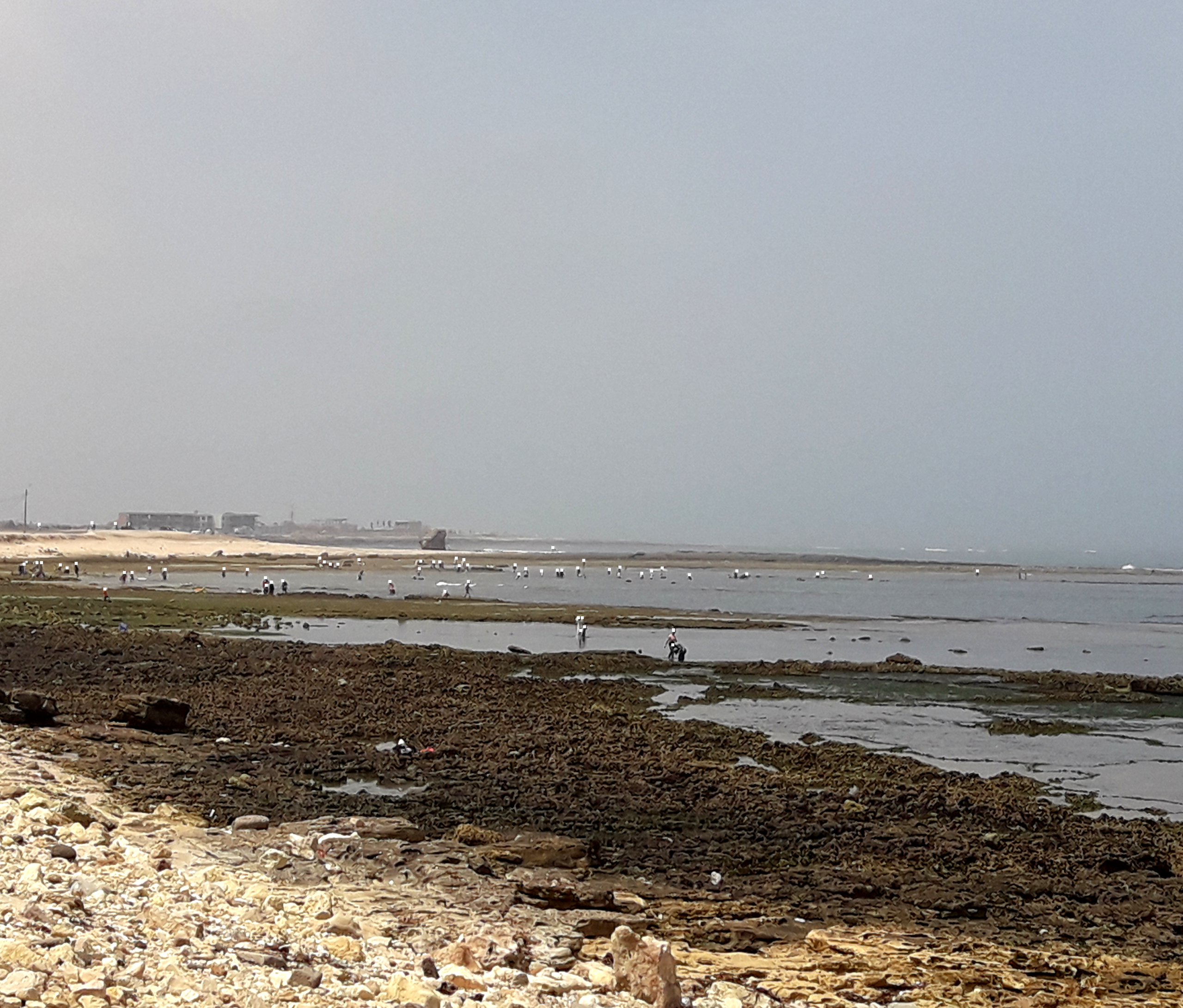
The exploitation of algae represents an economic resource for the population of the field of study despite its seasonality, but it undergoes several problems resulting from extractors violating the biological rest, the exploitation of the qualified human resource by algae extraction cooperatives. Add to this, there is fierce competition among cooperatives on the level of disrespect for the allocated space and purchase prices. Moreover, algae market monopoly by brokers who buy algae and sell it to companies at prices that exceed the purchase price is another constraint. Furthermore, it faces another problem which is the shortage and lack of necessary means and equipment’s such as boats, clothing, protective equipments, the negative effects of household waste, whether liquid or solid, and waste from Jorf Lasfar factories which threaten the life of marine algae (Picture 2).
Picture2: Secretly collecting algae and Jorf Lasfar laboratories machines’cooling water draining in Moulay Abdellah Beach
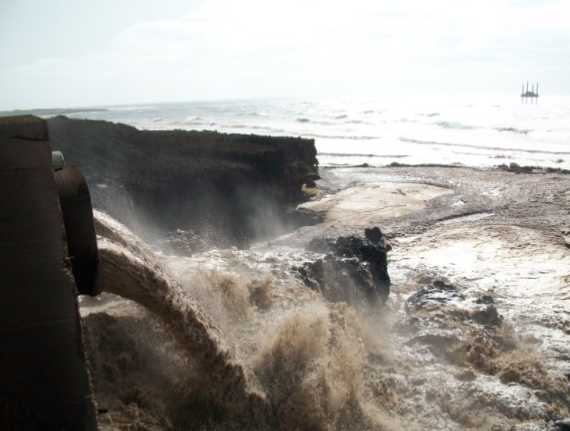
Jorf Lasfar factories machines’ cooling water drainage on Moulay Abdellah Beach
The process of secretly collecting marine algae on Moulay Abdallah center coast
Source: Fieldwork, 2018
The absence of a regulating law defining the duties and rights of all those involved in the sector opened the door for of many brokers, speculators and monopolists. There are about 4000 divers working for their own and not within cooperatives or companies. Marine Fishing Delegation lack resources and means to prevent the extraction of algae outside its legal time. The harvesting process begins three months before the opening of the season, using unidentified small boats at night, and not respecting the biological rest period specified by the Ministry of Fisheries (2019عاميري، يونس).
3.3 Oyster farming provides job opportunities for the population of Oualidia
Oualidiya Lagoon is characterized by natural qualifications that are compatible with the conditions of shellfish cultivation. In 1956, the first attempts to breed shellfish were recorded, especially the oyster variety in Oualidia Lagoon by a French who settled in the center of Oualidia and established the first farm (parc 7). The success of this experiment encouraged the local population to take interest in this activity. A second farm was established (Parc 10) in 1963, then a third (Parc 3) in 1971. Spain and Portugal constitute the main supplier of Oualidia farms with Damoos, a small oyster whose length ranges between 300 and 340 microns. The production ranged between the sixties and the nineties between 60 and 120 tons annually, in addition to the increase in the number of farms. In 1972, the Portuguese cupped oyster (l’huite creuse) was dispensed with to be re-placed by the Japanese oyster (Crassostra giga) which was introduced into France in the beginning of the seventies, starting from Japan and Canada. It is characterized by its high fertility, the female lays between 50 and 200 million eggs, and the speed of its adaptation to local conditions (BAALLA. A., 2009).This had a positive impact on the quality and profitability of the product.
Table 1: The area of the most important oyster farms in Oualidia Lagoon and their production evolution between 2011 and 2015
|
Production |
Oyster origin |
Area |
Name of the farm |
||||
|
2015 |
2014 |
2013 |
2012 |
2011 |
|||
|
9000 |
229500 |
78000 |
59000 |
13500 |
Local |
40000 |
Osteria |
|
115000 |
118685 |
– |
– |
– |
Imported |
||
|
10000 |
121000 |
122000 |
128000 |
0 |
Local |
60000 |
Africa |
|
76000 |
22100 |
– |
– |
– |
Imported |
||
|
4000 |
217000 |
18150 |
18150 |
2000 |
Local |
1018 |
Kali |
|
19000.90 |
217000 |
– |
– |
– |
Imported |
||
|
– |
25500 |
12000 |
12000 |
0 |
Local |
13054 |
Rouane |
|
28000.50 |
286885 |
– |
– |
– |
Imported |
||
|
261001.4 |
1237670 |
230150 |
217150 |
15500 |
Total |
||
Source: Maritime Fisheries Delegation, El Jadida, 2018
Oualidia Lagoon witnessed attempts to collect natural oysters as a step to develop the local product, but the process did not lead to the desired results. In addition to this, breeders got interested in foreign oysters, espe-cially the Japanese, due to its high productivity compared to the local and Portuguese type (SHAFEE, M. S. & SABATIE, M. R., 1986). The number of oyster farms in Oualidia Lagoon has also increased moving from three farms at the end of the eighties to five in the nineties. Currently, the number is nine, and the average amount of production during the 11 years from 2000 to 2011 reached about 150 tons per year. This production witnessed a decline from 2008 to 2011 which is explained by the suspension of a number of farms due to organizational problems, such as the failure of some to renew temporary exploitation licenses as well as the prevention of the sector’s guardians from importing oyster spat from abroad in 2008 due to the outbreak of a parasitic disease in France. This prompted the owners of the farms to import oysters from Dakhla which helped increase its production as it moved from 15.5 tons in 2011 to about 261 tons in 2015 (Table 1). This activity avails about 100 jobs. Oysters are marketed locally in restaurants and hotels in the center of Oualidia and on its beach of by street vendors. Oysters can also be purchased directly from the farms through direct interaction between farms and marketing centers, or through intermediaries at the national level.
3.4 Oyster farming suffers from several problems contributing to the decline of its socio-economic role
Oyster farming activity in the Oualidia Lagoon suffers from several problems that contribute to its deterioration and hinder its development. These problems can be classified into organizational and technical problems that are mainly related to the unorganized distribution of activity at the Lagoon level. This is represented by the convergence of farms and their overlapping, sometimes, which raises conflicts between the beneficiaries of the Lagoon for the right to exploit the public domain in oyster farming, and to occupy all the cross section of the main channel that impedes the process of entering and exiting waters to and from the lagoon during ebb and flow periods. Another problem is the expiration of the temporary exploitation licenses for marine areas, and the inability of some companies to meet the renewal conditions. Poor maintenance of farm infrastructure also contributes to its deterioration (2019 عاميري يونس،).
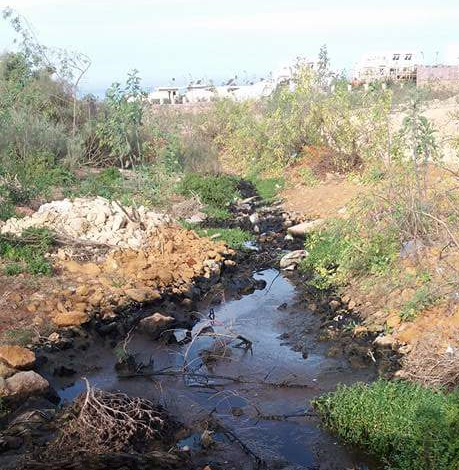
Picture 3: Oyster breeding boxes in need of maintenance, and the leakage of water and chemicals used in agriculture into the lagoon
Leakage of water and chemicals used in agriculture into the lagoon
Oyster breeding boxes in need of maintenance “Osteria” farm
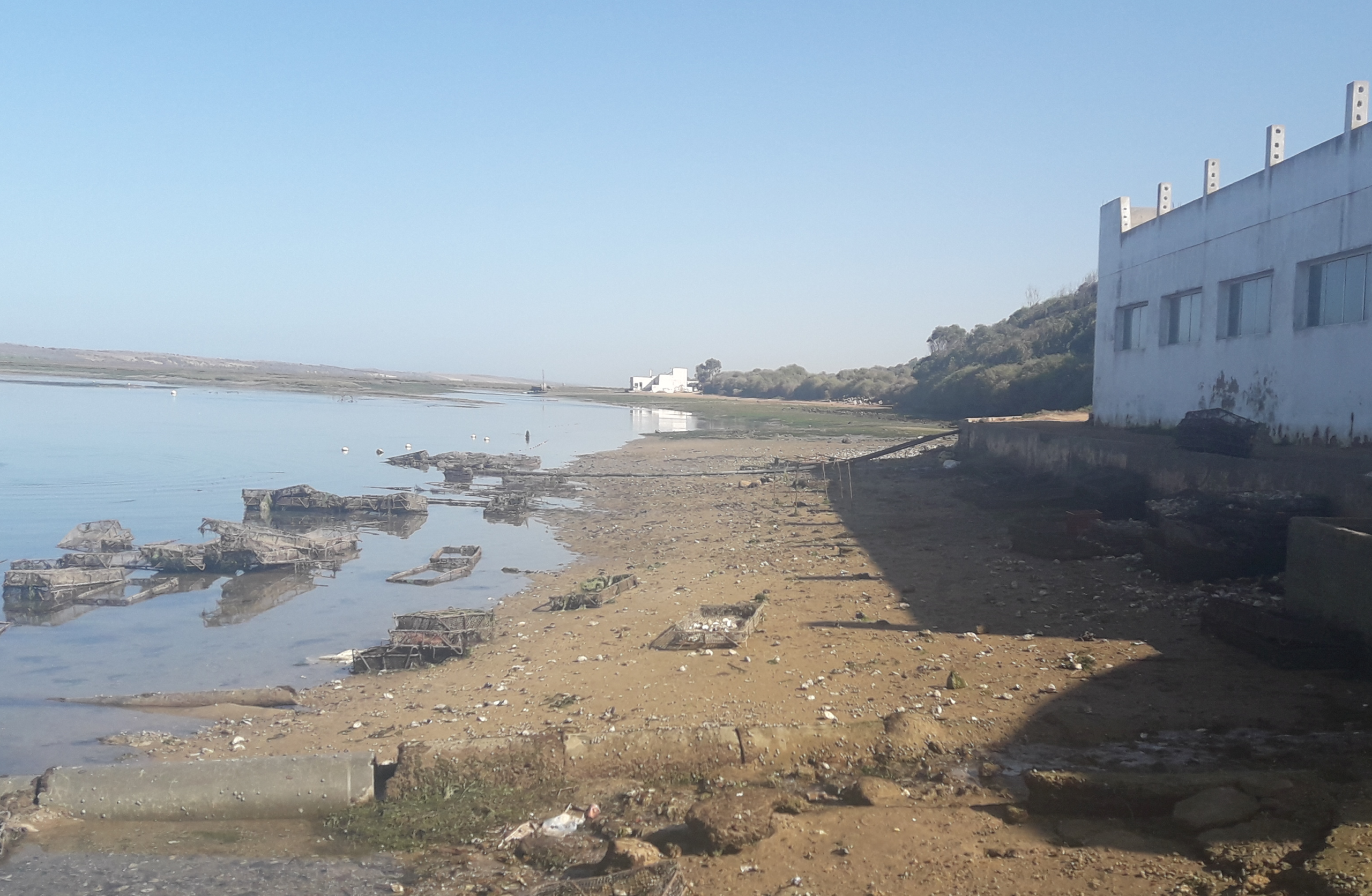
Source: Fieldwork, 2018
The environmental problems are manifested in the deterioration of the ecological situation of the Oualidia Lagoon. It is the result of the leakage of wastewater used by tourist facilities and sewage water into the lagoon, the leakage of chemicals used in agriculture by exploitations adjacent to the lagoon, and the change in the morphological situation of the lagoon. The sink is witnessing enrichment at the level of the sedimentary budget which threatens to close the two main outlets that are considered to be the lagoon’s way to connect to the ocean. This will lead to eliminating the hydrodynamic activity inside it that will change hydrobiological properties, and the possibility of eliminating the optimal conditions for oysters and a group of creatures whose lives depend on the renewal of the lagoon water (Picture 3).
Conclusion
The field of study is characterized by important economic peculiarities. Algae exploitation activity in the center of Moulay Abdallah, and the breeding of oyster in Oualidia lagoon are important economic resources for the local population despite its seasonality. However, it faces several constraints, technical and organizational problems that contribute to its deterioration and lack of development. Those resources current situation impose adopting a new development model based on the optimal exploitation of the resources and qualifications of the field. The latter will activate and strengthen the social economy base for the field of study and transform it into the production base of wealth, and create jobs so that it constitutes a foundation basis for moving the wheel of territorial development, provided that it is directed according to the strategy of integrated and sustainable development.
To achieve the aforementioned bets, an integrated and national strategy must be developed for sustainable development, through valuing and revitalizing social economy products and services in the field of study, especially algae collection and oyster breeding, facilitating the access of products to markets. Moreover, there should be strengthening and organizing the various actors in this field, especially associations and cooperatives, and providing an appropriate environment. This will make this type of social economy grow by encouraging local initiatives, improving the social aspect of algae collection and oyster farming professionals (social protection, health coverage), developing mechanisms and tools for monitoring and evaluation, strategic vigilance, communication and partnership.
References
- عاميري، يونس. (2019). المراكز الناشئة بدكالة: سيرورة التحولات السوسيومجالية ورهانات التنمية المحلية: حالة مولاي عبد الله، الواليدية، سيدي إسماعيل، وأربعاء العونات. أطروحة دكتوراه في الجغرافيا، جامعة شعيب الدكالي، كلية الآداب والعلوم الإنسانية، الجديدة، المغرب، 346 صفحة.
Amiri, Younes. (2019). Emerging Centers in Doukkala: The Process of Socio-Spatial Transformations and the Challenges of Local Development: The Cases of Moulay Abdellah, Oualidia, Sidi Ismail, and Larbaa Aounate. Doctoral Dissertation in Geography, Chouaib Doukkali University, Faculty of Letters and Human Sciences, El Jadida, Morocco, 346 pages.
- هلال، عبد المجيد. (2010). دينامية البيئة والمجتمع بساحل الجديدة: الإمكانات والإكراهات. أطروحة دكتوراه في الجغرافيا، جامعة الحسن الثاني، كلية الآداب والعلوم الإنسانية، المحمدية، المغرب، 420 صفحة
Hilal, Abdelmajid. (2010). The Dynamics of Environment and Society on the El Jadida Coast: Potentials and Constraints. Doctoral Dissertation in Geography, Hassan II University, Faculty of Letters and Human Sciences, Mohammedia, Morocco, 420 pages.
- المجلس الاقتصادي والاجتماعي والبيئي. (2015). الاقتصاد الاجتماعي والتضامني: رافعة لنمو مدمج. الرباط، المغرب: Station & Media Group، 130 صفحة
Economic, Social and Environmental Council. (2015). The Social and Solidarity Economy: A Lever for Inclusive Growth. Rabat, Morocco: Station & Media Group, 130 pages.
- SHAFEE, M. S., & SABATIE, M. R. (1986). Croissance et mortalité des huîtres dans la lagune de Oualidia (Maroc). Aquaculture, 53, 201–214.
شافي، م. س.، وساباتي، م. ر. (1986). نمو ونفوق المحار في بحيرة الوليدية (المغرب). مجلة الاستزراع المائي، 53، 201–214.
- BAALLA, A. (2009). Contribution à l’organisation des activités conchylicoles dans la lagune de l’Oualidia. Mémoire de 3ème cycle, I.A.V. Hassan II, Rabat, 86 pages.
بعلا، أ. (2009). مساهمة في تنظيم أنشطة تربية الأصداف في بحيرة الوليدية. رسالة دراسات عليا (السلك الثالث)، معهد الحسن الثاني للزراعة والبيطرة، الرباط، 86 صفحة.
 Arabic
  English